






Oak Apprentice Piece
An oak apprentice piece is a scaled-down item of furniture made by a joiner to prove mastery.
Oak Apprentice Piece
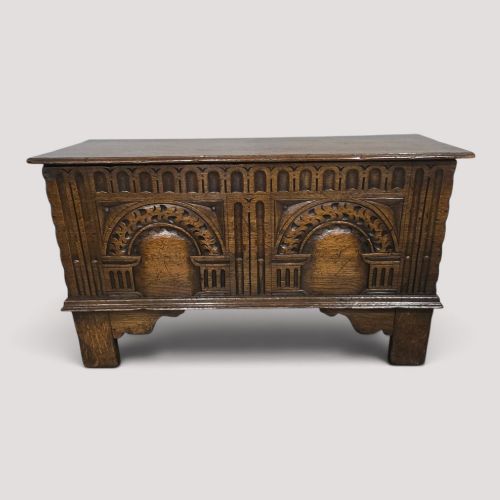
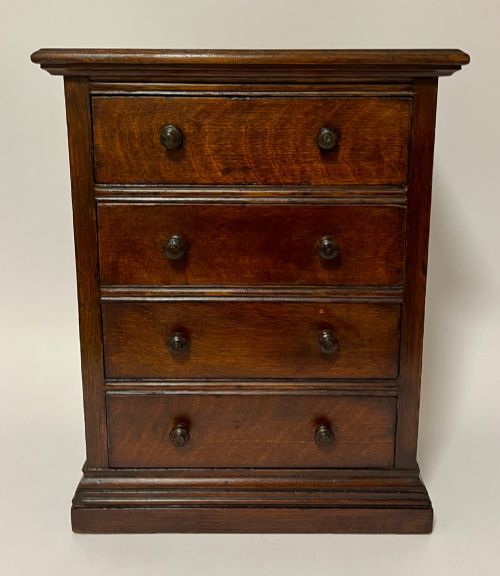
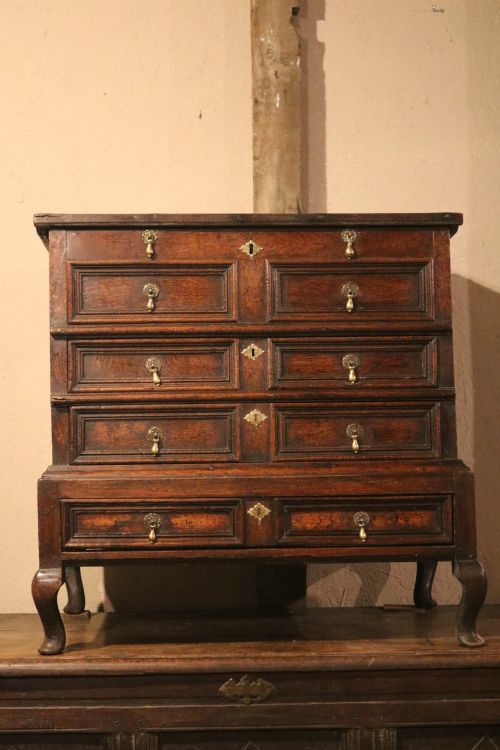
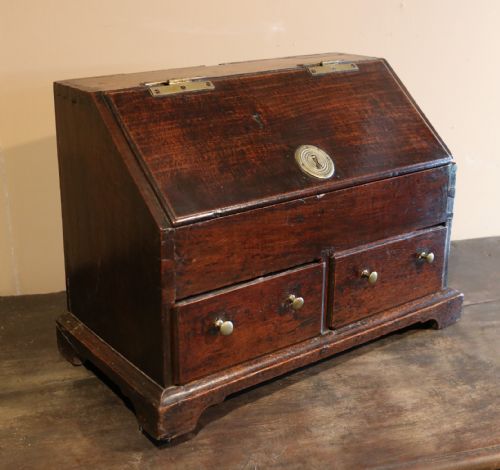
An oak apprentice piece is a miniature item of furniture, spanning forms from chests of drawers and coffers to tables, desks, and chairs. These items were traditionally created by trainees to demonstrate their technical competence to a guild or master.
The pieces appearing here range in period from the eighteenth century through the Victorian era and into the early twentieth century. Common formats include miniature chests, mule chests, desks, and window seats rooted in styles such as Georgian, Victorian, Jacobean, and Arts and Crafts.
How they were made
Makers constructed these miniature items primarily from solid timber using traditional joinery methods suited to full-scale furniture. Oak dominates the record, often paired with secondary woods like mahogany, beech, elm, pine, and iron or brass hardware.
Surface decoration relies on hand carving and timber selection rather than applied veneers. Regional variations appear in items originating from Wales or England, showing distinct local cabinet-making traditions.
Listings feature oak alongside mahogany, beech, elm, and pine across periods from the eighteenth century to nineteen-twenty.
What varies in quality
The standard of an oak apprentice piece rests on the fidelity of its proportions and the execution of its joints. Masterful examples display the exact dovetails, mortise-and-tenon joints, and operating drawers found in full-size furniture of the period.
Decorative work creates another distinction between pieces. Hand-carving depth, crispness of moulding, and the integration of brass fittings determine whether an object is a simple practice exercise or an accomplished scale model.
Drew Luggage Makers
The Oak Apprentice Piece Glossary
- Apprentice piece
- A scaled-down item of furniture made by a trainee craftsman to demonstrate skill. These objects replicate full-scale forms with working drawers and authentic joinery.
- Coffer
- A heavy wooden chest with a hinged lid used for storage. Miniature versions frequently feature panelled construction and iron hinges.
- Mule chest
- A storage chest fitted with one or more drawers beneath the main compartment. Antique examples in oak often display regional Georgian characteristics.
- Tallboy
- A tall chest of drawers consisting of one chest stacked upon another. Miniature variants compress this form while retaining multiple functioning drawers.
- Gate-leg table
- A table with hinged leaves supported by swing-out legs. The miniature format replicates the complex knuckle joints of the full-size originals.
Oak Apprentice Piece: Frequently Asked Questions
What is an oak apprentice piece?
An oak apprentice piece is a miniature item of furniture built by a trainee craftsman. These objects served as physical CVs to prove a joiner's capability.
They mirror the construction methods and styles of full-sized furniture from periods like the eighteenth century and the Victorian era.
Were these pieces actually used?
Most pieces were made as display or test items rather than toys. Their careful joinery meant they could function as desktop storage or decorative items.
Over time, owners used them on tables and shelves to store small valuables or documents.
How do I date an apprentice piece?
Dating relies on the style of the furniture, the type of wood, and the construction methods used. Georgian pieces show different moulding and dovetail styles compared to later Victorian or Arts and Crafts examples.
Examining the secondary timbers and hardware also helps anchor the piece to a specific decade.
Why are some pieces attributed to specific regions?
Makers often used local timber and regional design idioms. Pieces from Wales frequently feature particular framing styles and native oak distinct from English workshops.
Regional attribution comes from these persistent construction habits and material choices.