
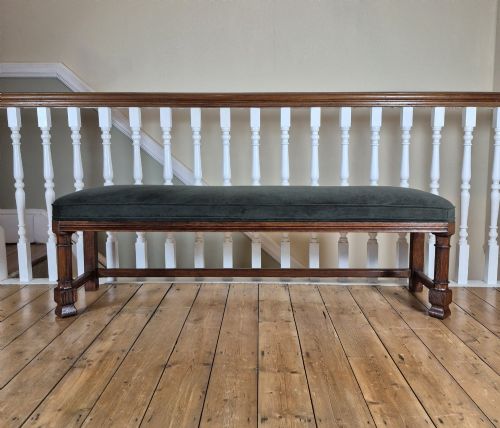
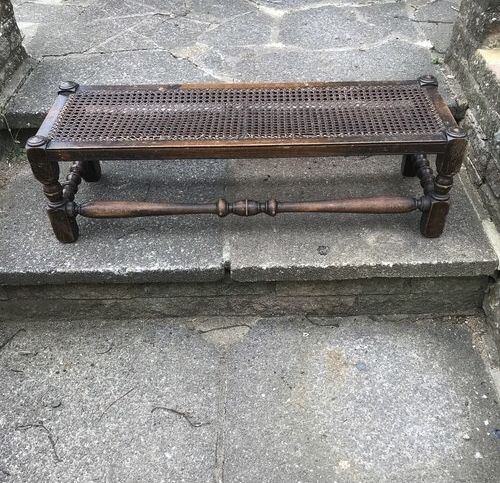


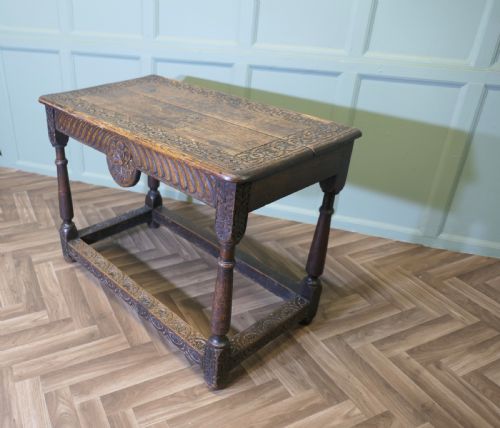


Gothic Revival Oak Stool
These gothic revival oak stool examples bring stern ecclesiastical lines and robust timber into domestic rooms.
Gothic Revival Oak Stool
A gothic revival oak stool combines medieval architectural motifs with domestic seating forms, most frequently appearing from the nineteenth century in various formats. Buyers seek these out for their strong structural presence and dense timber grains.
The selections available range from simple boarded trestle forms rooted in earlier centuries up to elaborate Victorian interpretations. Alongside standard stools, the category expands to include window seats, footstools, and clever metamorphic library steps.
Makers drew heavily on pointed arches, tracery, and turned supports to recreate a historic aesthetic within domestic interiors. Oak remains the predominant wood, frequently paired with secondary timbers like elm or burr elm.
Materials and construction methods
Solid oak forms the primary structural substance across these pieces, selected for its durability and capacity to hold crisp carved details. Joinery relies on traditional methods such as mortise and tenon connections secured with wooden pegs.
Secondary materials like brass hardware, leather, velvet, and cane appear on upholstered tops and hinged mechanisms. Burr elm surfaces occasionally provide contrasting grain patterns on seat panels.
Several examples double as library steps, allowing studious Victorians to reach high bookshelves before sitting down to read.
Factors influencing quality
Depth of carving and clarity of architectural ornament separate standard utilitarian seating from finer artistic productions. Pieces executed in the manner of notable designers often display superior proportions and more ambitious structural schemes.
The integrity of the timber and the tightness of historical joinery dictate the physical stability of each example. Retaining original upholstery materials or secondary coverings adds significantly to historical authenticity.
The Gothic Revival Oak Stool Glossary
- Gothic Revival
- An architectural and decorative movement drawing inspiration from medieval forms, pointed arches, and heavy timber construction. This style dominated much nineteenth-century design.
- Trestle form
- A structural arrangement where horizontal members are supported by vertical feet or uprights at each end. It provides exceptional rigidity to early boarded seating.
- Metamorphic furniture
- Pieces designed to transform from one functional object into another, such as a chair converting into library steps. These combine complex mechanical hinges with sturdy joinery.
- Burr elm
- A woody outgrowth on elm trees producing intricate, swirling grain patterns. It was frequently selected for decorative seat panels and tabletops.
- Aesthetic Movement
- A late nineteenth-century design current emphasising visual beauty over narrative meaning. It influenced the cleaner lines found in some library steps and seating.
Gothic Revival Oak Stool: Frequently Asked Questions
How do I identify a genuine nineteenth-century piece?
Examine the timber shrinkage, tool marks, and construction joints to gauge the age of the oak.
Nineteenth-century makers often utilised machinery alongside hand tools, leaving distinct physical evidence on internal surfaces.
Where were these stools used in homes?
These pieces suited libraries, halls, and parlours where heavy architectural furniture complemented the interior scheme.
Window seats and prayer stools served specific domestic functions near hearths and tall windows.
Can I use an antique footstool daily?
Solid oak construction generally provides the structural strength required for regular everyday usage.
Care should be taken with delicate upholstery fabrics and historical surface finishes to prevent unnecessary wear.
What distinguishes Reformed Gothic from standard styles?
Reformed Gothic design pares back excessive ornamentation in favour of structural honesty and geometric clarity.
This approach aligns closely with Arts and Crafts ideals concerning materials and construction.