






Apprentice Miniature Chest
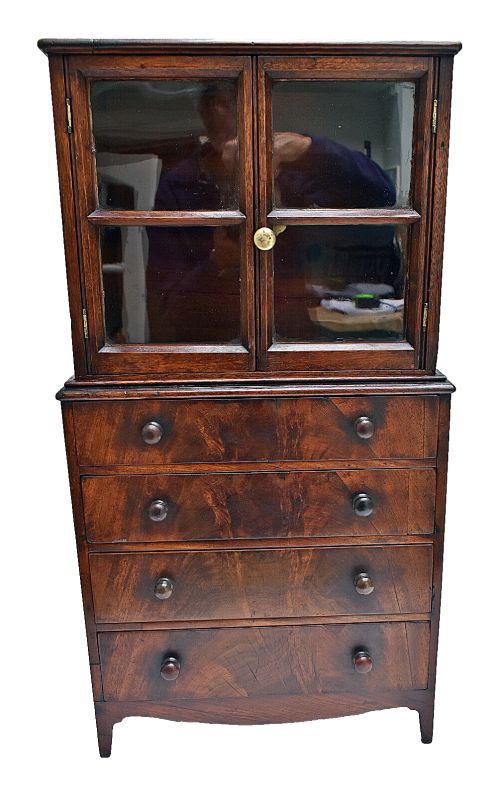
When you search for apprentice miniature chest, you are looking at scaled-down furniture built to demonstrate a joiner's skill or serve as a travelling salesman's sample.
Apprentice Miniature Chest
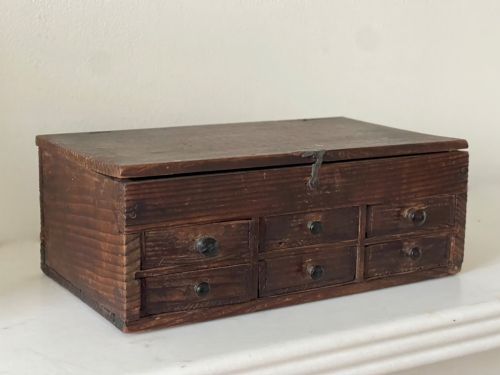
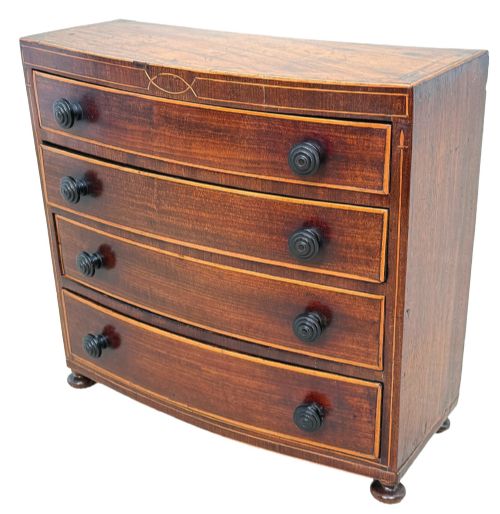
An apprentice miniature chest is a small-scale model of full-sized domestic storage furniture, produced across the eighteenth and nineteenth centuries. These pieces replicate the form and construction of standard chests of drawers, mule chests, and collectors' cabinets in miniature proportions.
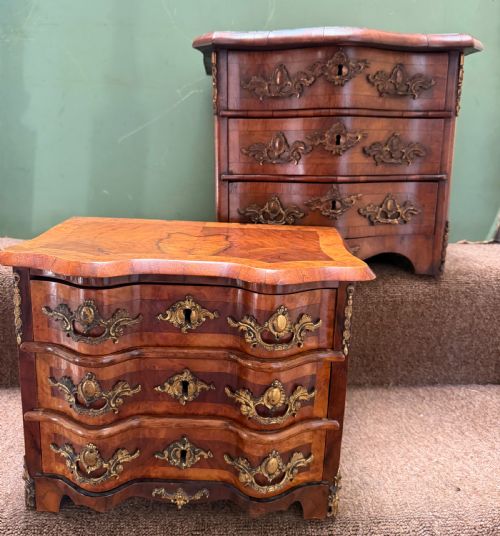
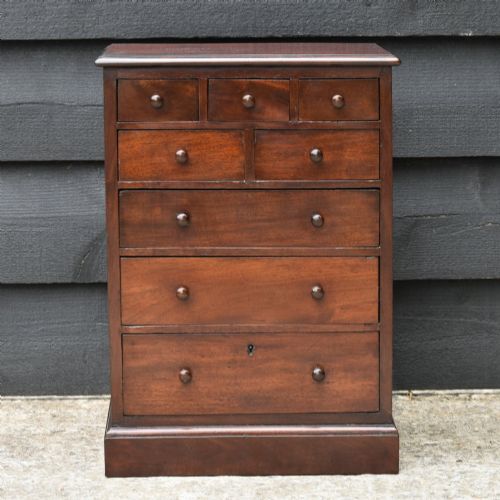
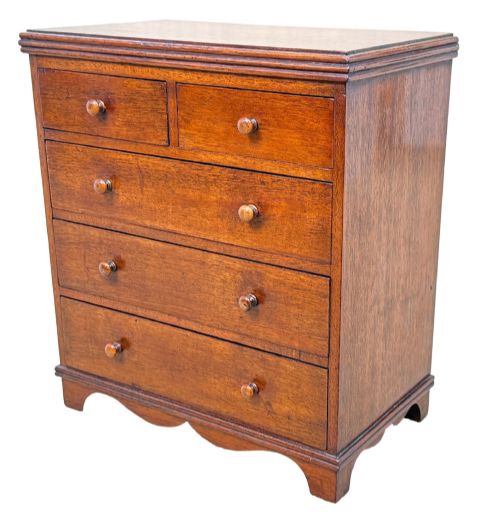
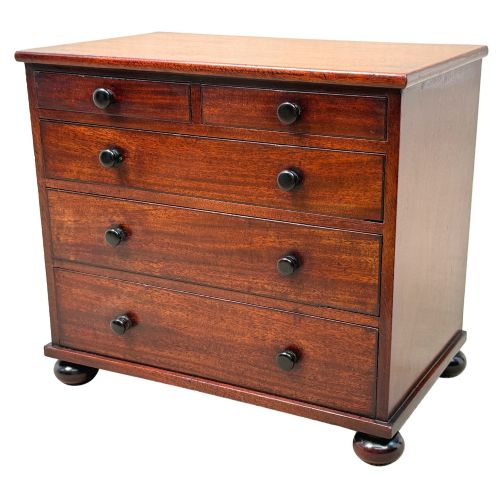
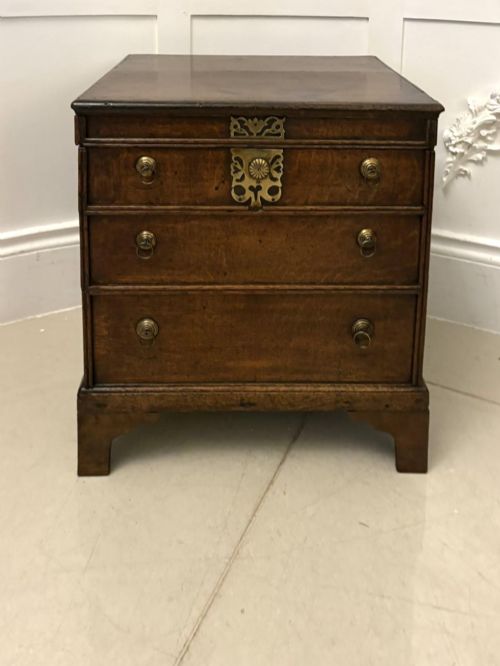
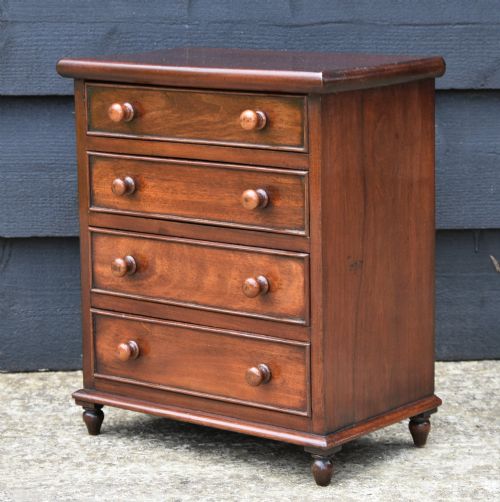
The version most commonly met on this page is the Victorian mahogany chest of drawers featuring small turned feet and working brass hardware. Alongside these, examples in oak, walnut, and pine appear from Georgian and later periods, often reflecting regional cabinet-making traditions such as Scottish or French designs.
How they were made
Makers constructed these miniature chests using primary hardwoods like mahogany, walnut, and oak, frequently paired with secondary pine or elm for interior drawer linings. Timber selection matched the standards of full-scale furniture, utilising solid planks and fine veneers.
Joinery methods included dovetail joints for drawer construction and mortise and tenon frames, executed by hand with the same precision applied to domestic furniture. Details such as turned wooden feet, applied mouldings, and brass escutcheons completed the construction.
Apprentice Miniature Chest Retail Price Guide 2026
Typical asking prices for apprentice miniature chest among the pieces listed under this phrase on Sellingantiques today, from the lower quarter to the upper quarter. They describe what is for sale here now, not the wider market.
Listings feature woods including mahogany, oak, walnut, pine, elm, and satinwood across eighteenth and nineteenth-century periods.
What varies in quality
The standard of execution depends heavily on the joiner's handling of scaled proportions and fine details, such as tight dovetailing on the drawer corners and smooth operation of the sliding mechanisms. Superior examples maintain exact architectural scaling rather than appearing clunky or overly simplified.
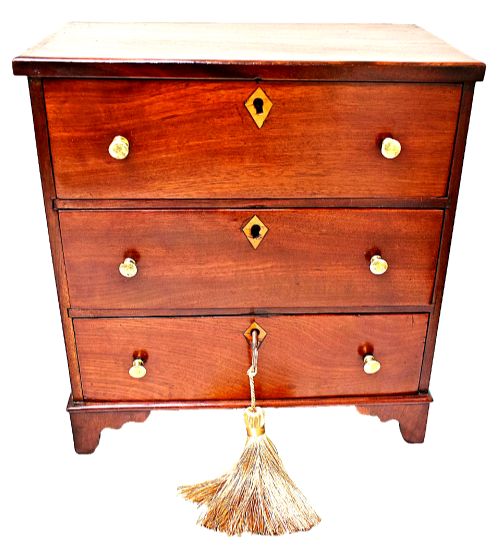
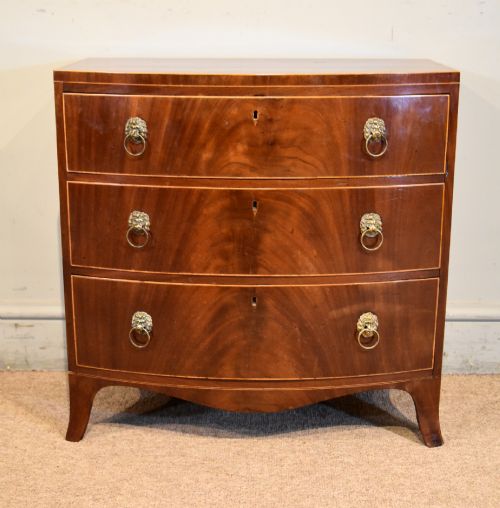
Material selection and decorative finishing also dictate the tier of a piece, with figured mahogany, inlaid marquetry, and well-preserved original hardware marking out superior workshop production against simpler utilitarian pine or stained boxes.
A. F. Lloyd, Bideford
The Apprentice Miniature Chest Glossary
- Apprentice piece
- A piece of furniture made by a trainee craftsman to demonstrate mastery of joinery techniques to a guild or master. These items typically duplicate full-scale forms in miniature.
- Mule chest
- A storage chest featuring one or more working drawers beneath the main lifting lid compartment. They combine the storage of a traditional coffer with the accessibility of drawer storage.
- Serpentine
- A curved furniture front characterised by a convex centre flanked by concave sides. This undulating shape requires advanced woodworking skill to shape and fit.
- Escutcheon
- A protective plate surrounding a keyhole, usually made of brass or bone on these chests. They prevent the timber around the lock from splitting with repeated use.
- Marquetry
- The art of applying decorative pieces of veneer to a structure to form geometric or pictorial designs. It adds surface pattern and colour variation to the timber background.
Apprentice Miniature Chest: Frequently Asked Questions
What is an apprentice miniature chest?
An apprentice miniature chest is a small-scale version of a full-sized chest of drawers or storage box. Craftsmen produced them to prove their competency or to serve as salesman samples for showing clients.
These pieces replicate standard furniture styles from specific eras, including Georgian and Victorian periods. They feature working drawers and miniature hardware built with traditional joinery techniques.
How were these miniature chests used?
Original uses varied from workshop test pieces to tabletop storage for jewellery, trinkets, or collectors' specimens. Their compact size suited domestic tabletops and dressing surfaces.
Cabinet makers also utilised them to demonstrate their repertoire of skills to prospective buyers without transporting full-scale furniture. Later examples often functioned purely as decorative items or specialised storage boxes.
How do I date an antique miniature chest?
Dating relies on identifying the primary wood species, construction methods, and hardware styles matching known periods. Mahogany and walnut dominate eighteenth and early nineteenth-century pieces, while pine and decorative inlays often point towards later Victorian or Edwardian production.
Secondary woods inside the drawers and the style of the dovetail joints provide further clues to the decade of manufacture. Comparing the proportions to full-sized furniture trends of the same era helps confirm the likely origin.
Where should I place one at home?
These chests suit placement on top of sideboards, desks, or chests of drawers where their detailed proportions remain visible. Their small footprint allows them to sit comfortably on narrow surfaces.
Keeping them away from direct sunlight and sudden temperature changes protects the aged timbers and delicate veneers from warping or splitting. Placing them at eye level or slightly below lets you appreciate the miniature joinery and hardware.