

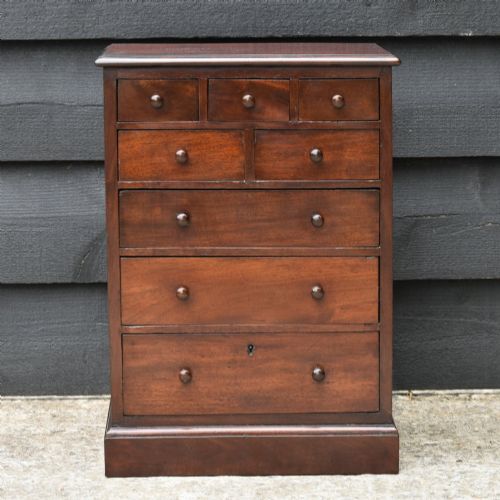
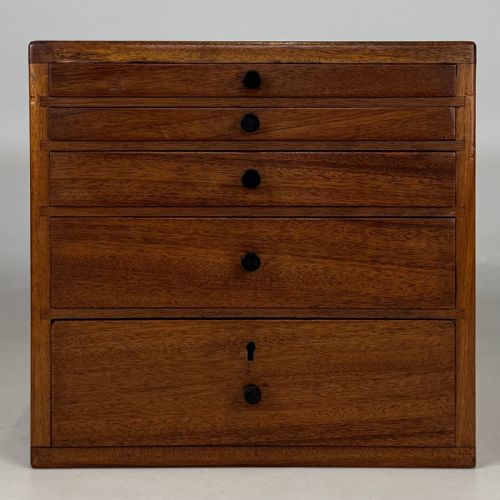
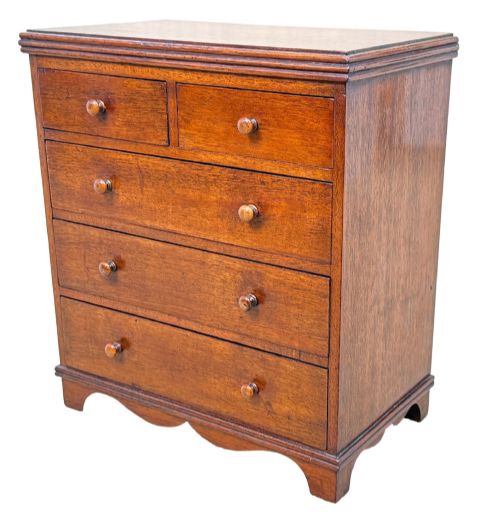
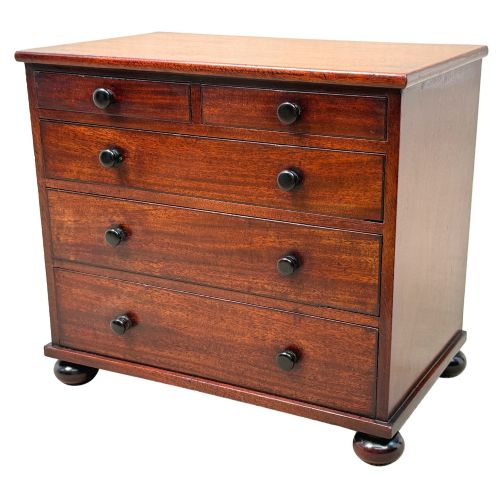
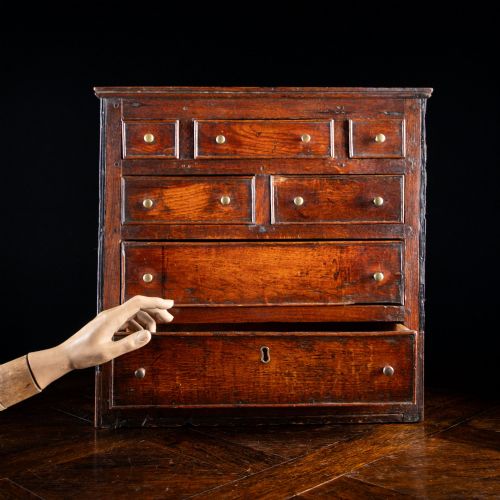
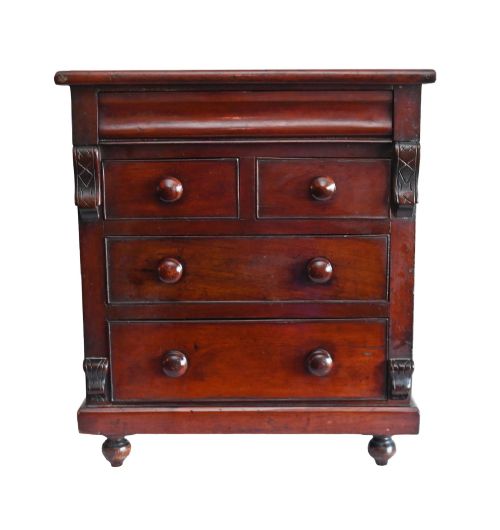
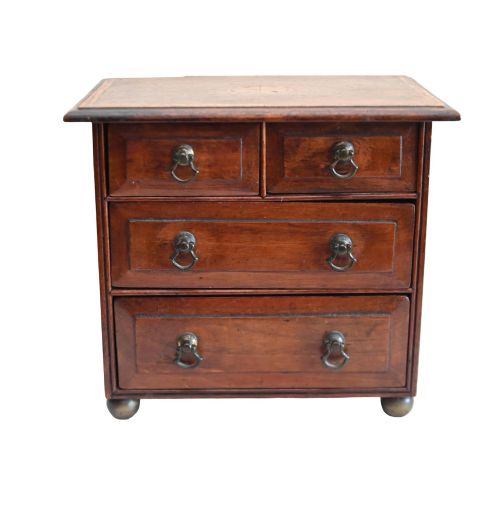
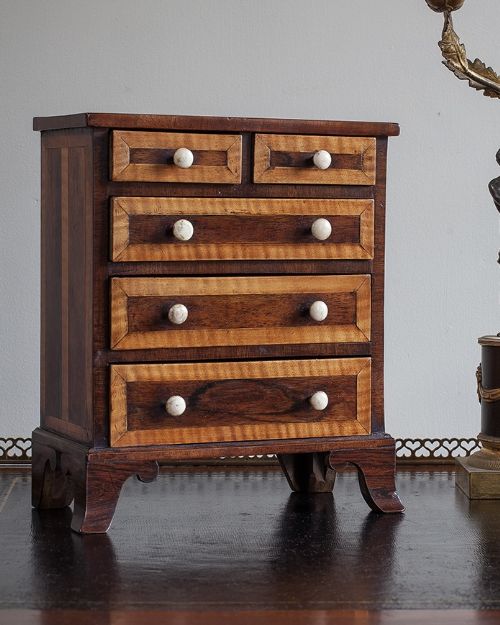
Miniature Wooden Chest
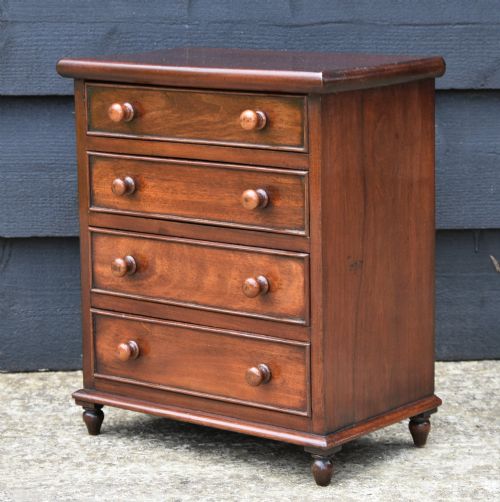
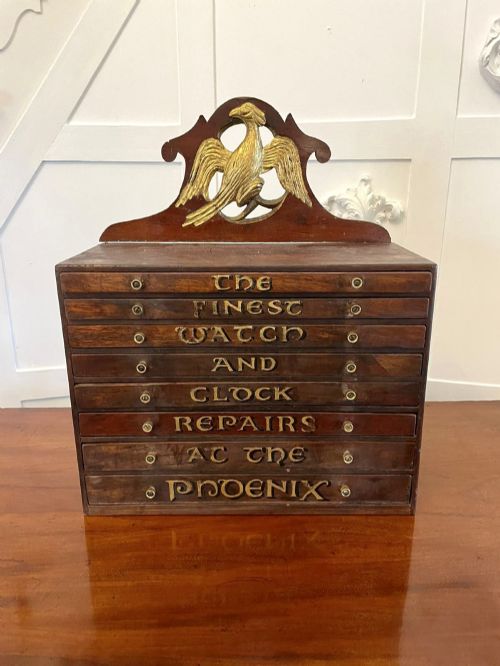
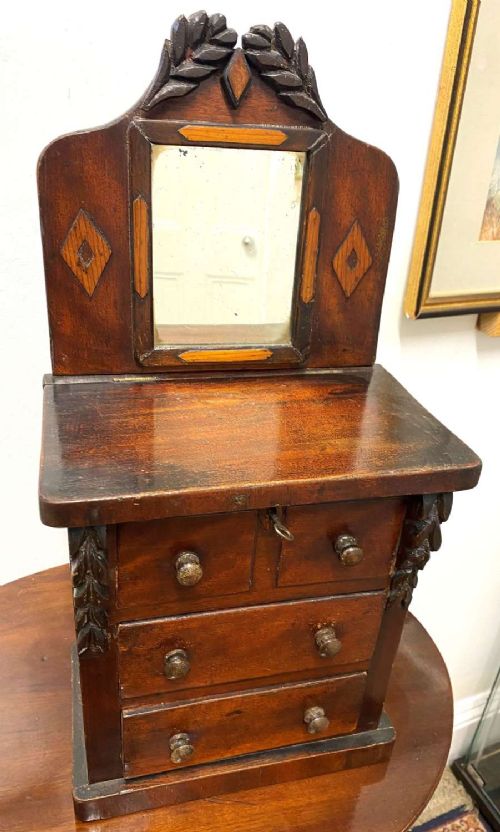
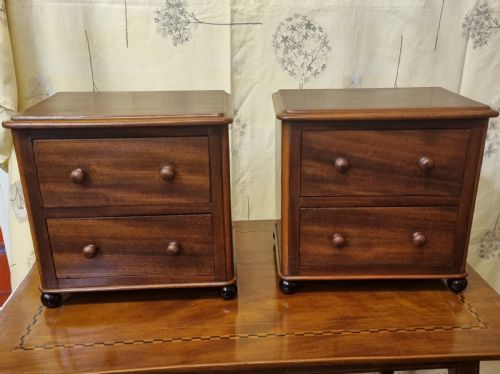
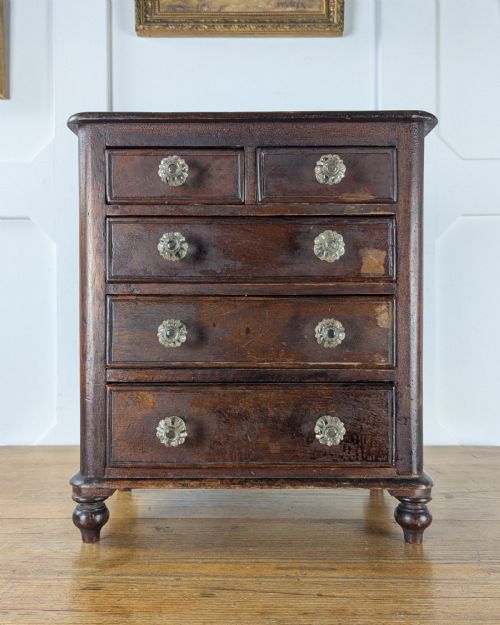
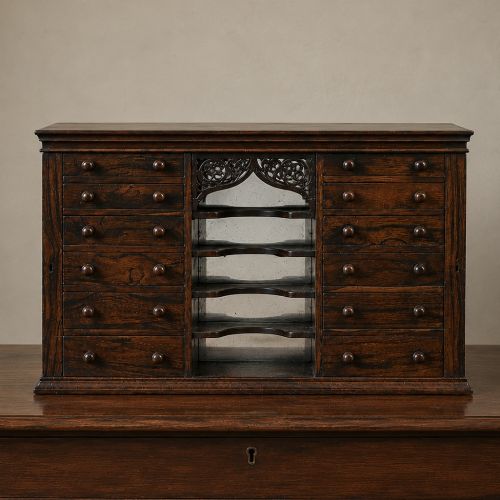
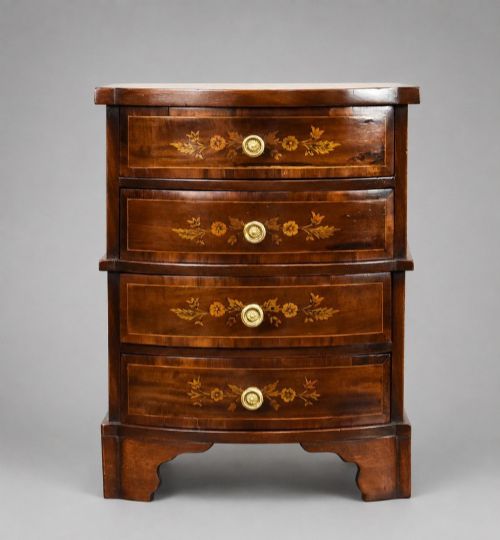
These small wooden chests are wonderful little pieces of scale furniture, offering fine cabinet-making in miniature format.
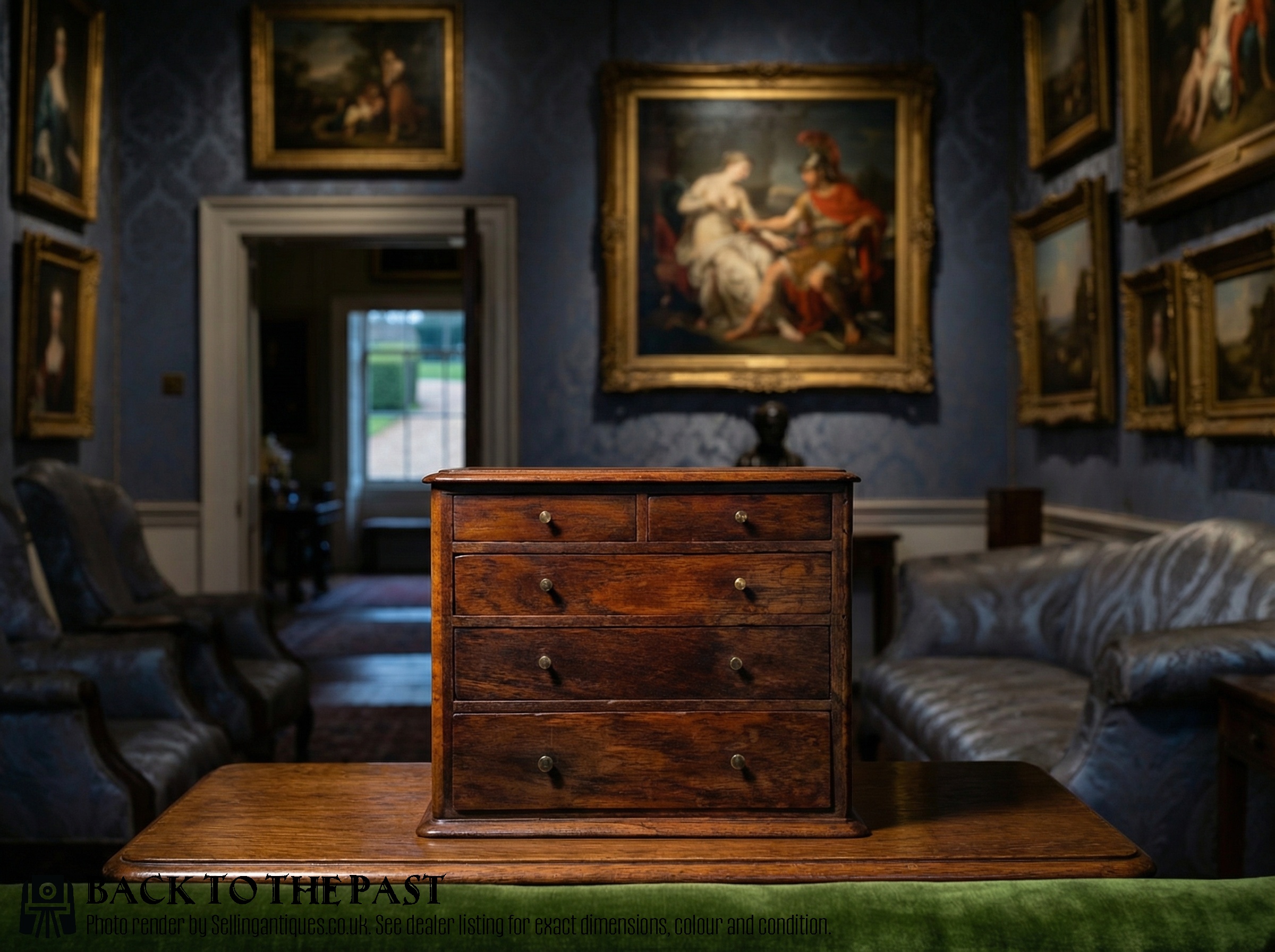
Miniature Wooden Chest
A miniature wooden chest offers a compact version of domestic storage furniture, built for the tabletop rather than the floor. These items range across the Georgian, Victorian and 1900 periods, encompassing styles from simple country pieces to George II style designs.
The most common form found in this category is the miniature chest of drawers, often referred to as an apprentice piece. Such items frequently appear in mahogany, pine, walnut, yew wood and elm, capturing the essence of larger household furnishings in a diminutive scale.
Materials and construction
Cabinet-makers constructed these small chests using traditional hardwoods like mahogany, walnut and yew wood, alongside softer timbers such as pine and eastern elm. Workshops utilised timber selection to showcase natural grain figures, particularly on drawer fronts.
Metal fittings such as brass handles and iron elements completed the construction, securing small drawers and lids. These pieces demonstrate the same joinery techniques found in full-scale furniture, applied with precise scaling.
Miniature Wooden Chest Retail Price Guide 2026
Typical asking prices for miniature wooden chest among the pieces listed under this phrase on Sellingantiques today, from the lower quarter to the upper quarter. They describe what is for sale here now, not the wider market.
Current listings span the eighteenth century, the Victorian era and the year 1900, incorporating both formal mahogany designs and rustic pine examples.
Judging quality
Quality rests on the fidelity of proportion and the choice of timber figure, distinguishing accomplished cabinet work from basic workshop output. Finer examples display carefully selected figured walnut or rich mahogany veneers alongside well-executed drawer linings.
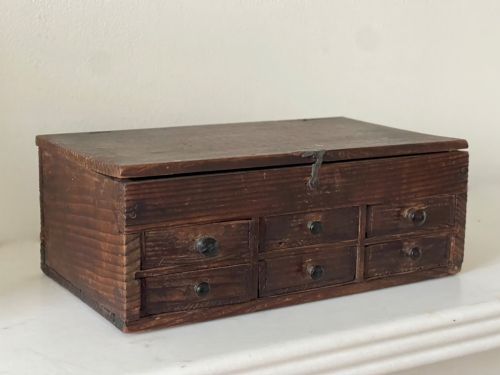
Simpler pine and elm pieces rely on rustic charm rather than elaborate cabinet-making, reflecting regional vernacular traditions. The integration of period brass hardware also elevates the visual weight of these small items.
The Miniature Wooden Chest Glossary
- Apprentice piece
- A small-scale item demonstrating the skill required for a tradesman to qualify. These chests show mastery of dovetailing and drawer construction.
- Figured walnut
- Timber with an attractive, swirling grain pattern. Cabinet-makers utilised this wood on primary surfaces for visual impact.
- Vernacular furniture
- Items made by local craftsmen using regional materials without grand stylistic pretensions. Pine and elm chests often fall into this category.
- Tabletop chest
- A portable storage box designed to sit on a desk or surface. These items provide compartments on a reduced scale.
Miniature Wooden Chest: Frequently Asked Questions
What is a miniature wooden chest?
A miniature wooden chest is a small-scale model of a domestic drawer unit, designed for tabletop display or storage. These items replicate the proportions of full-sized furniture in a fraction of the space.
Craftsmen built them across various centuries using timbers like mahogany, walnut and pine. They serve as decorative objects and historical examples of cabinet-making skill.
How were apprentice pieces used?
Apprentice pieces were traditionally created by trainees to demonstrate their proficiency to a guild or master. They proved the maker could handle complex joinery and scaling.
While some served functional roles on desks, others existed primarily as display of technical capability.
How do I date a miniature chest?
Dating relies on timber choice, construction methods and stylistic markers associated with specific periods. Georgian pieces often feature yew or mahogany, while Victorian examples span pine, elm and mahogany.
Hardware styles and dovetail construction also offer clues to the era of manufacture.
What woods are common?
Mahogany, walnut and yew wood appear frequently in finer decorative pieces from the eighteenth and nineteenth centuries. These timbers allowed for smooth finishes and polished surfaces.
Country versions often utilise pine and eastern elm, reflecting local material availability.