

Antique Wooden Table Cabinet
An antique wooden table cabinet offers compact storage with period character, spanning eras from Georgian craftsmanship to Edwardian simplicity.
Antique Wooden Table Cabinet
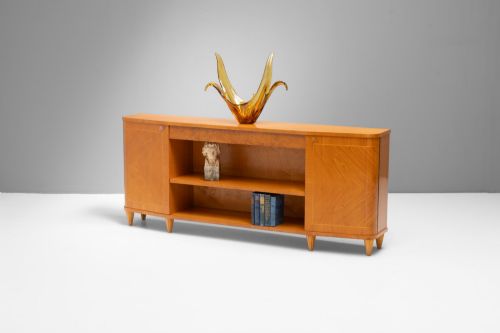
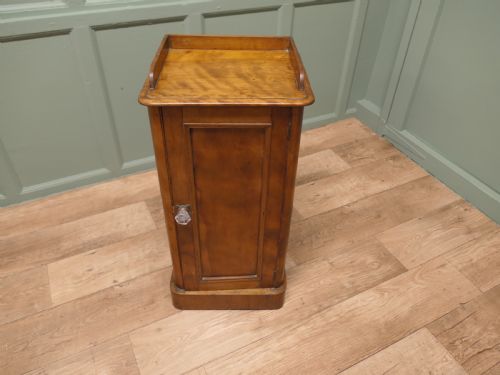
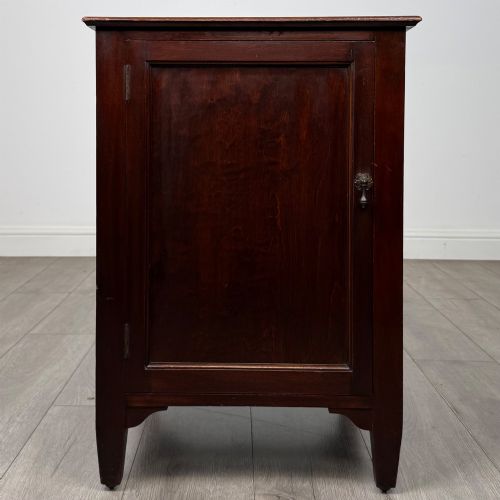
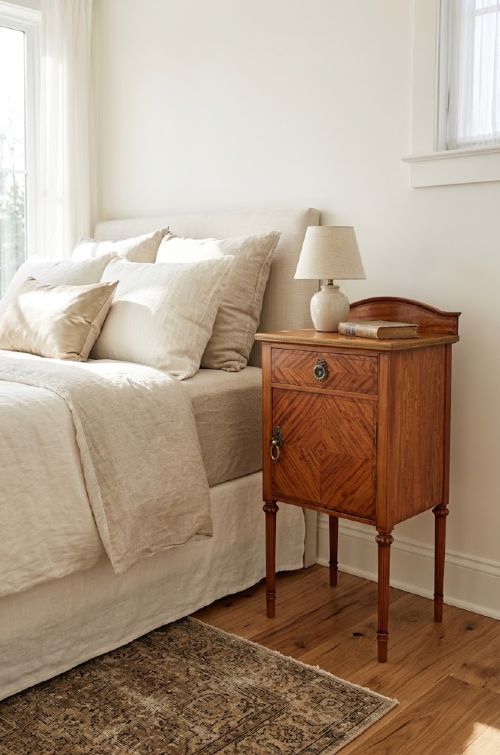
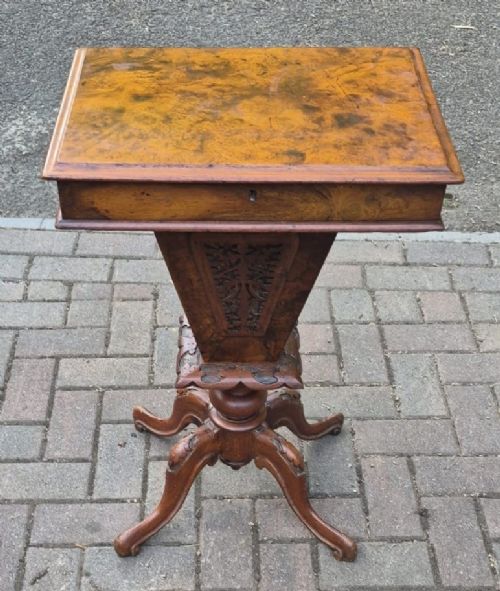
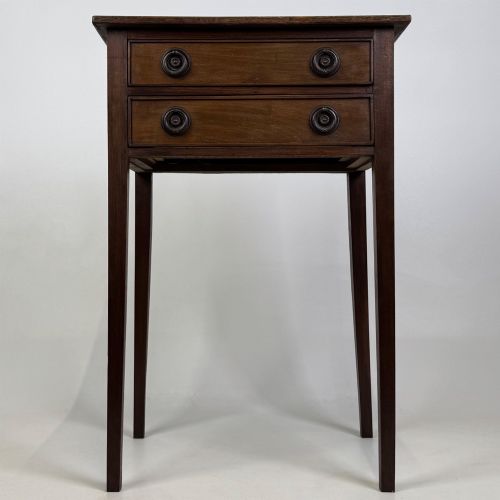
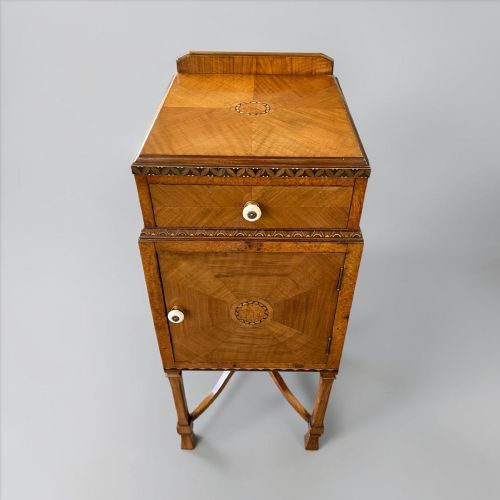
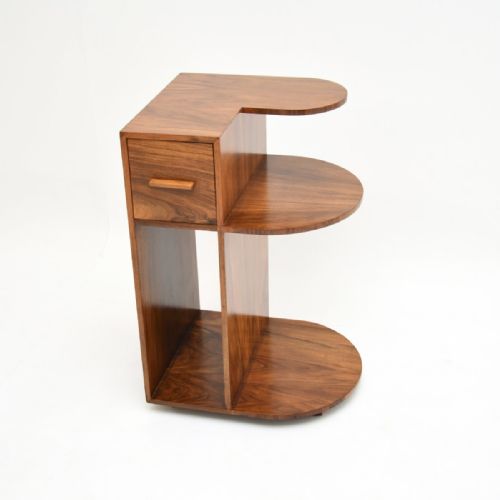
An antique wooden table cabinet represents a diverse category of small scale furniture designed for tabletop use or compact placement. Buyers searching for an antique wooden table cabinet encounter various forms including bedside cupboards, nightstands, sewing tables, and small chests originating from the 18th, 19th, and early 20th centuries.
The selections span distinct historical eras such as the Georgian, Victorian, and Edwardian periods, reflecting changing domestic needs over centuries. Most pieces serve practical functions as bedside storage or small display surfaces while maintaining traditional joinery and timber construction.
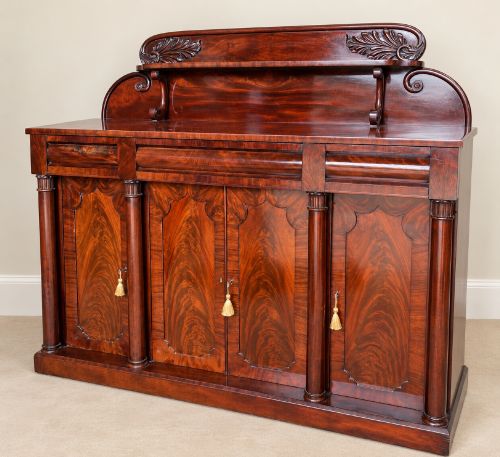
Makers utilised regional timbers and classic proportions appropriate to each era, ranging from simple pine cupboards to finely inlaid mahogany or walnut specimens. These pieces suit modern interiors by providing functional surface space and enclosed storage without dominating a room.
Materials and Construction
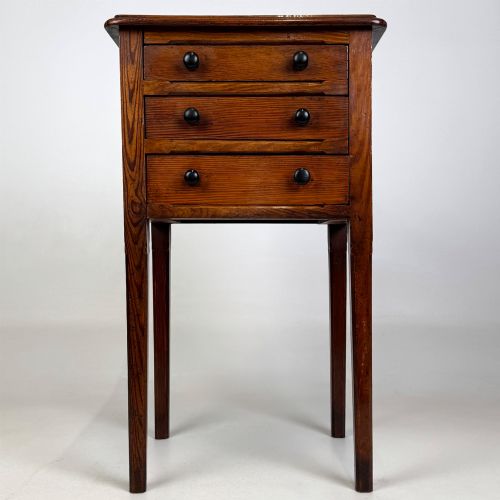
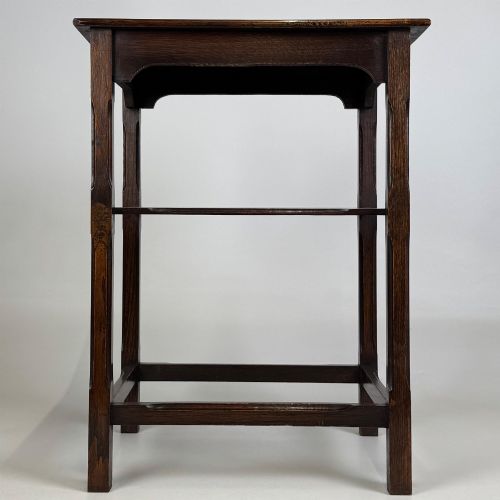
Cabinet makers relied predominantly on hardwoods like mahogany, oak, walnut, and ash, often enhanced with satinwood, boxwood, or flame mahogany veneer for decorative contrast. Structural elements frequently employed pine or secondary timbers for internal framing and drawer linings.
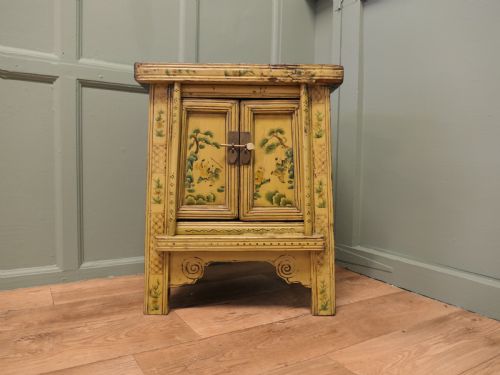
Surface decoration incorporated period techniques such as intricate inlay, hand carving, and applied ormolu mounts, alongside painted finishes like Chinoiserie decoration. Waxing and polished finishes protected the timber while highlighting natural grain patterns.
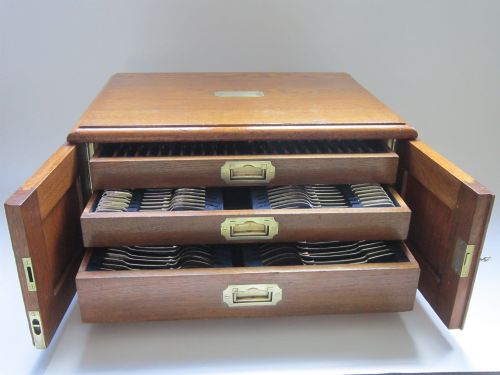
Hardware typically featured brass handles, hinges, and key escutcheons, securing doors and drawers constructed using traditional dovetail and mortise and tenon joints.
Materials recorded across the inventory include mahogany, oak, walnut, satinwood, boxwood, ash, pine, and brass.
Assessing Quality
Quality rests upon the selection of timber and the precision of the cabinet maker's joinery, distinguishing finely figured veneers and solid hardwoods from utilitarian pine. Superior examples exhibit balanced proportions, crisp carving, and meticulous attention to internal drawer construction.
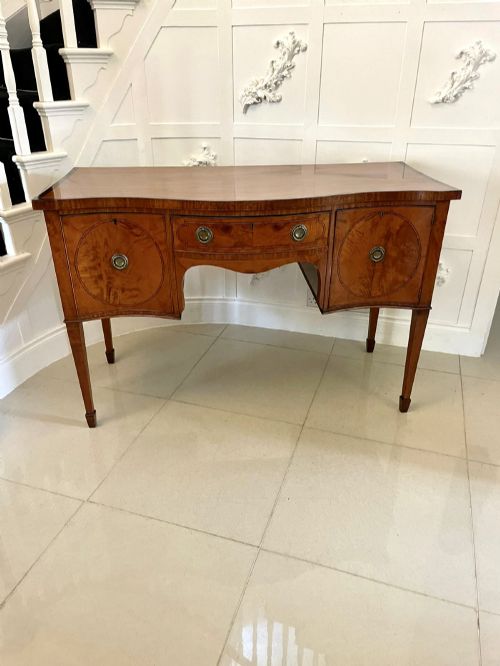
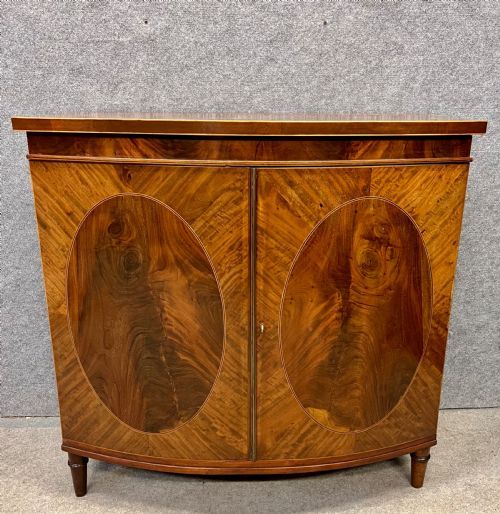
The integrity of decorative elements such as boxwood stringing, marquetry inlay, and original brass hardware further elevates a piece. Pieces that retain their original waxed surface finish and structural stability command greater appreciation among collectors.
The Antique Wooden Table Cabinet Glossary
- Serpentine
- A gently curved furniture front shaped in a convex-concave-convex line. This contour appears on high-status 18th and 19th century case furniture.
- Demi Lune
- A half-moon or semicircular shape utilised for tabletops and small cabinets. This profile allowed sideboards and tables to sit flush against a wall.
- Inlay
- A decorative technique where contrasting woods or materials are inserted into recessed portions of a wooden base. Craftsmen used boxwood and satinwood to create geometric or floral patterns.
- Ormolu
- Gilded bronze mounts applied to furniture for decorative enrichment. French provincial and later period pieces frequently incorporate these metallic accents.
- Dovetail
- A traditional joint formed by interlocking wedge-shaped fingers. This interlocking joint secures drawer corners and frame structures against separation.
Antique Wooden Table Cabinet: Frequently Asked Questions
What is an antique wooden table cabinet used for?
These small cabinets functioned historically as bedside storage, needlework tables, or tabletop receptacles for jewellery and documents.
Today, they serve equally well as compact bedside tables, lamp stands, or decorative storage accents in living spaces.
How do I date an antique wooden table cabinet?
Dating relies on identifying the prevailing style, construction methods, and primary timbers used in the piece. Georgian and Victorian pieces show distinct joinery techniques and decorative motifs compared to later Edwardian examples.
Examining secondary woods inside drawers and the style of brass hardware provides further chronological clues.
Which woods are common in these cabinets?
Mahogany, oak, and walnut form the primary structure for the majority of these pieces. Cabinet makers also employed ash, pine, and exotic veneers like satinwood for decorative effect.
Secondary timbers like deal or pine often appear inside drawers and on unexposed framework.
How should I clean a wooden table cabinet?
Maintain the finish using a soft cloth and occasional applications of quality beeswax to nourish the antique timber. Avoid modern silicone sprays or excessive moisture, which can damage aged polishes and veneers.
Keep pieces away from direct heat sources and strong sunlight to prevent wood splitting.