
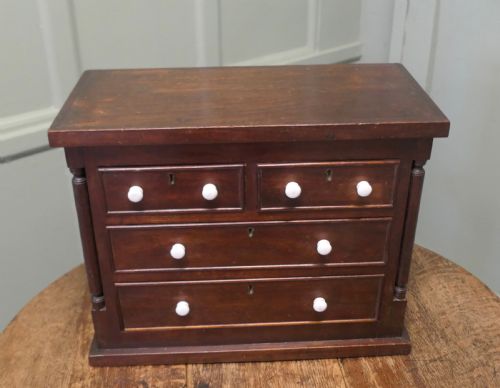
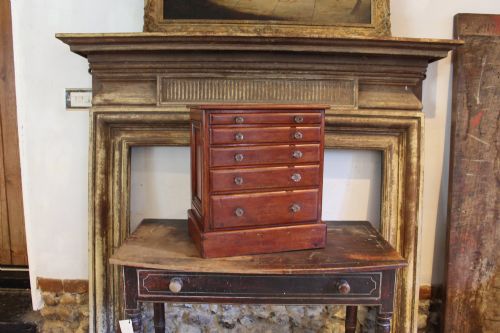


Mahogany Tabletop Cupboard
A mahogany tabletop cupboard offers compact storage with the rich warmth of traditional timbers, making it a practical desk accessory or collectors' piece.
Mahogany Tabletop Cupboard
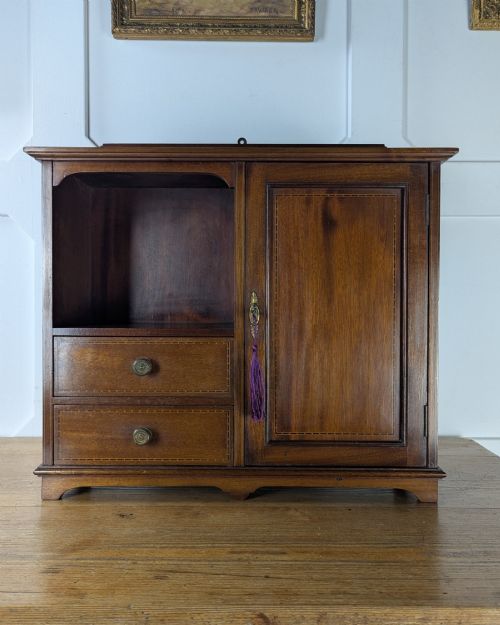
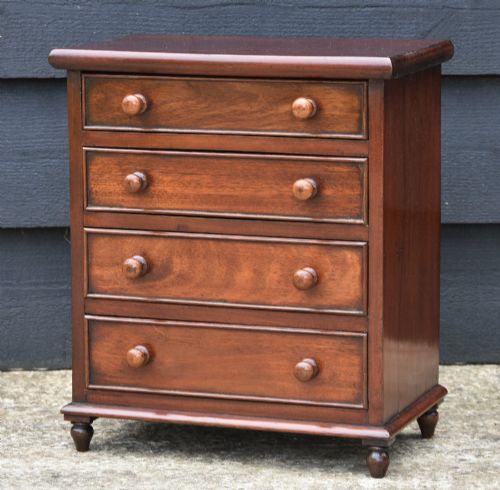
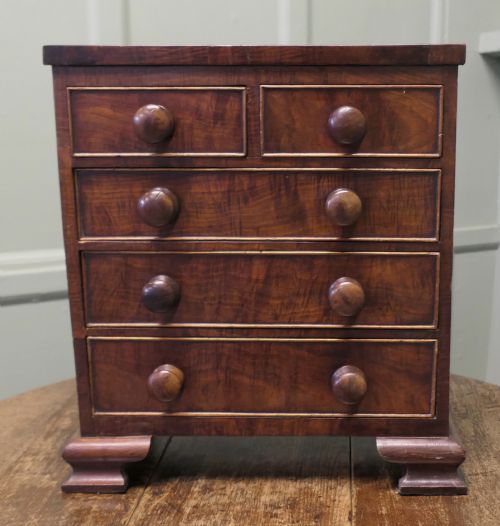
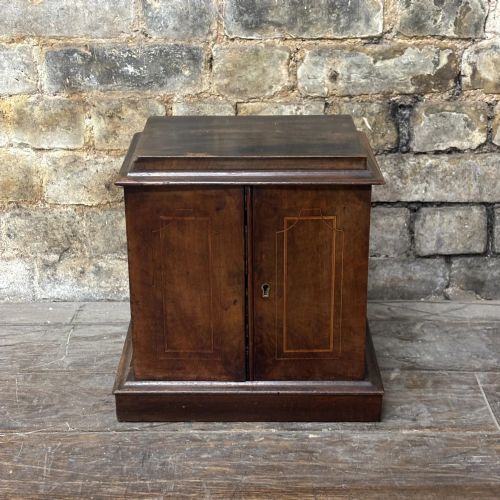
When you search for a mahogany tabletop cupboard, you encounter a variety of small-scale furniture designed to sit upon desks, sideboards or tables. The selection ranges from Georgian and Victorian miniature chests of drawers to stationery cabinets, linen presses and collectors' cabinets.
The pieces appearing on this page span the eighteenth, nineteenth and early twentieth centuries, encompassing styles such as Regency, William IV, Edwardian and Anglo-Indian. Miniature chests of drawers and apprentice pieces dominate the selection, alongside specialised receptacles for jewellery, stationery and specimens.
How they were made
Cabinetmakers constructed these small pieces using solid mahogany and mahogany veneers over secondary timbers, frequently incorporating brass for drop handles, escutcheons and hinges. Drawer interiors and internal partitions often utilise secondary woods like oak.
Decorative details rely on contrasting materials rather than heavy carving, with inlay and stringing executed in boxwood, satinwood and mother of pearl. Construction techniques mirror those of full-scale case furniture, scaled down for miniature proportions.
Smokers enjoyed dedicated tabletop cupboards with specialised compartments just to keep their pipes and tobacco tidy.
What varies in quality
The caliber of a tabletop piece is determined by the crispness of its dovetail joints, the selection of figured mahogany timber, and the precision of any decorative inlay. Finer examples display meticulous attention to proportion, matching wood grain across drawer fronts and retaining original brass hardware.
Lesser pieces may exhibit coarser secondary woods inside, simplified drawer construction, or later replacements of handles and escutcheons. The integration of specialised internal fittings, such as multiple graduated drawers or partitioned stationery slots, elevates the sophistication of the design.
The Mahogany Tabletop Cupboard Glossary
- Apprentice piece
- A small item of furniture made by a trainee cabinetmaker to demonstrate proficiency to a guild or master. These often replicate full-sized chests of drawers with remarkable attention to detail.
- Collectors cabinet
- A specialised tabletop case designed to house small specimens, coins, minerals or curiosities. They frequently contain multiple shallow drawers.
- Escutcheon
- A protective plate surrounding a keyhole, commonly cast in brass on these cabinets. It prevents the wood surrounding the lock from sustaining damage through repeated use.
- Stringing
- A narrow line of contrasting inlay used to outline drawer fronts, panels or tops. Cabinetmakers typically employed boxwood or satinwood for this linear decoration.
Mahogany Tabletop Cupboard: Frequently Asked Questions
What were miniature chests used for?
These small chests served various domestic purposes, from storing documents and jewellery to functioning as decorative tabletop display pieces.
Cabinetmakers also produced them as masterworks to showcase technical skill rather than solely for practical household storage.
How do I date a mahogany cabinet?
Dating relies on observing stylistic markers, construction methods and timber characteristics. Georgian and Regency pieces generally display heavier brass hardware and hand-cut dovetails.
Victorian and later examples introduce machine-sawn elements, satinwood stringing or different brass handle designs typical of the nineteenth century.
Are apprentice pieces real antique furniture?
Apprentice pieces are genuine antiques produced during training periods, functioning as authentic scaled-down versions of larger furniture forms. They represent period woodworking standards.
Collectors prize them for their miniature accuracy and the high skill level required to construct joints at such a reduced scale.
What is an Anglo-Indian tabletop piece?
Anglo-Indian pieces reflect the stylistic exchange between British cabinetmaking forms and Indian craftsmanship during the colonial era. They incorporate traditional British furniture shapes.
These items frequently utilise specific regional timbers and decorative techniques distinct from standard domestic British production.