
Antique Wooden Pew Bench
An antique wooden pew bench brings robust ecclesiastical or domestic character to a hallway, kitchen or living space.
Antique Wooden Pew Bench
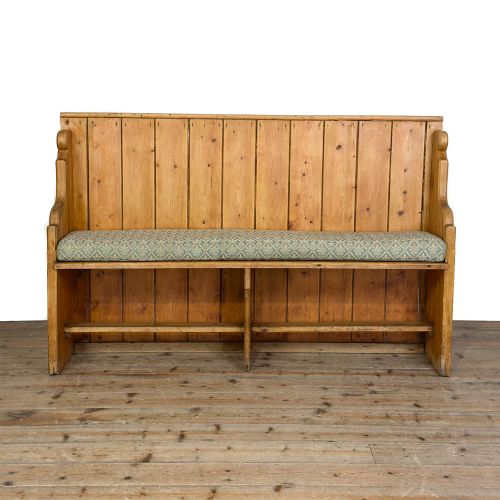
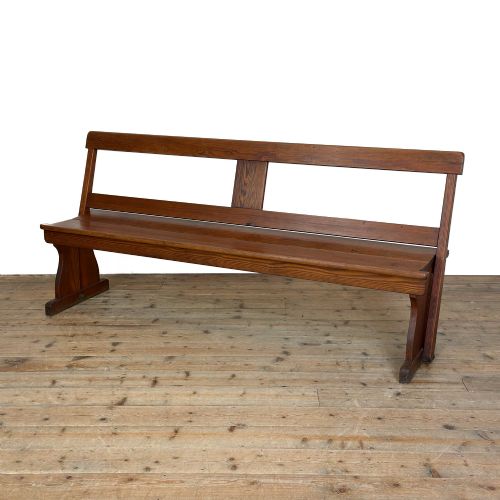
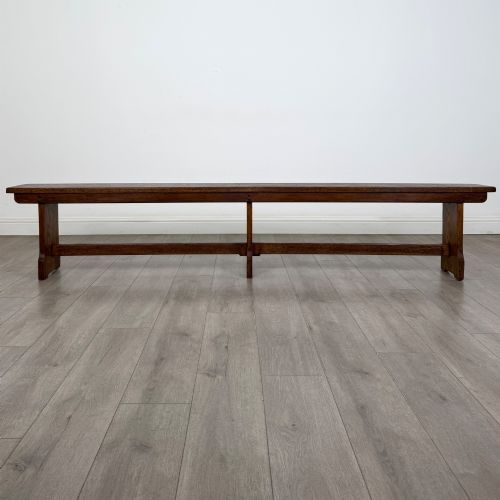
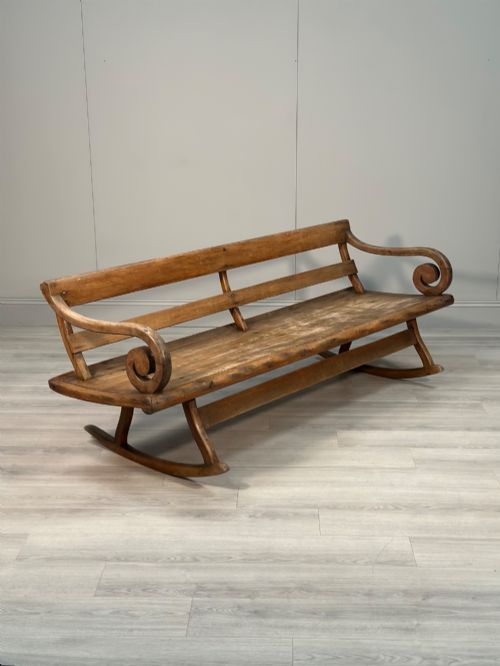
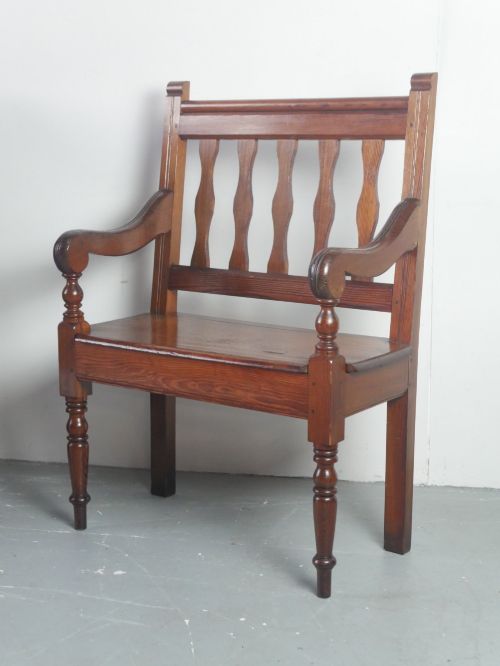
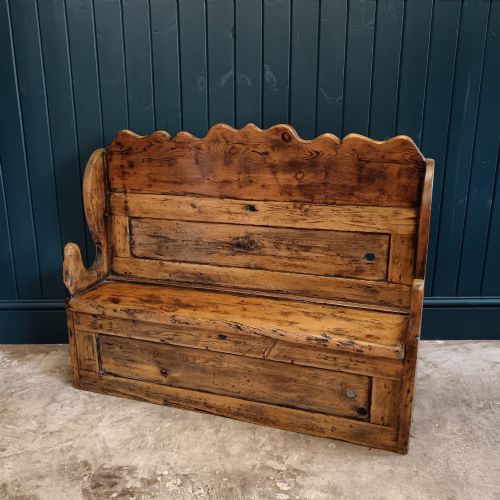
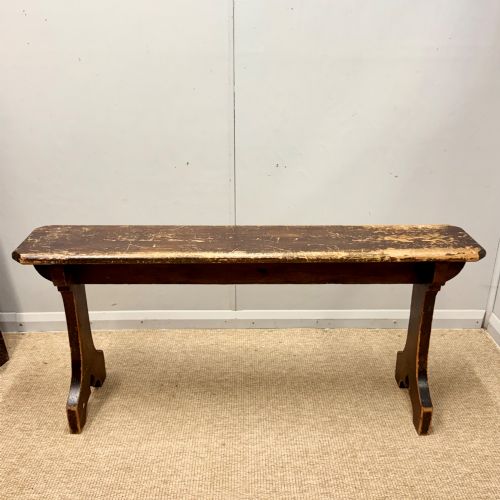
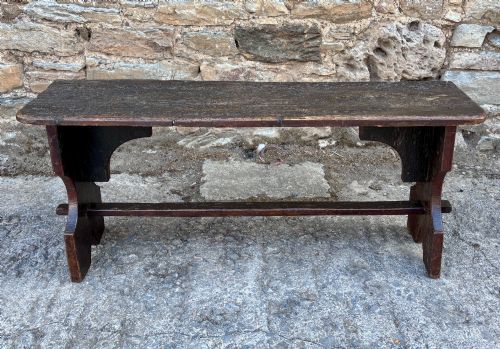
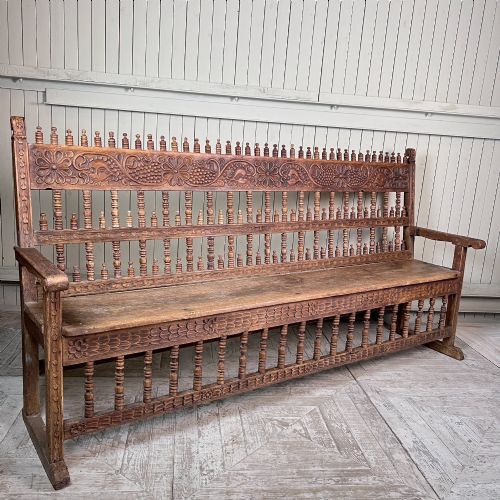
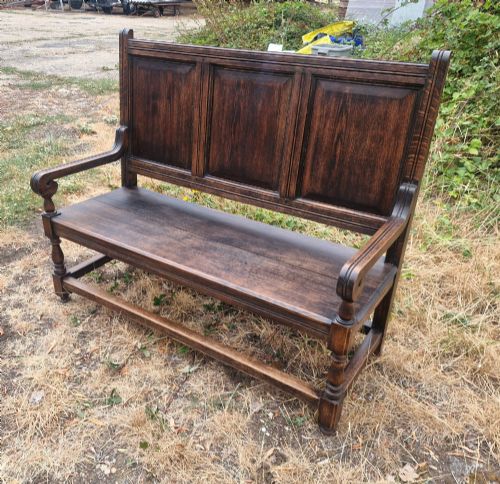
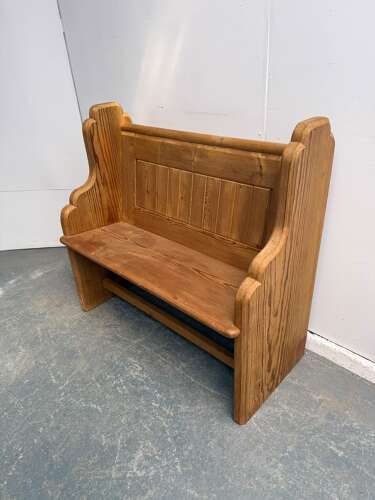
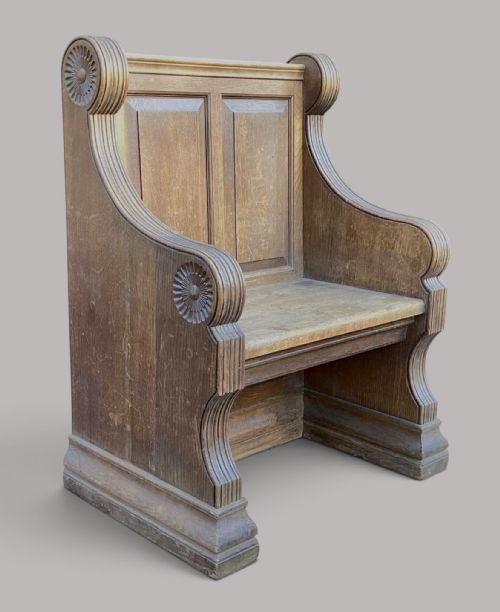
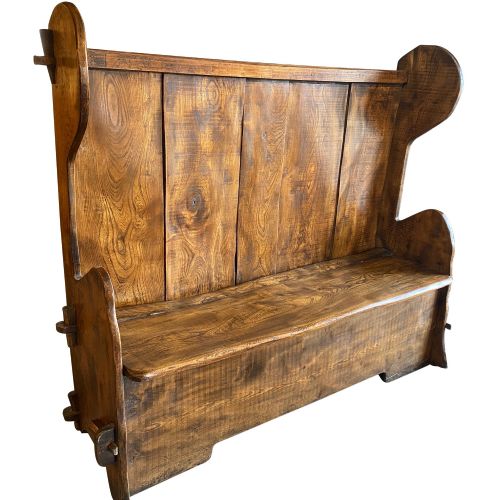
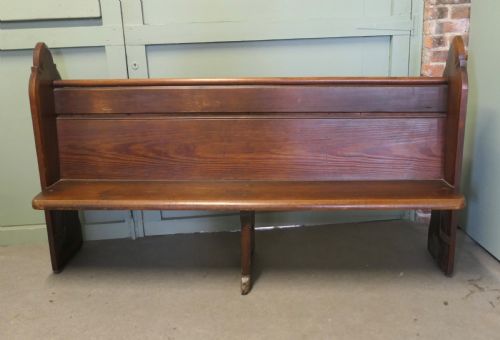
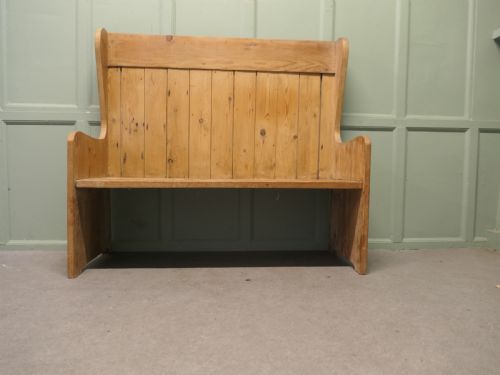
An antique wooden pew bench is a sturdy linear seating form originating from churches, chapels, taverns and country houses. These pieces range from simple ecclesiastical pews to high-backed settles designed to keep out draughts, alongside long hall benches and flip-over chapel designs.
The selections encountered most frequently on this page date from the nineteenth century, including Victorian examples in pine, oak and pitch pine. Buyers also find occasional eighteenth-century formats and Edwardian hall seats reflecting rustic country or gothic revival styles.
How they were made
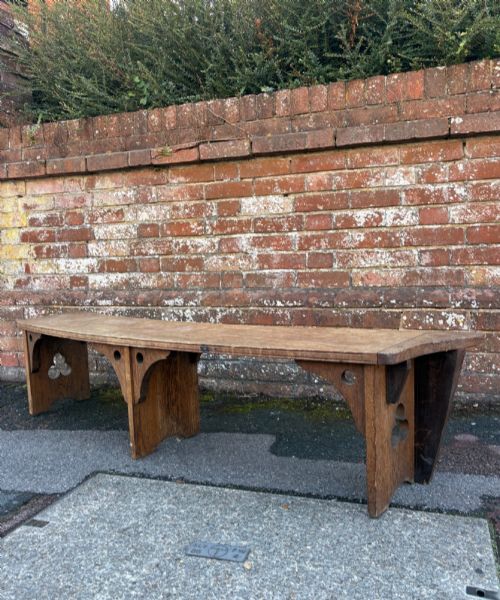
Construction relies heavily on durable timbers such as pine, oak, elm, pitch pine and walnut, sometimes enhanced with iron hardware, fabric or painted finishes. Makers utilised solid boards for seats and backs, occasionally incorporating panelled structures, box storage beneath the seat or trefoil carved supports.
Surfaces frequently display waxed treatments, honey brown patina or original paint layers that preserve the underlying grain of the wood. Architectural forms incorporate architectural details like high backs, barrel curves and spindled galleries.
Listings feature timbers including pine, oak, elm, pitch pine and walnut spanning the eighteenth to early twentieth centuries.
What varies in quality
Quality rests upon the integrity of the timber selection, the weight of the timber and the honesty of the construction. Solid oak, heavy pitch pine and figured elm command attention for their durability and depth of grain compared to simpler utility pine.
The sophistication of the joinery and carving distinguishes finer workshop examples from basic utilitarian seating. Retained original surfaces, such as early painted finishes or deep waxed patinas, elevate the character of a piece considerably.
The Antique Wooden Pew Bench Glossary
- Settle
- A wooden bench with a high back, solid arms and often a box base intended to block cold draughts in domestic rooms or taverns.
- Pew
- A long wooden bench traditionally fixed in churches or chapels, characterised by simple linear construction and sometimes shaped ends.
- Pitch pine
- A resinous durable timber sourced from pine species, known for distinctive grain patterns and robust structural qualities.
- Box settle
- A form of seating featuring a hinged lid beneath the seat to provide concealed storage space within the base.
- Gothic Revival
- An architectural and decorative style drawing inspiration from medieval design, featuring pointed arches and trefoil carvings.
Antique Wooden Pew Bench: Frequently Asked Questions
Where should I place a wooden pew bench?
These benches suit narrow hallways, large kitchens and dining tables where linear seating maximises space. Their sturdy proportions also function effectively along long corridors or against living room walls.
Placing them away from direct heat sources helps protect older timbers and historic wax finishes from drying out or splitting.
How do I distinguish a church pew from a tavern bench?
Church pews generally feature fixed open backs, simple panelled ends and narrow seats designed for upright posture during services. Tavern benches often incorporate heavier wooden construction, box bases or shorter lengths intended for taproom socialising.
Chapel and church variants may also include specific architectural details such as book ledges or organist modifications.
Did these benches have storage originally?
Certain forms, particularly settles and box benches, were built with lidded compartments beneath the seat for blankets or household items. Most standard pews and simple church benches remained open underneath without storage cavities.
Examining the hinges and interior boards helps confirm whether any storage feature belongs to the original construction.
How do I care for a waxed pine bench?
Maintenance involves gentle dusting with a dry cloth and occasional application of traditional beeswax to nourish the timber. Avoiding excessive moisture and direct sunlight preserves the honey brown patina and wax finish.
Regular polishing maintains the protective surface layer built up over decades of use.