



Pine Trestle Bench
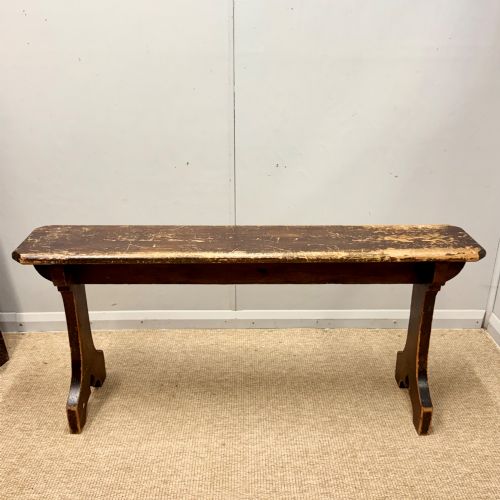
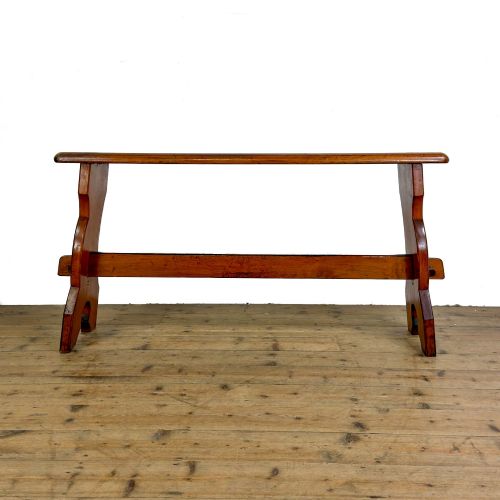
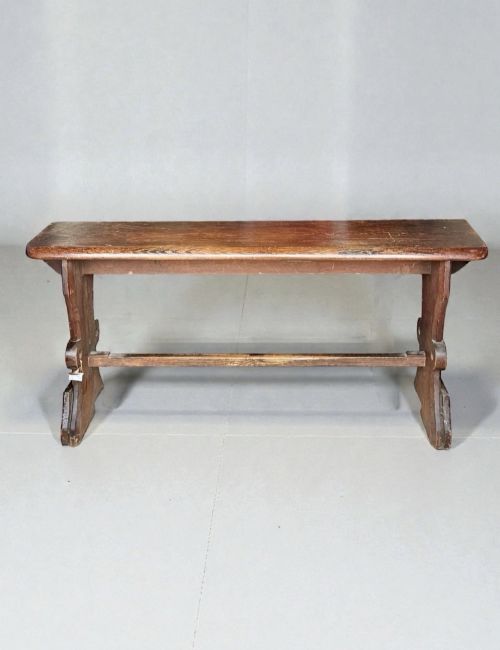
These pine trestle bench examples offer robust rustic seating, shaped by nineteenth and early twentieth century utilitarian craft.
Pine Trestle Bench
A pine trestle bench provides practical and unpretentious seating rooted in nineteenth and early twentieth century utility. You will frequently encounter long school benches, church organist seats, and rustic farmhouse forms across these listings.
Originating from British, Scandinavian, and French country traditions, these pieces range from simple softwood kitchen seating to robust industrial trestle designs. They serve well in hallways, at dining tables, or as standalone console surfaces.
How they were made
Constructed primarily from pine and softwood timber, these benches often incorporate sycamore, elm, and wrought iron supports. Workshops utilised straightforward joinery to build sturdy furniture capable of withstanding heavy daily use.
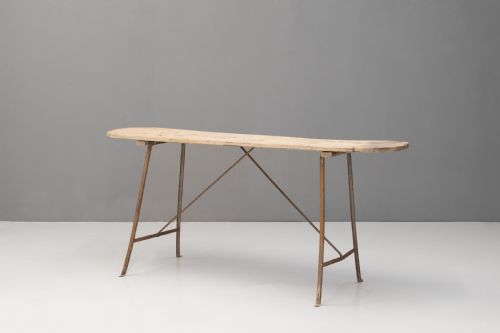
Surfaces frequently show the effects of time through original paint, scrubbed finishes, or plain timber ageing naturally. Iron brackets and braces provide structural reinforcement on industrial and heavy utilitarian examples.
Keep an eye out for an original nineteenth century pig scratch, reminding us that antique furniture often served surprisingly muddy purposes.
What varies in quality
Quality rests in the integrity of the timber and the honesty of the construction rather than applied decoration. Benches featuring dense pitch pine or paired proportions maintain greater structural stability.
Original untouched surfaces, such as early paint or deeply scrubbed grain, distinguish better examples from heavily altered pieces. The harmony between the timber top and the supporting trestle structure dictates overall balance.
The Pine Trestle Bench Glossary
- Trestle
- A structural support consisting of a horizontal beam fixed to two splayed legs. This method provides stable weight distribution for long seating and tables.
- Pitch pine
- A durable resinous softwood prized for its strength and distinct grain pattern. It appears frequently in heavier nineteenth century utility furniture.
- Scrubbed finish
- A surface repeatedly washed with water and scrubbing brushes to clean the timber. This process leaves a pale, matte texture on woods like sycamore and elm.
- Softwood
- Timber derived from conifers, encompassing the various pine species used widely in country furniture. It offers a workable material for utilitarian workshop construction.
Pine Trestle Bench: Frequently Asked Questions
Where do these benches originate?
The listings include examples from British, French, and Scandinavian workshops, reflecting regional variations in country joinery.
Local timber availability and domestic traditions determined whether a maker used simple softwood or denser pitch pine.
How do I care for scrubbed pine?
Maintain scrubbed timber surfaces by dusting regularly with a dry cloth and avoiding harsh chemical cleaning products.
Spills should be blotted immediately to prevent staining on untreated softwood and sycamore grain.
Are these benches suitable for daily dining?
Most surviving examples were built for robust communal use in schools, churches, or rural homes.
Their solid timber construction and trestle supports make them practical for contemporary dining seating.