

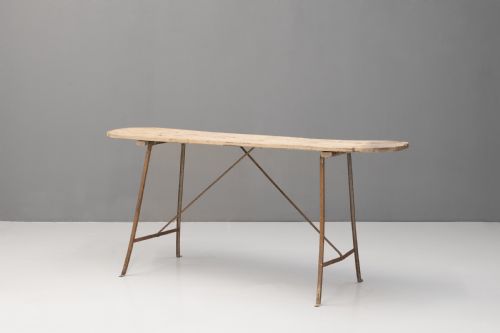


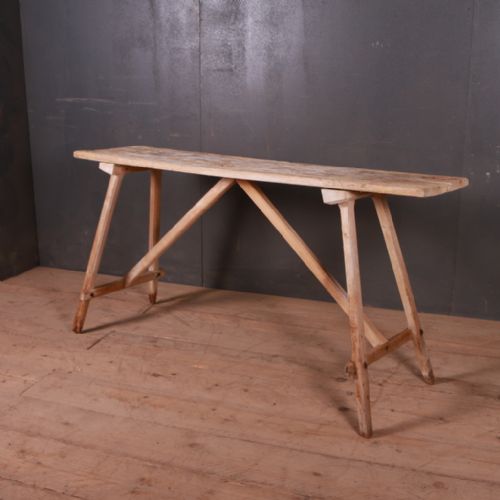


Pine Trestle Side Table
These pine trestle side table pieces offer utilitarian charm and honest construction, making them a practical choice for any country interior.
Pine Trestle Side Table
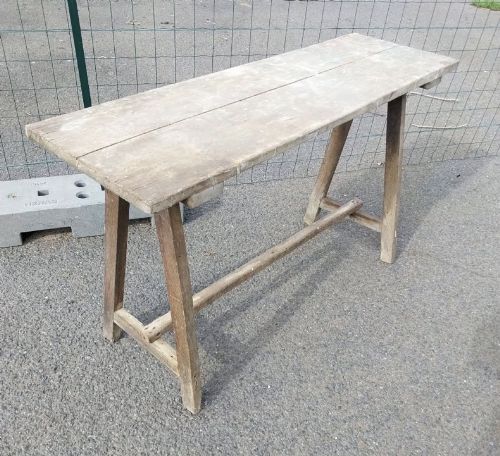
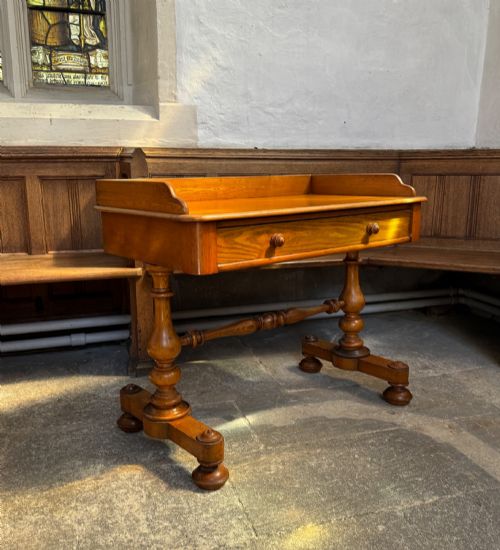
When searching for a pine trestle side table, you encounter a robust mix of utilitarian forms originating from the nineteenth century. These tables span diverse domestic and institutional contexts, ranging from simple washstands to ecclesiastical writing desks and kitchen tables.
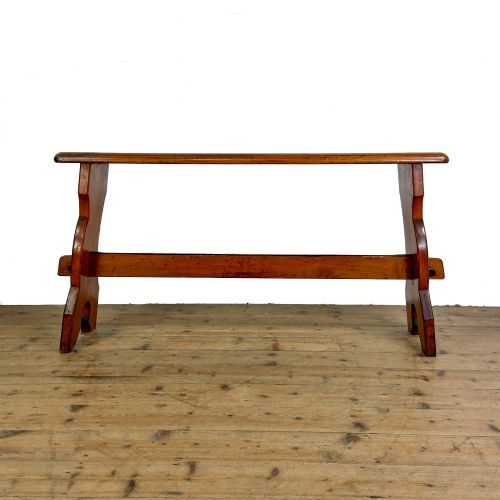
The pieces on this page lean heavily towards Victorian and nineteenth-century examples, often constructed from pitch pine or standard pine. You will find regional variations including English, Welsh, and French country pieces that utilise straightforward trestle and X-frame supports.
While many listings function as general side or console tables, the underlying design frequently derives from older working furniture such as tavern tables and altar tables. This background gives each piece a distinct architectural presence without unnecessary ornamentation.
Materials and Construction
The construction of these pieces relies primarily on pine and pitch pine timber, selected for durability and pronounced grain patterns. Workshops often paired these softwoods with wrought iron braces or structural stretchers to stabilise the trestle bases.
Surface finishes vary from scrubbed natural wood to original painted treatments like traditional red paint or Falu paint. Carpenters employed straightforward joinery methods suited to vernacular furniture production, prioritising structural utility over fine cabinet-making.
Pine Trestle Side Table Retail Price Guide 2026
Typical asking prices for pine trestle side table among the pieces listed under this phrase on Sellingantiques today, from the lower quarter to the upper quarter. They describe what is for sale here now, not the wider market.
Several tables retain traces of red paint and Swedish Falu coatings applied to protect the working timber.
Assessing Quality and Character
Quality in these tables is determined by the integrity of the timber and the honesty of the surface patina. Tables retaining original paint finishes or deeply scrubbed antique pine surfaces command greater interest than those with modern alterations.
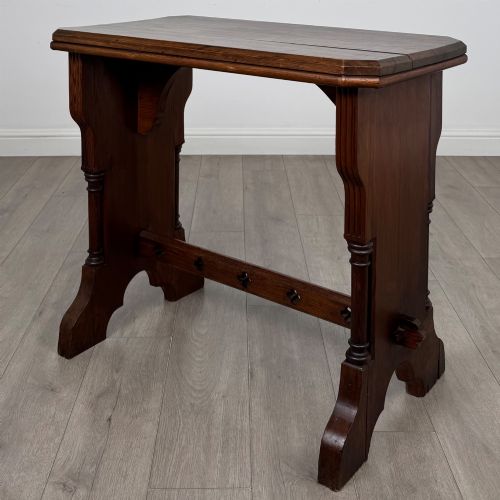
Structural proportions also separate standard domestic pieces from finer ecclesiastical or architect-designed examples, such as those referencing Gothic revival styles. The weight of the pitch pine and the stability of the trestle base dictate the enduring utility of the table.
The Pine Trestle Side Table Glossary
- Pitch pine
- A durable softwood with a high resin content and prominent growth rings. Nineteenth-century makers favoured it for heavy-use furniture.
- Trestle table
- A table consisting of two or more support frames connected by a longitudinal beam. This design maximises legroom beneath the top.
- Falu paint
- A traditional deep red paint originating from Sweden, made from copper mine waste. It preserves and protects outdoor and indoor timber.
- Vernacular country
- Domestic furniture built by local craftsmen using regional traditions and readily available materials. It avoids grand academic styles.
- X frame
- A structural base formed by two intersecting diagonal members. This configuration provides robust support for narrow console and tavern tables.
Pine Trestle Side Table: Frequently Asked Questions
What is a pine trestle side table used for today?
These tables function well as narrow console surfaces in hallways or as compact sideboards in kitchens and living rooms.
Their sturdy timber construction also suits them for use as writing desks or display tables in traditional interiors.
How do I care for a scrubbed pine top?
Clean unsealed timber surfaces with a dry or barely damp cloth to remove dust without raising the grain.
Avoid harsh chemical cleaners that can strip the historic patina from nineteenth-century pine and pitch pine.
Are these tables suitable for small spaces?
Many examples feature narrow proportions designed specifically for hallways, washstands, or compact country rooms.
The open trestle base also creates a visually lightweight footprint compared to heavy pedestal tables.
How can I tell a Victorian pine table from a newer one?
Examine the timber for the deep grain patterns and density typical of nineteenth-century pitch pine and mature softwood.
Look for hand-planed surfaces, period joinery techniques, and genuine surface wear accumulated over generations.