
Rustic Hallway Seating
These rustic hallway seating pieces are solid timber benches and settles that bring practical charm to an entryway.
Rustic Hallway Seating
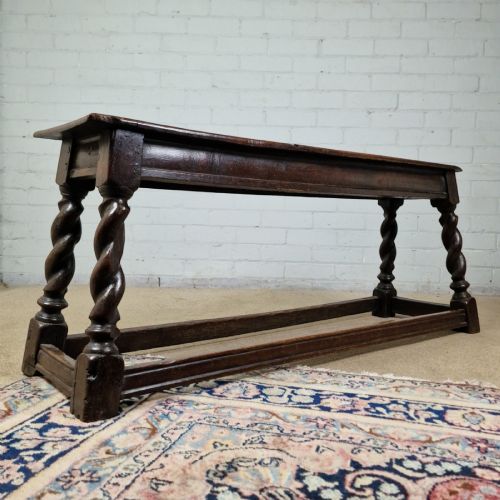
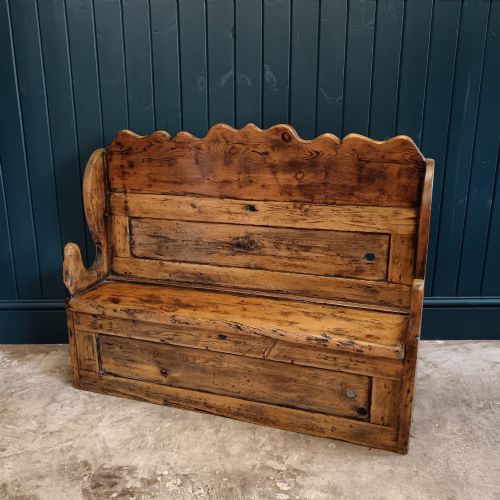
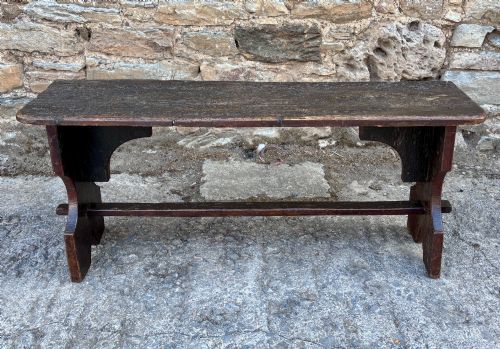
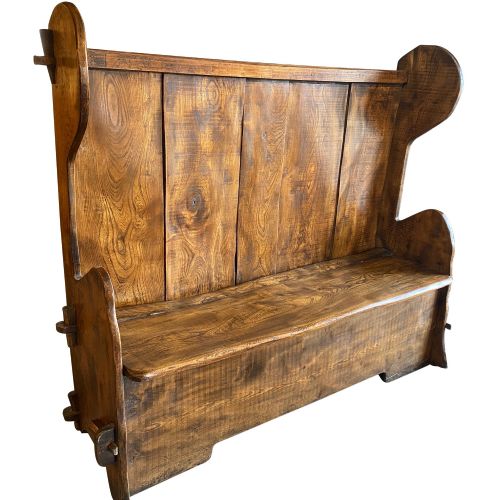
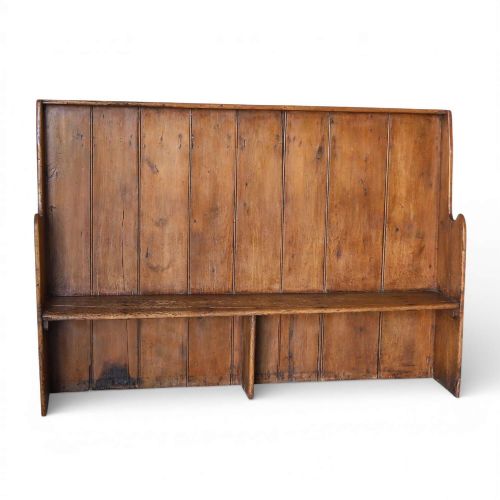
Rustic hallway seating encompasses benches, long stools and high-back settles designed to fit narrow spaces like corridors and entrances. These pieces originate from various periods including the eighteenth and nineteenth centuries, spanning Georgian, Victorian and Edwardian eras. Buyers frequently encounter simple pine benches or box settles providing integrated storage for boots and household items.
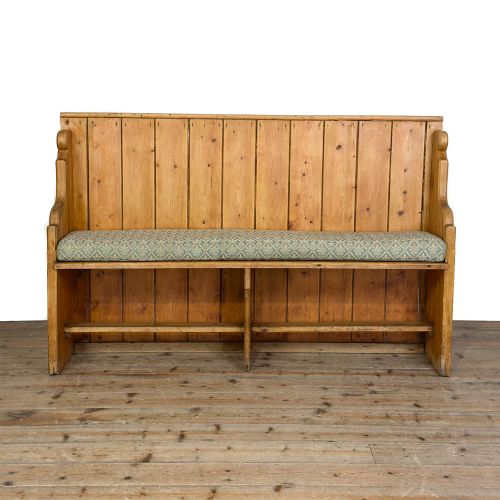
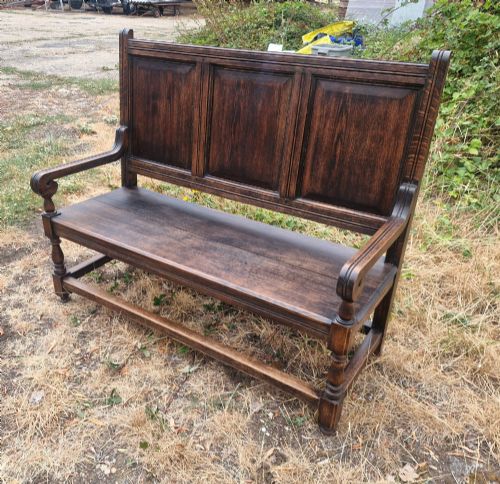
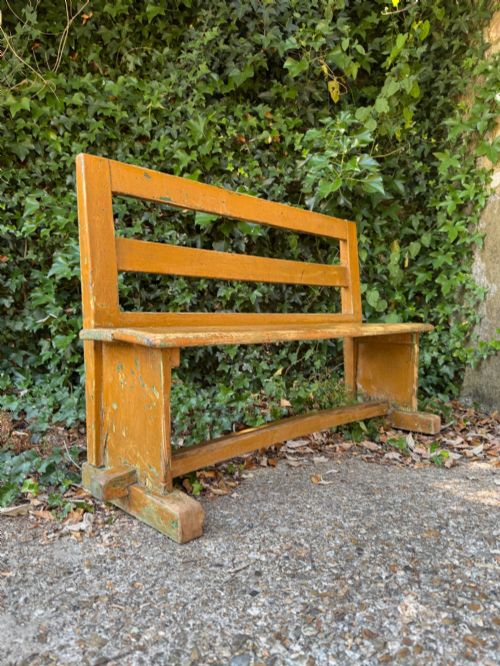
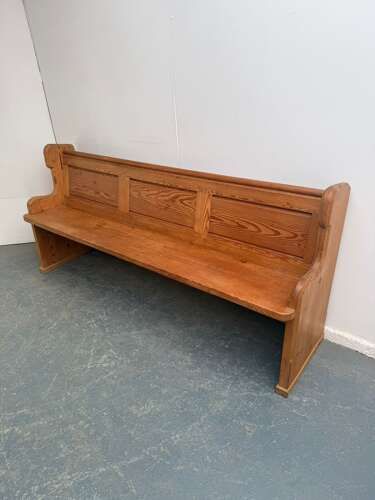
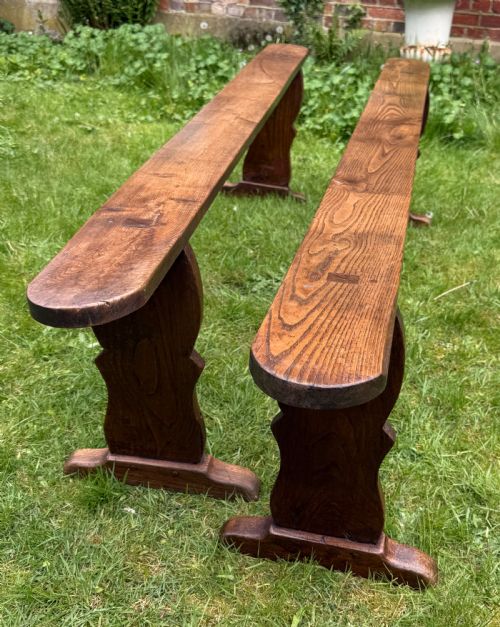
Examples on this page include church pews, organ benches, railway benches and country settles originating from England, Wales, France, Sweden and Hungary. Timber choices range from native pine and oak to elm, cherry and hardwood, finished in wax or retaining original painted surfaces. Forms vary from low slim hallway benches to substantial high-back settles offering protection from draughts.
Materials and construction
Construction relies heavily on solid timbers such as pine, oak and elm, joined using traditional methods suited to everyday domestic or ecclesiastical use. Many items display panelled backs, spindle details or hinged seats opening onto storage boxes. Surfaces show natural wax finishes or historical layers of paint in black, grey and blue.
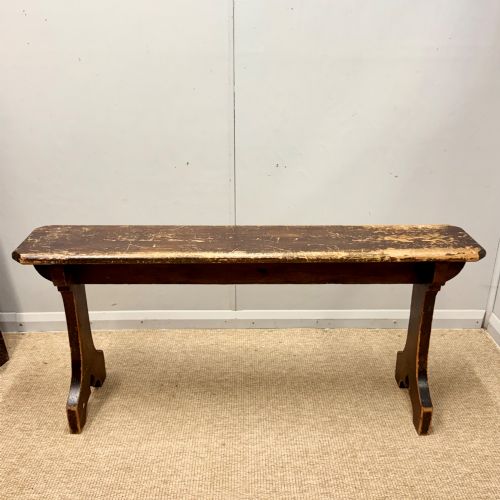
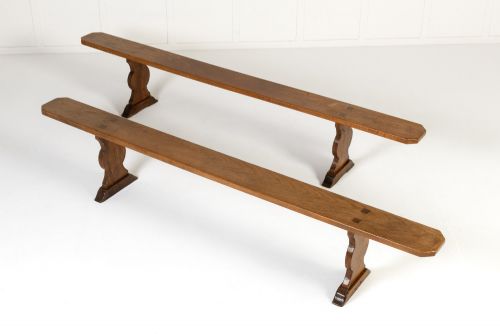
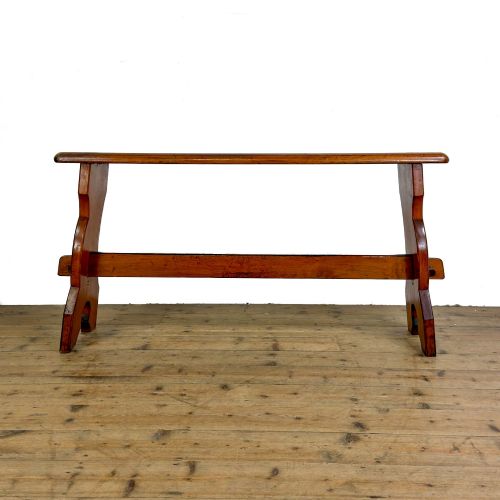
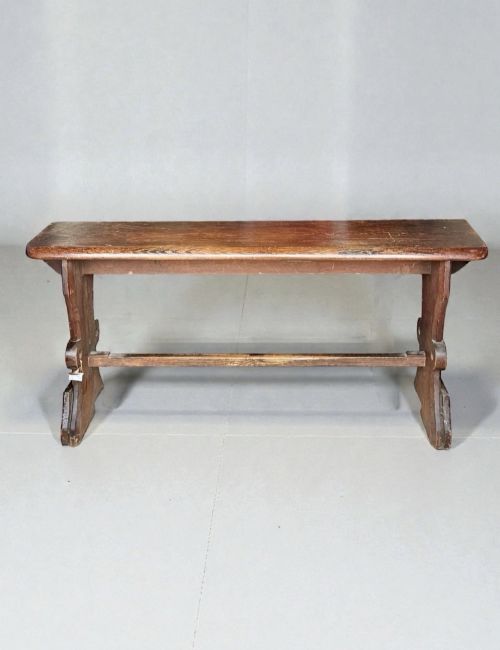
Joinery reflects the utilitarian origins of these benches, utilising pegged joints, sturdy trestle supports and heavy planks designed to withstand heavy wear. Wood selection ranges from pale bleached oak to honey-brown patinated pine and dense fruitwood like cherry.
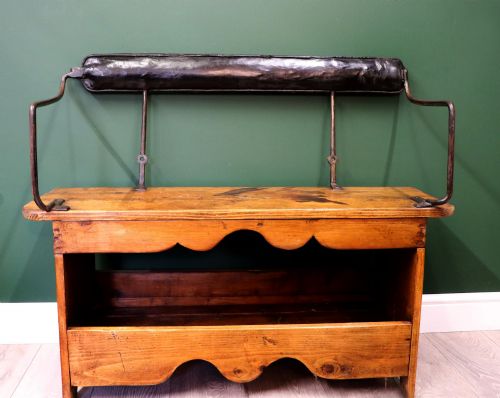
Railway benches and church organist seats occasionally find a second life welcoming guests in domestic hallways.
Factors determining quality
Quality rests upon the integrity of the timber, the depth of natural patina accumulated through decades of use, and the survival of original surface finishes such as early paint. Pieces retaining their structural honesty without excessive timber replacement hold greater integrity.
Proportions also dictate distinction, with slimmer hallway depths and longer spans offering practical utility for narrow spaces. The presence of functional elements like original storage boxes or hinged flip mechanisms adds character and usefulness.
The Rustic Hallway Seating Glossary
- Settle
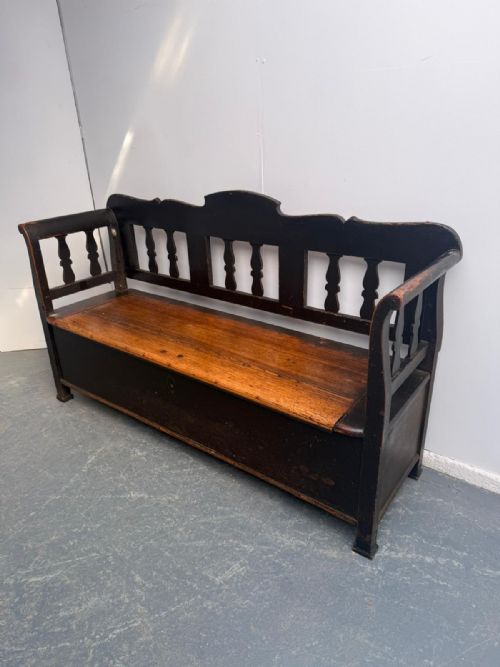
- A wooden bench with a high back, solid arms, and often a box seat for storage. They were traditionally placed near hearths or in hallways to block draughts.
- Patina
- The surface sheen and mellowing of colour developed by wood over long periods of handling and waxing. It indicates age and depth of character.
- Box settle
- A specific form of bench featuring a hinged seat lid that opens to reveal a compartment beneath. This provided concealed storage in domestic hallways.
- Church pew
- Long wooden seating originating from ecclesiastical settings, adapted for domestic hallways and corridors. They often feature simple panelled backs and robust framing.
- Trestle support
- A structural framework where a horizontal board is held up by diverging legs at each end. This design provides steady floor contact for long benches.
Rustic Hallway Seating: Frequently Asked Questions
What is rustic hallway seating?
Rustic hallway seating comprises traditional wooden benches, settles and stools intended for corridors and entryways. These items are constructed from solid timbers like pine, oak and elm.
Such seating ranges from simple nineteenth-century church pews to panelled oak hall benches and Welsh box settles with integrated storage compartments.
How were box settles used?
Box settles served a dual purpose as both seating and storage furniture in historic homes. The hinged seat lifted to hold blankets, boots or everyday items.
The high back also offered protection from cold draughts when placed near entrances or hallways.
How do I choose the right size bench?
Selecting the correct bench requires measuring both the available floor length and the corridor width. Slim hallway benches and narrow stools accommodate restricted spaces without blocking movement.
Longer refectory style benches or three-seater pews suit wider hallways and larger open entrance spaces.
What is the difference between a pew and a settle?
A pew is a simple bench, often originating from a church, featuring an open base and a panelled back. They are designed for linear seating along walls.
A settle includes solid wooden arms and frequently incorporates a enclosed box base beneath the seat for storage, offering a more enclosed structure.