


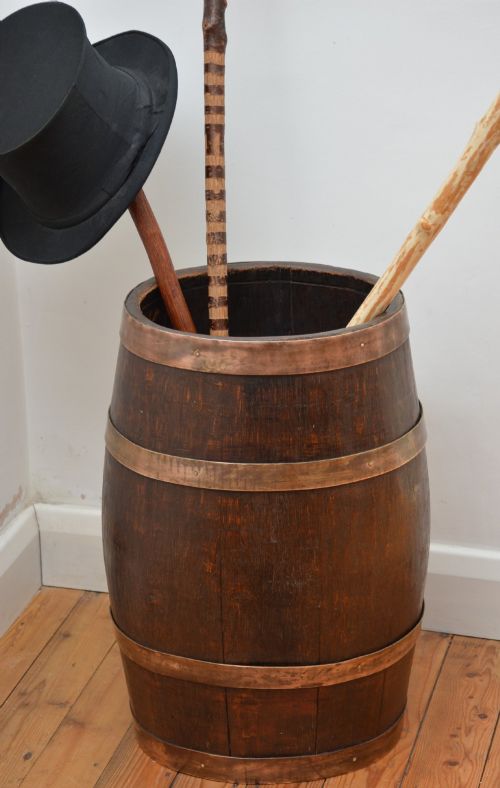

Antique Wooden Barrel
An antique wooden barrel offers robust storage and country character, spanning utilitarian vessels to refined furniture crafted across the eighteenth and nineteenth centuries.
Antique Wooden Barrel
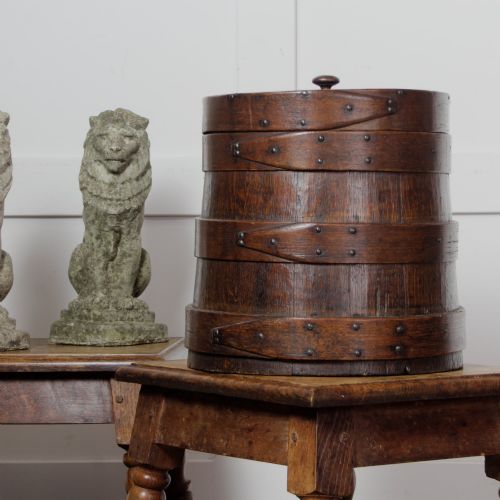
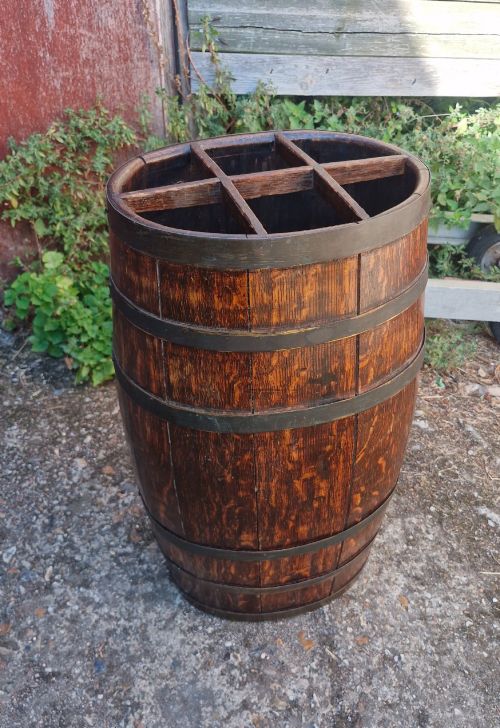
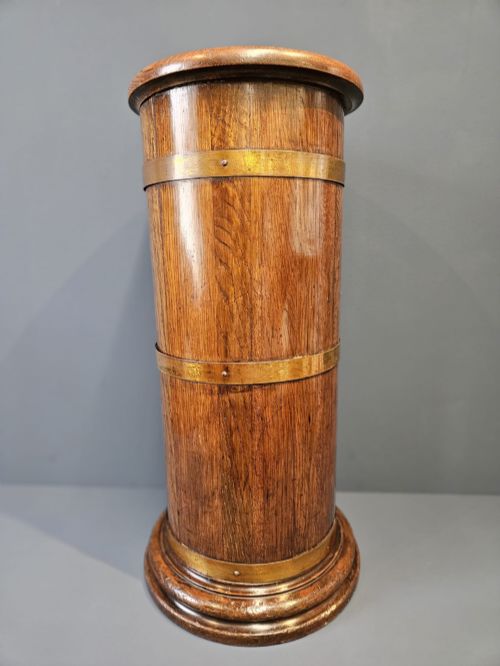
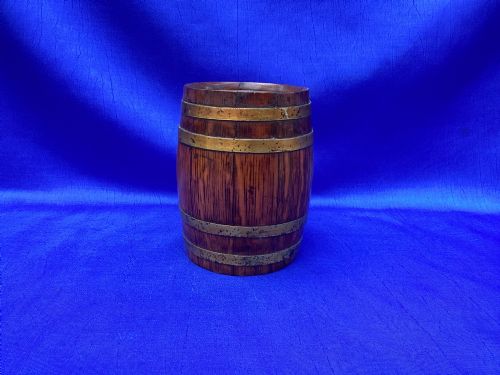
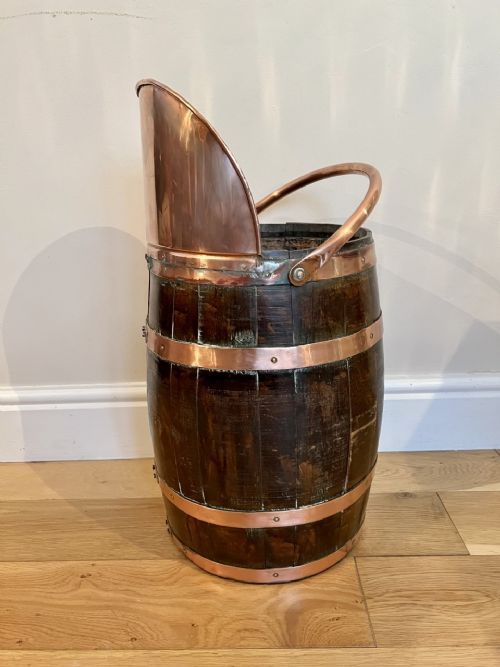
When you search for an antique wooden barrel, you encounter diverse functional items ranging from coopered storage vessels and rum barrels to umbrella stands, butter tubs, and barrel-backed settles.
The examples on this page date principally from the Georgian, Victorian, and Edwardian eras, appearing in British, Scandinavian, and Dutch country house traditions.
Domestic and hallway accessories like stick stands and coal buckets dominate current choices, alongside larger storage pieces and seating.
Materials and Construction
Staves of oak, pine, mahogany, teak, and hardwood form the bodies, shaped by coopers and bound with brass, iron, copper, or steel hoops.
Traditional woodworking joins curved wooden elements together using precise angles and metal tension bands, yielding durable vessels designed to hold dry goods, liquids, or walking sticks.
A sturdy Victorian wooden barrel can hold your walking sticks today just as readily as it held naval rum two centuries ago.
Craftsmanship and Proportion
Superior pieces display tight stave joints, original metalwork such as brass bands or coats of arms, and patinated timber surfaces showing genuine age.
Lower quality or later utilitarian items often lack the crisp proportion, original mounts, or integrity of timber found in early country house and naval examples.
The Antique Wooden Barrel Glossary
- Coopered
- Constructed from curved wooden staves bound together with tight metal or wooden hoops. This technique provides the structural strength required for liquid storage and heavy daily use.
- Settle
- A wooden bench featuring a high back and solid arms, sometimes incorporating a curved barrel back. It protected sitters from draughts in hallways and kitchens.
- Stave
- One of the narrow shaped strips of wood that join edge-to-edge to form the sides of a barrel or tub. The angle of each stave dictates the curvature of the vessel.
- Butter tub
- A small coopered container traditionally used for packing and preserving butter. They often feature tight-fitting lids and contrasting metal or wooden bands.
Antique Wooden Barrel: Frequently Asked Questions
How were wooden barrels used originally?
Utilitarian barrels stored liquids, grain, and provisions in domestic and naval settings. Smaller vessels served specific roles like rum storage or butter preservation.
Over time, makers adapted the barrel form into hallway stick stands, coal buckets, money boxes, and enveloping settle seating for country houses.
What woods appear most often?
Oak is the predominant timber found in these pieces, valued for its strength and durability. Pine and mahogany also feature extensively in domestic barrels and furniture.
Hardwoods and exotic timbers like teak and yew appear in specific regional items, often complemented by brass or iron bands.
How do I date an antique barrel?
Dating relies on timber species, construction marks, and the style of metal mounts. Georgian and 19th-century pieces display hand-forged or early rolled metal bands.
Victorian and Edwardian examples often incorporate applied coats of arms, brass umbrella loops, or specialised domestic fittings suited to hall use.
How do I clean and maintain them?
Preserve the timber surface by applying occasional neutral wax rather than modern polishes. Keep the wood away from direct heat sources to prevent stave shrinkage.
Metal bands benefit from gentle dusting to retain their aged patina without stripping historical character.