


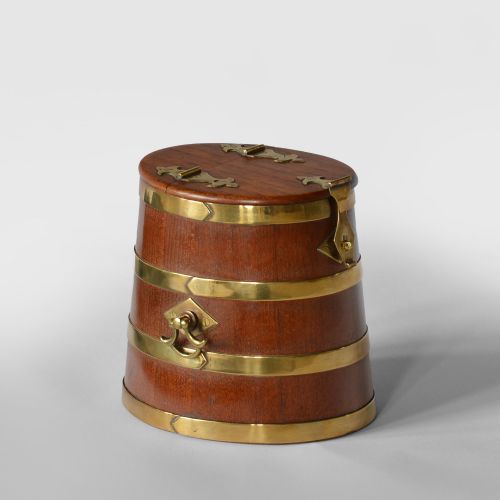


Brass Bound Barrel
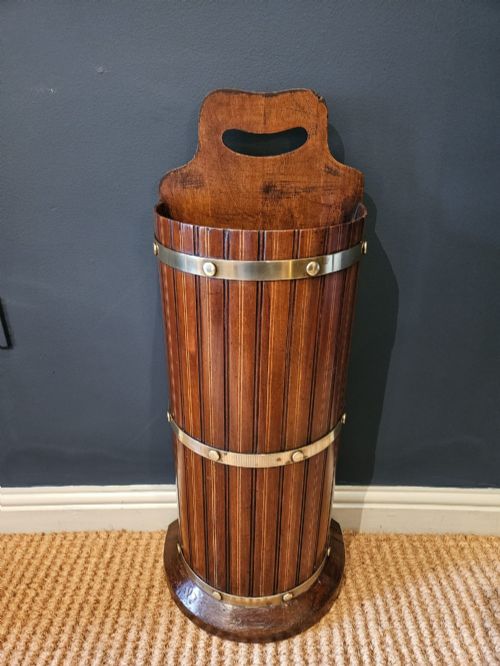
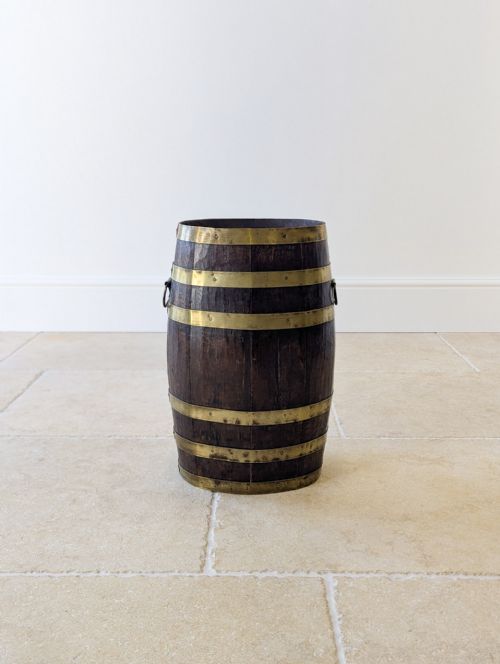
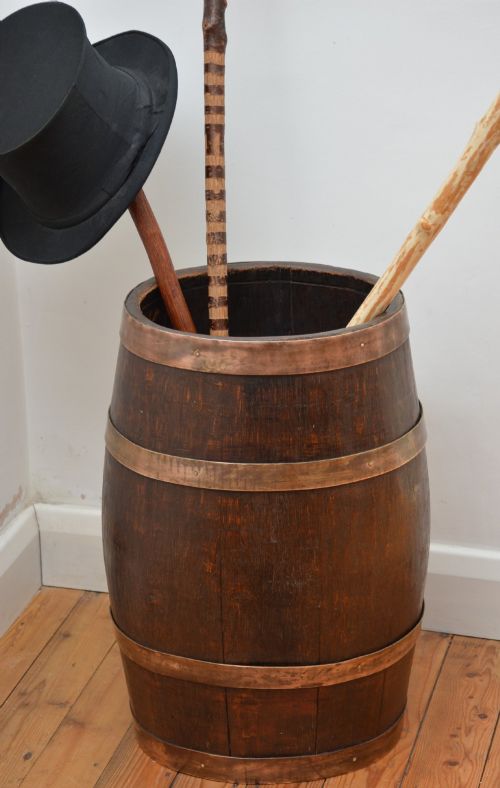
A brass bound barrel brings sturdy coopered timber and gleaming metal bands together, serving as a practical umbrella stand or decorative vessel.
Brass Bound Barrel
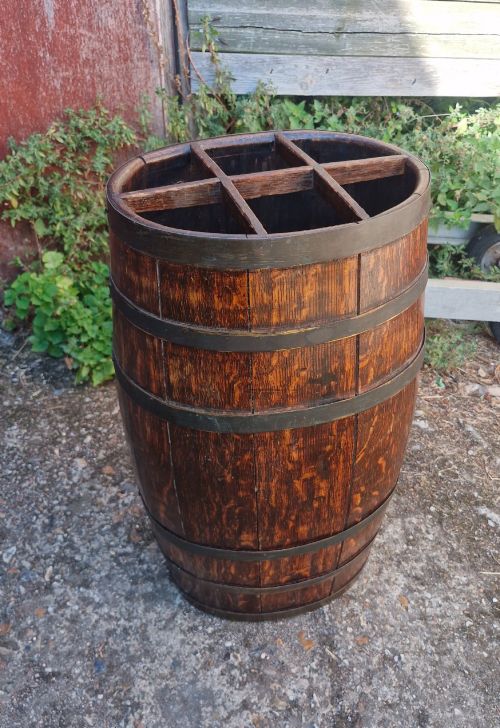
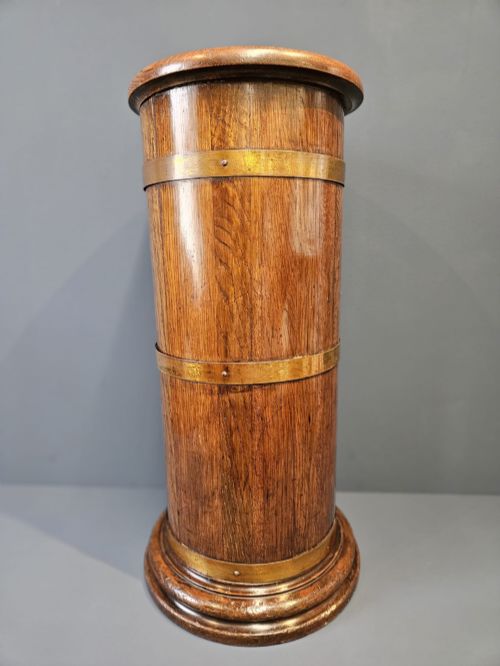
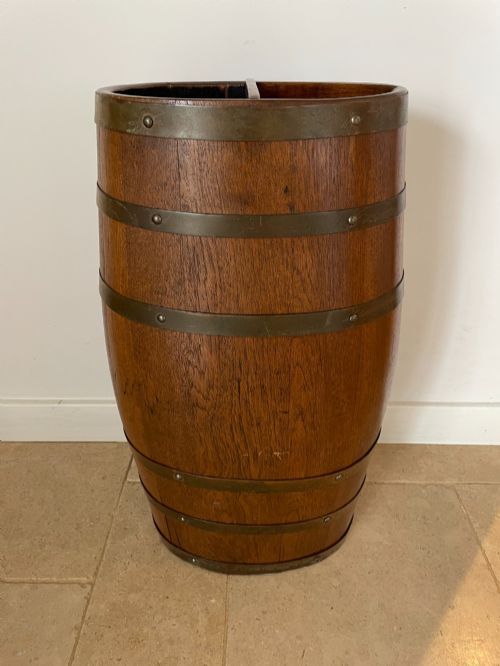
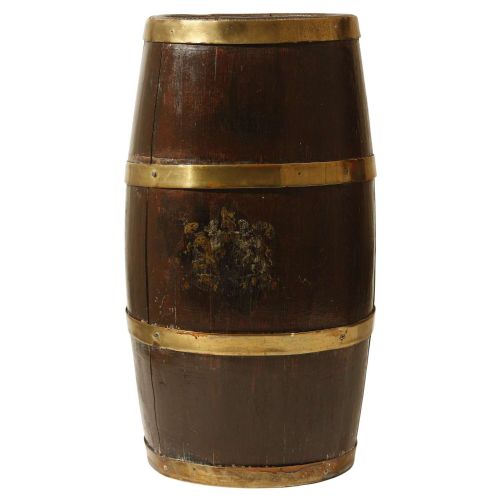
A brass bound barrel is a coopered vessel constructed from vertical wooden staves held tightly by metal bands, frequently adapted as an umbrella stand, stick stand, planter, or storage bucket. The pieces found here date predominantly from the Victorian and Edwardian eras, alongside a selection of nineteenth-century and earlier examples.
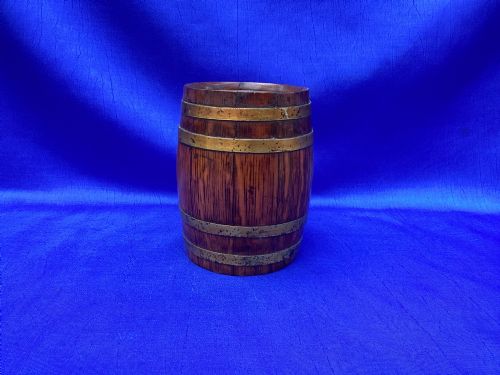
The most common form encountered in these listings is the umbrella or stick stand fashioned from oak, utilising metal braces and distinctive copper or brass hoops. Buyers also meet smaller decorative items, including money boxes, miniature naval rum barrels, coal hods, and log containers.
Materials and construction methods
Construction relies heavily on traditional cooperage, where skilled artisans shape individual wooden staves of oak, mahogany, or hardwood to form a watertight or structurally sound tapering cylinder. These staves fit tightly together without modern adhesives, held under immense tension by heavy metal bands.
The primary metals utilised are brass and copper, shaped into flat or strap bands that encircle the timber body and secured with metal pins or rivets. Additional elements frequently incorporate iron or steel for underlying structural support, alongside applied brass handles, lion masks, or umbrella loops.
Surface finishes range from polished natural oak and dark mahogany to painted highlights and patinated leather accents on related trunks. The wood is often treated to resist moisture from wet umbrellas or damp garden plants while retaining the rich grain of the original timber.
Listings for this phrase feature oak as the dominant timber, paired with brass and copper across Victorian and Edwardian umbrella stands and planters.
Judging the standard of manufacture
Quality in a coopered vessel rests on the precision of the stave joints and the snugness of the metal bands. Superior examples display tight, seamless vertical joins where the wood has been bevelled accurately by hand.
The thickness and gauge of the brass bands also dictate the standard, with heavier, solid cast brass or thick sheet metal indicating a superior build compared to thin, stamped metal hoops. Maker attribution, such as pieces bearing stamps by Lister and Co, elevates the standing of an item.
The integrity of the timber forms a key distinction, as well-seasoned oak resists warping and splitting over decades of holding wet walking sticks or damp soil. Original patination and intact interior linings further separate standard utilitarian containers from exceptional collector pieces.
R. A. Lister and Co
The Brass Bound Barrel Glossary
- Coopered
- Constructed from curved wooden staves bound together with hoops, a method traditionally used for making casks, buckets, and barrels.
- Stave
- One of the narrow vertical strips of wood with bevelled edges that form the sides of a barrel or tub.
- Hoop
- A circular band of metal or wood used to hold the staves of a barrel tightly in place.
- Jardiniere
- An ornamental pot or stand for holding flowers or plants, often taking the form of a brass bound wooden tub.
- Grog tub
- A low oak and brass vessel historically used aboard naval ships for diluting and serving the daily rum ration to sailors.
Brass Bound Barrel: Frequently Asked Questions
What were brass bound barrels originally used for?
These vessels originally served practical maritime, domestic, and agricultural functions, ranging from holding gunpowder and rum on ships to storing flour or water on land.
Over time, many of the staved containers were adapted for household use as umbrella stands, coal hods, log bins, or umbrella buckets in Victorian hallways.
How do I date an antique barrel?
Dating relies on examining the type of wood, the method used to shape the staves, and the style of the brass fastenings. Machine-cut wood and modern screws indicate a later date, whereas hand-bevelled staves and forged brass pins point to the nineteenth century or earlier.
Maker marks, where present, help pinpoint the exact workshop and decade of manufacture.
Can I use these barrels for plants?
Many of these pieces, particularly those designated as jardiniere stands or planters, were designed specifically to house potted plants and flowers. Oak and brass withstand moisture well when properly lined, though antique wood requires care to prevent water damage to the original interior.
Inserting a modern plastic liner protects the historic timber while allowing practical use in a home or garden room.
How do I care for the brass bands?
The brass bands benefit from gentle dusting with a soft cloth to maintain their natural patination without stripping the aged metal surface. Avoid harsh chemical polishes that can splash onto the adjacent oak staves and stain the historic timber.
Keeping the wood conditioned with appropriate furniture wax helps prevent the staves from drying out in centrally heated rooms.