



Wooden Fireplace Bucket
A wooden fireplace bucket keeps fuel close at hand while bringing rich timber texture and warm metal detail beside the hearth.
Wooden Fireplace Bucket
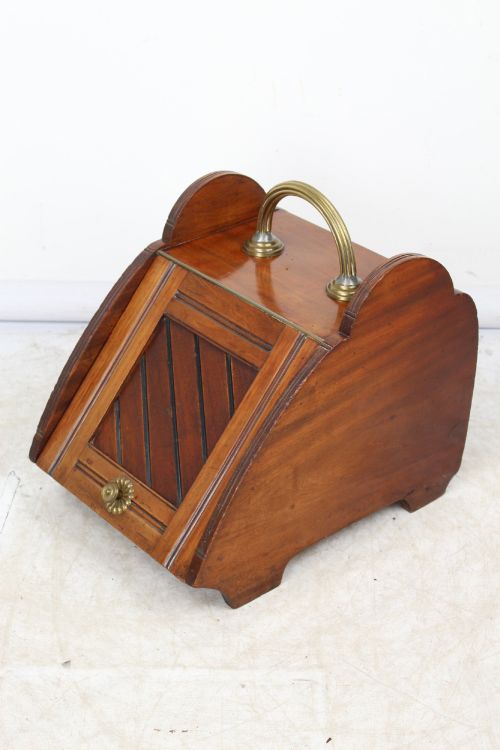
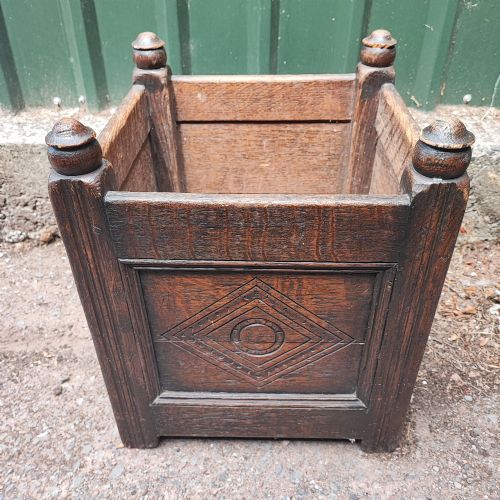
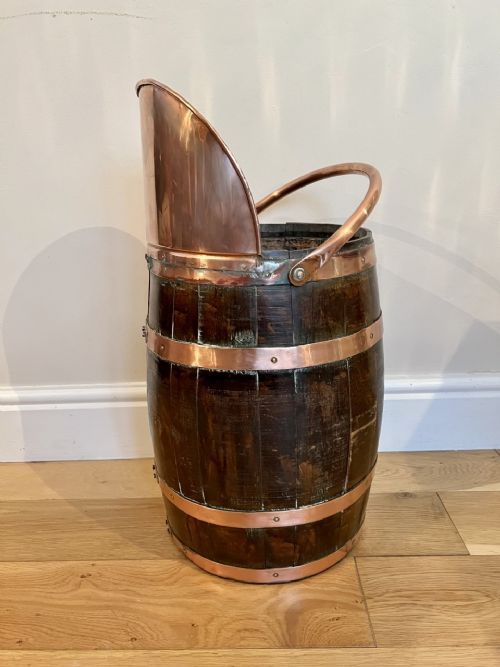
A wooden fireplace bucket serves practical fuel storage beside the hearth, taking forms such as coal scuttles, peat buckets, log boxes, and purdoniums. These pieces emerge from periods spanning the Georgian era through the Victorian age and into the early twentieth century.
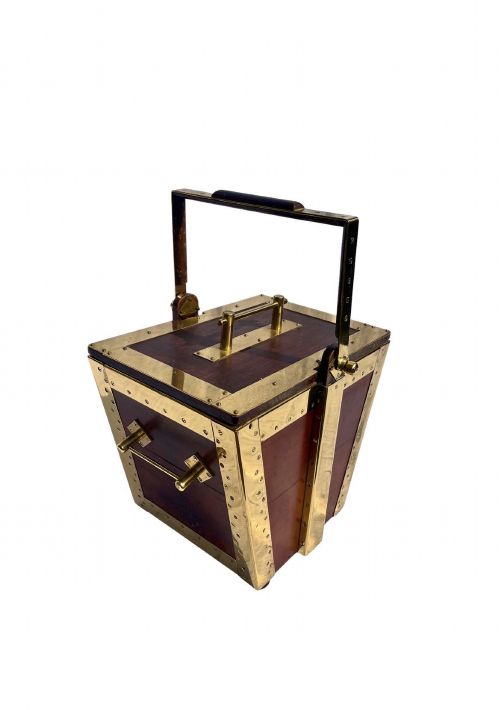
Mahogany and oak dominate the selection, often formed using traditional coopered stave construction or solid carved timber boards. Buyers frequently encounter nineteenth-century mahogany examples fitted with brass bands and metal liners designed to hold coal, wood, or peat.
Materials and construction methods
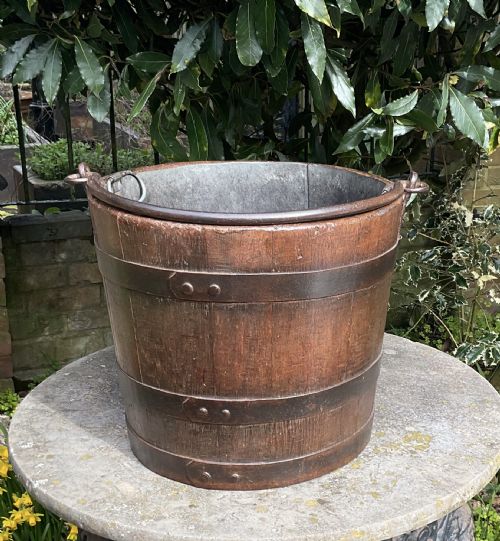
Craftsmen built these vessels primarily from dense hardwoods like mahogany, oak, and walnut, frequently utilising coopered barrel techniques where curved staves join together tightly. Metal elements such as brass bands, swing handles, drop handles, and protective liners provide structural reinforcement and functional contrast against the dark timber.
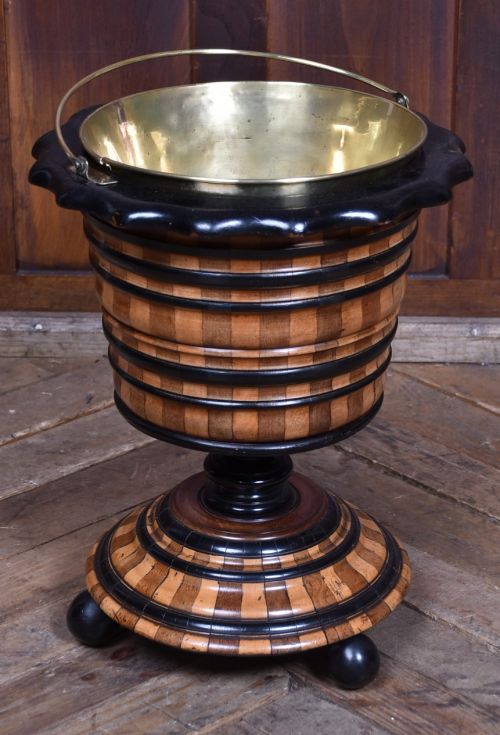
Surface treatments range from simple waxed finishes on rustic country oak to finely polished mahogany surfaces highlighting deep grain patterns. Ebonised details, iron fittings, and carved panels occasionally appear on more formal Victorian purdoniums and coal boxes.
Materials span mahogany, oak, walnut, and ebonised wood, paired with brass, copper, iron, and zinc.
Assessing quality and craftsmanship
Quality rests upon the integrity of the timber selection and the precision of the joinery, whether through tight coopered stave work or solid board construction. Original internal liners and matching brass mounts elevate an example above those altered or stripped of their functional fittings over time.
Proportion and decorative restraint dictate distinction, separating utilitarian vessels from ornate display pieces intended for formal reception rooms. Subtle details like ribbed mahogany forms or well-balanced brass swing handles signal superior workshop execution.
The Wooden Fireplace Bucket Glossary
- Coopered
- Constructed from curved wooden staves bound together by metal hoops, much like a traditional barrel. This technique ensures stable containment of heavy fuel.
- Purdonium
- A specialised coal box featuring a sloping front or drop-down door designed for easy shovelling. These typically house a removable metal liner.
- Peat bucket
- A traditional vessel originally intended for storing dry turf or peat blocks near the hearth. They often display elegant stave proportions and swing handles.
- Coal scuttle
- A domestic container designed to carry fuel from an external store to the fireplace. Many include a fixed handle and a matching metal scoop.
- Teestoof
- A Dutch warming vessel, sometimes adapted or related in form to small fireside containers. These pieces often incorporate metal liners for warmth or fuel storage.
Wooden Fireplace Bucket: Frequently Asked Questions
What is the difference between a coal box and a bucket?
Coal boxes often take rigid box or purdonium forms with hinged lids and front doors designed for tidy domestic interiors. Buckets utilise open-topped cylindrical or tapered shapes with swing handles for carrying fuel directly.
Buckets lean towards traditional coopered construction, whereas coal boxes frequently employ panelled timber and decorative brass mounts suited to formal Victorian settings.
How were these wooden buckets used originally?
Households utilised these vessels to store and transport coal, logs, or peat for immediate use beside the fireplace. Metal liners protected the timber from moisture and soot generated by the fuel.
Servants carried them from outdoor stores to the hearth, making both durability and portability essential qualities of their daily service.
Are original metal liners common?
Original zinc or metal liners survive in a portion of surviving pieces, protecting the surrounding wood from damp fuel. Many examples have lost their liners or received modern replacements over time.
Finding a vessel with its original liner and matching shovel adds considerable authenticity to an antique fireside piece.
How do I care for antique timber near a fireplace?
Keep wooden fireplace vessels at a sensible distance from direct excessive heat to prevent the timber from drying out and splitting. Regular gentle waxing maintains the moisture and sheen of hardwoods like mahogany and oak.
Avoid placing damp fuel directly against unprotected wood surfaces to preserve the interior structure of the piece.