

Antique Walnut Press
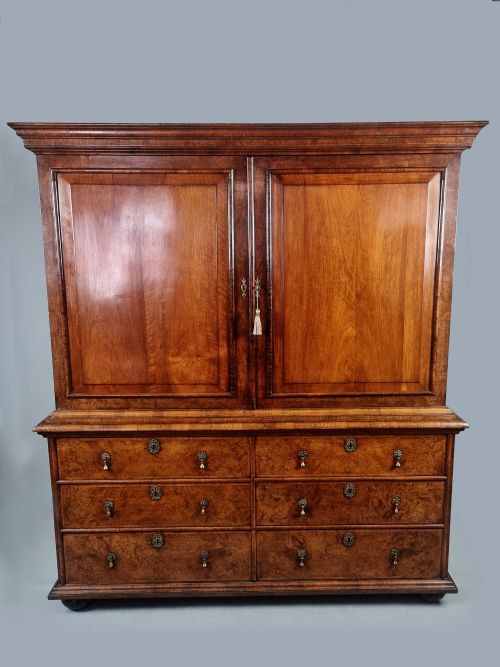
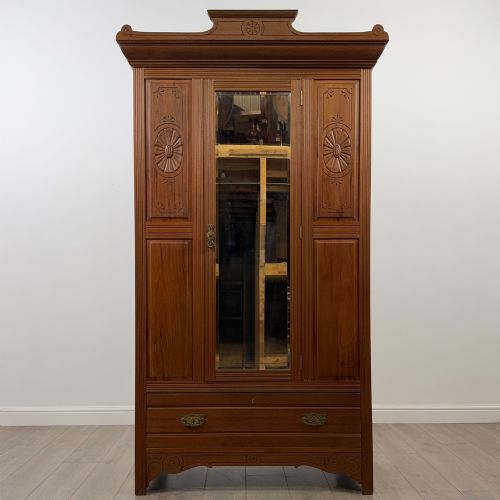
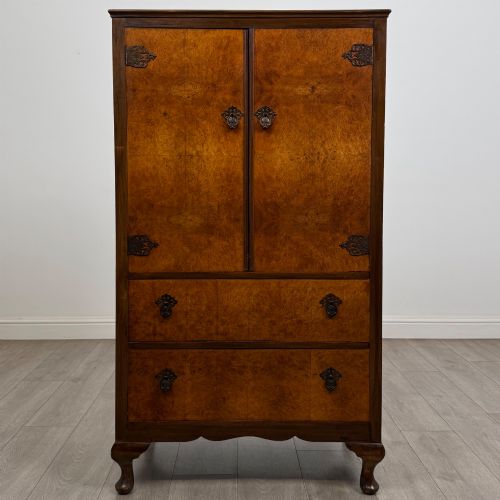
An antique walnut press offers substantial storage through figured timber and traditional craftsmanship, providing a commanding focal point for any bedroom.
Antique Walnut Press
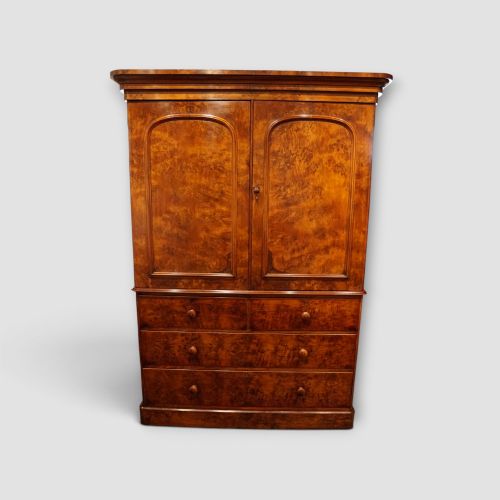
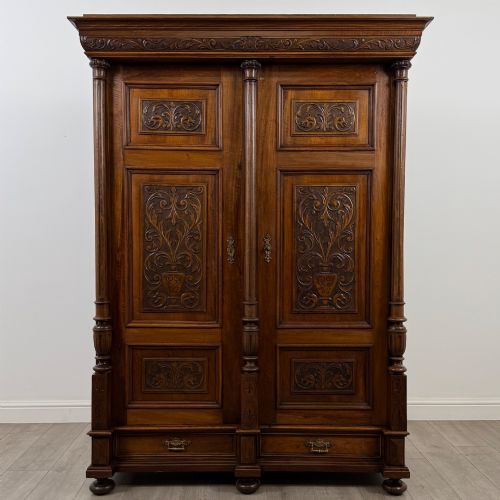
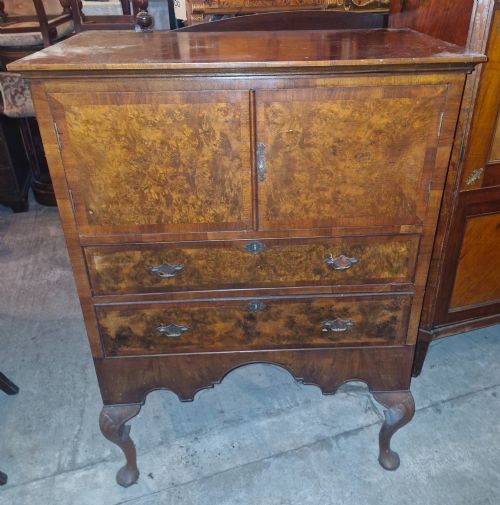
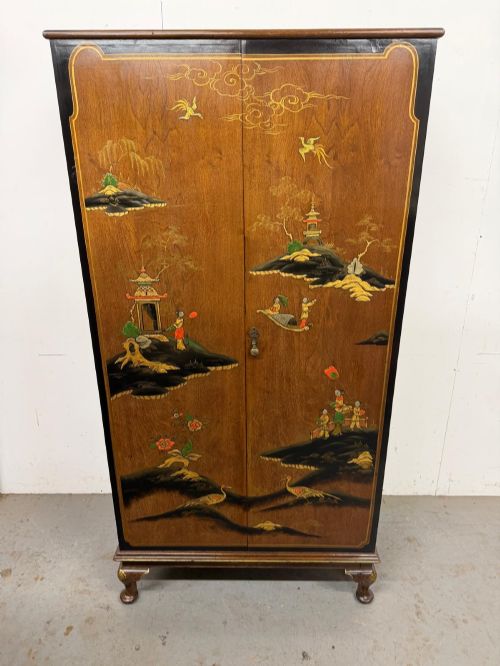
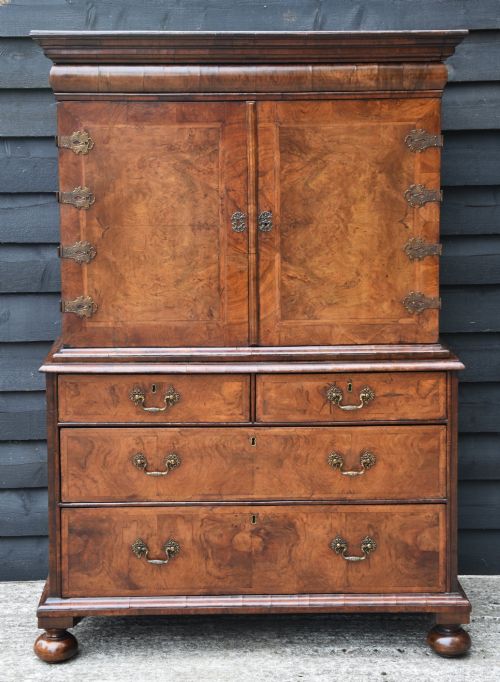
When you search for an antique walnut press, you encounter substantial storage furniture designed for linens and garments, spanning the seventeenth century through to the art deco period. These pieces incorporate upper cupboard sections, often housing sliding trays or hanging space, above banks of lower drawers.
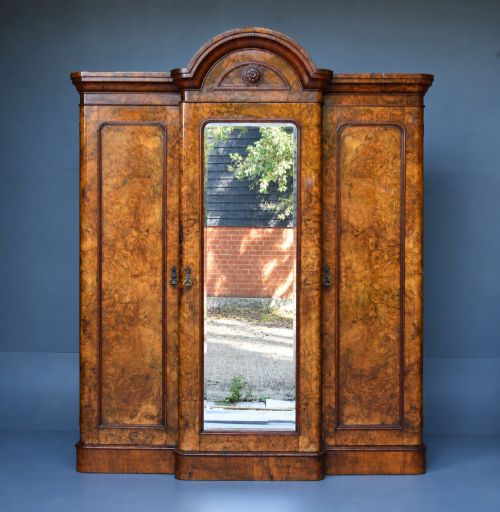
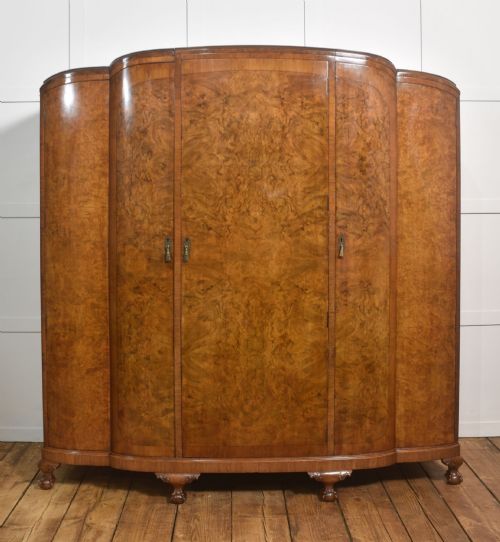
The most common examples you will meet on this page originate from the Victorian era and the early twentieth century, alongside select eighteenth-century Dutch and English iterations. Forms range from towering compactum wardrobes and tallboys to double-dome cupboards and breakfront cabinets.
Regional variations appear across British, French, and Italian workshops, shifting from baroque carved details to clean art deco lines. Despite these stylistic leaps, the fundamental purpose remains unchanged: storing textiles securely while displaying the rich figure of the wood.
Assessing quality in walnut furniture
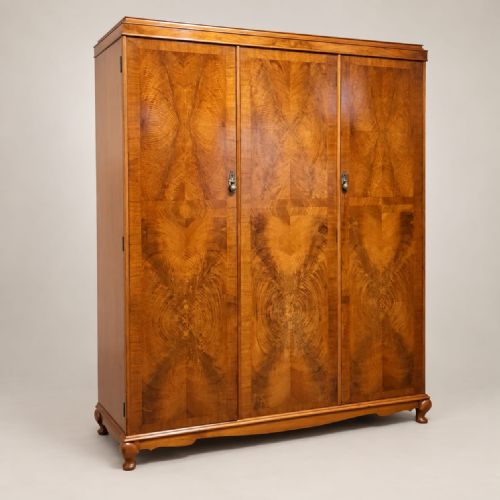
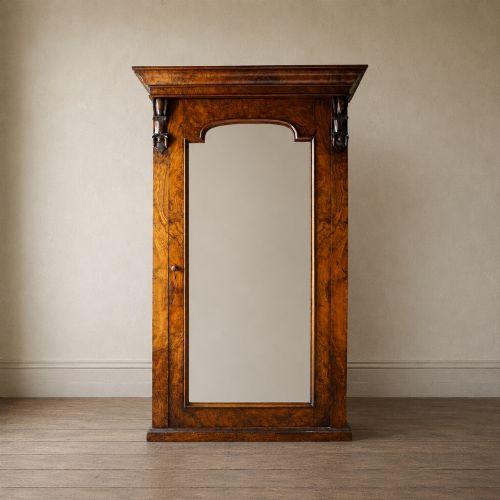
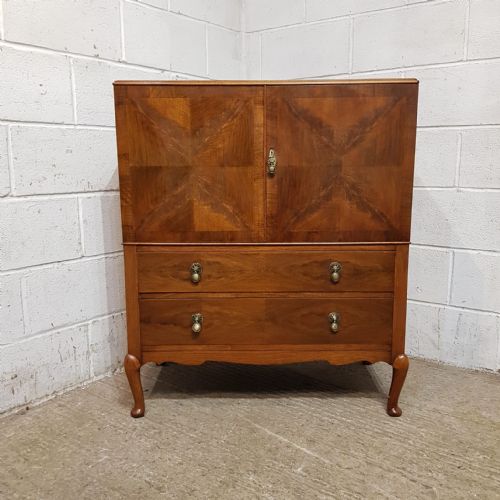
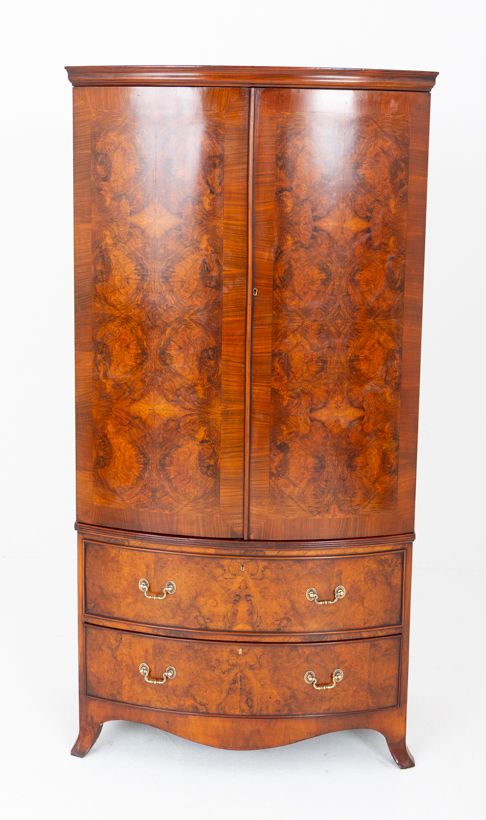
Quality rests heavily on the selection and matching of the timber veneers, where continuous grain patterns across multiple doors indicate superior planning by the maker. Thick, rich burr walnut displays depth and movement that flat, plain timber simply lacks.
Structural integrity and the retention of original internal fittings, such as sliding linen trays, shelves, and brass hardware, distinguish better examples from modified pieces. Precision in dovetail joinery and the smoothness of drawer operation further separate standard utility items from elite commissions.
Current listings feature walnut presses spanning the seventeenth century to the 1930s art deco period, incorporating oak, fruitwood, and glass elements.
Maple & Co·Waring & Gillow·Sopwith & Co·Gillows·Morison & Co Edinburgh
The Antique Walnut Press Glossary
- Burr walnut
- A prized veneer taken from the knotted growth of a walnut tree, yielding swirling, organic patterns. It is typically reserved for the most prominent exterior surfaces of high-end cabinetry.
- Compactum
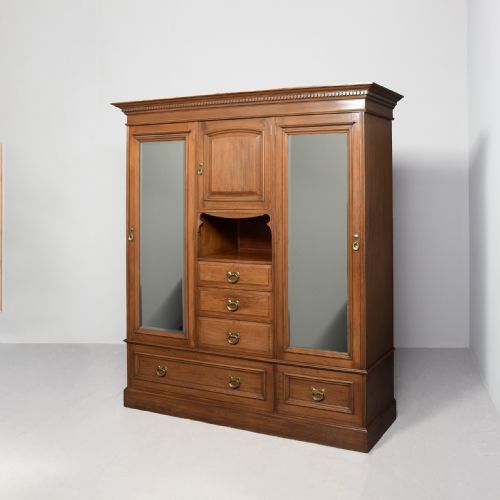
- A multi-functional wardrobe designed to maximise internal storage by combining hanging space, sliding trays, and drawers into a single footprint. This form became particularly popular during the late Victorian and Edwardian periods.
- Tallboy
- A tall chest of drawers standing on a base or chest of lower drawers, creating vertical storage capacity. Eighteenth and early twentieth-century makers utilised this proportion to save floor space.
- Marquetry
- The art of applying decorative pieces of veneer to a structure to form intricate pictorial designs or floral motifs. Seventeenth and eighteenth-century Dutch pieces frequently employ this technique in contrasting woods.
- Dovetail
- A traditional interlocking joint utilised in drawer construction to ensure durable, long-lasting corners. Hand-cut dovetails indicate earlier periods before industrial machinery standardised production.
Antique Walnut Press: Frequently Asked Questions
How do I care for walnut furniture?
Walnut benefits from stable room temperatures and protection from direct sunlight, which can bleach the rich natural tones over time. Regular dusting with a dry, soft cloth and occasional application of appropriate wax keeps the timber nourished.
Avoid placing these heavy wooden pieces near active heat sources or in damp environments to prevent veneer lifting and timber splitting.
How can I tell the period of a press?
Dating relies on observing construction methods, hardware styles, and overarching design motifs. Seventeenth-century examples often feature heavy mouldings and geometric panels, whereas eighteenth-century pieces lean towards marquetry inlay and arched double-dome tops.
Victorian and Edwardian versions introduce large mirrored doors, carved crests, and extensive internal compartments designed for modern wardrobe needs.
Where were these pieces used?
These large cabinets originally stood in principal bedrooms, dressing rooms, and grand hallways of period homes to store household linens, folded garments, and formal wear. Their substantial height and imposing presence required dedicated wall space in domestic interiors.
Today, they function equally well in modern bedrooms and large dressing areas, offering massive internal volume that surpasses contemporary flat-pack alternatives.