


Figured Walnut Wardrobe
A figured walnut wardrobe brings warmth and striking grain patterns to a bedroom, combining practical storage with notable cabinetmaking.
Figured Walnut Wardrobe
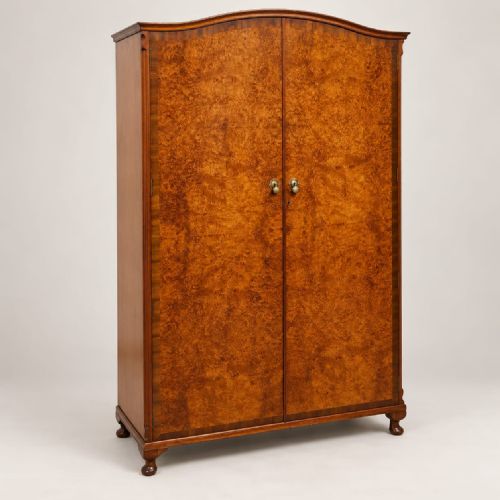
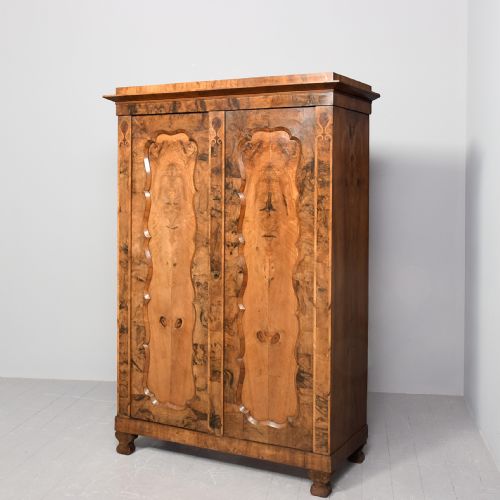
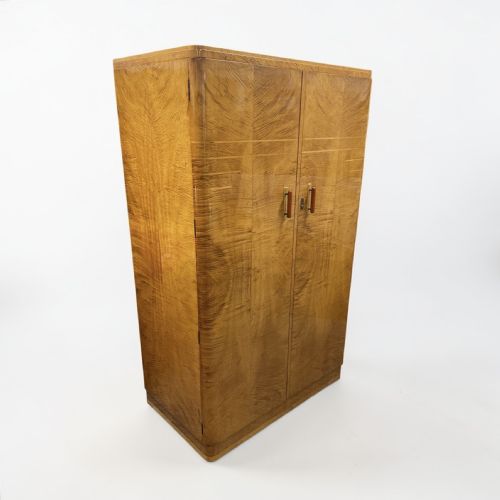
A figured walnut wardrobe is a large storage piece defined by the decorative grain of the walnut timber, spanning periods from the eighteenth century through the Victorian era to the nineteen-thirties. Buyers searching for a figured walnut wardrobe encounter tall double doors, compactum designs, and single mirrored formats.
The selection ranges from elaborate Victorian floral marquetry armoires to streamlined nineteen-thirties Art Deco examples. Alongside standard wardrobes, the forms include tallboys, press cupboards, and compact cabinets sharing the same characteristic rich veneer work.
How they were made
Cabinetmakers utilised timber veneers cut from burr and figured walnut sections, applied over secondary woods such as pine to create symmetrical grain patterns across large surfaces. These panels were paired with brass fittings, glass mirrors, and occasional bakelite details on later twentieth-century pieces.
Construction techniques evolved from eighteenth-century solid timber and early framing methods to industrial veneering processes in the Victorian period and geometric waterfall or cloud curves during the nineteen-thirties.
Listings demonstrate forms ranging from eighteenth-century cabinets to nineteen-thirties Art Deco wardrobes.
What varies in quality
The visual strength of the timber grain dictates much of the distinction, with highly figured burr walnut commanding attention through complex, swirling patterns rather than plain surfaces. Symmetry in veneer matching across double doors indicates careful workshop planning.
Structural integrity and the retention of original brass hardware, internal shelving, and mirrors separate well-preserved examples from heavily altered pieces. Finer iterations display precise marquetry inlay and smooth door alignment without warping.
Heal's·Whytock and Reid
The Figured Walnut Wardrobe Glossary
- Figured Walnut
- Timber featuring natural distortions and irregularities in the grain that produce decorative patterns. These patterns create deep optical movement across the surface of the cabinet doors.
- Compactum
- A fitted wardrobe designed with internal compartments, drawers, and hanging space combined into one unit. It provides versatile storage within a relatively compact footprint.
- Marquetry
- Inlays of different woods applied in pictorial or geometric patterns onto a furniture surface. Victorian examples frequently utilise this technique for floral decoration.
- Tallboy
- A tall chest of drawers standing on a base or combined with a small cupboard section. The elevated form maximises vertical storage space in a bedroom.
Figured Walnut Wardrobe: Frequently Asked Questions
How do I date a figured walnut wardrobe?
Examine the overall silhouette, construction methods, and hardware style to determine the period of origin. Pieces from the eighteenth century display different carcass assembly than Victorian or nineteen-thirties Art Deco examples.
Look closely at the feet, cornice, and internal fittings for clues. Art Deco pieces show geometric veneering, while Victorian versions often incorporate mirrors and floral marquetry.
What is a compactum wardrobe?
A compactum is a multi-functional storage unit that combines hanging space with internal drawers, shelves, and sliding trays. It provides comprehensive bedroom storage within a single piece of furniture.
These pieces appeared frequently during the Art Deco period. They offer clever internal organisation behind matching figured walnut doors.
How do I care for figured walnut veneer?
Protect the polished surface by keeping the timber away from direct sunlight and maintaining stable room humidity. Sudden environmental changes can cause the delicate veneer to lift or crack over time.
Dust gently with a dry cloth and apply occasional specialist wax to nourish the wood. Avoid commercial silicone polishes that damage antique finishes.
Are these wardrobes easy to dismantle?
Many large nineteenth-century and early twentieth-century wardrobes were constructed to be taken apart for transport and installation. Bolt-down cornices and knock-down carcasses allowed massive pieces to move between rooms.
Check the internal construction for assembly bolts or slot-in panels before attempting movement. Simpler Art Deco designs may rely on solid glued frames that do not separate easily.