

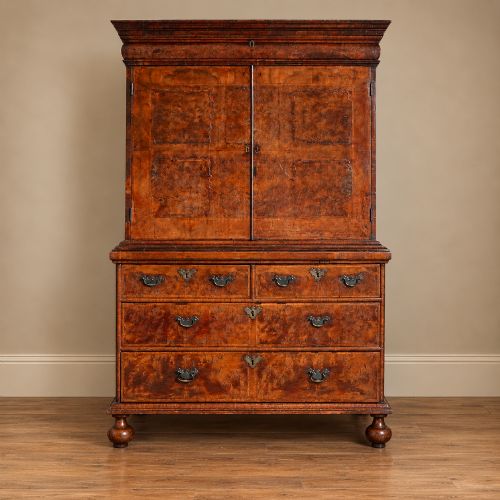


Queen Anne Wardrobe
A queen anne wardrobe brings substantial timber storage into a room, joining eighteenth-century forms with twentieth-century revival pieces.
Queen Anne Wardrobe
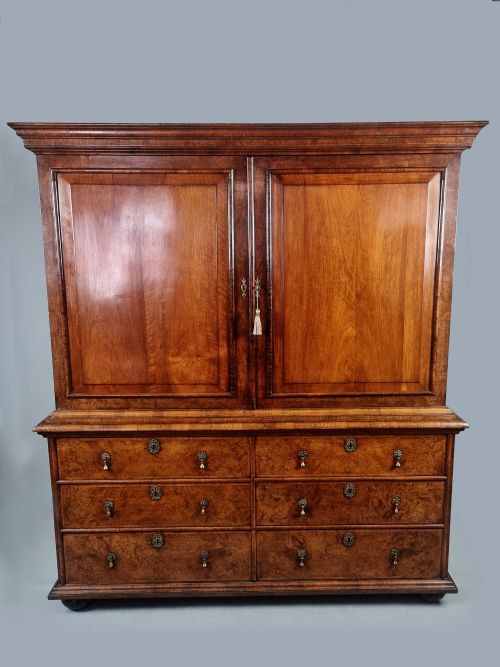
When you search for a queen anne wardrobe, you encounter large timber furniture designed for hanging garments and storing linens. The selection spans early eighteenth-century oak and walnut press cupboards alongside substantial revival pieces built around nineteen-twenty.
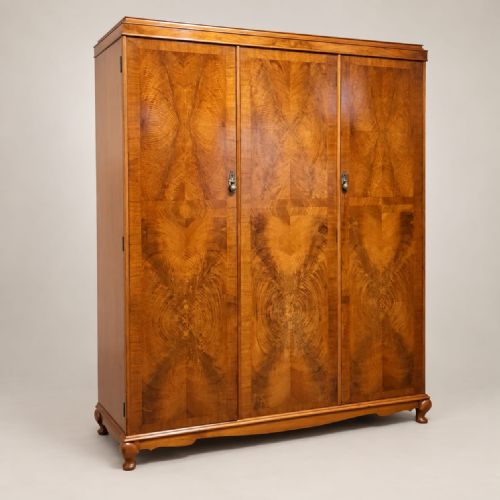
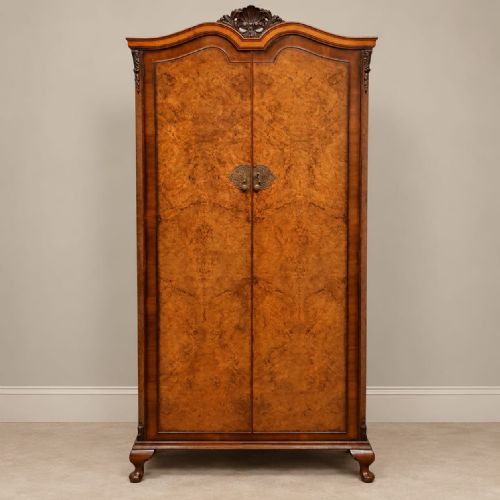
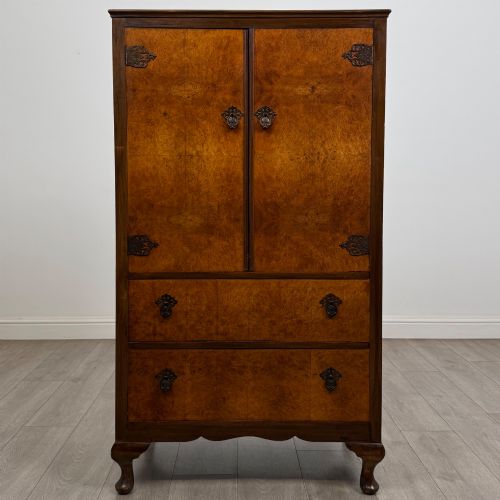
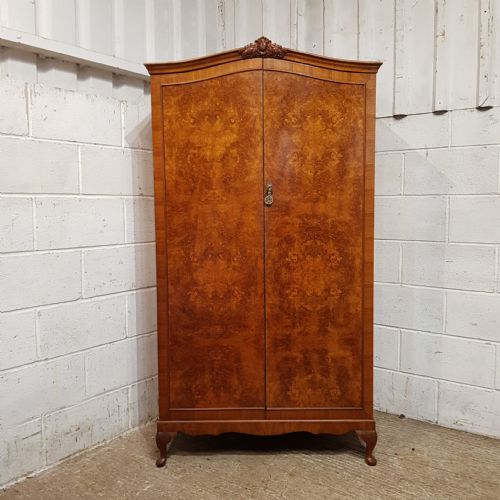
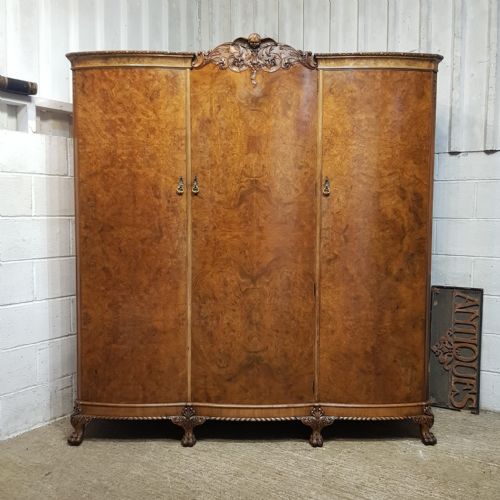
The version most commonly met on this page is the twentieth-century revival wardrobe executed in burr walnut. These pieces often take the form of double or triple wardrobes, tallboys, and linen presses reflecting earlier proportions and details.
How they were made
Cabinet makers utilised solid oak, mahogany, and walnut as structural timbers, applying burr walnut veneers to external surfaces to create patterned grain effects. Brass handles, hinges, and escutcheons complete the construction.
Surfaces receive polished finishes that highlight the natural figure of the wood. Joinery methods combine period carcass construction with later internal fittings designed for modern garment storage.
Several wardrobes arrive with serpentine fronts, ensuring your socks travel in undulating luxury.
What varies in quality
Quality depends upon the selection and matching of burr walnut veneers across the doors and panels. Cohesion in grain pattern distinguishes superior revival pieces from simpler constructions.
The depth of colour in the timber and the crispness of shaped cornices and bracket feet indicate the standard of craftsmanship. Original brass hardware and well-fitted internal shelving further elevate a piece.
Denby and Spinks
The Queen Anne Wardrobe Glossary
- Burr Walnut
- Timber taken from the warted growths on walnut trees, sliced into thin veneers to produce intricate, swirling grain patterns. This material defines the aesthetic of the revival pieces.
- Press Cupboard
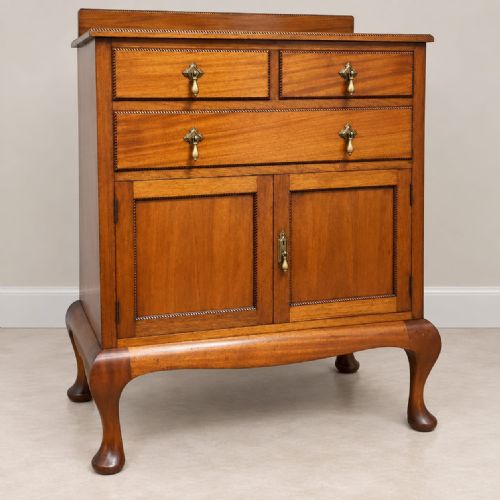
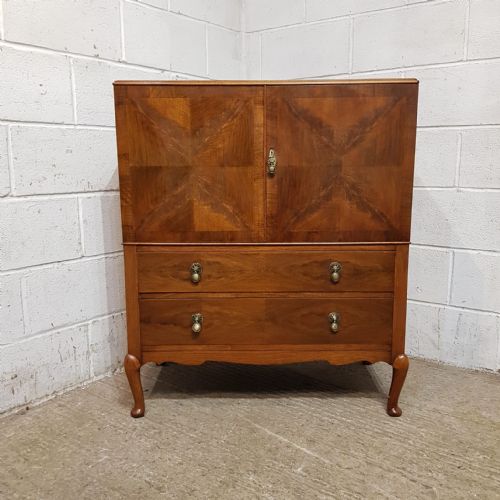
- An enclosed piece of furniture traditionally used for storing pressed linen and garments. These items often feature upper cupboard sections above lower drawer units.
- Tallboy
- A tall chest of drawers standing upon another chest or a base cabinet. They provide vertical storage capacity within a compact floor footprint.
- Tallboy / Wardrobe
- A hybrid form combining hanging space with vertical drawer storage. These dual-purpose items address multiple storage requirements in one footprint.
- Dome Top
- A curved upper carcass profile found on specific cabinets and wardrobes. This shaping adds height and visual presence to the piece.
Queen Anne Wardrobe: Frequently Asked Questions
What is a queen anne wardrobe?
A queen anne wardrobe is a large storage furniture piece that originates either from the early eighteenth century or the nineteen-twenty revival period. They utilise timber such as oak, mahogany, and burr walnut.
These pieces provide hanging space and shelving, often incorporating double or triple doors and dome top profiles. Their design echoes the architectural proportions of the early seventeen-hundreds.
How do I date a queen anne wardrobe?
Dating relies on examining the construction timbers, internal fittings, and veneer application. Eighteenth-century pieces use solid oak or walnut with hand-cut joinery.
Revival pieces from nineteen-twenty typically employ machine-cut elements and modern hanging rails behind burr walnut veneered doors. Hardware style and timber oxidation offer further chronological clues.
Where should I place a wardrobe in my home?
These large timber cabinets require substantial wall space and clearance for opening doors. Bedrooms and dressing rooms provide natural settings for their original storage purpose.
Because of their decorative burr walnut veneers and panelled construction, they also function well in large hallways or landings. Ensure the room humidity remains stable to protect the wood and veneer.
What is the difference between a wardrobe and a press cupboard?
A wardrobe primarily provides vertical hanging space for garments behind full-length doors. Interiors often include clothes rails and hooks.
A press cupboard contains internal shelves or sliding trays intended for folded linens and textiles, frequently positioned above base drawers. Revival makers sometimes combined these functions into single hybrid pieces.