


Edwardian Walnut Wardrobe
An edwardian walnut wardrobe brings generous storage and rich timber grain to a bedroom, combining practical hanging space with period presence.
Edwardian Walnut Wardrobe
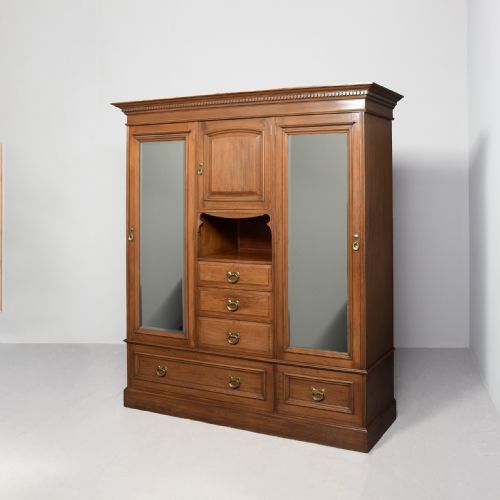
An edwardian walnut wardrobe is a substantial bedroom storage piece dating predominantly from the late nineteenth and early twentieth centuries. These pieces appear frequently as double or triple wardrobe configurations, often incorporating compactum designs with internal drawers and hanging sections.
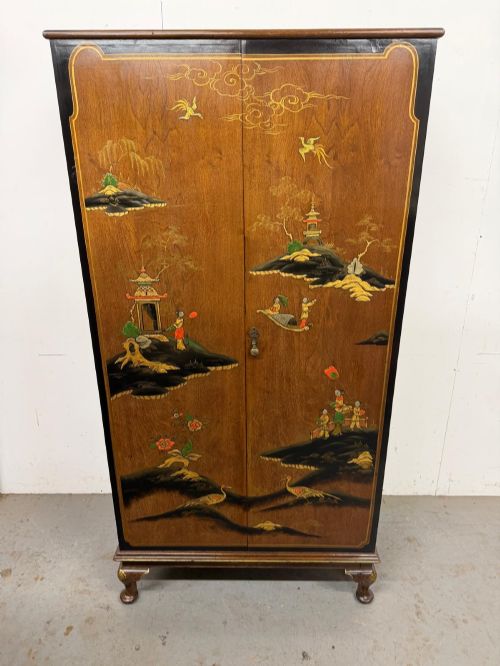
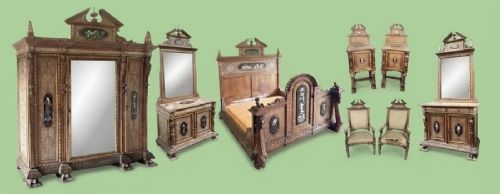
Makers and workshops constructed these items during the Edwardian period and adjacent decades, occasionally utilising styles such as Art Nouveau or Chinoiserie alongside traditional revival forms. Buyers encounter single hanging robes, combination pieces with ash or oak elements, and extensive bedroom suites.
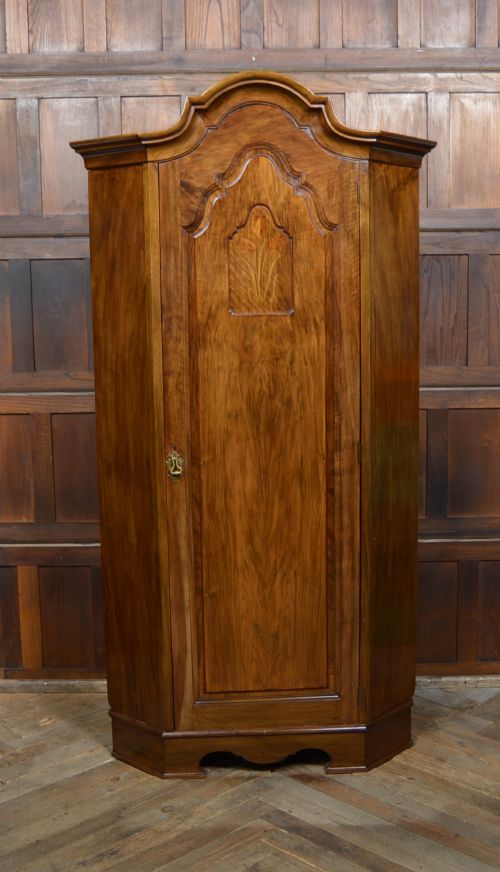
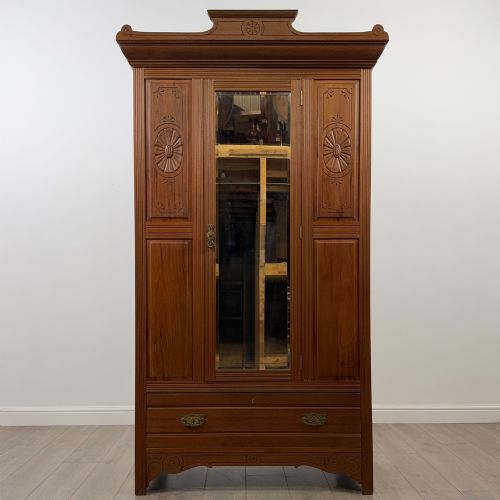
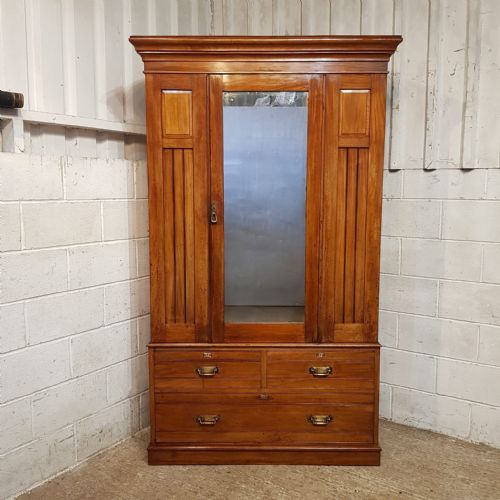
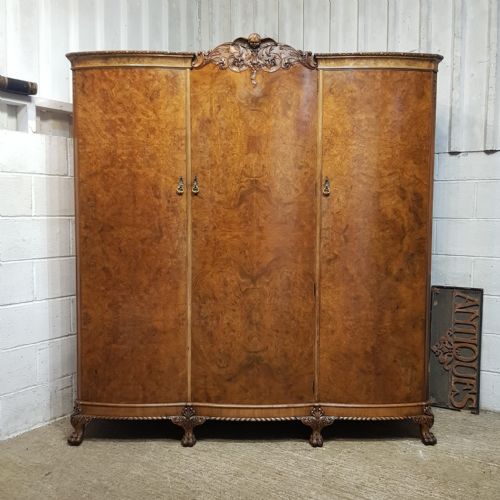
The architectural form ranges from simple rectilinear single cupboards to serpentine and bow fronted triple wardrobes with mirrored doors. The enduring appeal lies in the combination of functional internal division and decorative timber surfaces.
How they were made
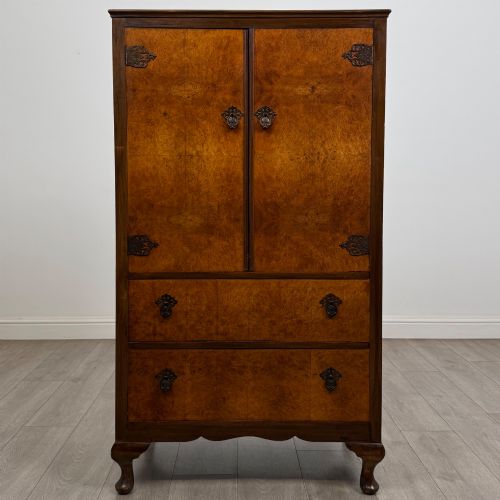
Cabinet makers utilised solid walnut and decorative burr walnut veneers applied to secondary woods to create rich grain patterns across large door panels. Satinwood, glass, and brass fittings completed the internal and external detailing of the better pieces.
Construction methods combined traditional joinery with applied decorative elements like marquetry inlay or carved panels, particularly on pieces influenced by Art Nouveau or Queen Anne revival designs. Larger triple and compactum wardrobes were frequently built in modular sections to facilitate delivery and installation.
Listings feature pieces spanning the late nineteenth century through the Edwardian era into the nineteen twenties, constructed in walnut, burr walnut, and satinwood.
What varies in quality
The choice of timber creates a fundamental distinction, with plain straight-grained walnut sitting at one end and highly figured burr walnut veneers or elaborate marquetry occupying the other. The depth of architectural planning, seen in serpentine and bow fronted designs, separates standard double robes from exceptional triple pieces.
Workshop origin significantly influences standing, with recorded pieces by known makers and retailers carrying distinct attribution. Original brass hardware, intact bevelled glass mirrors, and complete internal fittings preserve the integrity of the piece.
Waring & Gillows·Lamb of Manchester·Whytock & Reid of Edinburgh·George Jack·Shapland & Petter·Druce & Co·Denby and Spinks
The Edwardian Walnut Wardrobe Glossary
- Compactum
- A wardrobe design that combines hanging space with multiple internal drawers, linen slides, and sometimes small cupboards within a single unified carcass.
- Burr walnut
- Timber taken from the warted excrescence of a walnut tree, yielding intricate, swirling grain patterns highly valued for veneering large door surfaces.
- Combination wardrobe
- A storage piece that integrates hanging compartments with open shelving or enclosed drawer units.
- Beaconsfield
- A specific wardrobe layout featuring a central mirrored door flanked by hanging spaces and banks of internal drawers.
- Marquetry
- Decorative patterns formed by the insertion of different coloured wood veneers into a prepared surface.
Edwardian Walnut Wardrobe: Frequently Asked Questions
How do I fit a large wardrobe?
Many Edwardian wardrobes, particularly triple and compactum variants, were constructed in modular sections that dismantle into cornices, bases, and separate robes. This clever engineering allows large timber furniture to navigate narrow staircases and period doorways.
Professional installation often involves aligning the main carcasses carefully on uneven floors to ensure that mirrored doors and hanging sections swing freely without binding.
What is a compactum wardrobe?
A compactum is a multi-functional storage unit that integrates hanging space, linen drawers, and small cupboards into one piece of furniture. These configurations maximised bedroom storage efficiency during the Edwardian era.
Buyers often find these designs include dedicated compartments for hats, boots, and folded garments alongside the main vertical hanging rails.
How do I care for walnut wood?
Walnut timber benefits from stable room temperatures and protection from direct sunlight, which can fade rich brown tones over time. Regular dusting with a dry, soft cloth maintains the natural sheen of the polished surface.
Application of appropriate furniture waxes should be done sparingly to nourish the grain without building up a heavy, dull residue.
Can I separate a bedroom suite?
Bedroom suites from this period were designed to match visually, but individual pieces function entirely independently within a home. Separating a wardrobe from a matching dressing table or washstand is common practice in modern interiors.
Each item retains its structural integrity and utility when placed in different rooms or paired with alternative antique furniture.