



Walnut Mirrored Armoire
A walnut mirrored armoire brings deep grain and reflective depth to a bedroom, and the versions here span the Victorian and Edwardian eras.
Walnut Mirrored Armoire
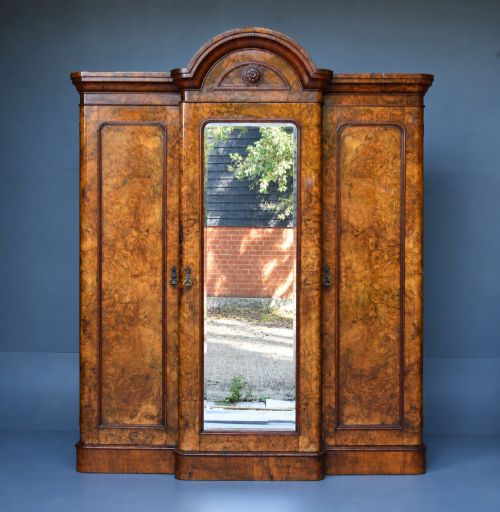
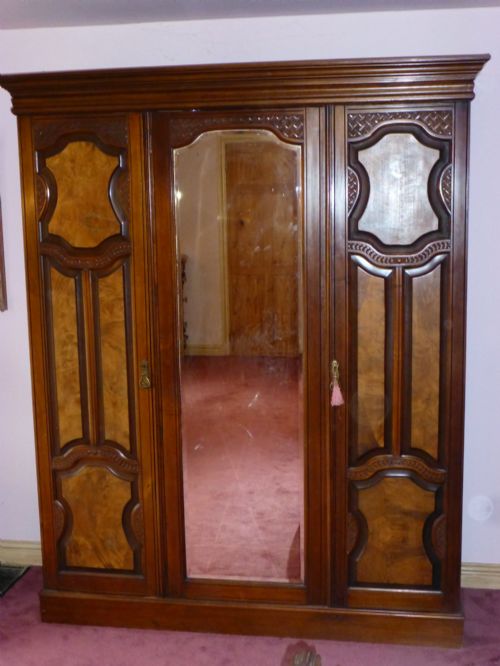
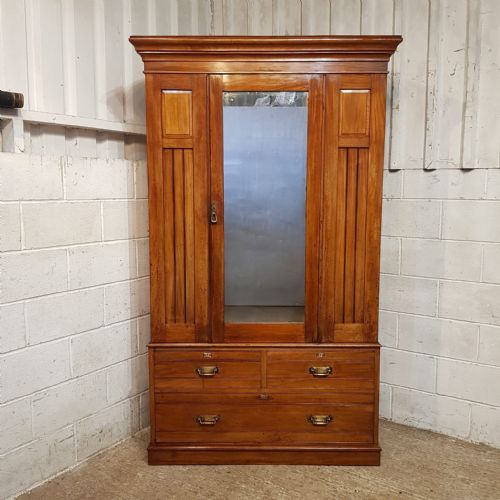
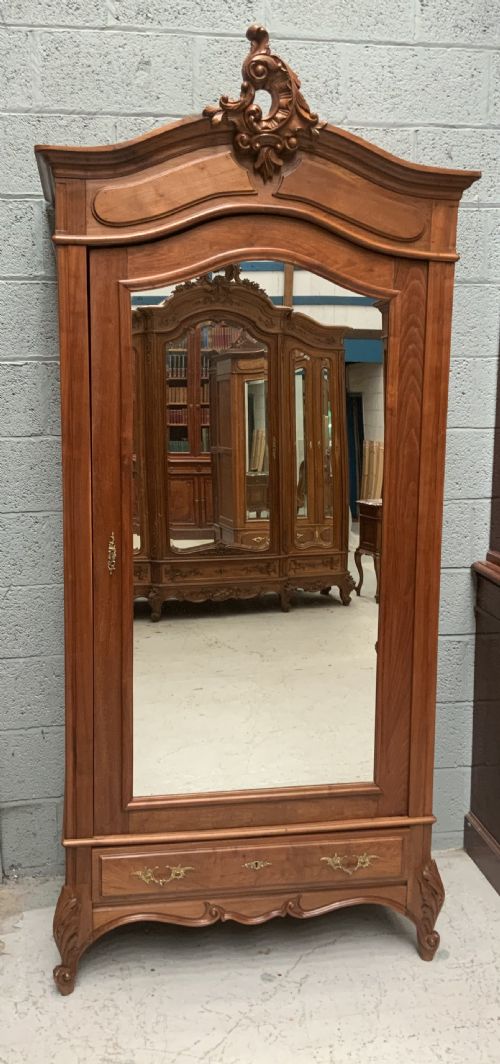
When you search for a walnut mirrored armoire, you encounter grand wardrobe designs primarily from the nineteenth and early twentieth centuries. These pieces combine substantial storage capacity with full-length mirror glass set into the doors, reflecting light around a room while concealing garments.
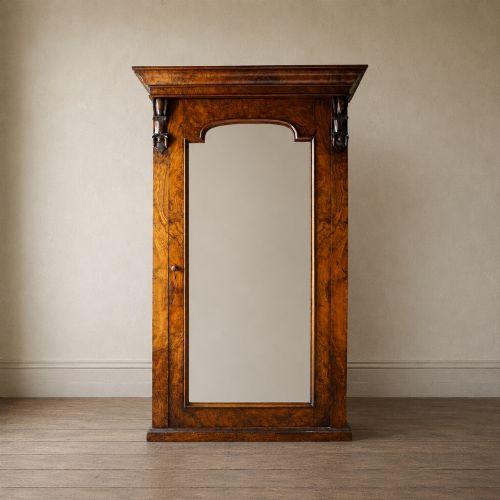
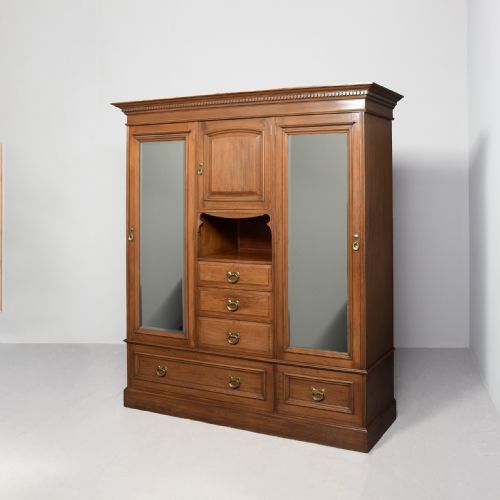
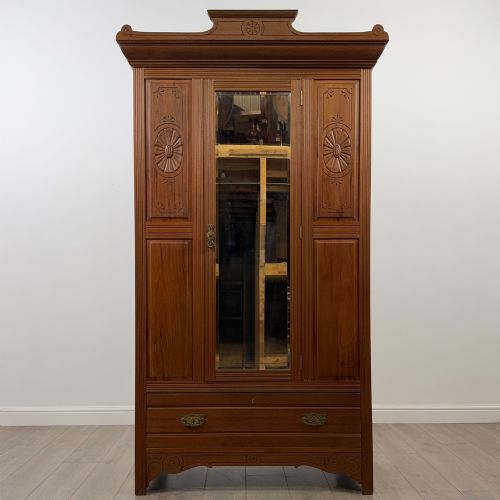
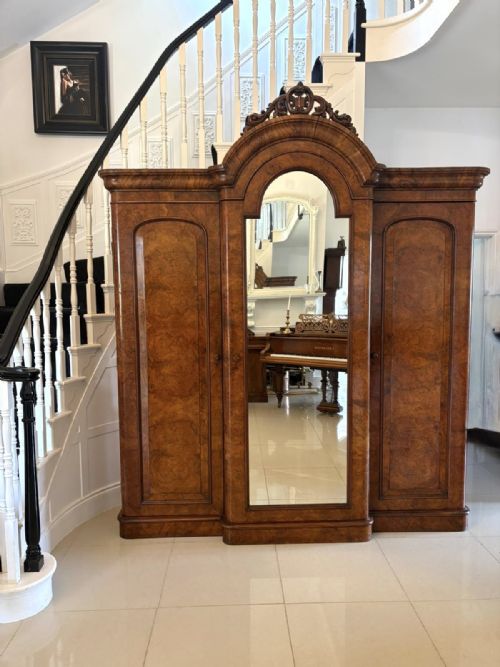
The pieces on this page range from single-door compactum wardrobes to large triple wardrobes and French armoires. Victorian and Edwardian examples dominate the selection, frequently utilising figured timbers and substantial proportions suited to period interiors.
How they were made
Cabinet makers utilised solid walnut and decorative burr walnut veneers applied over secondary timbers such as ash or satinwood. The grain patterns were carefully matched across large surfaces to create symmetrical patterns on the doors and panels.
Mirrored glass was bevelled and fitted securely into heavy timber frames, often accompanied by cast brass hardware, internal drawers, and hanging compartments designed for Victorian and Edwardian garments.
Materials span walnut and burr walnut alongside contrasting ash, satinwood, and brass hardware.
What varies in quality
Quality in these wardrobes rests upon the selection of timber and the ambition of the construction. Pieces utilising highly figured burr walnut veneer across large triple doors represent a higher level of cabinet making than simpler single-door variants.
The integration of the mirror and the sophistication of internal fittings also separate standard bedroom furniture from pieces produced by notable workshops. Carved details and secondary woods like ash or satinwood indicate careful workshop execution.
Holland and Sons·Lamb of Manchester·Jean Faure·Shapland and Petter·Mercier
The Walnut Mirrored Armoire Glossary
- Compactum
- A multi-section wardrobe designed to hold various types of clothing in a single combined unit with drawers, shelves, and hanging space. They often include mirrored doors to maximise utility in bedroom suites.
- Burr walnut
- A specialised wood veneer taken from the warted growths on walnut trees, showing swirling and knotty grain patterns. Cabinet makers used it on prominent exterior surfaces for decorative effect.
- Armoire
- A large freestanding cupboard with doors, traditionally used for storing clothes. In the context of these listings, the term often applies to French or continental single and double door wardrobe designs.
- Combination wardrobe
- A piece of bedroom furniture that joins hanging space with drawers, linen presses, or compartments. These designs offer varied storage configurations within one frame.
Walnut Mirrored Armoire: Frequently Asked Questions
How do I fit a large wardrobe in a modern room?
Many of these pieces dismantle into sections for transport and installation, allowing them to be moved into rooms with standard ceiling heights.
Measuring the clearance for cornice mouldings and mirrored doors ensures the wardrobe sits correctly in your space.
What is the difference between an armoire and a wardrobe?
While both store clothing, armoires often originate from continental traditions with single doors and carved details, while Victorian and Edwardian wardrobes frequently feature multiple mirrored sections.
Both types serve the same primary function of garment storage within a bedroom.
How do I care for burr walnut veneer?
Burr walnut requires stable humidity levels and protection from direct sunlight to prevent the timber veneer from drying out or fading over time.
Applying a traditional wax polish occasionally helps maintain the lustre of the polished wood surface.
How can I tell a Victorian wardrobe from an Edwardian one?
Victorian pieces tend to use heavier timber mouldings, deep burr walnut veneers, and darker finishes, reflecting mid to late nineteenth-century tastes.
Edwardian examples frequently show lighter woods like satinwood or ash alongside simpler lines and occasional Chinoiserie decoration.