
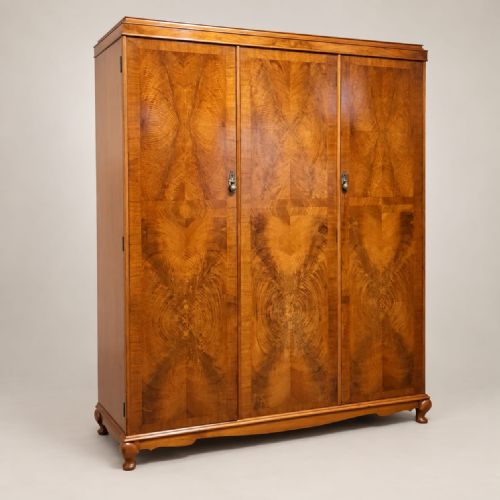
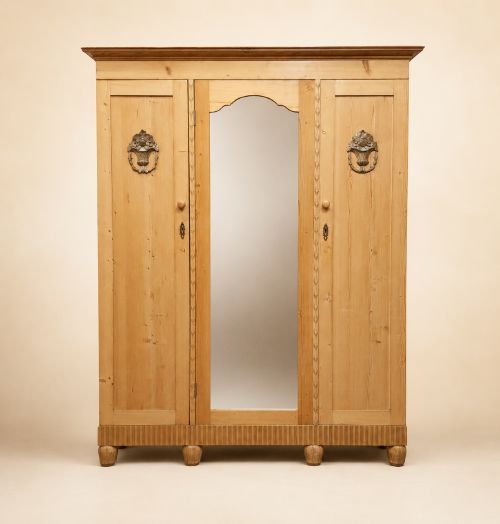
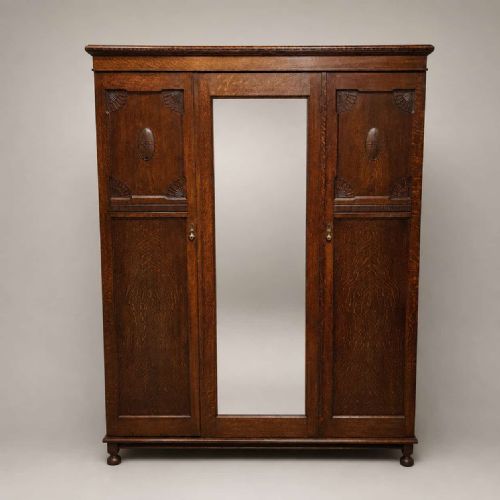
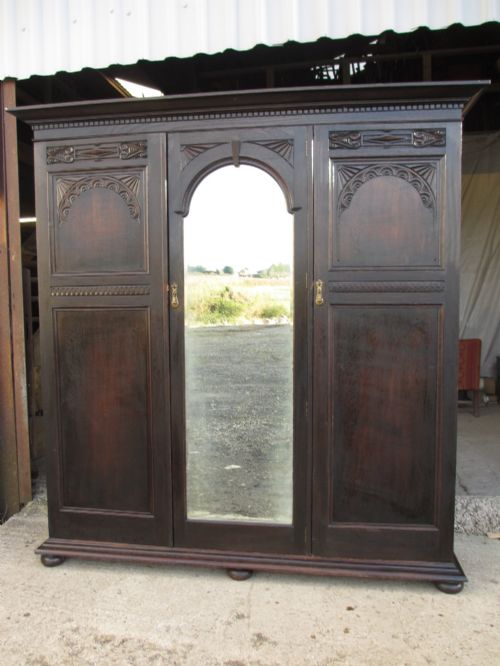
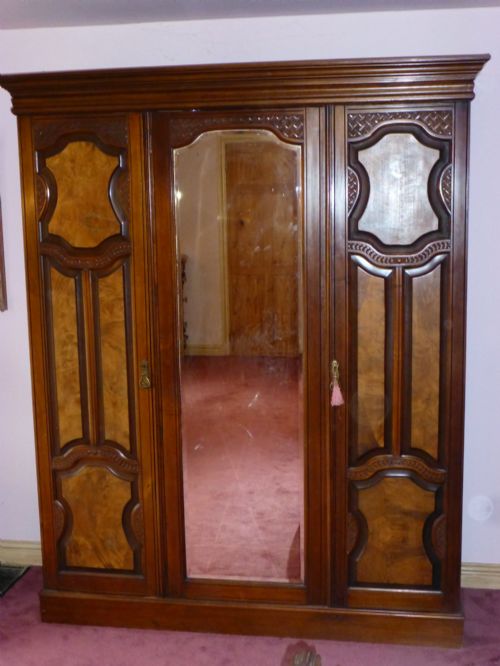
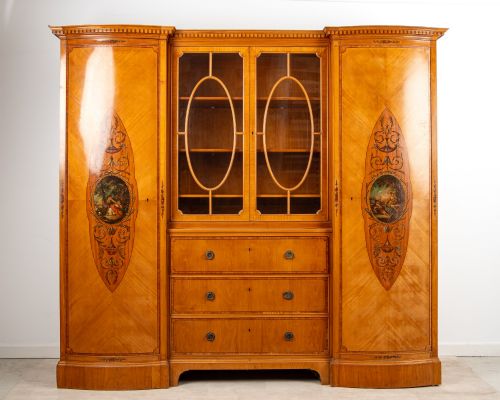

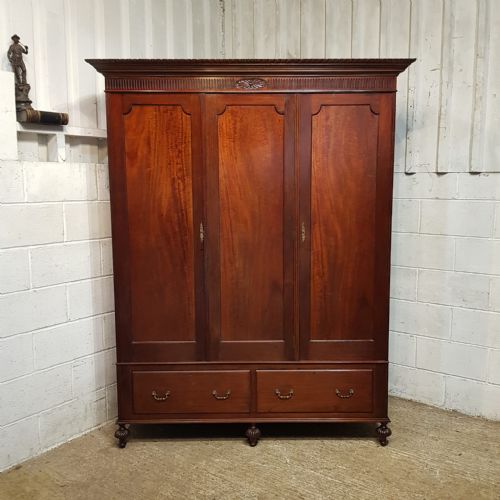
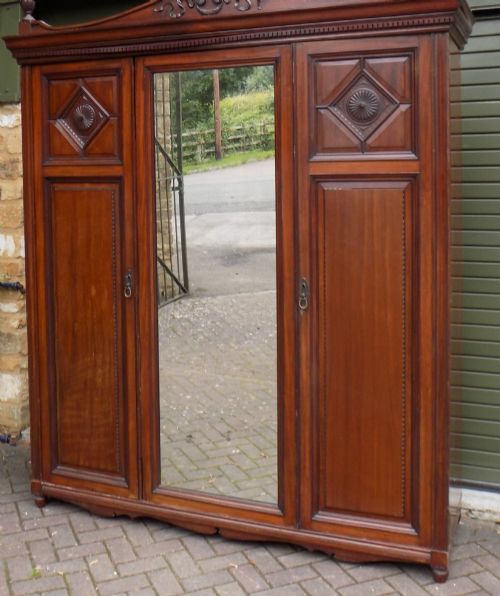
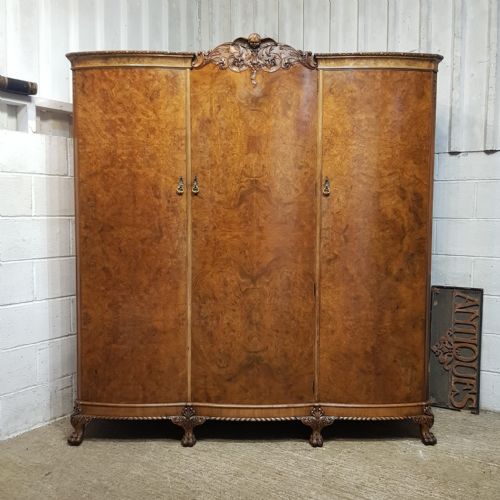
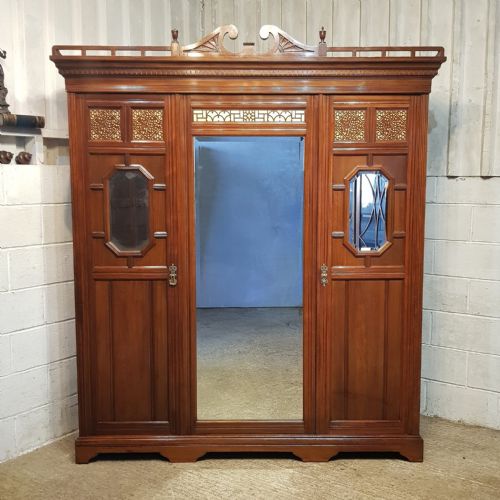

Triple Door Armoire
These triple door armoire pieces are substantial storage cupboards offering grand scale and timeless presence, built to anchor a bedroom with presence.
What They Are
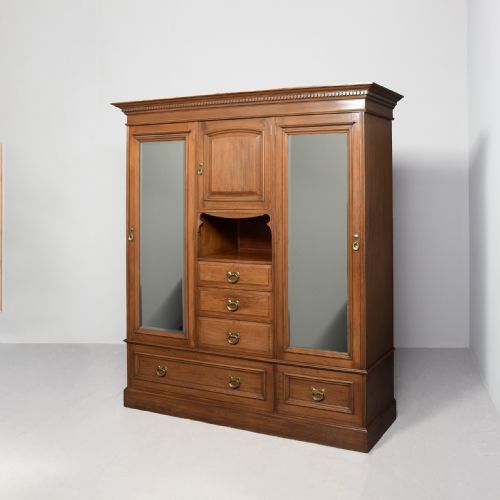
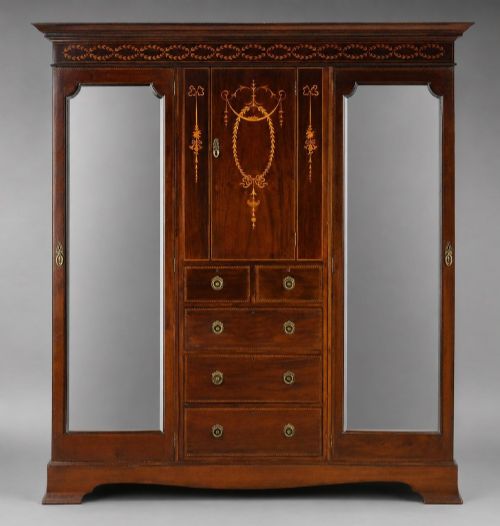
When you search for a triple door armoire, you encounter grand storage pieces spanning the late Victorian, Edwardian, and early twentieth-century periods. These wardrobes offer substantial internal capacity divided across three distinct vertical bays, often pairing hanging space with internal shelving or drawers.
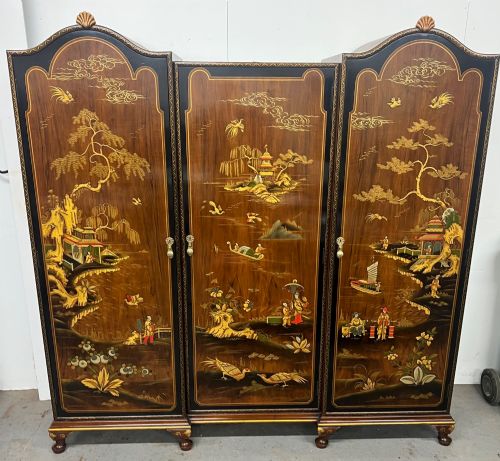
The selections on this page lean heavily towards French regional interpretations and classic British revival forms. You will find French Provincial models alongside Edwardian Chippendale Revival pieces, demonstrating a range of historical aesthetic influences.
Origin points encompass British workshops and French ateliers, bringing distinct regional carving traditions and proportions to the market. The forms vary from breakfront oak cupboards to large carved walnut armoires.
How They Were Made
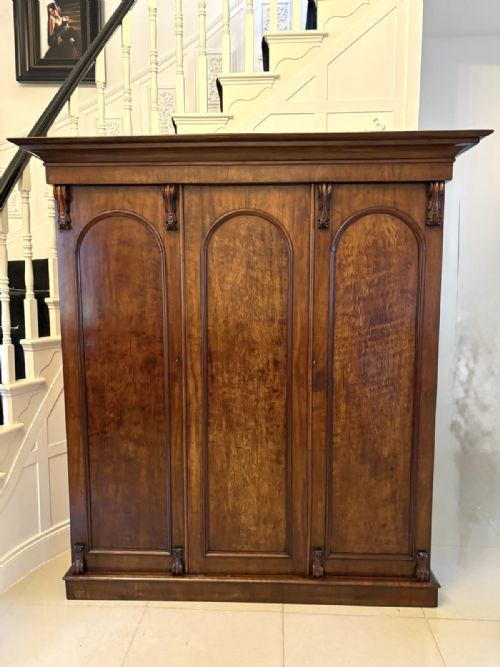
Cabinet makers utilised dense hardwoods such as mahogany, oak, bleached oak, and walnut to construct the heavy carcasses of these large wardrobes. These timbers provided the structural integrity required to support three full-length doors.
Decoration relied upon traditional cabinet-making techniques including hand carving, fielded panels, and applied mouldings. Metal components such as brass hinges and ormolu mounts added functional security and decorative contrast to the timber surfaces.
Retail Price Guide 2026
Typical UK retail prices for triple door armoire, calculated from the Sellingantiques database of over a million retail prices indexed since 2003. This retail price guide relies exclusively on Sellingantiques data; no external sources or auction records are used, so the figures do not describe the wider market.
The listings span the Victorian period, 1900, 1910, 1920, and incorporate mahogany, oak, bleached oak, walnut, brass, glass, and ormolu.
What Varies in Quality
Quality rests upon the selection of timber and the precision of the joinery used in the three-door frame. Superior pieces display carefully matched grain patterns across all three panels and robust internal framing that keeps heavy doors hung true.
The depth of hand carving and the quality of applied ormolu or brass hardware distinguish standard workshop production from finer atelier pieces. Finer examples maintain crisp detailing in the carved woodwork and substantial timber thickness throughout.
The Triple Door Armoire Glossary
- Compactum
- A fitted wardrobe designed to hold a variety of garments and accessories in dedicated internal compartments. These often combine drawers, shelves, and hanging space within one multi-door unit.
- Breakfront
- A piece of furniture whose central section projects forward from the flanking outer sections. This architectural arrangement adds visual depth and shadow lines to large cabinetry.
- Ormolu
- Gilt bronze ornamentation applied to furniture as decorative mounts and handles. The technique involves creating a finely chased bronze base finished with gold amalgam.
- Bleached Oak
- Timber treated to lighten its natural colour while retaining the prominent grain pattern of oak. This finish became popular in twentieth-century French and continental furniture design.
Frequently Asked Questions
How do I fit a triple door armoire?
Measure your ceiling height and wall space carefully, noting that these grand cupboards often require assembly in the room where they will stand. Ensure clearance for the three wide doors to swing fully open without hitting adjacent furniture.
Leave adequate space around the perimeter to let the timber breathe and to appreciate the proportions of the carved or panelled facade. Professional delivery and installation help protect the heavy framework during placement.
What is the history of these wardrobes?
Large triple door storage pieces evolved from regional European armoires and British Victorian wardrobes as homes demanded greater clothing capacity. Makers combined hanging space with internal drawers to serve the fashion needs of the period.
French workshops favoured provincial styles with carved walnut and bleached oak, while British makers produced mahogany revival pieces. These varied origins reflect changing interior fashions from the late nineteenth century into the 1920s.
How do I maintain the timber surfaces?
Dust the exterior regularly with a soft, dry cloth to prevent particulate buildup on the carved details and panelled doors. Apply a suitable beeswax periodically to nourish hardwoods like mahogany, oak, and walnut without leaving sticky residues.
Keep the armoire away from direct heat sources and strong sunlight to prevent the timber from drying out or splitting. Maintaining stable room humidity protects both the solid wood construction and any brass or ormolu mounts.
Can I adjust the internal layout?
Many period wardrobes feature fixed internal configurations designed around original hanging rails and stationary wooden shelving. Altering the interior typically requires careful carpentry work to preserve the structural stability of the carcass.
Consider how your storage needs align with the existing layout of hanging space and shelving before purchase. Original partitions and drawer boxes contribute to the historical integrity of the piece.