
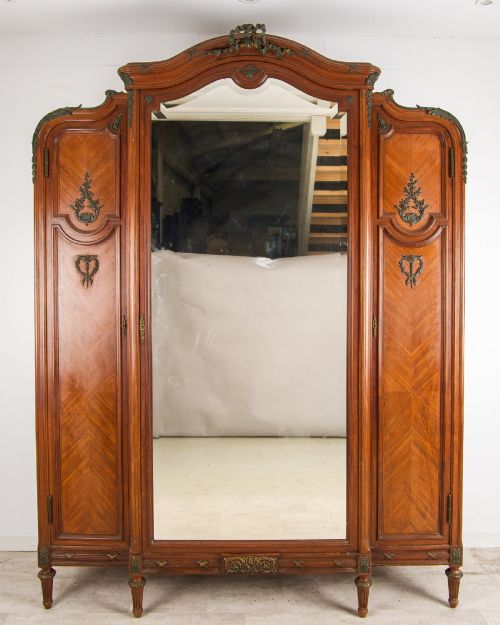


French Mirrored Wardrobe
A french mirrored wardrobe brings depth and light to a bedroom through grand glass doors and polished timbers.
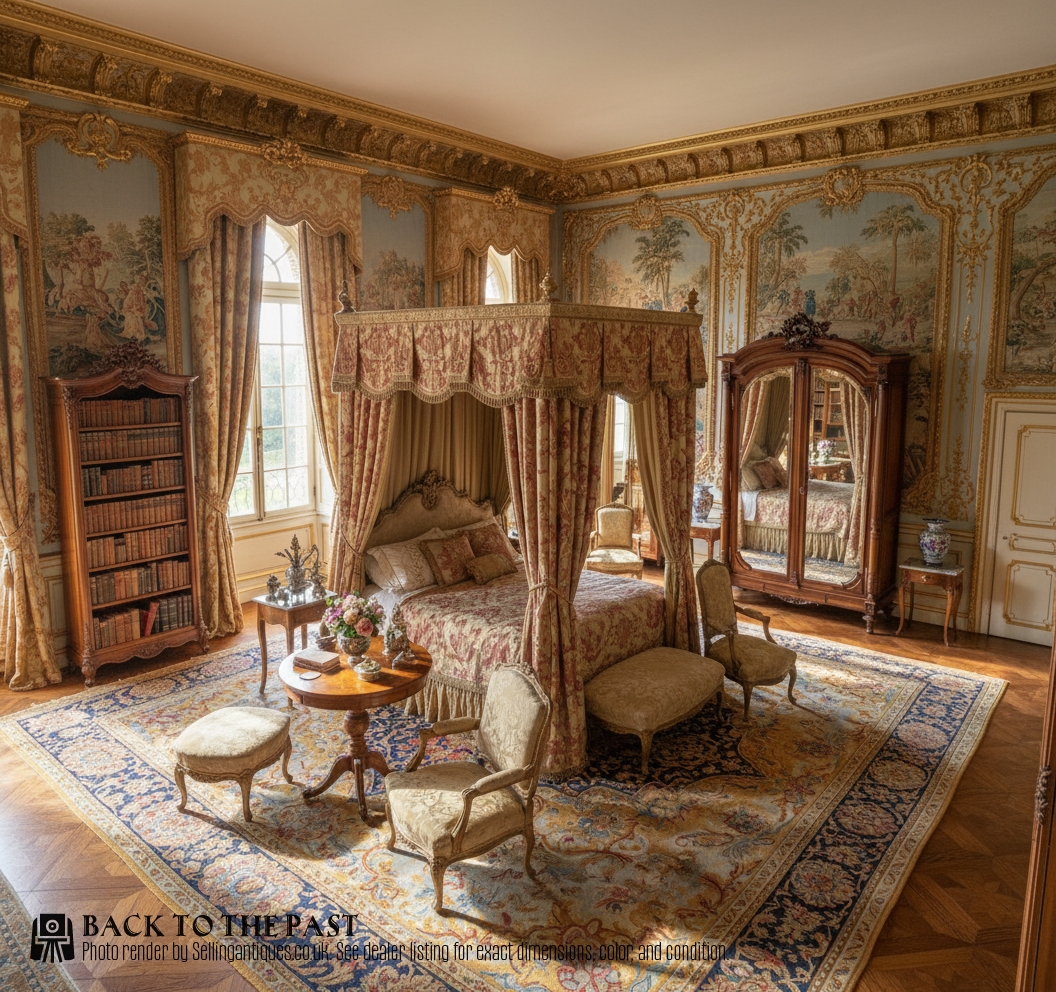
The French Mirrored Wardrobe
A french mirrored wardrobe provides generous bedroom storage while using glass plates to reflect natural light across the room. These pieces appear as large armoires and bedroom cabinets designed for hanging and shelving garments.
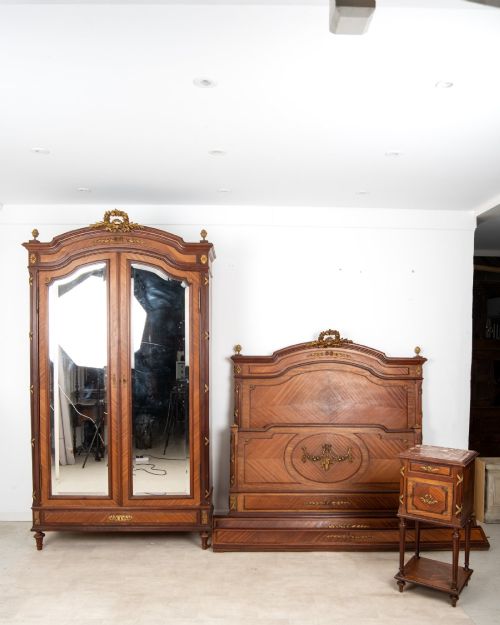
The selection on this page centres primarily on the grand proportions of armoires and wardrobes dating from the late nineteenth century through to the 1920s. Buyers frequently encounter styles referencing Louis XVI and Louis XV revivals alongside French provincial and chateau aesthetics.
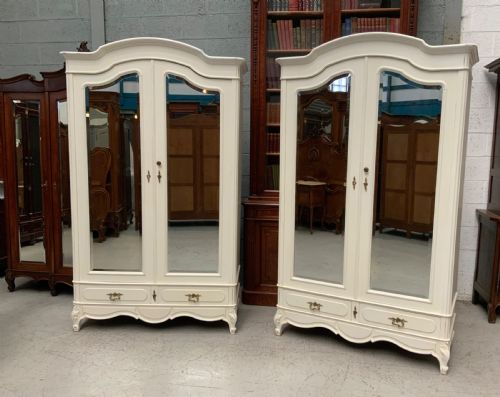
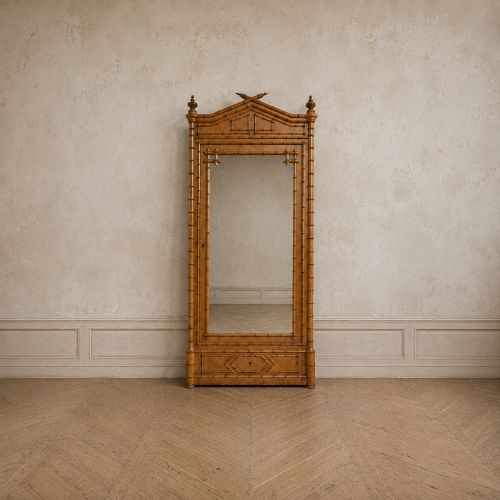
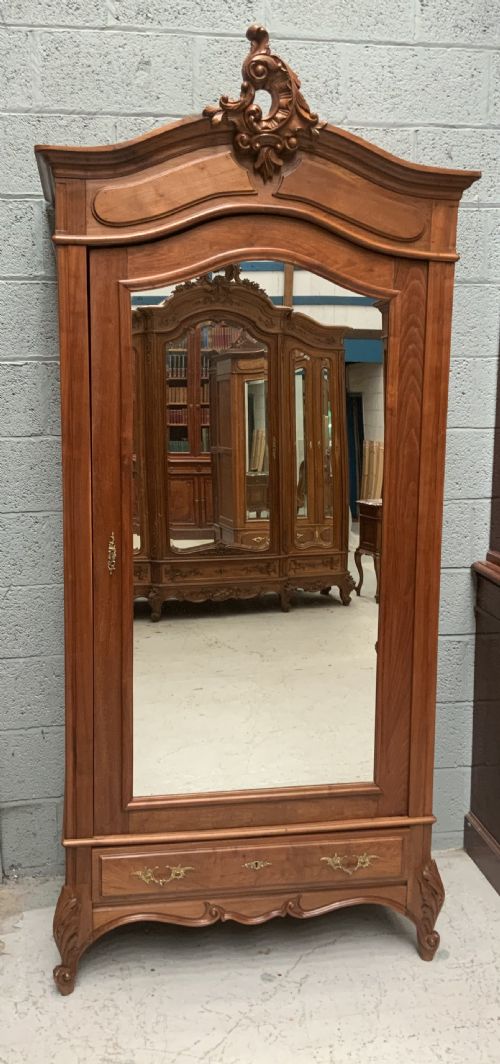
Forms range from single door configurations in walnut to substantial double door cabinets featuring parquetry and carved cartouches. Oak, mahogany, rosewood and painted pine finishes complete the range of domestic storage furniture recorded in these pieces.

Construction and Materials
Cabinet makers utilised solid woods and decorative veneers including walnut, mahogany, rosewood, kingwood and oak over sturdy pine carcases. Parquetry placement demonstrates precise geometric wood selection on door panels and drawer fronts.
Metal components such as brass detailing and ormolu mounts punctuate the timber facades, framing the glass plates and embellishing key escutcheons. Bevelled glass mirrors are set securely within heavy timber door frames to withstand the weight of the swing doors.
Retail Price Guide 2026
Typical UK retail prices for french mirrored wardrobe, calculated from the Sellingantiques database of over a million retail prices indexed since 2003. This retail price guide relies exclusively on Sellingantiques data; no external sources or auction records are used, so the figures do not describe the wider market.
Design influences span from French provincial to Louis XVI revival across pieces dated between 1880 and 1920.
Assessing Quality
Quality rests upon the selection of timber veneers, where figured rosewood, walnut and matched parquetry create sophisticated visual depth across the doors. The weight and clarity of the mirror glass, alongside the crispness of brass detailing and carved cartouches, separate standard cabinetry from exceptional workshops.
Structural integrity shows in the hanging space, the smoothness of door alignment on heavy hinges, and the precision of joinery within the cornice and plinth. Pieces bearing documented maker attribution command attention for their superior decorative finish and proportion.
Mercier
The French Mirrored Wardrobe Glossary
- Armoire
- A large upright cupboard or wardrobe used traditionally for storing clothing. In French cabinet making, these pieces often feature substantial mirrored doors and deep internal hanging space.
- Parquetry
- A mosaic of geometric wood veneers arranged to create decorative patterns on cabinet surfaces. This technique showcases contrasting grains in timbers such as walnut and rosewood.
- Ormolu
- Gilded bronze mounts applied to furniture for decorative effect. These metallic accents highlight corners, cornices and door surrounds.
- Cartouche
- An ornamental carved panel resembling a scroll or shield, often placed centrally on the crown of an armoire. It provides a focal point for the decorative woodwork.
- Louis XVI Revival
- A nineteenth-century design style drawing on neoclassical symmetry, straight lines and restrained classical ornamentation. Furniture from this period emphasises proportion and refined proportions.
Frequently Asked Questions
How do I fit shelves inside an antique armoire?
Many of these wardrobes were built with removable hanging rails or adjustable wooden pegs to support custom timber shelving. Modern storage can be integrated by resting shelves on these existing internal supports without altering the historic carcase.
Measuring the internal depth carefully ensures that folded garments or storage boxes sit comfortably behind the closed mirrored doors without obstructing the lock mechanism.
Can a large French armoire be dismantled for moving?
Traditional French wardrobes frequently employ knock-down construction using large wooden pegs, bolts or interlocking panels. This allows the cornice, sides, base and heavy mirrored doors to separate for transport and reassembly in tight spaces.
Enlisting professional antique movers ensures the heavy glass plates and delicate veneer edges are protected during disassembly and transit.
How do I care for the mirror glass?
Antique mirror plates benefit from gentle cleaning using a soft cloth and mild glass cleaner applied sparingly. Avoid letting moisture seep behind the silvered backing at the edges of the glass.
Polishing the surrounding walnut, mahogany or painted pine frame with appropriate wax maintains the timber's moisture balance without splashing residue onto the mirror surface.
How do I distinguish Louis XVI style from Louis XV?
Louis XVI pieces are characterised by straight architectural lines, symmetrical proportions and neoclassical detailing such as fluted columns and ribbon twists. The overall silhouette remains geometric and restrained.
Louis XV pieces favour asymmetrical curves, cabriole legs and flowing natural motifs like scrolling foliage and shell carvings. The contours of the crown and door panels appear softer and more exuberant.