




Louis XVI Armoire
A louis xvi armoire brings classical symmetry and restrained French elegance into a modern room.
Louis XVI Armoire
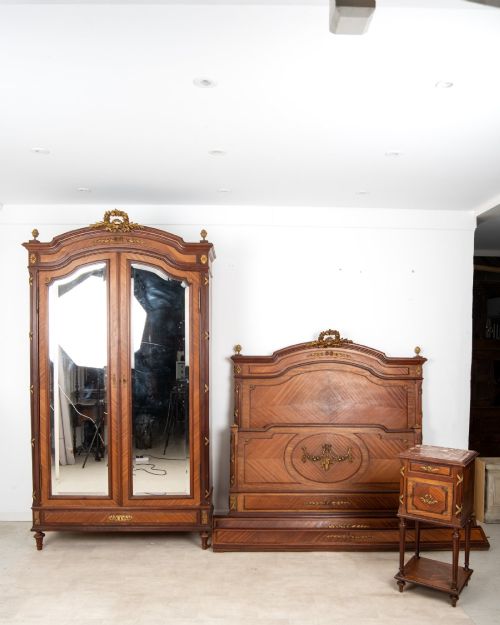
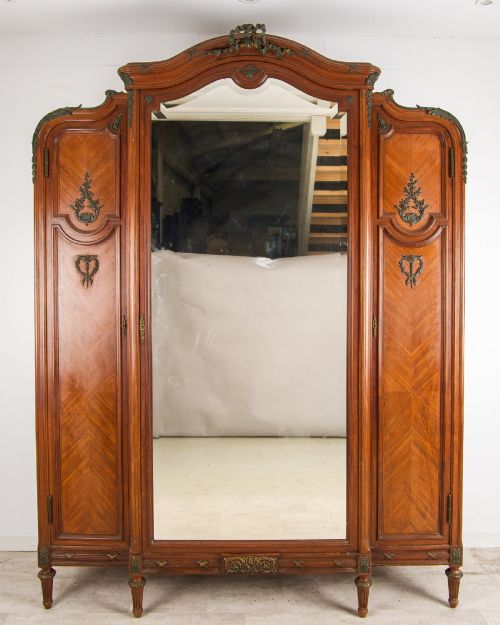
When you search for a louis xvi armoire, you enter a world of straight lines, fluted columns, and balanced proportions that mark a deliberate turn away from earlier curves. The examples you encounter on this page span the nineteenth century and the early twentieth century, taking the form of revival pieces and regional interpretations rather than original eighteenth-century royal commissions.
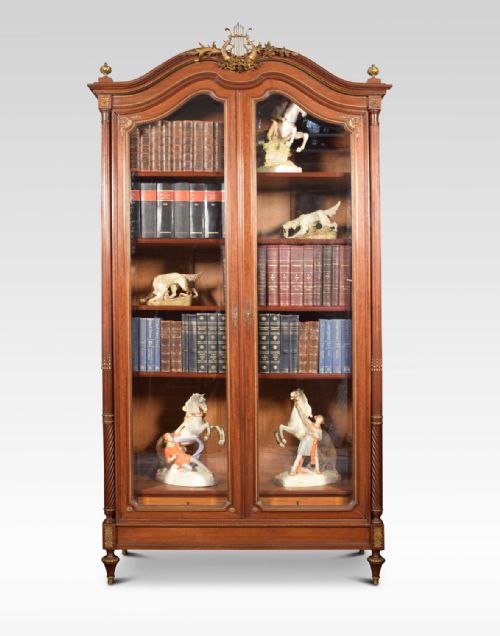
Most pieces meet you as large freestanding wardrobes, sometimes paired in bedroom suites with matching beds, chests, or bookcases. The forms range from grand breakfronts and two-door mahoganies to painted finishes and smaller cherrywood or walnut variants.
You also discover French provincial and chateau adaptations alongside formal revival models. Each version retains the characteristic rectilinear silhouette, architectural cornices, and disciplined geometry that define the style.
How they were made
Cabinetmakers built these wardrobes using solid timbers and veneered panels of mahogany, walnut, cherrywood, and painted wood over robust structural carcasses. The choice of wood dictates the visual weight, moving from rich, dark polished mahogany to softer painted surfaces.
Metalwork played a defining role in the construction, featuring cast or gilt bronze and ormolu mounts, brass detailing, and inset mirror glass. Mounts were pinned or screwed directly to the facades, highlighting corners, key escutcheons, and structural divisions with classical motifs.
Interiors typically combined hanging space with adjustable shelving or built-in drawers, utilising panel-and-frame joinery designed to accommodate seasonal wood movement in large timber doors.
Louis XVI Armoire Retail Price Guide 2026
Typical asking prices for louis xvi armoire among the pieces listed under this phrase on Sellingantiques today, from the lower quarter to the upper quarter. They describe what is for sale here now, not the wider market.
Listings feature mahogany, walnut, cherrywood, and painted wood finishes, often elevated with brass, ormolu, and mirror glass.
What varies in quality
Quality reveals itself in the architectural crispness of the carving and the precision with which the timber grain is selected and laid. Superior pieces show sharp, clean fluting on columns and finely chased ormolu mounts that integrate harmoniously with the wood.
The weight and stability of the doors separate better examples from simpler ones. Well-constructed armoires maintain true alignment on their hinges, allowing large panel doors to open and close smoothly without sagging.
Attention to secondary details, such as parquetry patterns, original brass detailing, and the finish of internal shelving, distinguishes workshop output from standard commercial production.
Mercier
The Louis XVI Armoire Glossary
- Ormolu
- Gilded bronze mounts applied to furniture for decoration. This technique adds bright metallic accents to dark woods.
- Breakfront
- A cabinet design where the central section projects forward from the flanking sides. It creates architectural depth on large armoires.
- Parquetry
- Geometric wood veneer patterns arranged in repetitive arrays. Cabinetmakers used this technique on door panels to display decorative grain.
- Bonnetiere
- A tall, narrow single-door cupboard originally designed to store bonnets. It shares stylistic roots with larger armoires.
- Escutcheon
- A protective plate surrounding a keyhole. These metal fittings often incorporate classical revival motifs.
Louis XVI Armoire: Frequently Asked Questions
How do I style a louis xvi armoire?
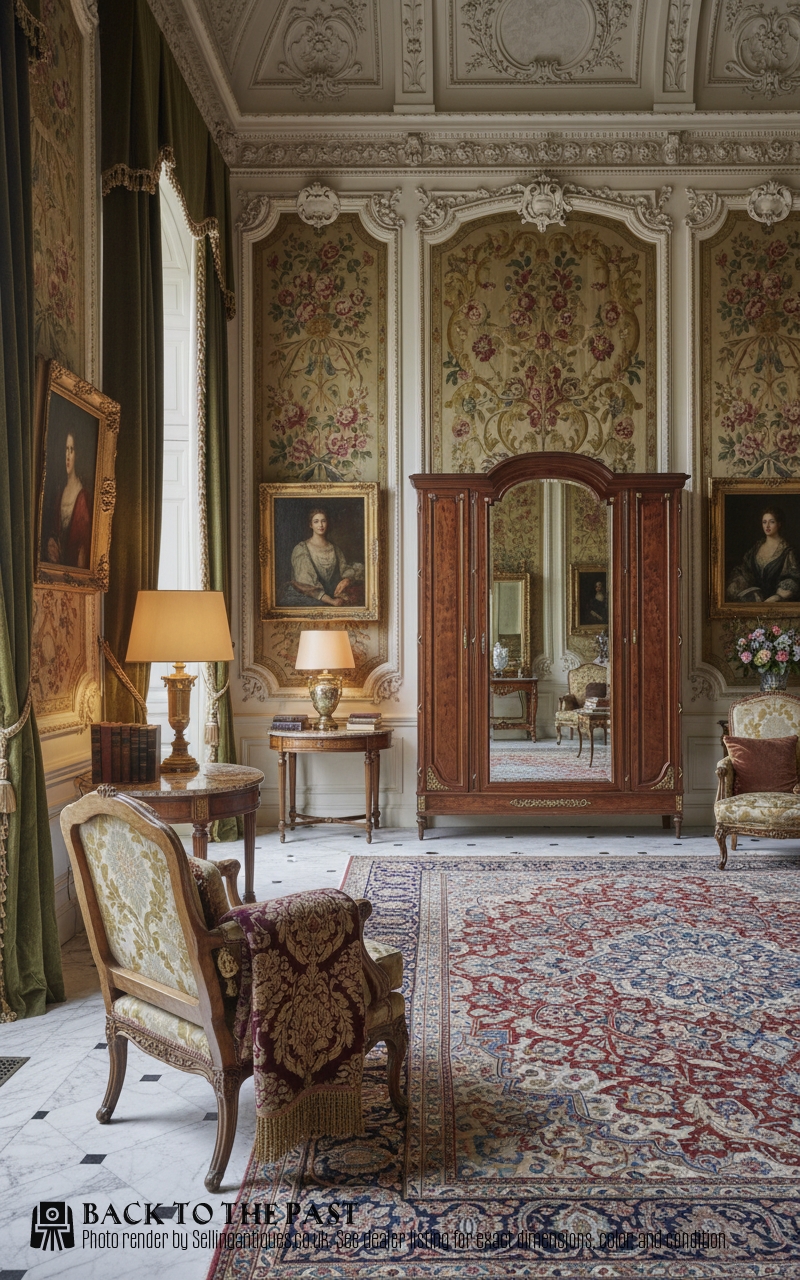
Place the armoire against a flat wall in a bedroom or hallway where its vertical proportions can anchor the room. Let the wood tone or painted finish stand alone without cluttering the top cornice.
Keep surrounding furniture simpler in design to allow the classical columns and mounts to draw the eye. Use the interior for storage while treating the exterior as a primary architectural feature.
Will a large armoire fit through doorways?
Many nineteenth and twentieth-century armoires were constructed to dismantle into sections, including the cornice, base, side panels, and heavy doors. This modular construction helped transport large wardrobes up staircases and into period rooms.
Check whether the specific piece uses knock-down construction with internal bolts or wooden wedges before attempting delivery.
How do I care for mahogany and ormolu?
Dust wood surfaces regularly with a soft, dry cloth and apply a quality wax sparingly to maintain the polish. Avoid modern silicone sprays that can damage historic finishes over time.
Clean gilt bronze and ormolu mounts gently with a dry brush, keeping moisture away from the metal to prevent tarnishing the underlying gilding.
What is the difference between revival and original styles?
Revival pieces date from the nineteenth and early twentieth centuries, drawing direct inspiration from the reign of Louis XVI. They utilise period construction methods and machinery alongside traditional hand-crafting techniques.
Original eighteenth-century pieces carry distinct eighteenth-century joinery marks and structural wear, whereas revival iterations reflect later interpretations of classical French design.