

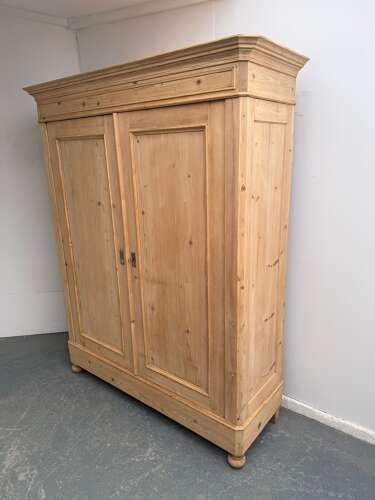
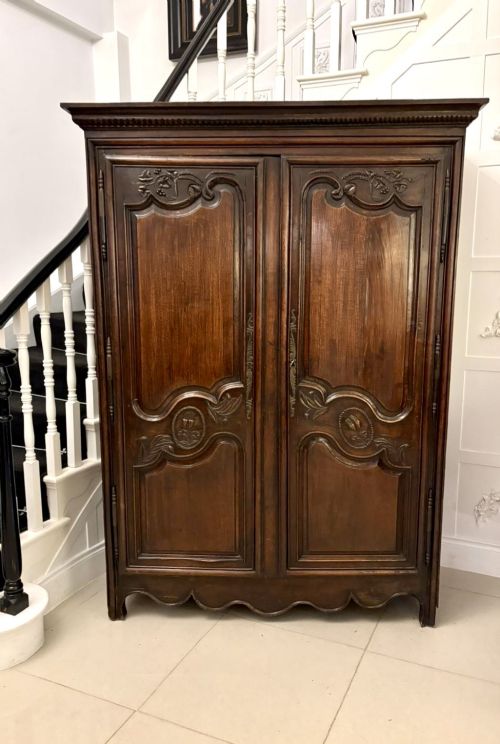
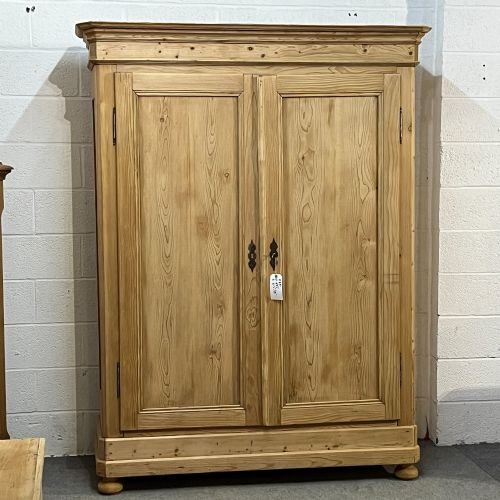
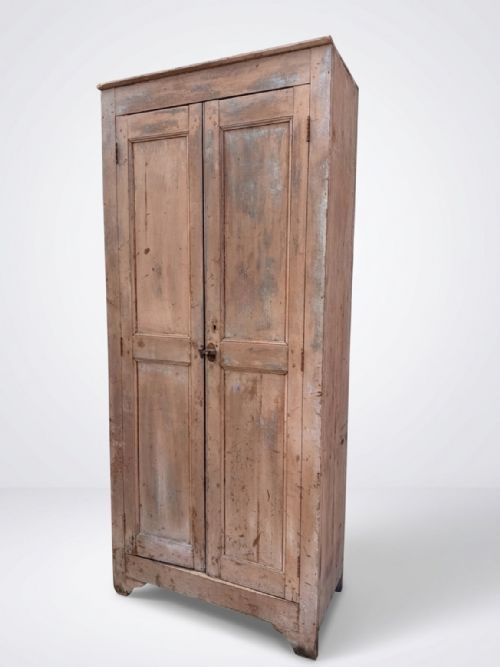
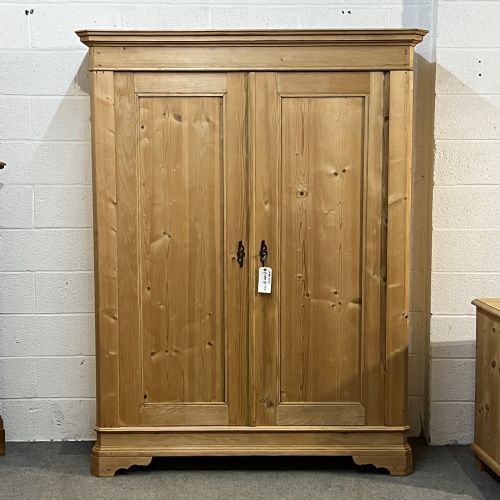


Rustic French Wardrobe
A rustic french wardrobe offers substantial provincial storage, bringing generous timber presence and authentic rural character to a bedroom.
Rustic French Wardrobe
A rustic french wardrobe encompasses large timber armoires, linen cupboards and storage cabinets originating from provincial regions. These pieces provide deep hanging space and shelving, traditionally utilised for household linens and garments in rural homes.
The versions most commonly met on this page span the 18th century, 19th century and early 20th century. They arrive in forms ranging from imposing double door oak armoires to painted pine storage cupboards and single door variants.
Makers shaped these practical items within distinct rural traditions such as French Provincial, French Country and Victorian Country. Their presence anchors a room with solid proportions and honest, unpretentious construction.
How they were made
Workshops built these wardrobes predominantly using regional timbers such as oak, pine, cherrywood and walnut. Artisans often selected pine and oak for their structural strength, applying paint finishes or leaving the grain exposed depending on local taste.
Joinery relied on traditional pegged frames, panelled doors and hand-carved details. Iron, steel and brass hardware such as hinges and latches secured heavy doors, while clever designs like flat pack construction allowed large pieces to be dismantled for transport.
Rustic French Wardrobe Retail Price Guide 2026
Typical asking prices for rustic french wardrobe among the pieces listed under this phrase on Sellingantiques today, from the lower quarter to the upper quarter. They describe what is for sale here now, not the wider market.
At least one historic cabinet maker anticipated modern flat pack furniture by building armoires that dismantle entirely.
What varies in quality
Quality reveals itself in the choice of timber and the ambition of the carpentry. Superior examples display dense, well-figured oak, walnut or cherrywood with refined hand-carved mouldings rather than purely utilitarian boards.
The integrity of the original construction and hardware distinguishes finer pieces. Well-preserved pegged joints, substantial panel thickness and authentic period iron or brass fittings elevate a wardrobe above simpler utility cupboards.
The Rustic French Wardrobe Glossary
- Armoire
- A large freestanding wardrobe or cupboard with doors enclosing space for hanging clothes or shelves. These items often feature double doors and deep cornices.
- Provincial
- Pertaining to the regions outside the capital city. Provincial furniture reflects local materials and vernacular design traditions rather than court fashions.
- Linen cupboard
- A tall storage piece designed specifically for stowing household textiles and bedding. They frequently incorporate internal shelving alongside hanging capacity.
- Flat pack
- Furniture engineered with knock-down construction using pegged or slotted joints. This allowed large wardrobes to travel easily across regions before final assembly.
- Bleached oak
- Oak timber treated to lighten its natural tone. This finish highlights the grain while softening the visual weight of heavy period pieces.
Rustic French Wardrobe: Frequently Asked Questions
How do I use a rustic french wardrobe today?
These pieces serve primarily as bedroom wardrobes or hallway storage for coats and linens. Their deep interiors accommodate modern hangers and shelving units.
To live with them successfully, measure your ceiling height and doorway clearance carefully before delivery. Their substantial proportions require adequate clearance to open doors fully.
What woods were used for these wardrobes?
Carpenters utilised regional hardwoods and softwoods depending on local availability and budget. Oak and walnut provided robust structures for formal provincial homes.
Pine and cherrywood appeared frequently in rural farmhouses and country dwellings. Painted finishes were also common on softer timbers to brighten dark interiors.
How do I date an antique armoire?
Dating relies on examining the timber grain, tool marks, joinery techniques and hardware style. Hand-carved mouldings and pegged joints typically indicate earlier 18th century origins.
Later 19th century and 1900 pieces often display machine-sawn elements and standardised fittings. Comparing the door panels and cornices to known regional styles helps narrow the decade.
What is the difference between an armoire and a linen cupboard?
Armoires generally provide primary hanging space for garments behind full-length doors. Their interior depth accommodates coat hangers and bulky clothing.
Linen cupboards focus more on horizontal shelving tailored for folded textiles and bedding. They often appear slightly shallower or narrower than full-scale wardrobe armoires.