

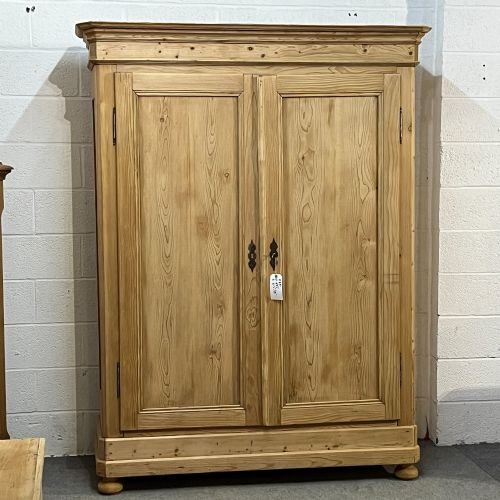
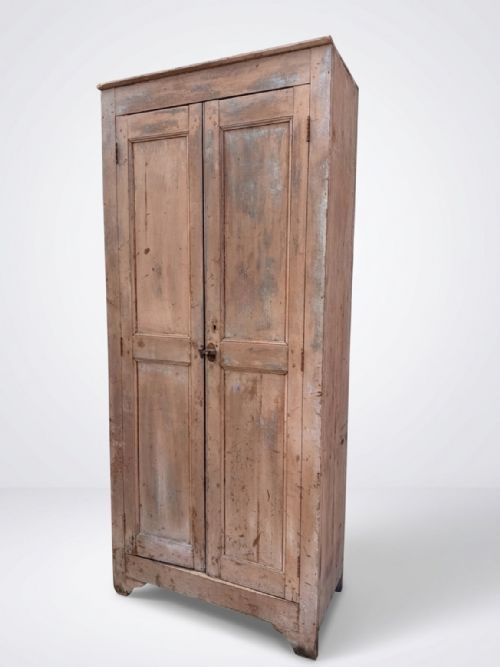
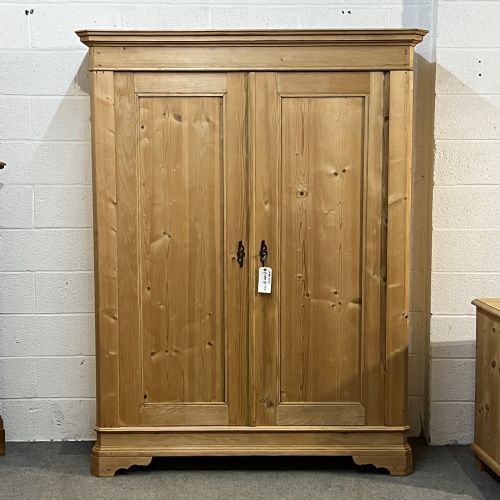
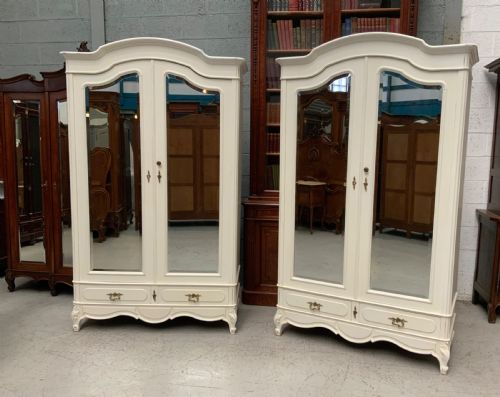
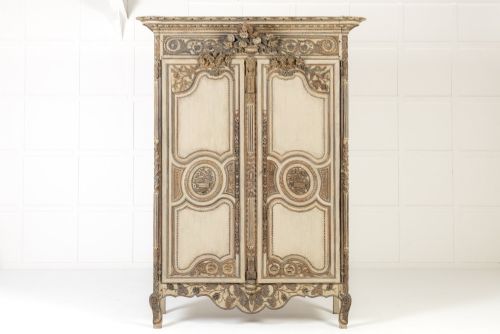
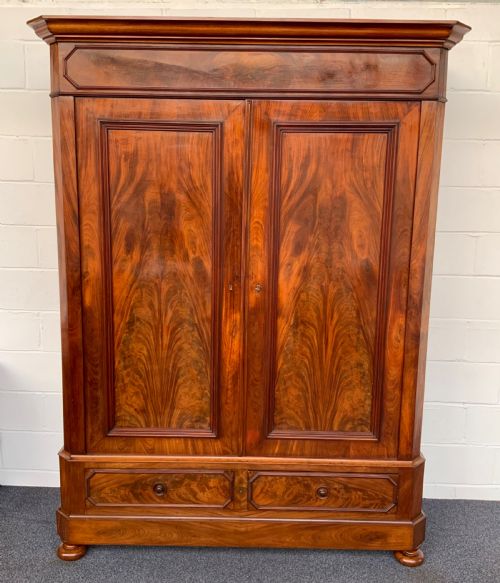


French Double Door Wardrobe
These french double door wardrobe pieces are grand timber storage units built to anchor a bedroom, offering substantial capacity alongside regional carving.
French Double Door Wardrobe
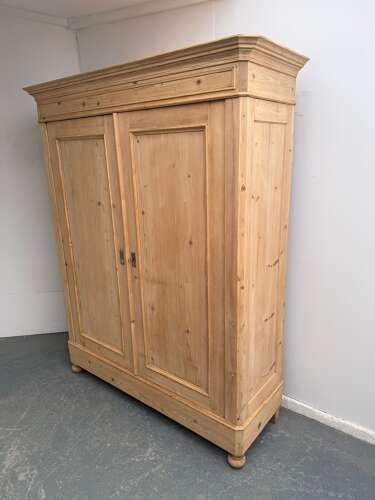
A french double door wardrobe is a tall timber storage piece designed for hanging garments or storing household linen, frequently styled as an armoire or housekeepers cupboard. You will find examples here spanning from the eighteenth century through to the early twentieth century, taking forms such as the Louis XVI Revival, Empire style, and French Provincial.
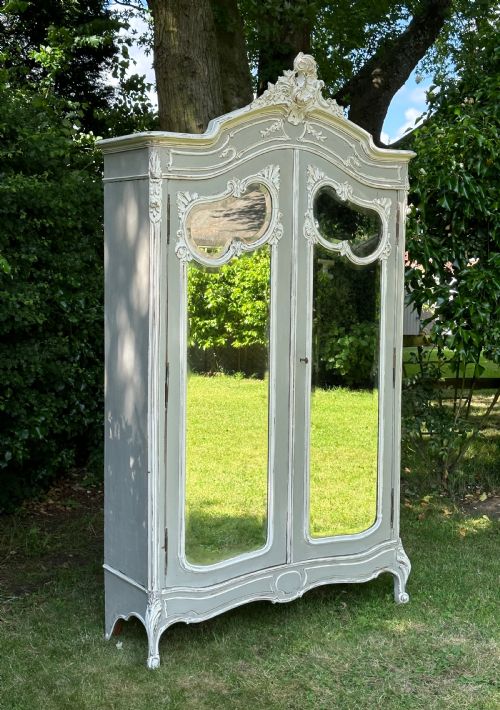
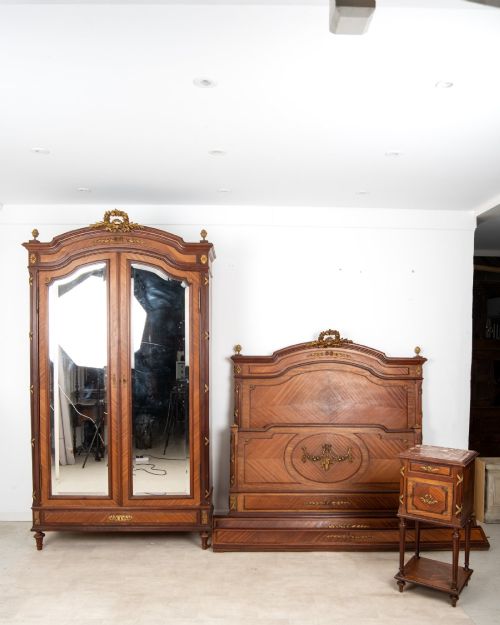
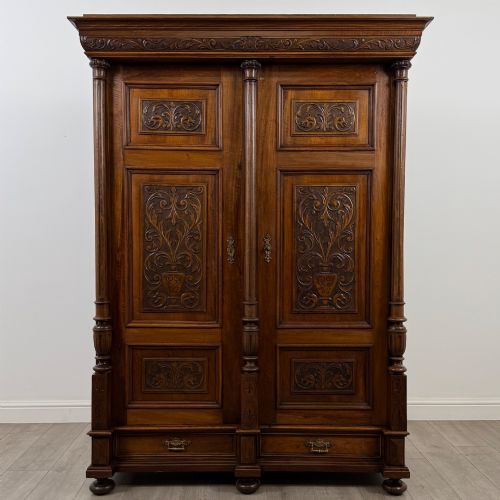
The most common version on this page is constructed from pine or walnut, often built with grand proportions to suit high-ceilinged rooms. Pieces range from painted country country house editions to richly carved walnut and flame mahogany models adorned with brass or ormolu mounts.
How they were made
Construction relies on solid timbers including oak, walnut, pine, mahogany, and cherry, assembled into large frameworks with panelled doors. Cabinetmakers utilised hand-carving techniques to ornament the cornices and stiles, while parquetry and burr veneers decorated finer surfaces.
Metalwork played a structural and decorative role, with iron hinges, brass escutcheons, and cast ormolu mounts securing the heavy doors and drawers. Painted finishes applied over pine formed another traditional surface treatment, seen on eighteenth-century and nineteenth-century country pieces.
French Double Door Wardrobe Retail Price Guide 2026
Typical asking prices for french double door wardrobe among the pieces listed under this phrase on Sellingantiques today, from the lower quarter to the upper quarter. They describe what is for sale here now, not the wider market.
Listings feature timbers including walnut, pine, oak, mahogany, rosewood, cherry, and maple across periods from the eighteenth century to the 1930s.
What varies in quality
The distinction between standard utility storage and high-end cabinet work rests on the choice of timber and the depth of the carving. Finely figured flame mahogany, burr walnut, and intricate parquetry denote workshops of higher ambition compared to plain pine or standard oak.
Proportion and hardware further separate the levels of manufacture. Grand cornices, well-cast ormolu mounts, and integrated bedroom suites demonstrate superior design and execution by known makers.
Mercier
The French Double Door Wardrobe Glossary
- Armoire
- A large tall wardrobe or cupboard, traditionally used for storing clothes. These pieces feature two doors and deep internal hanging or shelf space.
- Ormolu
- Gilt bronze mounted as decorative hardware on furniture. It provides metallic contrast against dark timbers like walnut and mahogany.
- Parquetry
- Geometric wood mosaic work used for surface decoration on cabinet doors and panels. It creates patterned wooden floors or furniture surfaces.
- Linen Press
- A tall piece of furniture designed for folding and storing household linen rather than hanging garments. They often combine upper cupboard space with lower drawers.
- Flame Mahogany
- Mahogany timber cut to reveal a distinctive flickering grain pattern. This veneer was selected for high-status nineteenth-century pieces.
French Double Door Wardrobe: Frequently Asked Questions
How do I clean the wood?
Dust the timber regularly with a dry soft cloth to prevent grime buildup on the carved surfaces.
Apply a traditional beeswax polish sparingly when the wood appears dry, buffing it gently to maintain the natural lustre.
Will a large wardrobe fit?
Measure your ceiling height and floor space carefully before selecting a grand armoire, as these pieces are exceptionally tall and deep.
Check whether the cabinet disassembles into sections, as many antique wardrobes were built to be taken apart for transport.
How do I spot revival styles?
Louis XVI Revival and Empire pieces borrow classical symmetry, straight architectural lines, and formal ormolu mounts from earlier royal French periods.
Look for the proportions and decorative motifs typical of late nineteenth-century interpretations rather than original eighteenth-century execution.
Are shelves adjustable inside?
Many traditional armoires were configured with fixed wooden shelves or simple hanging rails suited to historical garment lengths.
Modern users often adapt the interior space by adding removable shelving or updated rails while preserving the outer cabinet.