

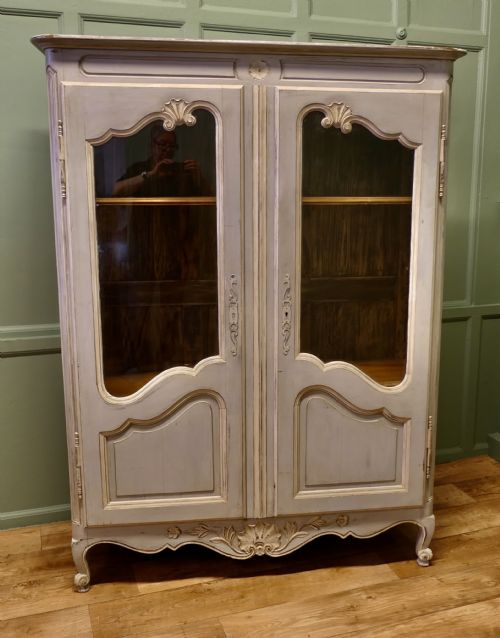
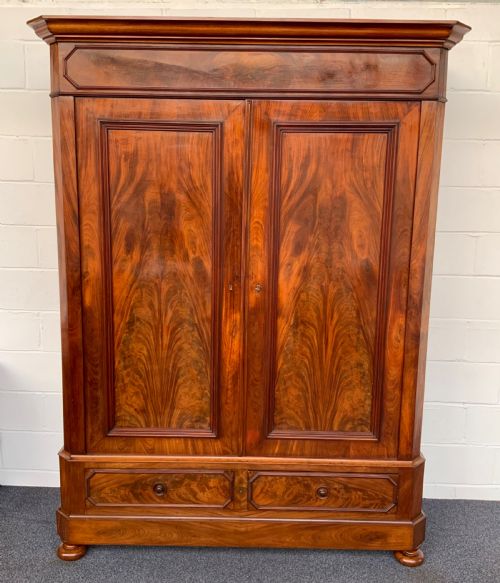
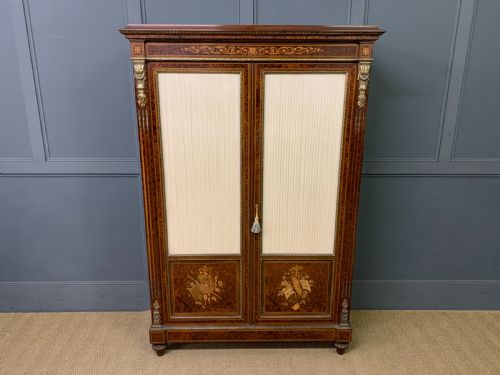

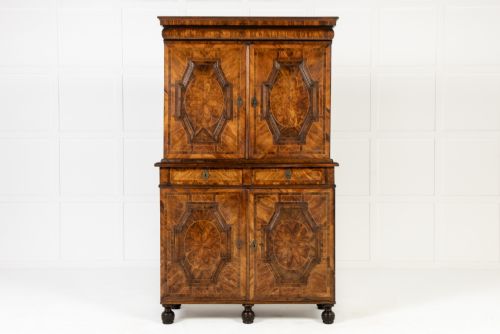


Two Door French Armoire
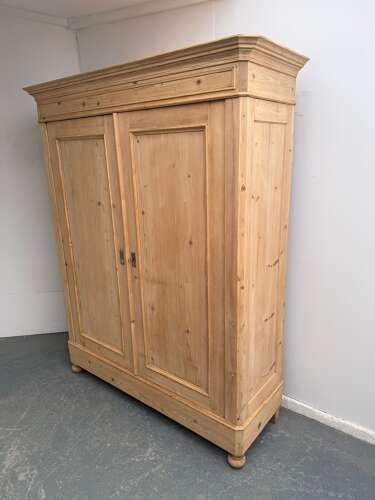
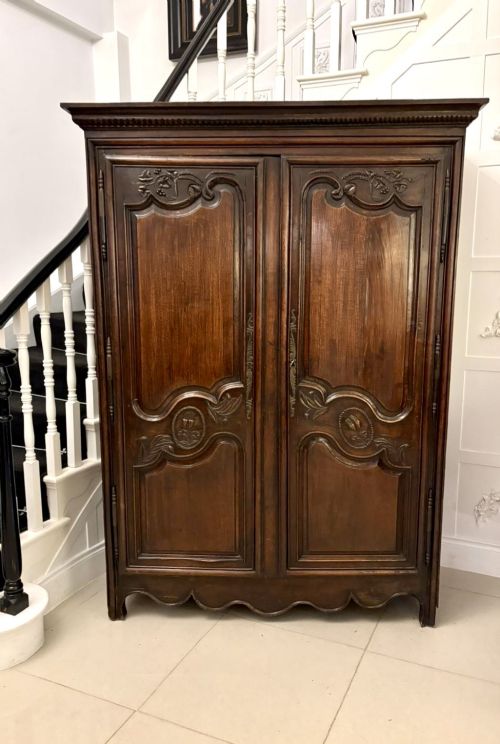
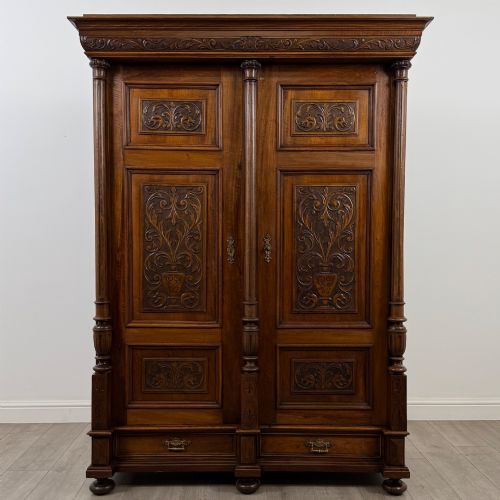
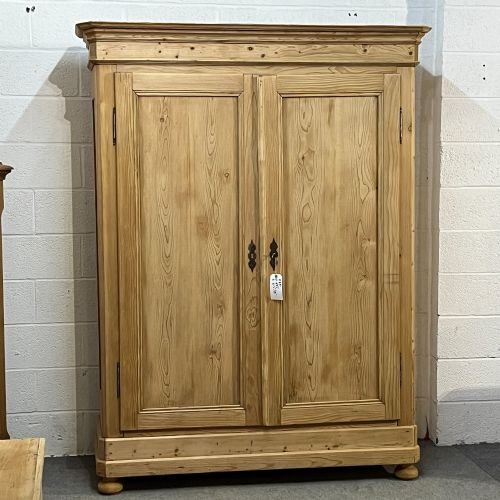
A two door french armoire brings substantial storage and grand proportions to a room, offering deep presence through regional timbers and classic carving.
Two Door French Armoire
When searching for a two door french armoire, buyers encounter robust storage furniture built primarily during the 18th and 19th centuries across various French regions. These pieces function as grand wardrobes, linen presses, and cupboards designed to anchor large bedrooms and hallways.
The version most commonly met on this page is constructed from solid oak, walnut, or pine, often displaying regional provincial characteristics or formal revival styles such as Rococo and Empire. These substantial cabinets combine practical hanging and shelving space with decorative architectural cornices and fielded panels.
Materials and construction methods
Cabinet makers utilised dense native timbers including oak, walnut, and fruit wood, frequently selecting figured mahogany and amboyna for refined urban pieces. Panels were traditionally hand-carved and assembled using pegged mortise and tenon joints to accommodate seasonal wood movement.
Hardware played a functional and decorative role, featuring heavy iron hinges, brass escutcheons, and occasional ormolu mounts. Surfaces were finished with natural wax, hand-painting, or left as bleached timber depending on the period and regional workshop practice.
Two Door French Armoire Retail Price Guide 2026
Typical asking prices for two door french armoire among the pieces listed under this phrase on Sellingantiques today, from the lower quarter to the upper quarter. They describe what is for sale here now, not the wider market.
House maid cupboards occasionally retain faint traces of historic whitewash and stubborn flour dust trapped deep within their pegged oak floorboards.
Distinctions in quality and execution
The distinction between standard utility cupboards and exceptional pieces lies in the depth of hand-carving on the pediment and stiles, particularly on 17th and 18th century examples. Superior armoires display crisp relief work and balanced proportions rather than flat, mechanically produced mouldings.
Timber selection and joinery integrity dictate overall standard, with premier examples utilising book-matched veneers, burr walnut, or carefully selected flame mahogany. Original patination, intact interior shelving, and heavy brass hardware further separate everyday storage from master craftsmanship.
Mercier
The Two Door French Armoire Glossary
- Armoire
- A large wardrobe or cupboard, traditionally used for storing clothes and linens. These pieces typically feature double doors and generous internal depth.
- Pediment
- The decorative architectural structure surmounting the top of the cabinet. Carved pediments often define the regional style of provincial French pieces.
- Parquetry
- A geometric mosaic of wood pieces used for decorative inlay on furniture surfaces. This technique appears on high-status 19th and early 20th century pieces.
- Escutcheon
- A flat plate surrounding a keyhole, designed to protect the surrounding wood from wear. They are frequently cast in brass or iron.
- Buffet Deux Corps
- A traditional two-stage storage piece consisting of a lower cabinet surmounted by a smaller upper cupboard. These heavy cupboards offer dual-level display and storage.
Two Door French Armoire: Frequently Asked Questions
How do I fit a large armoire?
Many traditional French armoires were designed to be completely dismantled for transport and reassembled in the room. Check whether the carcass uses pegged joints or knock-down construction before delivery.
Ensure you measure ceiling height as well as floor space, because ornate pediments add significant vertical clearance above the main body.
Can I use an armoire as a wardrobe?
Most pieces listed as wardrobes, linen presses, or armoires offer deep internal spaces suitable for modern clothes hangers and shelving inserts. Some earlier cupboards retain their original fixed shelves and require minor adaptation for hanging garments.
Consider the internal depth of the specific cabinet, as older timber frames can occasionally be shallow for modern bulky coats.
How do I care for antique oak?
Maintain timber surfaces by applying a traditional beeswax polish sparingly and buffing with a soft cloth. Avoid placing these heavy wooden pieces near direct heat sources or strong sunlight to prevent warping.
Clean glass panels and brass hardware gently using dry cloths to preserve the natural historic patination.
How do I date a French armoire?
Examine the construction joints, timber types, and hardware style to establish a baseline period. Hand-carved walnut and pegged oak construction generally indicate 18th or 17th century origins, while machine-cut veneers and pine linings point toward the Victorian era and 1900s.
Regional styles also provide clues, as provincial pieces retain local vernacular carving distinct from Parisian revival workshops.