


French Bedroom Wardrobe
A French bedroom wardrobe brings sculptural presence and generous storage to a room, uniting functional purpose with continental character.
French Bedroom Wardrobe
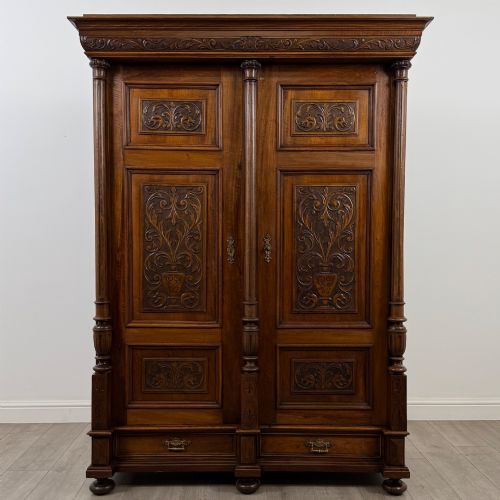
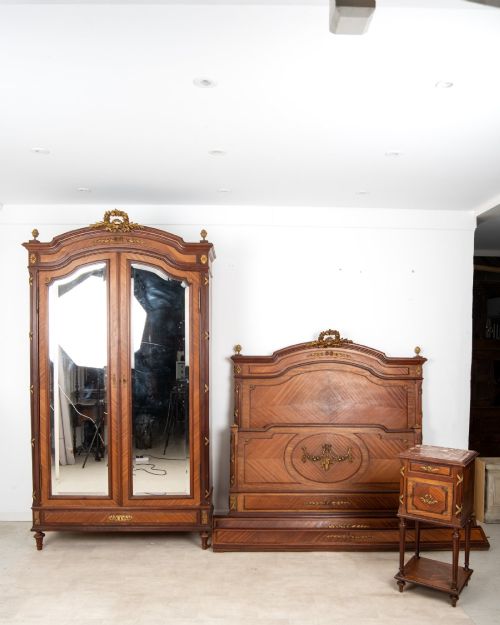
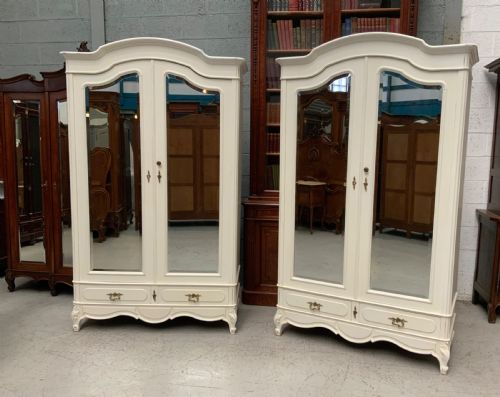
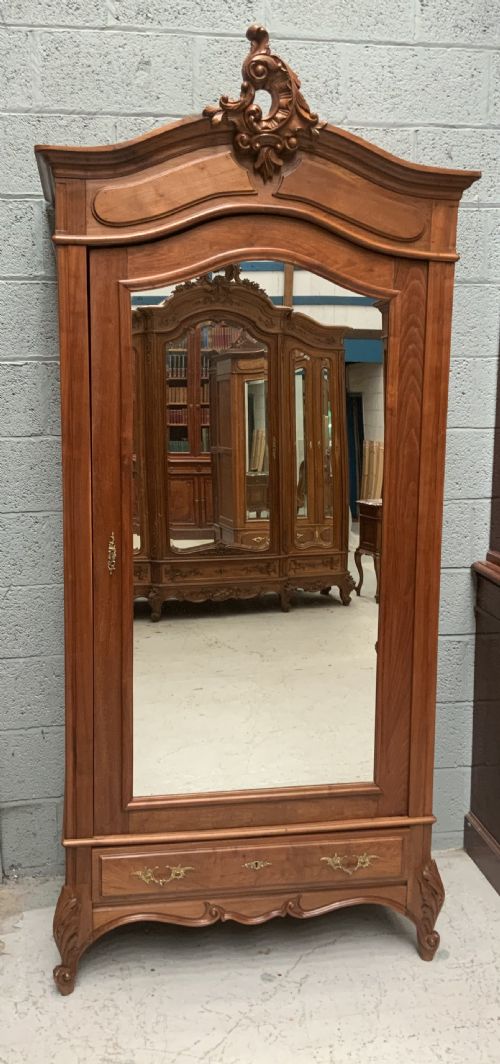
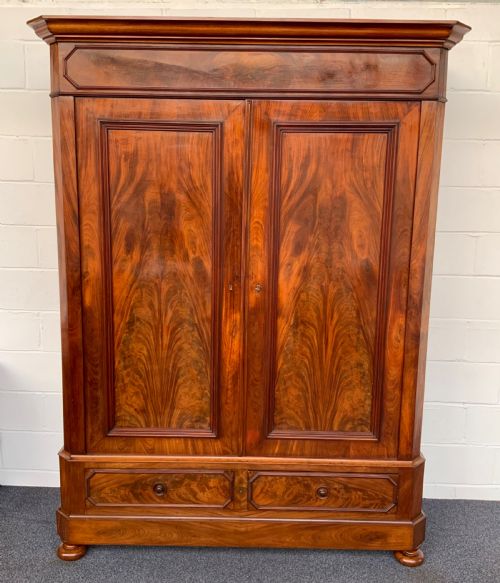
A french bedroom wardrobe encompasses tall armoires, mirrored storage cupboards, and complete bedroom suites dating across the nineteenth and early twentieth centuries. These pieces typically arrive in walnut, mahogany, oak, or painted wood, reflecting diverse regional aesthetics from provincial workshops to grand revival salons.
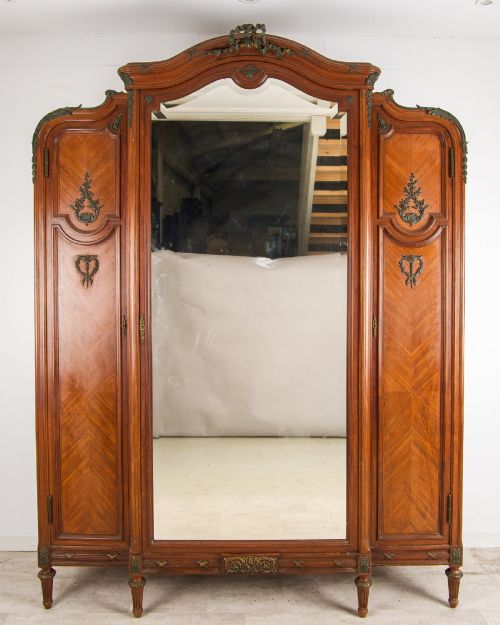
Buyers meet single and double door formats frequently on this page, often featuring bevelled glass mirrors and carved detailing. Styles range from restrained Louis XVI revival lines to ornate Louis XV curves and striking Empire proportions.
Origins stretch across French provincial districts and metropolitan centres, occasionally including related continental cabinetmaking. They serve as primary bedroom storage solutions that anchor a room through imposing scale and timber warmth.
Markers of distinction
Quality rests upon the selection of timber figures, such as matched flame mahogany or burr walnut veneers, and the crispness of hand-carved ornamentation. Finer examples display meticulous parquetry and substantial gilt bronze ormolu mounts rather than cast metal substitutes.
Structural integrity reveals itself in the precision of door alignment, panel construction, and the preservation of original mirrored glass or hardware. Pieces originating from comprehensive bedroom suites or bearing maker signatures reflect elevated workshop standards.
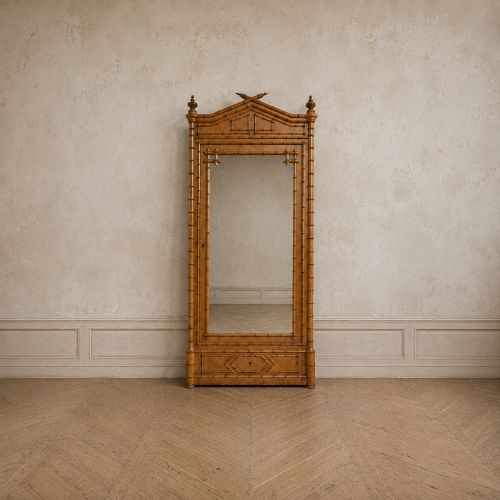
Early twentieth-century makers occasionally simulated jungle foliage by turning solid wood into convincing faux bamboo.
Jean Faure·Mercier
The French Bedroom Wardrobe Glossary
- Armoire
- A tall wardrobe or cupboard, traditionally used for storing garments. These pieces often feature double doors and generous internal hanging or shelving space.
- Ormolu
- Gilded bronze applied as a decorative mount on furniture. It provides metallic contrast and highlights structural corners or panels.
- Marquetry
- Decorative veneer work forming pictures or patterns using different woods. Craftsmen assemble thin pieces of timber to create intricate surface designs.
- Parquetry
- Geometric mosaic woodwork used for flooring or furniture panels. It relies on contrasting wood tones arranged in repeating patterns.
- Faux bamboo
- Wood turned and carved to resemble natural bamboo stalks. This decorative technique appeared frequently in nineteenth century furniture design.
French Bedroom Wardrobe: Frequently Asked Questions
How do I identify a Louis XVI style wardrobe?
Look for straight tapered legs, fluted column details, and neoclassical symmetry in the carvings and overall proportion. These elements distinguish the style from more curvaceous earlier periods.
Hardware often incorporates classical motifs such as ribbons, urns, and laurel wreaths executed in brass or ormolu mounts.
Are these wardrobes easy to dismantle for moving?
Many nineteenth-century continental wardrobes utilise a knock-down construction held together by large wooden pegs or internal bolts. This design allowed large armoires to be transported up staircases and between rooms.
Checking the internal joints reveals whether the cornice, base, and side panels separate independently from the backboards.
What is the difference between an armoire and a linen press?
An armoire functions primarily as a hanging wardrobe with full-length vertical space for garments. A linen press traditionally incorporates internal sliding trays or shelves specifically for folded textiles.
Many listings combine these terms, but internal depth and configuration determine whether the piece suits hanging coats or folded linens.
How do I care for antique mahogany and walnut surfaces?
Maintain timber finishes by avoiding direct sunlight and excessive humidity fluctuations that cause wood to dry or crack. Regular dusting with a soft dry cloth preserves the polish without chemical buildup.
Periodic application of appropriate wax feeds the grain and protects older veneer work from minor surface wear.