
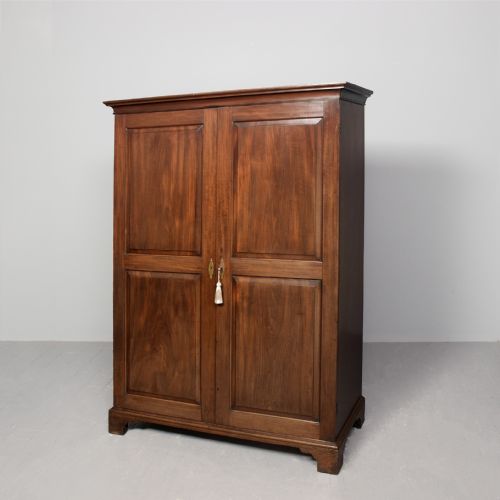
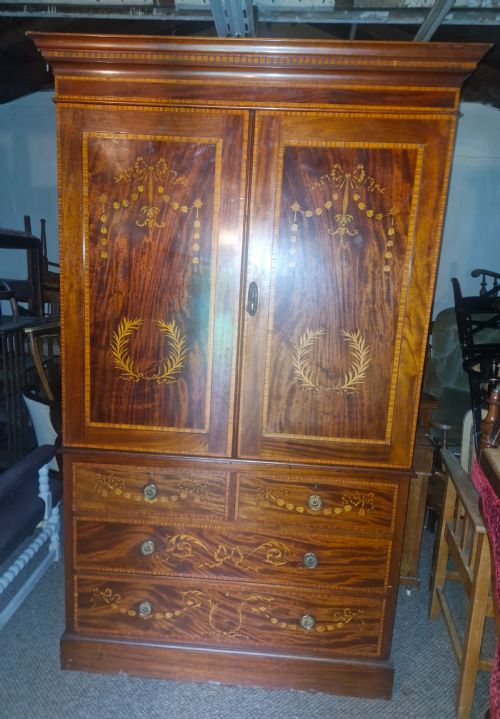

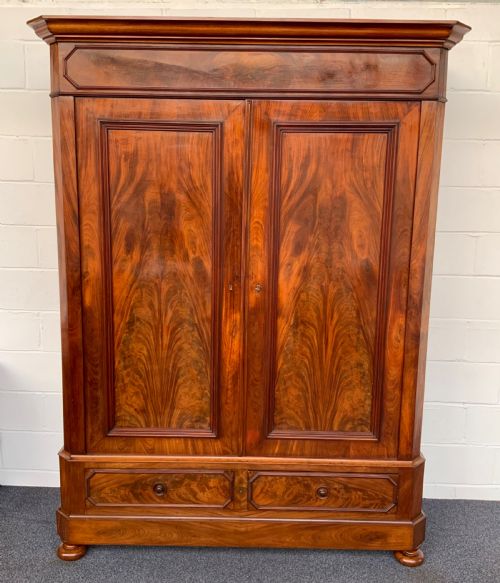


Brown Timber Wardrobe
These brown timber wardrobes span centuries of storage, bringing solid mahogany, walnut and pine into the bedroom with honest construction and enduring presence.
Brown Timber Wardrobe
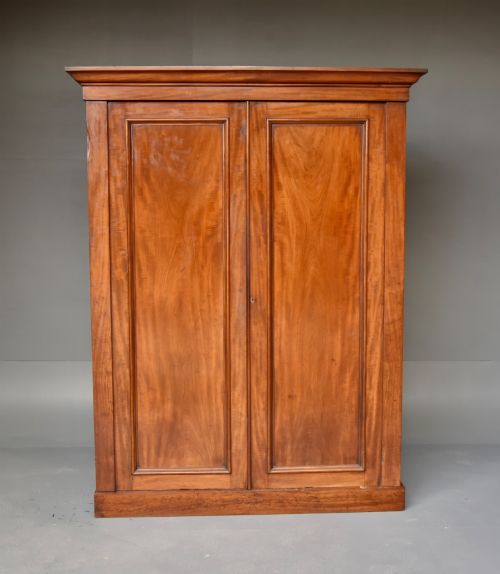
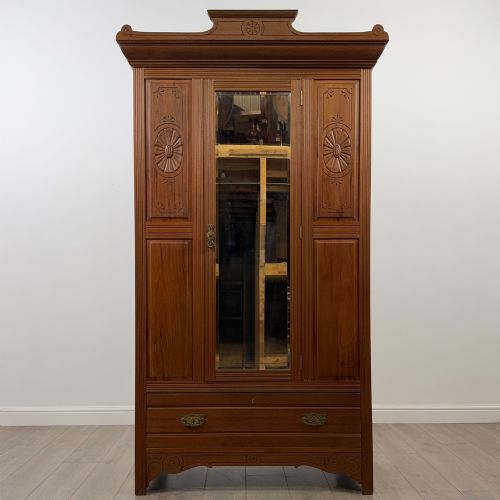
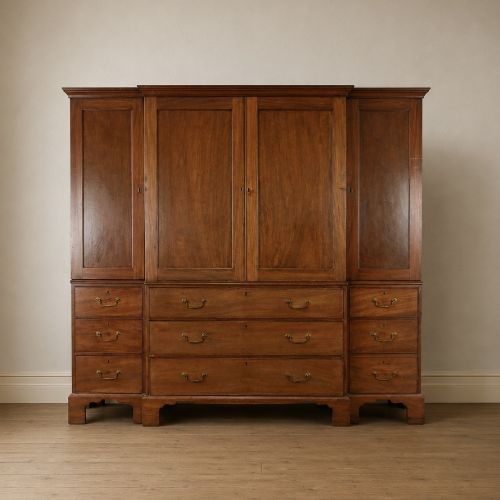
A brown timber wardrobe provides substantial clothes storage, appearing across periods from the eighteenth century through the Edwardian era and into the 1930s. Buyers searching for a brown timber wardrobe encounter tall double doors, breakfront linen presses and single door compartments designed to hold substantial garments.
The pieces on this page originate from diverse cabinet-making traditions, ranging from English Georgian workshops to French provincial makers and Italian studios. Forms vary from low combination cupboards to monumental breakfront wardrobes fitted with internal drawers and hanging space.
How they were made
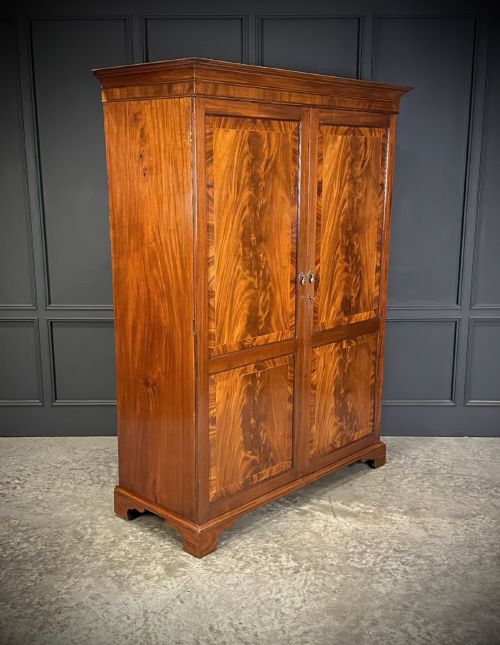
Cabinet-makers constructed these pieces using solid timbers such as mahogany, walnut, ash, teak and pine, frequently applying flame mahogany veneers to principal surfaces. Frame and panel construction allowed the wood to move naturally with changes in humidity without splitting the main structure.
Joinery relied on traditional dovetailed joints for drawers and mortise and tenon frames for doors, supplemented by brass hardware and glass panels. Surfaces received wax, polish or polychrome paint finishes that protected the timber while highlighting its natural grain and figure.
Listings feature brown timber wardrobes constructed from mahogany, walnut, pine, teak and ash across Victorian, Edwardian, Georgian and 1930s periods.
What varies in quality
Quality in a brown timber wardrobe reveals itself in the selection of figured timber, such as matched flame mahogany or intricate parquetry work. Superior examples demonstrate careful grain alignment across large door panels and meticulous attention to internal drawer construction.
The degree of hand-carved detail and the integration of specialised elements like inlaid stringing or brass mounts separate standard utility pieces from finer architectural wardrobes. Hardware execution, from working brass locks to heavy hinges, also marks the distinction between workshop tiers.
Druce & Co.·Mercier
The Brown Timber Wardrobe Glossary
- Linen press
- A tall cupboard featuring sliding trays or drawers in the upper section for folded textiles, placed above a base of deeper drawers.
- Breakfront
- A piece of furniture where the central section projects forward from the flanking wings, creating a layered architectural facade.
- Parquetry
- A geometric mosaic of wood pieces used for decorative surfacing on floors, cabinet doors and architectural panels.
- Scumbled
- A decorative paint technique where a translucent top coat is manipulated over a lighter base to imitate the grain of oak or other desirable timbers.
- Armoire
- A large wardrobe or cupboard, originally designed for storing weapons or armour, later adapted for clothing and textiles.
Brown Timber Wardrobe: Frequently Asked Questions
How do I distinguish a Georgian press from a Victorian wardrobe?
Georgian presses often feature classical architectural proportions, crisp cockbeading around drawer fronts and sliding linen trays behind upper doors. Victorian examples generally provide deeper hanging compartments and heavier architectural moulding.
Timber selection also shifts between eras, moving from eighteenth-century figured mahogany towards the broader use of walnut and pine in later nineteenth-century bedrooms.
Can I dismantle these large wardrobes for transport?
Many older wardrobes, particularly continental armoires and breakfront presses, were designed to be completely dismantled into modular sections of crown, base, sides and doors. This modular construction allowed workshops to deliver massive pieces up narrow staircases.
English hanging wardrobes of the nineteenth century frequently remain fixed as single rigid carcases, requiring careful measurement of doorways and ceiling heights before delivery.
What is the difference between an armoire and a wardrobe?
Armoire is a traditional continental term for a large standing cupboard with doors, whereas wardrobe generally describes British furniture built specifically for hanging garments. French and Italian pieces often emphasise decorative painted finishes, parquetry or heavy carved walnut.
British iterations lean towards architectural mahogany or inlaid Edwardian styling with fitted internal sliding shelves and clothes hooks.
How should I care for timber surfaces and veneers?
Maintain antique timber by applying natural beeswax sparingly and buffing gently with a soft cloth to nourish the dry wood fibres. Avoid placing these pieces near direct heat sources or in fluctuating humidity to prevent veneer lifting and timber splitting.
Keep glass panels clean with standard non-abrasive solutions and periodically check that brass hinges and locks remain properly aligned under the weight of the heavy doors.