
Antique Clothes Wardrobe
An antique clothes wardrobe offers substantial domestic storage through period craftsmanship in mahogany, oak, walnut, and pine.
Antique Clothes Wardrobe
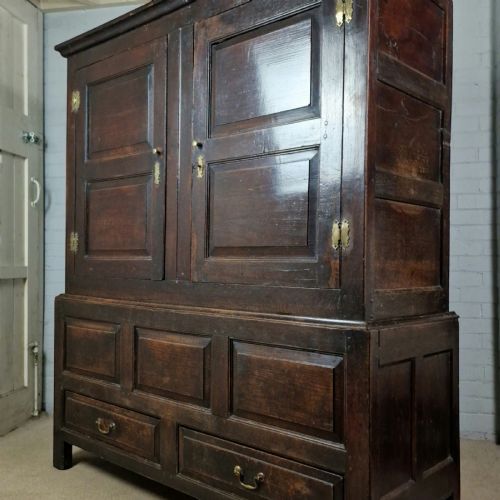
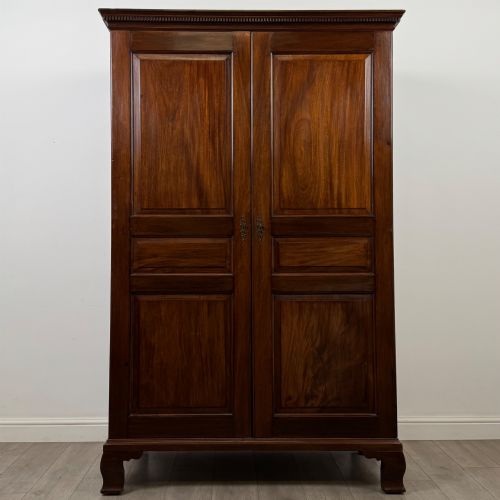
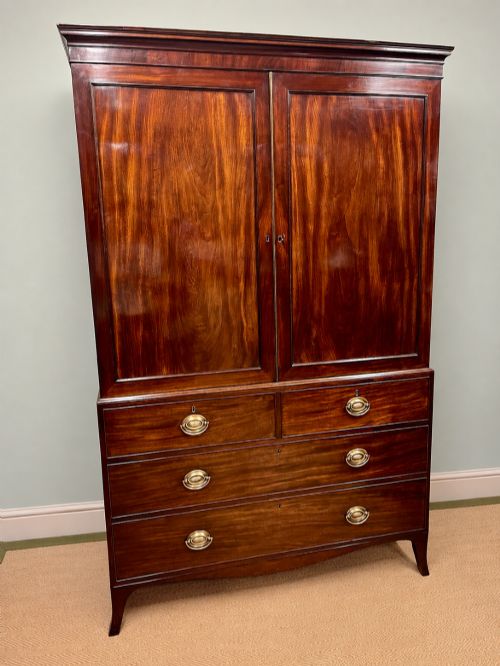
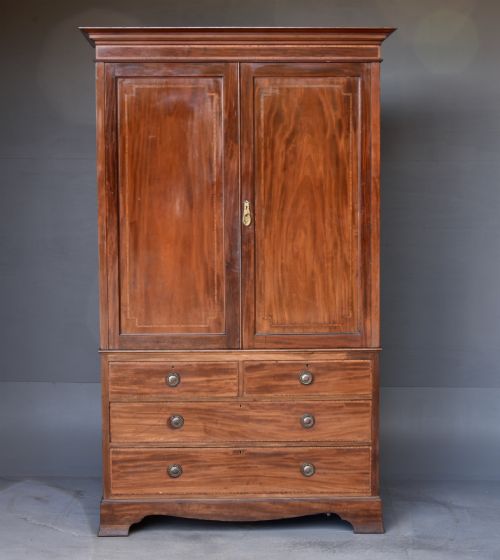
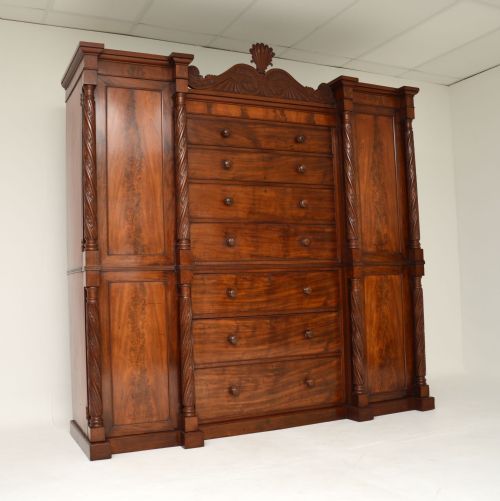
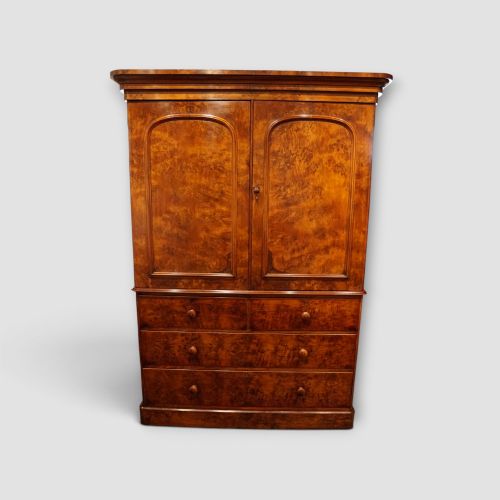
An antique clothes wardrobe provides large-scale bedroom storage for garments, often combining hanging space with internal linen trays, shelves, and drawers. These pieces range from substantial Georgian and Regency clothes presses to Victorian and Edwardian triple or double wardrobes.
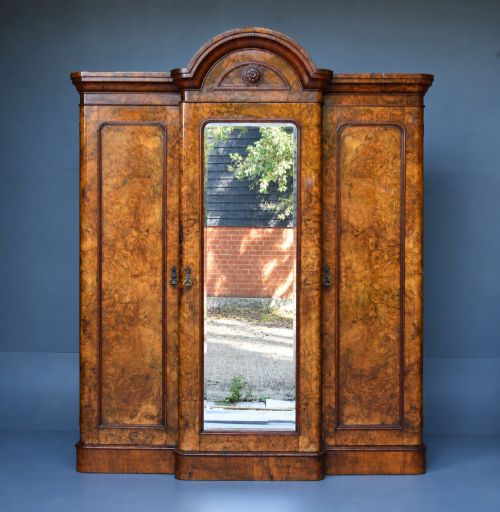
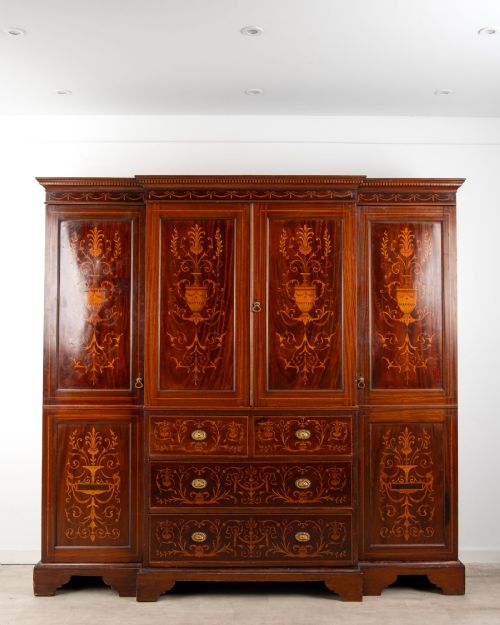
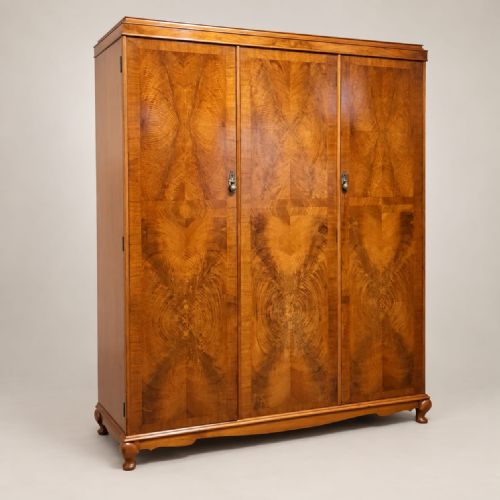
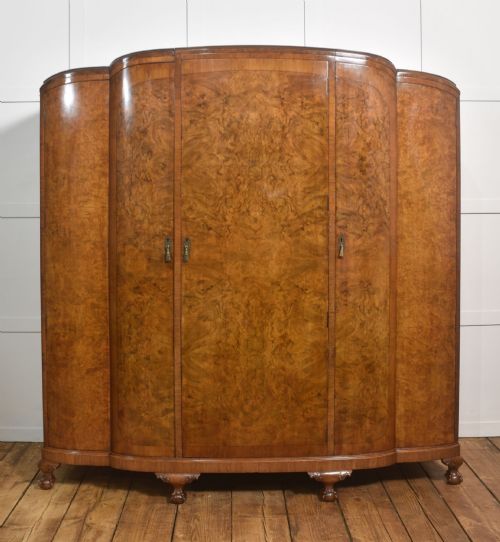
The versions most frequently found here include mahogany and burr walnut constructions from the Victorian and Edwardian decades, alongside practical pine knockdown pieces. Regional pieces and specialised forms such as compactums and gentleman's wardrobes frequently appear across the selection.
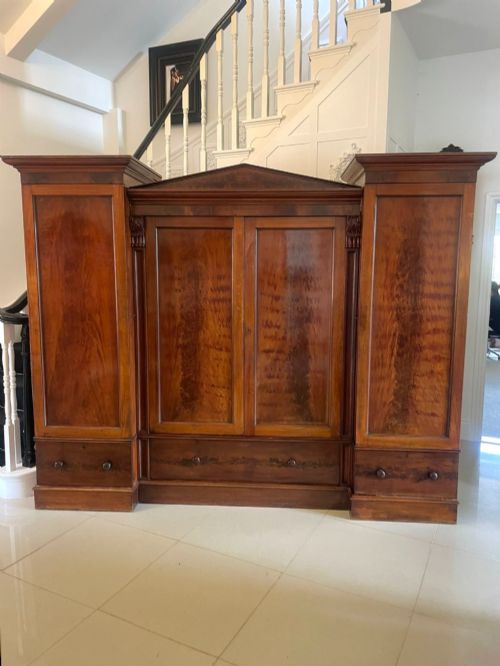
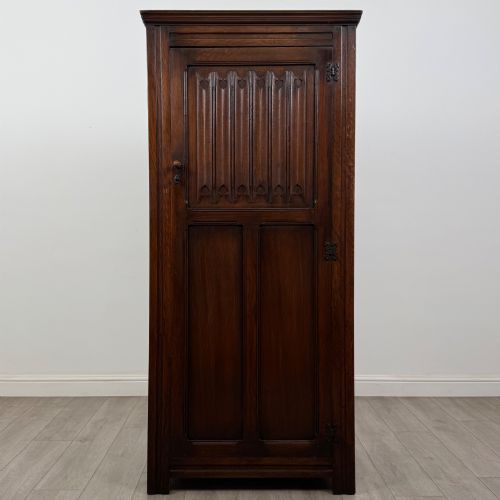
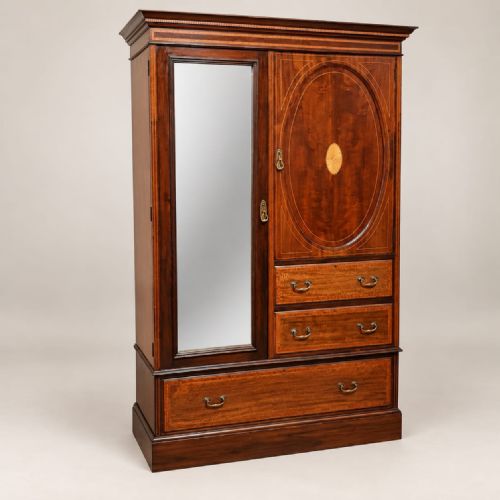
Design influences span from clean Georgian proportions and Regency elegance through to Arts and Crafts simplicity, Art Nouveau curves, and the geometric lines of Art Deco. Formats vary from single mirrored doors to massive breakfront and triple-door configurations.
Construction and materials
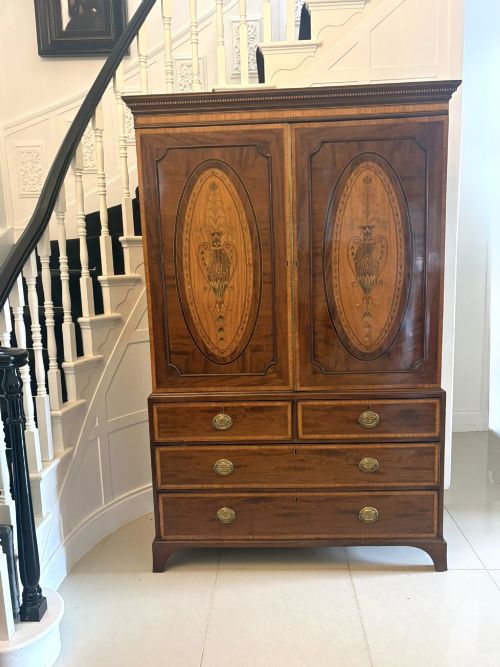
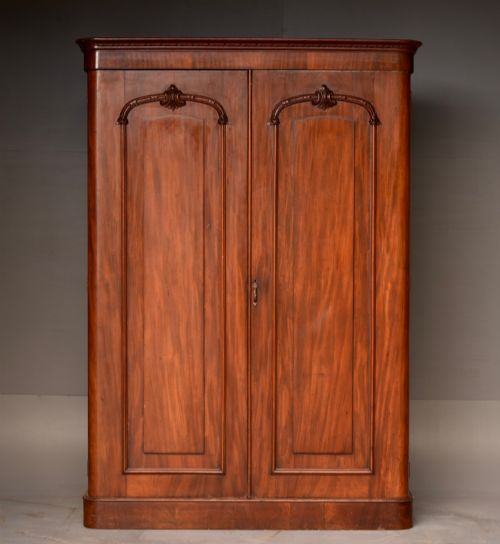
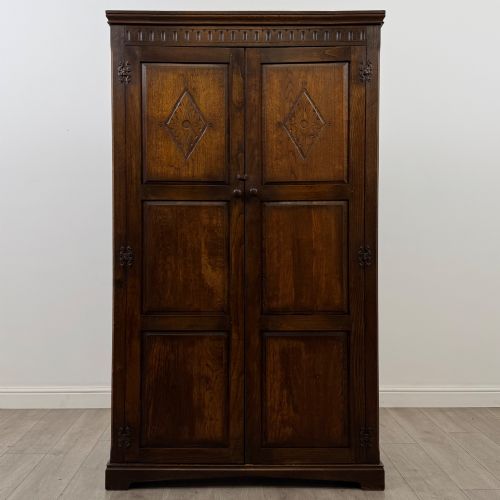
Makers utilised solid and veneered timbers including figured mahogany, burr walnut, oak, ash, and pine, frequently enhanced with satinwood inlay or brass hardware. Carved details and glass mirror doors appear on later Victorian and Edwardian examples.
Larger formats such as knockdown wardrobes and multi-section compactums were engineered to dismantle for transport into domestic spaces. Traditional joinery methods secured stability across expansive timber panels and heavy panelled doors.
Listings feature woods including mahogany, burr walnut, oak, ash, and pine across Victorian, Edwardian, Georgian, Regency, and Art Deco periods.
Judging construction and finish
Quality depends upon the selection of timber figures, such as highly figured mahogany or burr walnut veneers, matched symmetrically across large surfaces. Finer examples display meticulous inlay work and original brass fittings.
Structural integrity relies upon robust internal framing, smoothly operating drawers, and well-fitted panel doors that maintain alignment over decades of use.
maples & co·MAPLES & SON
The Antique Clothes Wardrobe Glossary
- Compactum
- A multi-compartment wardrobe that integrates hanging space, shelving, and linen drawers within a single unified piece.
- Linen press
- A tall storage piece featuring upper sliding trays or shelves enclosed by doors, positioned above a base section of chest drawers.
- Knockdown
- A piece engineered to dismantle entirely into manageable sections for ease of transport and site assembly.
- Breakfront
- A cabinet design where the central section projects forward from the flanking outer wings.
- Scumble
- A decorative paint technique applied to imitate natural wood graining, often found on regional pine pieces.
Antique Clothes Wardrobe: Frequently Asked Questions
How do I assemble a knockdown wardrobe?
Knockdown wardrobes were built to dismantle using interlocking pegs, bolts, or tongue-and-groove joints that allow the cornice, base, sides, and doors to separate.
Reassembly requires careful alignment of these original joints on a level floor to ensure the heavy doors hang plumb and swing smoothly.
What is the difference between a wardrobe and a clothes press?
A standard wardrobe focuses primarily on vertical hanging space for garments behind full-length doors, often with a drawer in the base.
A clothes press, or linen press, traditionally contains internal sliding trays or shelves in the upper section for folded textiles, positioned above a chest of drawers.
Will a large Victorian wardrobe fit in a modern bedroom?
Victorian and Edwardian wardrobes were designed for high-ceilinged rooms and often feature imposing heights and deep footprints.
Measuring ceiling clearance and stairway turning space is essential before purchase, particularly for non-dismantling solid wood or large triple configurations.
How should I care for antique wood finishes?
Polished mahogany, walnut, and oak surfaces benefit from occasional applications of traditional beeswax to nourish the timber and maintain a soft sheen.
Keeping pieces away from direct heat sources and strong sunlight prevents the wood and veneer from drying out or splitting.