




Georgian Walnut Linen Press
A georgian walnut linen press is a substantial storage piece built to hold household linens, prized for rich burr figuring and architectural presence.
Georgian Walnut Linen Press
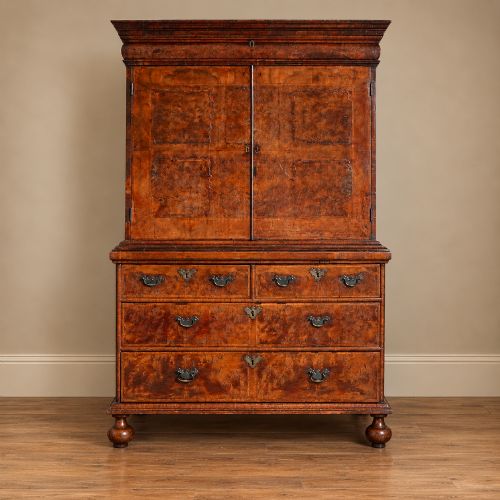
When you search for a georgian walnut linen press, you encounter large storage furniture combining a top cabinet section with sliding trays and a lower chest of drawers. These pieces emerge primarily from the eighteenth century, featuring walnut and burr walnut veneers laid over oak or pine carcases.
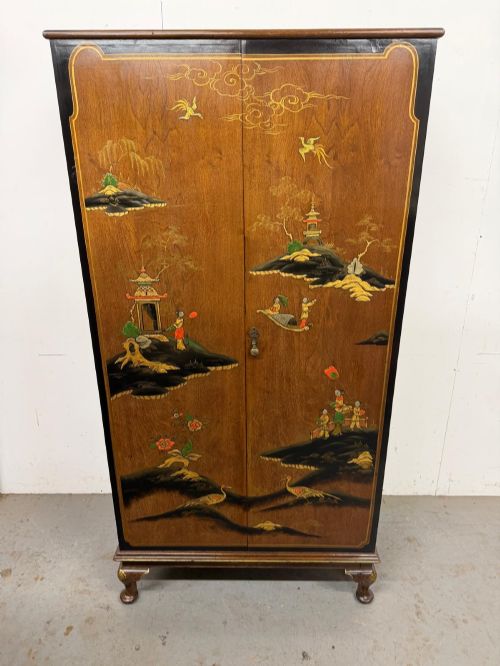
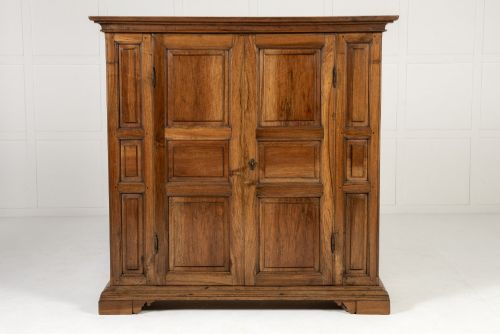
The inventory on this page also shows related forms such as cabinets on chests, compactum wardrobes, and Dutch press cupboards spanning the seventeenth century through to early twentieth-century revivals. Queen Anne and George I styles dominate the early examples, while later iterations bring Chinoiserie lacquer and Sheraton influences.
Buyers most frequently meet walnut cabinet forms and linen press cupboards that display highly figured grain patterns across their front elevation. These heavy case pieces served primarily to store and press linens flat before modern ironing equipment existed.
How They Were Made
Cabinetmakers constructed these carcases using solid oak or wood frames, applying thin veneers of figured walnut and burr walnut to the exterior surfaces. Crossbanding and stringing lines in lighter woods frequently frame the drawer fronts and door panels.
Iron and brass hardware, including escutcheons, hinges, and drop handles, secure the doors and drawers while adding structural detail. Surface finishes relied on traditional hand-polished shellac or lacquer, particularly visible on Italian Baroque and Chinoiserie examples.
Materials in these listings span walnut, burr walnut, oak, mahogany, lacquer, brass, and iron across the eighteenth and twentieth centuries.
What Varies in Quality
The visual impact of a georgian walnut linen press rests heavily on the choice and matching of veneer timbers, where mirrored burr walnut panels command higher regard than plain grain. Expert timber selection ensures symmetrical patterns across large cabinet doors and drawer banks.
Construction finesse dictates longevity, distinguishing pieces with tight dovetail joints in the drawer construction and well-fitted internal linen slides from coarser work. Original brass mounts and untouched patination further elevate the standing of a survival from these periods.
The Georgian Walnut Linen Press Glossary
- Burr walnut
- A veneer sliced from the gnarled growths of a walnut tree, producing swirling patterns of knots and eyes. It was favoured by cabinetmakers for the most visible panels of high-status furniture.
- Compactum
- A multi-functional wardrobe or storage cabinet designed with internal divisions for hanging clothes, sliding trays, and drawers. This form maximises storage efficiency within a single case.
- Crossbanding
- A narrow strip of veneer laid perpendicularly to the surrounding grain around the border of a drawer front or tabletop. This technique creates a neat framing effect that contrasts with the central panel.
- Escutcheon
- A protective metal plate surrounding a keyhole, usually cast in brass. It prevents the wood around the lock from splitting through repeated use.
- Linen press
- A tall piece of furniture featuring upper sliding trays for storing folded textiles and lower drawers for apparel. The upper section originally exerted gentle pressure to keep linen flat.
Georgian Walnut Linen Press: Frequently Asked Questions
What is a georgian walnut linen press used for?
These large pieces were originally designed to store and flatten household linens using internal sliding shelves, with lower drawers holding larger garments. Today, they function effectively as generous bedroom wardrobes or living room storage cupboards.
Their deep internal compartments easily accommodate modern clothing, blankets, and folded items while adding significant historical character to a room.
How do I date a walnut cabinet on chest?
Dating relies on examining construction methods, timber choices, and hardware styles across the piece. Early eighteenth-century examples often feature feather-banding, candle slides, and solid oak drawer linings.
Later nineteenth and twentieth-century revival pieces utilise machine-cut elements or different secondary woods inside the carcase, even when mimicking Queen Anne or George I aesthetics.
How should I care for antique walnut furniture?
Keep walnut furniture away from direct sunlight, heating vents, and damp environments to prevent the timber veneers from drying out, cracking, or lifting. Maintain stable room humidity levels year-round.
Apply a traditional microcrystalline wax polish occasionally to nourish the historic wood finish and protect the surface from dust and minor wear.