
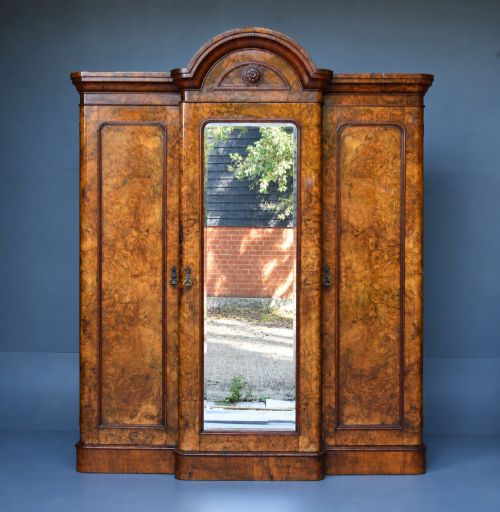
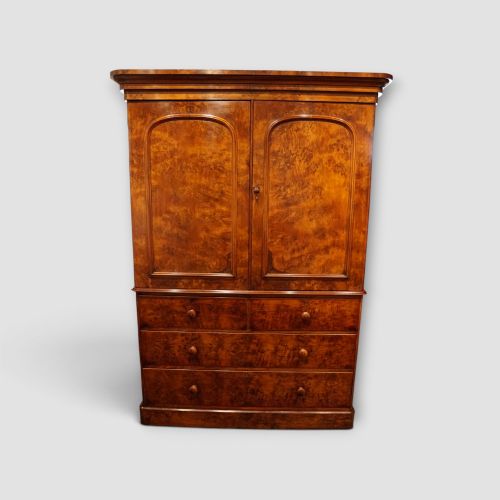
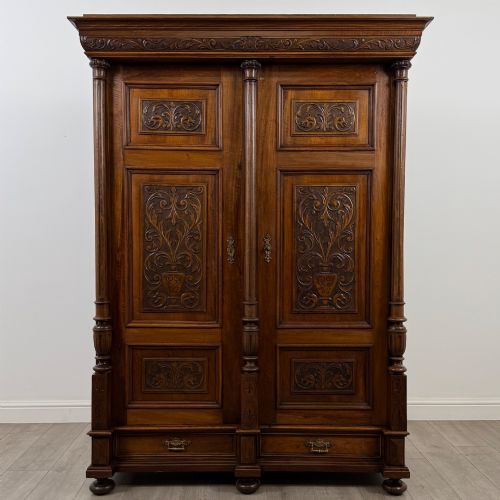
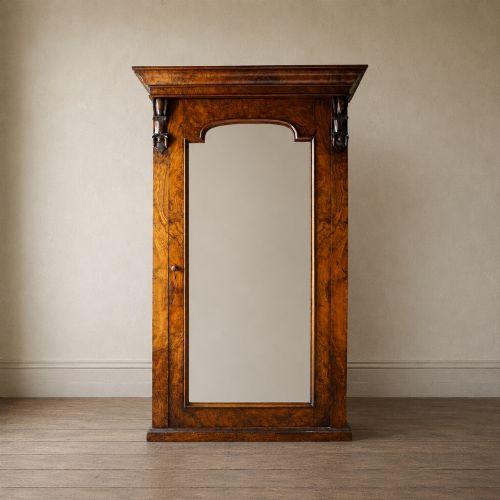
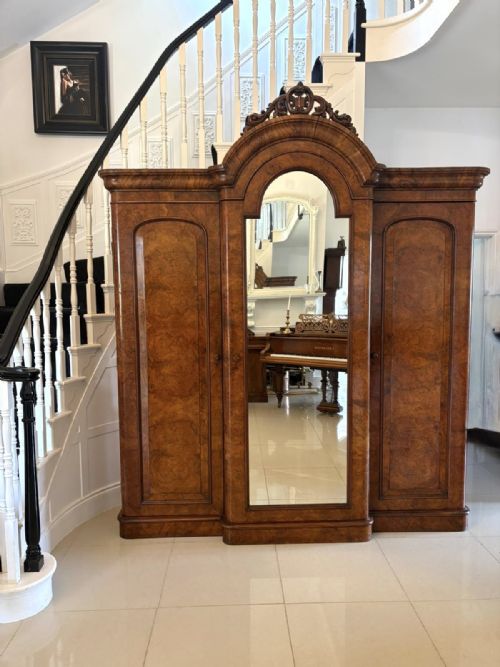

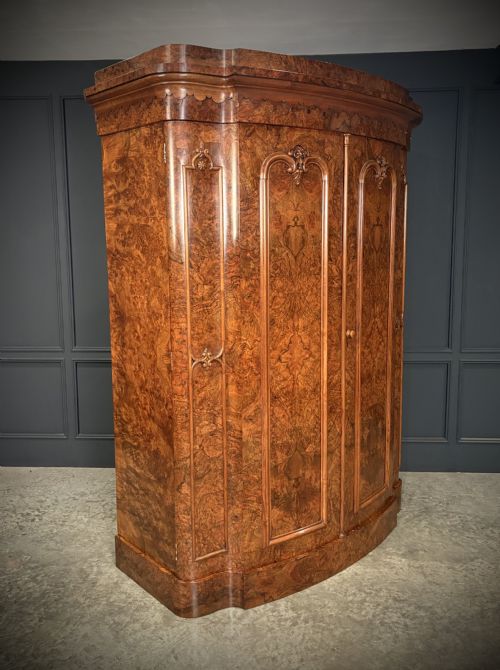


Victorian Walnut Clothes Press
These walnut pieces are substantial storage furniture from the nineteenth century, built for hanging garments and linen.
Victorian Walnut Clothes Press
A victorian walnut clothes press or wardrobe offers deep internal storage housed in richly figured timber. These pieces span the nineteenth century, emerging in single, double, triple, and compactum formats.
The versions met here range from bow fronted designs to French Provincial and Grunderzeit styles. Many incorporate internal sliding trays, hanging space, and fitted drawers beneath timber or mirrored doors.
Makers utilised burr walnut and plain walnut veneer over secondary timbers such as oak and ash. The resulting surfaces display distinct grain patterns that mark out the period of production.
Construction and Materials
Cabinet makers applied fine burr walnut and walnut veneers onto solid carcass woods like oak and ash. This technique created striking decorative grain patterns across large panel surfaces while maintaining structural stability.
Functional hardware relied on brass fittings and functional locks. Doors often featured mirrored glass inserts, whilst interior compartments utilised sliding linen trays and timber shelving built to handle heavy textiles.
One recorded piece spent its earlier days at Ayton Castle before finding its way into the modern antiques market.
Assessing Quality
Quality rests in the selection of the timber veneer and the depth of the grain figures. Burr walnut displays intricate patterning that demands exceptional skill in matching and laying the veneer across multiple doors.
Internal configuration and joinery define the upper tier of these cabinets. Compactum designs with sophisticated internal drawer arrangements and robust framing represent the more accomplished end of nineteenth century production.
The Victorian Walnut Clothes Press Glossary
- Compactum
- A fitted wardrobe featuring a combination of hanging space, shelves, and internal drawers within a single carcass. This layout provides multi-functional storage for various garments.
- Burr Walnut
- Timber taken from a growth on a walnut tree, producing swirling, highly decorative grain patterns. Cabinet makers prized this wood for veneering prominent surfaces.
- Clothes Press
- A tall storage cabinet traditionally used for flat linens and folded clothes before hanging garments became standard. Interiors often contain sliding trays rather than deep hanging rails.
- Grunderzeit
- A nineteenth century Central European architectural and decorative style characterised by historic revival forms. Pieces from this tradition often feature solid proportions and restrained classical details.
- Veneer
- A thin slice of decorative wood glued over a secondary timber base. This method allowed craftsmen to display expensive grain figures economically.
Victorian Walnut Clothes Press: Frequently Asked Questions
What is a compactum wardrobe?
A compactum is a multi-functional wardrobe designed to maximise storage by combining hanging space, shelving, and internal drawers within one unit.
These pieces often include sliding linen trays behind central doors flanked by hanging compartments.
How do I care for walnut furniture?
Walnut furniture requires a stable environment away from direct sunlight and extreme temperature fluctuations to protect the veneer.
Regular dusting with a dry cloth and occasional application of appropriate wax maintains the lustre of the timber.
Are these wardrobes easy to dismantle?
Many nineteenth century wardrobes were constructed in modular sections to facilitate transport and placement in large houses.
Cornices, bases, and central hanging sections often separate, though professional assembly is advisable due to the weight of the timber.
What is the difference between a wardrobe and a clothes press?
A traditional clothes press is designed primarily for folded garments and linens, featuring internal sliding trays behind doors.
Wardrobes focus predominantly on vertical hanging space for coats and dresses, sometimes supplemented by lower drawer sections.
How do I identify burr walnut?
Burr walnut is recognisable by its dense, swirling knot patterns and irregular, highly decorative grain formations.
This timber was sliced into veneers and applied across the main visible panels of high quality Victorian cabinets.