

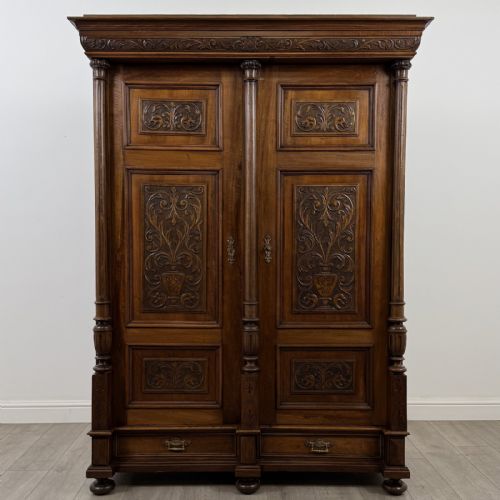
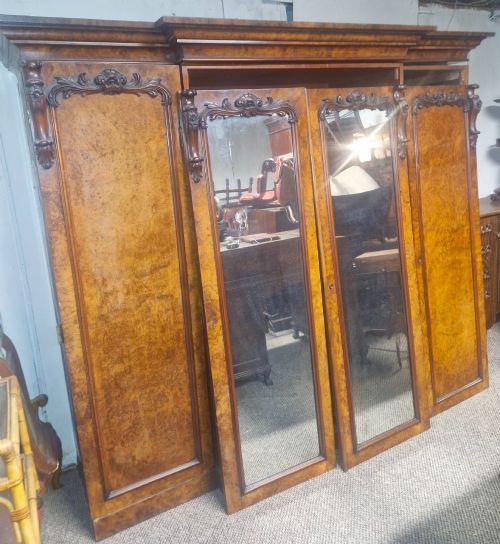
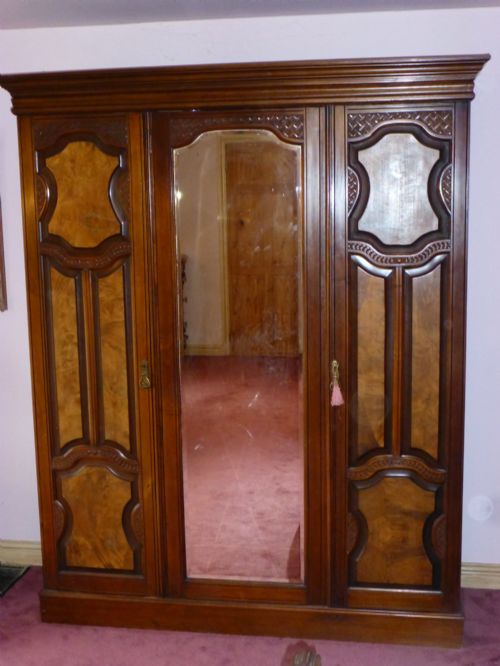
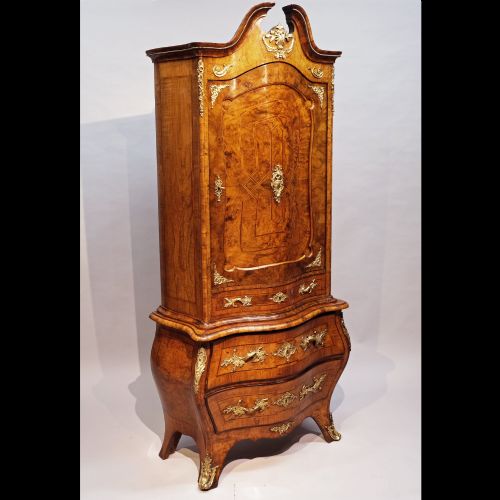
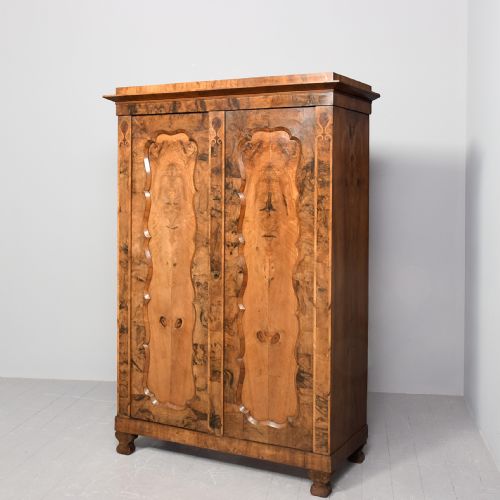

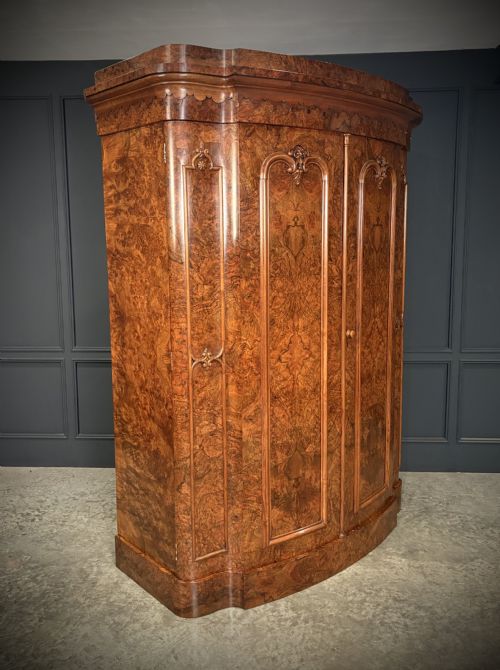


19th Century Walnut Wardrobe
A 19th century walnut wardrobe brings rich figured timber and substantial storage to a bedroom.
19th Century Walnut Wardrobe
A 19th century walnut wardrobe is a large storage piece built to hold garments, featuring internal hanging space, drawers, or linen slides. These items range from single-door armoires to expansive triple-door compactum wardrobes.
The Victorian period dominates the selection, alongside continental examples including French, Dutch, and German pieces. Buyers frequently encounter symmetrical multi-door cabinets and specialised linen presses fitted with internal drawers beneath upper cupboard doors.
How they were made
Cabinet makers built these wardrobes using solid pine carcases faced with walnut, burr walnut, or figured walnut veneer. Selected timbers display intricate grain patterns, often enhanced by crossbanding or marquetry details.
Construction incorporated brass hardware, mirror glass door panels, and ormolu mounts on continental variations. Internal fittings relied on sturdy timber framing to support heavy hanging rails and sliding linen trays.
19th Century Walnut Wardrobe Retail Price Guide 2026
Typical asking prices for 19th century walnut wardrobe among the pieces listed under this phrase on Sellingantiques today, from the lower quarter to the upper quarter. They describe what is for sale here now, not the wider market.
Listings feature walnut, burr walnut, and figured walnut veneer supported by secondary timbers like pine and oak.
What varies in quality
Quality rests upon the selection and matching of the walnut veneers across the doors and panels. Superior examples exhibit continuous grain alignment and carefully chosen burr timber rather than plain surfaces.
Construction depth defines the tier of the piece, visible in the thickness of the oak or pine secondary woods and the precision of the drawer dovetails. Master workshops integrated complex internal compartments and high-grade brass locks.
Holland and Sons·Shapland and Petter
The 19th Century Walnut Wardrobe Glossary
- Burr walnut
- A figured timber obtained from the gnarled growth on walnut trees, prized for its swirling grain. Cabinet makers sliced this wood into thin veneers for decorative door panels.
- Compactum wardrobe
- A multi-section piece combining hanging space with linen slides and internal drawers. This design maximises storage efficiency within a single footprint.
- Linen press
- A tall storage cabinet featuring upper cupboard doors enclosing sliding trays above lower drawers. They served originally to store folded textiles and garments.
- Ormolu
- Gilt-bronze decorative mounts applied to furniture. This finish appears frequently on continental armoires.
- Marquetry
- Inlaid patterns formed from different coloured veneers. Dutch examples employ this technique extensively across the primary facade.
19th Century Walnut Wardrobe: Frequently Asked Questions
What is a compactum wardrobe?
A compactum wardrobe is a combined storage unit that integrates hanging rails, shelving, and internal drawers into a single structure. These pieces offer varied organizational compartments behind multiple doors.
They emerged to provide comprehensive bedroom storage without requiring separate chests of drawers and wardrobes.
How do I care for walnut veneer?
Walnut furniture requires placement away from direct sunlight and heat sources to prevent the veneers from drying out or lifting. Maintaining stable room humidity preserves the timber.
Dust the surface regularly with a soft cloth and apply appropriate natural waxes sparingly when the wood appears dry.
Are these wardrobes easy to dismantle?
Many 19th century large wardrobes were designed to dismantle into modular sections including a cornice, base, sides, and doors to facilitate transport. Assembly relies on internal bolts or slot-in joints.
Checking the construction method helps determine whether a multi-door wardrobe can navigate staircases and tight doorways.
What distinguishes French armoires?
French armoires often feature single doors, prominent pediments, and mirrored glass panels framed in shaped walnut. Continental designs also incorporate distinctive regional styling such as Rococo Revival curves.
These pieces typically emphasise decorative mouldings and proportion rather than the compartmentalized interior layouts found in English compactums.