
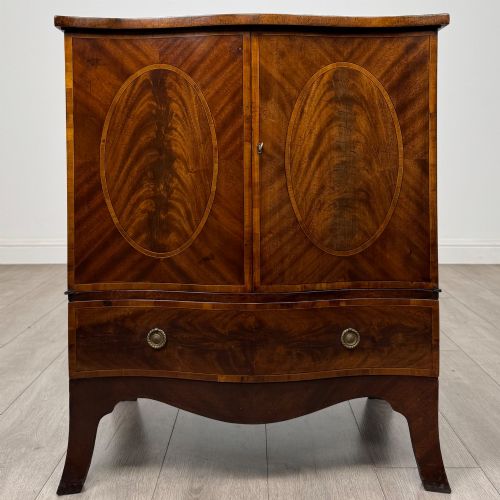
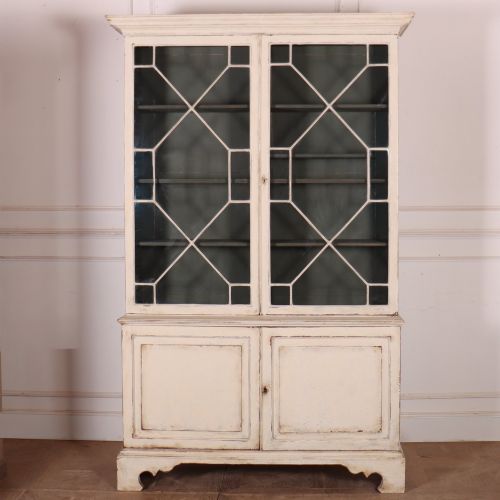
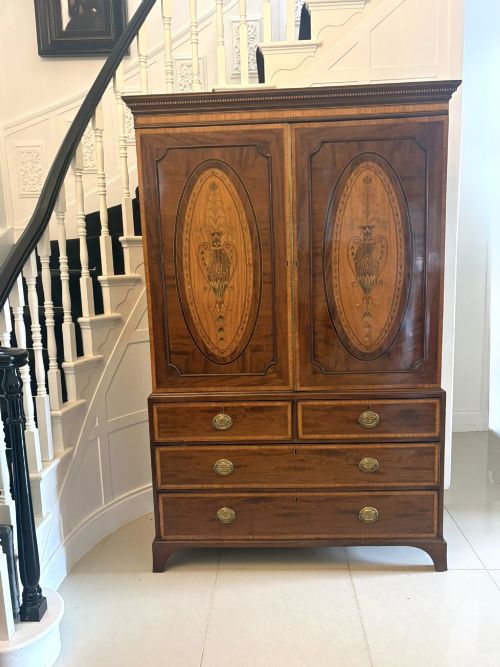
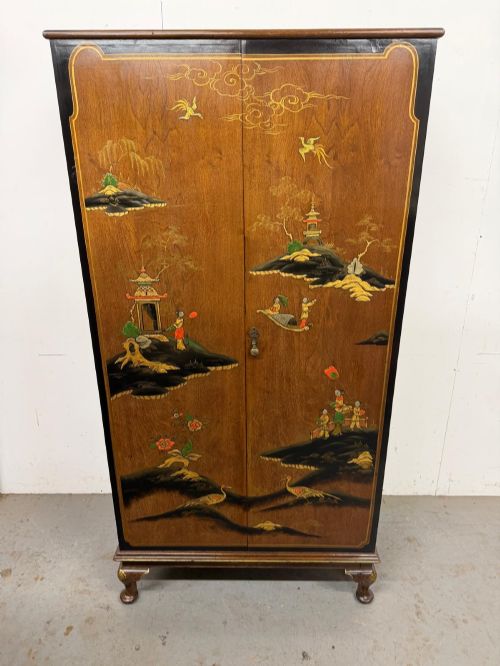
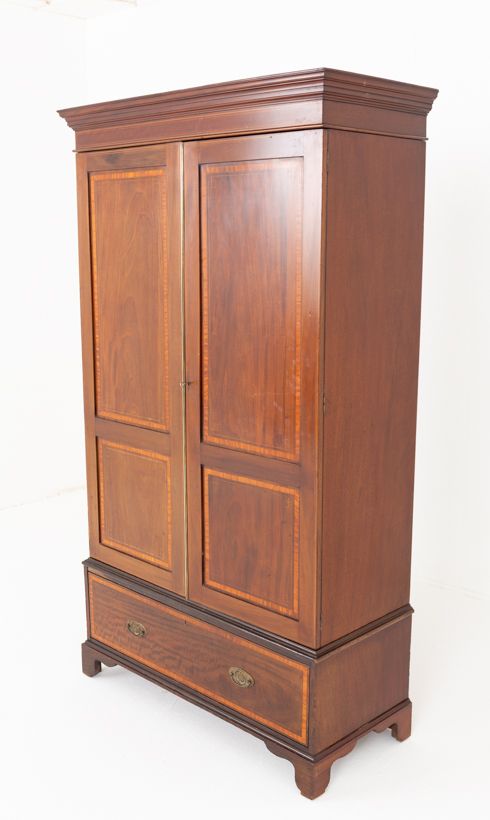
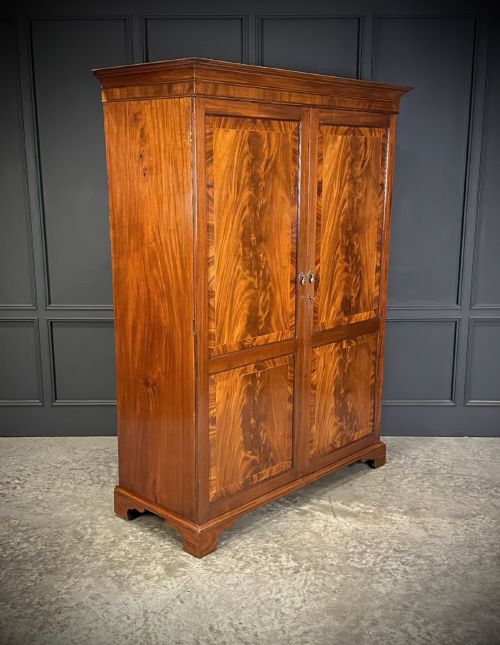
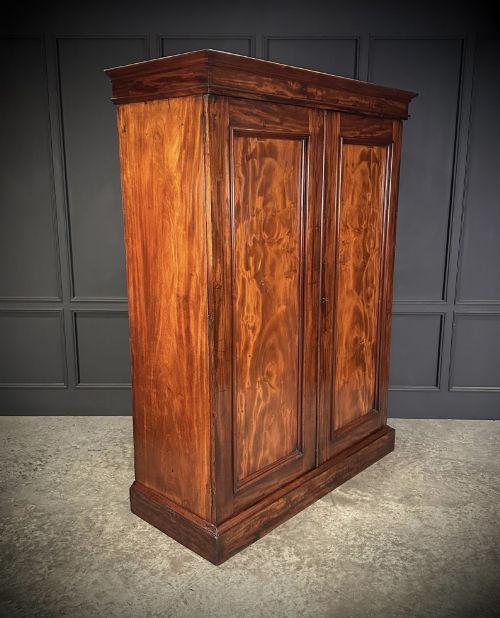
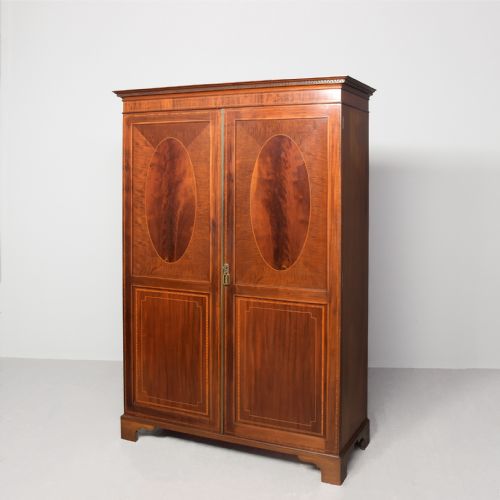
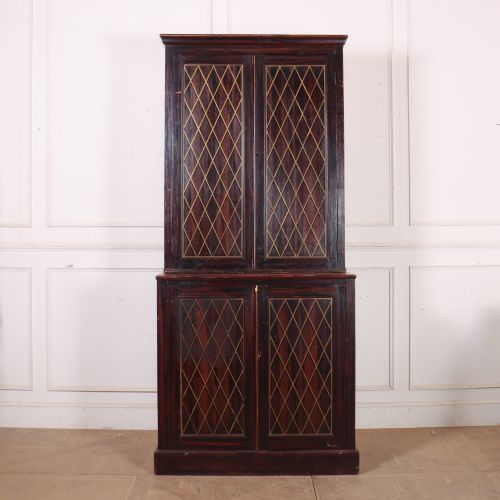

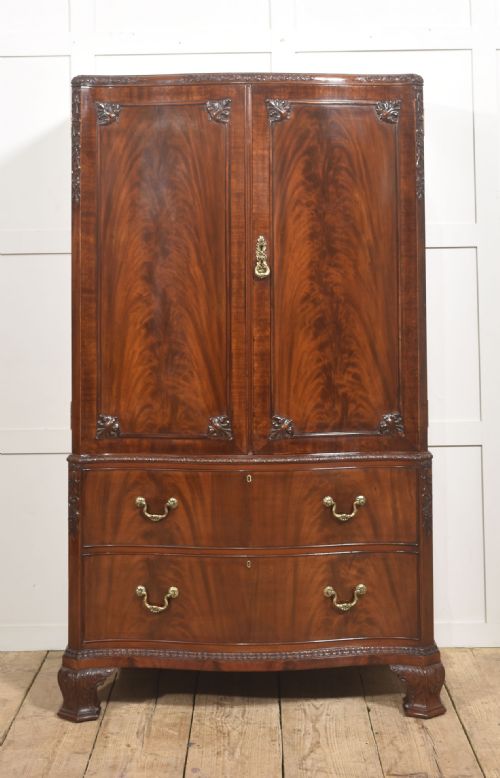
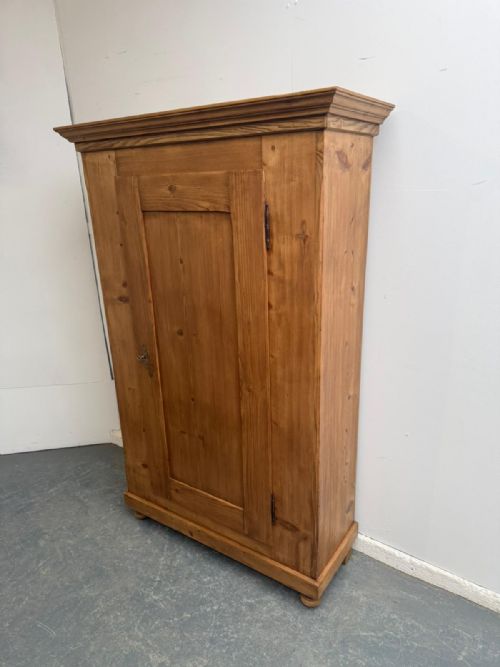


Georgian Style Linen Press
A georgian style linen press offers grand storage with deep historic character, combining tall upper cupboards and lower drawers in rich timber.

Georgian Style Linen Press
A georgian style linen press is a substantial piece of case furniture designed to store household textiles and clothing, featuring an upper cabinet section above a chest of drawers. The pieces found here span genuine Georgian origins as well as later revivals from the nineteenth and twentieth centuries.
Most examples meet on this page are constructed from mahogany, flame mahogany veneer, or oak, often displaying classic proportions that suit traditional and contemporary interiors alike. Forms range from straightforward panelled cupboards to intricate designs incorporating satinwood inlay and carved details.
Buyers seeking this phrase encounter variations including tallboys, housekeepers cupboards, and compactum wardrobes that share the characteristic double-section elevation. These items function equally well as statement bedroom wardrobes or imposing living space storage cabinets.
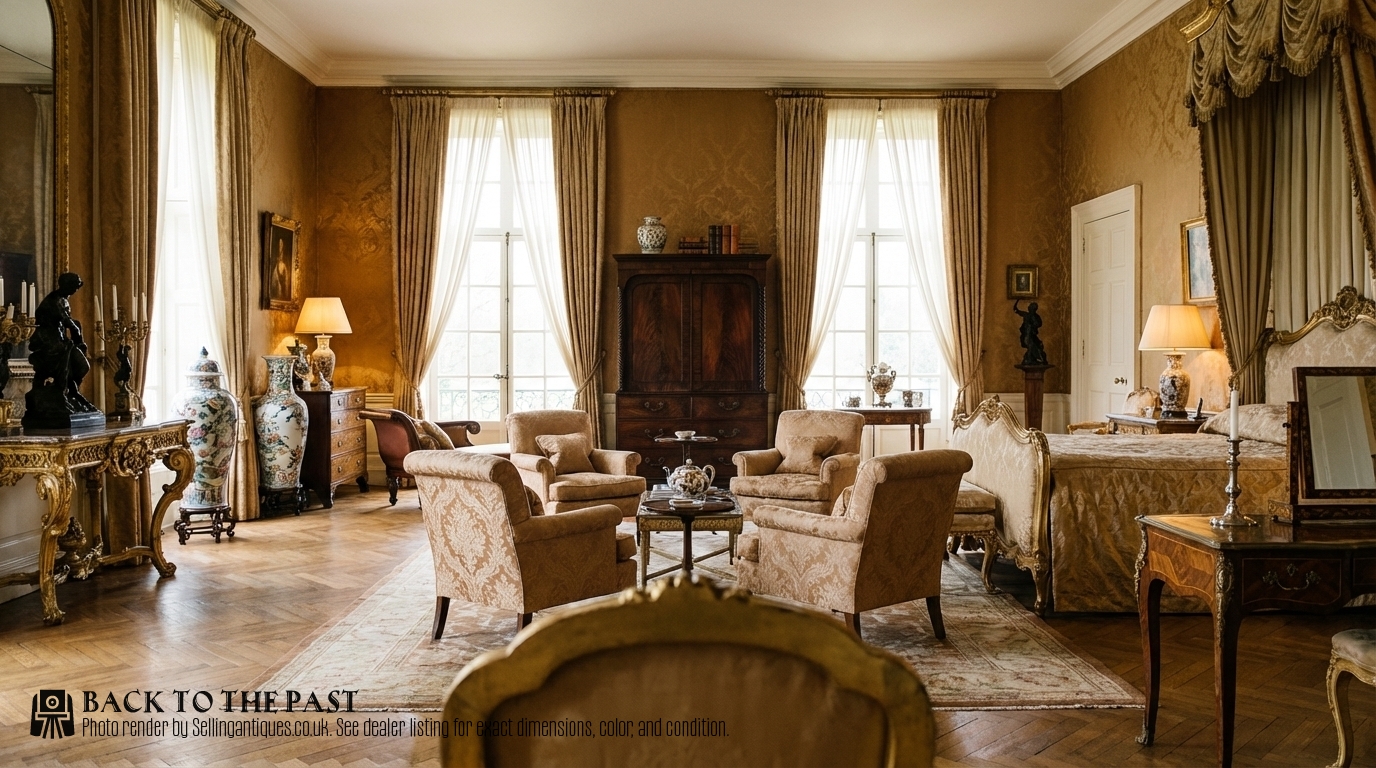
Materials and construction
Cabinet makers utilised dense native and imported timbers, notably solid mahogany, figured mahogany veneer, and oak, supported by secondary woods such as pine for internal framing and drawer linings. Flame mahogany veneer provided striking decorative grain patterns across the primary doors and drawer fronts.
Decorative embellishments relied on contrasting stringing, satinwood inlay, and marquetry work, whilst structural hardware featured cast brass handles and escutcheons. Cabinets frequently separated into upper and lower sections to facilitate movement during construction and placement.
Georgian Style Linen Press Retail Price Guide 2026
Typical asking prices for georgian style linen press among the pieces listed under this phrase on Sellingantiques today, from the lower quarter to the upper quarter. They describe what is for sale here now, not the wider market.
Some nineteenth-century linen presses still retain the faint, lingering scent of dried lavender tucked away in the deep corners of the bottom drawers.
Evaluating quality and execution
Superior examples demonstrate meticulous timber selection, where veneer matches symmetrically across wide door panels and drawer fronts maintain consistent grain direction. Finely executed carving and precise inlay work separate ambitious cabinet work from utilitarian storage pieces.
Internal configuration also dictates distinction, as original sliding trays within the upper press section alongside well-fitted lower drawers show superior original utility. The condition of the timber finish and the presence of original brass hardware further influence the overall standing of the piece.
Thomas Chippendale·Gillows
The Georgian Style Linen Press Glossary
- Linen Press
- A tall piece of case furniture featuring upper cabinet doors enclosing sliding shelves or trays, positioned above a chest of base drawers. Originally designed for storing household linen flat before modern folding and hanging practices.
- Flame Mahogany
- A distinctive wood veneer cut from timber fork joints that creates a flickering, flame-like pattern across furniture surfaces. Highly prized by cabinet makers for grand formal facades.
- Compactum
- A fitted wardrobe or wardrobe-press combination designed to maximise interior storage through specialised compartments, hanging space, and drawers. Popularized during the nineteenth and early twentieth centuries.
- Satinwood
- A durable, yellowish timber native to the tropics and used extensively for contrasting inlay, banding, and stringing on mahogany furniture. It provides bright visual detail against darker primary woods.
- Tallboy
- A tall chest of drawers consisting of a chest standing upon another chest, or a press cupboard raised high on a drawer base. This form maximises vertical storage capacity whilst occupying a compact floor footprint.
Georgian Style Linen Press: Frequently Asked Questions
What is inside a linen press?
Inside the upper section you typically find wooden pull-out slides or trays originally intended for flat-folded table linen and garments. The lower portion contains a chest of graduating drawers for smaller items.
Many modern owners adapt the upper sliding tray space for hanging clothes or general shelving depending on domestic requirements.
How do I tell a true Georgian press from a revival piece?
Examine the internal construction methods, timber types, and secondary woods used in the drawer linings and backboards. True eighteenth-century pieces display hand-cut dovetails and timber seasoning specific to that era.
Revival pieces built during the nineteenth or twentieth centuries often utilise machine-sawn elements or later hardware whilst successfully copying the classic proportions.
Where should I place a linen press at home?
These tall cabinets suit bedrooms as primary wardrobes or large hallways where their imposing scale can be appreciated. Ensure you measure ceiling height carefully because many presses were built to stand very tall.
Keep them away from direct heat sources and strong sunlight to protect the polished mahogany or walnut veneers from drying out.
Did people use these for clothes?
Historically, clothing was largely folded rather than hung on hangers, making the sliding trays inside the upper press ideal for garments. As fashion changed toward hanging clothes, many presses were adapted internally to accommodate rails.
They served as the main wardrobe solution for large households before fitted bedroom furniture became standard.