


Single Drawer Wardrobe
These single drawer wardrobe pieces combine hanging space and a base compartment, offering compact storage in timber.
Single Drawer Wardrobe
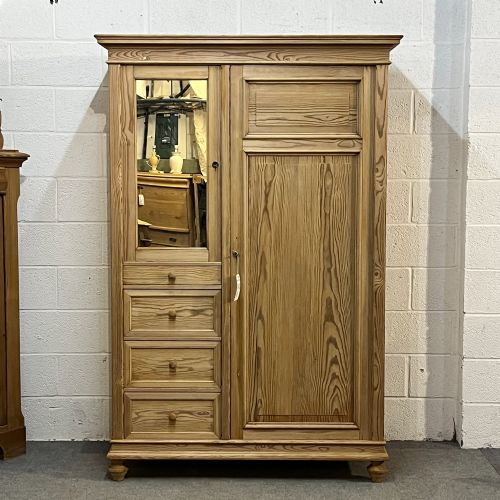
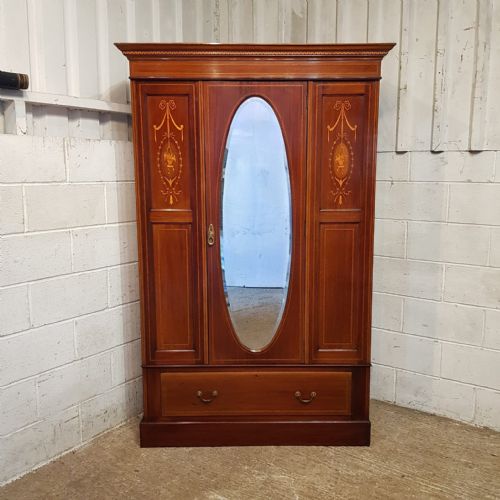
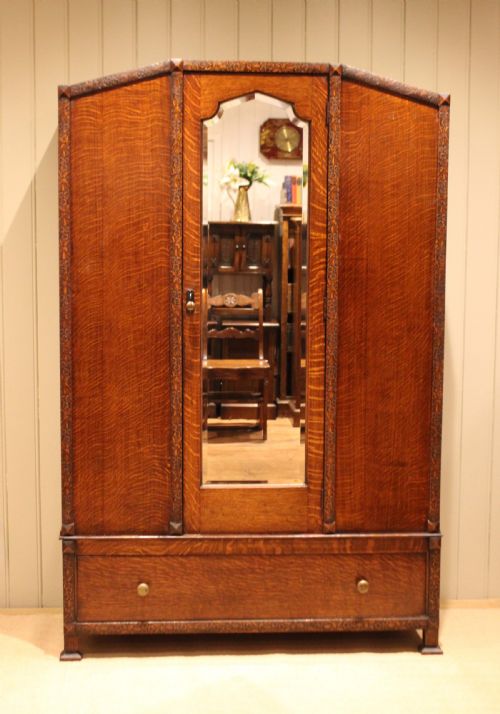
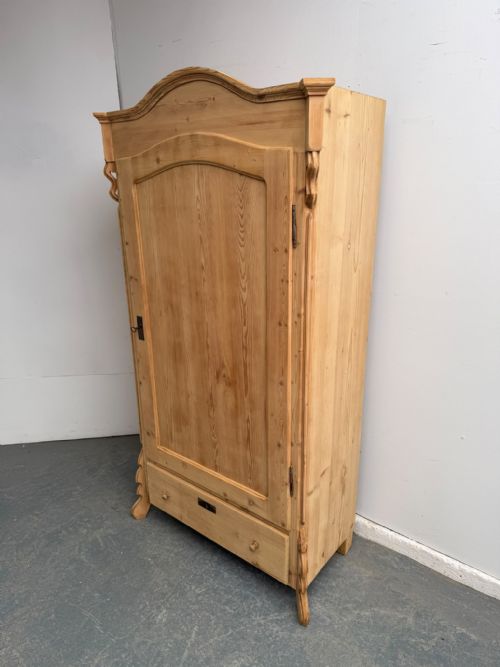
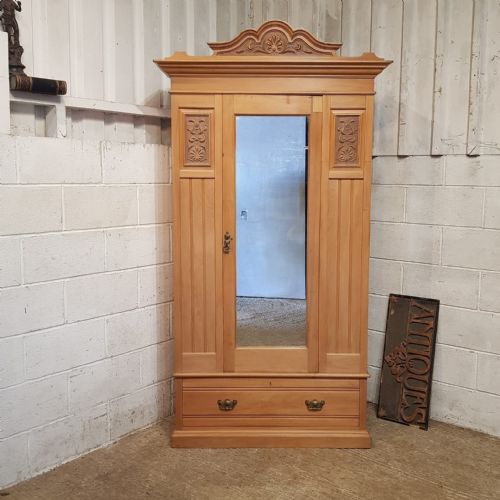
A single drawer wardrobe provides hanging space enclosed by a door alongside a single compartment built into the base. These items appear across several eras, including the Georgian, Victorian, and Edwardian periods, as well as the 1930s.
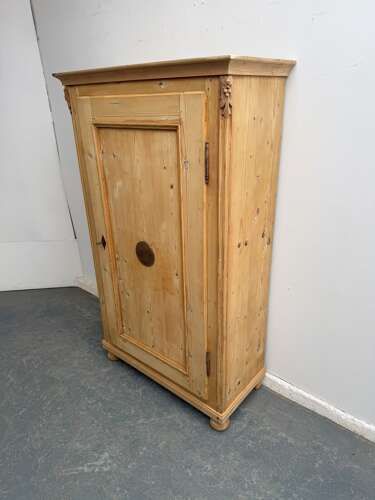
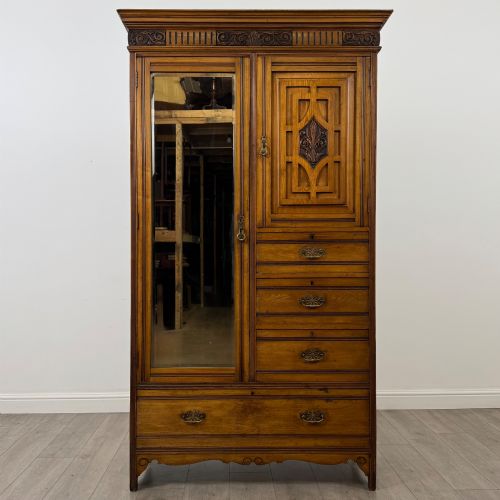
Most examples found here are constructed from pine, mahogany, or oak, while ash, satinwood, and pitch pine also occur. Forms range from narrow child or hall wardrobes to compactum styles and mirrored door designs.
Makers utilised various regional aesthetics, yielding styles such as Victorian Country, Edwardian Arts and Crafts, and 1930s Country. Buyers encounter pieces intended for smaller rooms, utility spaces, or bedrooms.
How they were made
Construction relies heavily on solid timbers like pine, oak, and mahogany, shaped into single door carcases with panelled or mirrored fronts. Base compartments integrate directly beneath the main hanging space.
Surface treatments vary from waxed, painted, or polished finishes to exposed natural grain. Brass and glass hardware frequently furnish the doors and drawer fronts.
Listings feature woods including pine, mahogany, oak, ash, satinwood, and pitch pine across Victorian, Edwardian, and Georgian periods.
What varies in quality
Quality differences emerge in the selection of timber and the complexity of the cabinetwork. Dense hardwoods like mahogany and satinwood display finer grain than utilitarian softwood variants.
Design sophistication distinguishes simpler country pieces from refined Edwardian Arts and Crafts or mirrored compactum examples. The inclusion of decorative elements such as burr walnut veneer or brass fittings elevates the construction.
Early Heals
The Single Drawer Wardrobe Glossary
- Compactum
- A multi-compartment wardrobe combining hanging space, shelves, and drawers. This format maximises storage efficiency within a reduced footprint.
- Pine
- A softwood commonly utilised in country and utilitarian furniture. It accepts paint and wax finishes readily.
- Mahogany
- A durable hardwood prized for its rich reddish-brown tone and smooth grain. It appears frequently in nineteenth-century bedroom furniture.
- Arts and Crafts
- A design movement favouring handcraftsmanship and simple structural honesty. Pieces from this style often display restrained woodwork and honest joinery.
- Pitch pine
- A resinous variant of pine known for its prominent grain pattern. It provides robust construction for larger wardrobes.
Single Drawer Wardrobe: Frequently Asked Questions
What periods do these wardrobes come from?
These pieces date from the Georgian period through the Victorian and Edwardian eras up to the 1930s. Construction styles reflect the prevailing design sensibilities of each respective decade.
Craftsmanship shifts from Georgian and Victorian cabinetmaking traditions toward the simpler utilitarian forms of the twentieth century.
Which woods are most common?
Pine appears frequently, often finished with wax or paint for domestic settings. Hardwoods such as mahogany and oak also occur regularly.
Less common materials include ash, pitch pine, satinwood, and burr walnut, which provide distinct grain patterns and surface textures.
Are mirrors typical on these doors?
Mirrored glass panels feature on several examples, particularly from the Edwardian period and the 1930s. These reflective surfaces are set directly into the single door.
Plain panelled wooden doors and glazed or mirrored variations both exist within the selection.
How were they used originally?
These items served as bedroom storage for garments requiring vertical hanging alongside folded items kept in the base drawer. Smaller formats also functioned in hallways or children's rooms.
The single door layout offered a space-saving alternative to larger multi-door wardrobes in smaller homes.