


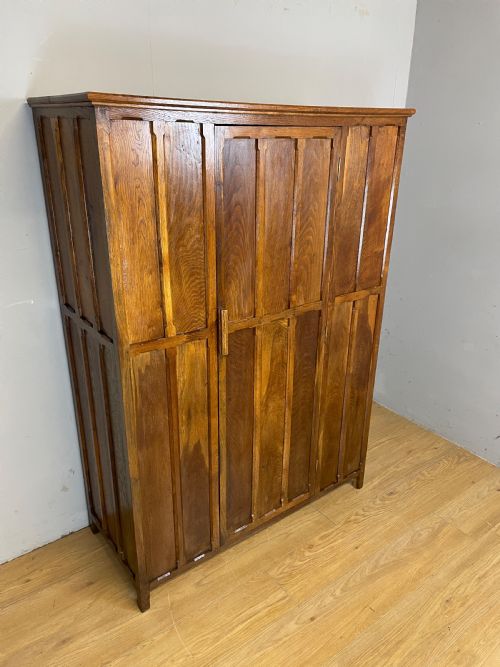


Solid Oak Armoire
A solid oak armoire brings heavy timber storage into a bedroom, offering substantial hanging space and deep shelves built to last generations.
Solid Oak Armoire
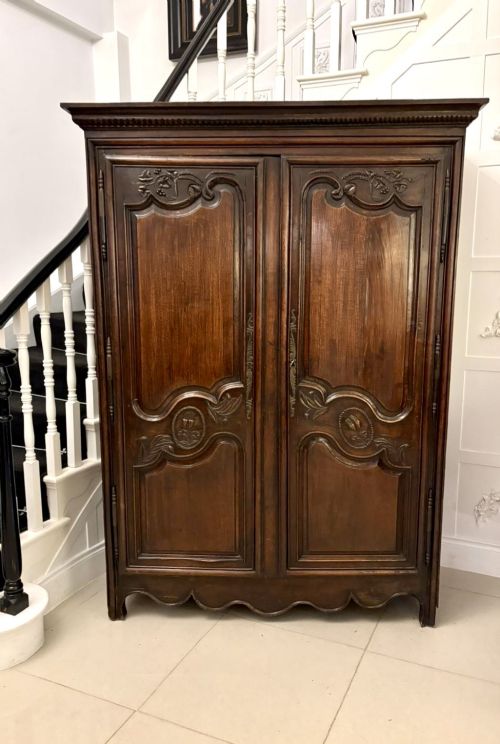
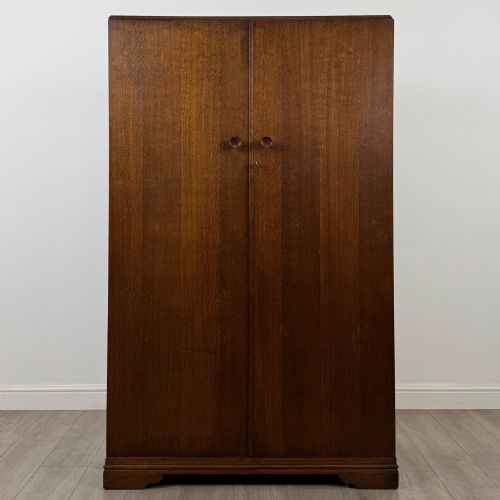
A solid oak armoire is a large freestanding timber cupboard designed for clothing storage, encompassing regional wardrobes, linen presses, and hall robes. These pieces span several centuries of cabinet-making, appearing in robust Georgian proportions, restrained Edwardian formats, and heavier 1920s interpretations.
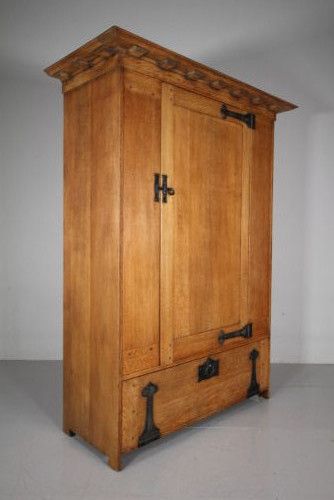
The selection ranges from early eighteenth-century press cupboards with panelled doors to later Arts and Crafts iterations bearing characteristic metalwork and linear detail. Buyers frequently encounter smaller double wardrobes alongside expansive triple formats originating from both British workshops and French regional traditions.
Materials and construction
Construction relies upon heavy solid oak timbers, joined using traditional peg-joined frameworks and panelled construction that accommodated natural wood movement. Hardware typically includes brass or wrought iron hinges, key escutcheons, and drop handles.
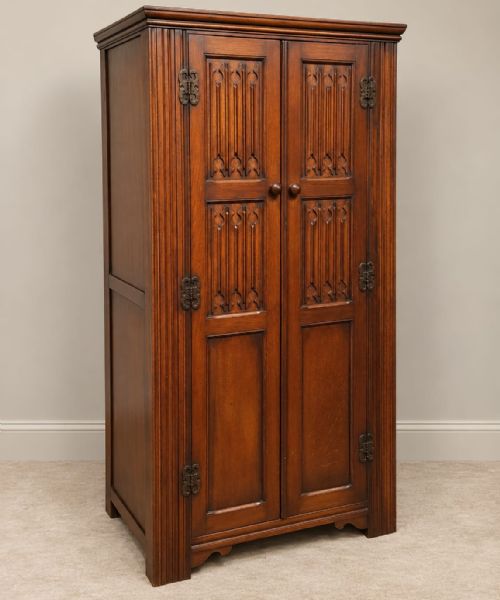
Surface finishing relies on natural waxing or polishing to highlight the timber grain, while specific periods incorporate carved linenfold panels, mother of pearl inlay, or surface distressing aligned with Gothic Revival and Jacobean Revival aesthetics.
Several heavy oak wardrobes still retain faint traces of old cedar or lavender scent trapped inside their linen press trays.
Judging quality in solid oak furniture
Quality rests in the architectural integrity of the timber framework, the crispness of hand-carved details such as linenfold panels, and the original condition of brass or iron hardware. Pieces that retain their historic peg joinery without major timber replacement demonstrate superior workshop execution.
Interior configuration also dictates distinction, separating simple hanging spaces from sophisticated fitted wardrobes and linen presses complete with original sliding trays and internal compartments.
Heals·Maple & Co·Pugin
The Solid Oak Armoire Glossary
- Linen press
- A tall cupboard featuring upper doors enclosing sliding trays or shelves for linen storage, paired with lower drawer sections.
- Peg joint
- A traditional timber connection secured by driving a wooden dowel through a mortise and tenon joint.
- Linenfold
- A style of wood carving resembling folded vertical folds of fabric, commonly found on Tudor and revival panels.
- Escutcheon
- A protective metal plate surrounding a keyhole, frequently cast in brass or wrought iron.
Solid Oak Armoire: Frequently Asked Questions
How do I dismantle a large solid oak armoire?
Many older wardrobes utilise pegged joints or knock-down bolt construction designed for relocation between rooms. Examine the interior cornices and corner posts for hidden fixings before attempting disassembly.
Label each loose panel and wooden peg carefully to ensure correct reassembly in the exact same sequence.
Will a solid oak armoire fit modern clothing hangers?
Earlier wardrobes often feature shallow interior depths designed for historic garments or sliding peg rails rather than modern shoulder hangers. Check the internal front-to-back measurement before planning everyday clothes storage.
Some pieces allow for the discrete repositioning of hanging rails to accommodate contemporary coat hanger widths.
How do I clean and condition a solid oak surface?
Remove surface dust using a dry microfiber cloth, avoiding modern silicone sprays that build up sticky residues over time. Apply a traditional beeswax polish sparingly to nourish the dry oak grain.
Buff the timber gently with a clean cloth to restore a natural, low-sheen protective lustre.
How can I tell an eighteenth-century piece from a revival copy?
Examine the rear boards, drawer linings, and internal construction marks for signs of hand-tooling, irregular pit sawing, and hand-cut dovetails. Eighteenth-century examples display natural timber oxidation and wear patterns accumulated over generations.
Revival pieces from the Edwardian or 1920s eras often employ mechanical saw marks and standardised machine fixings hidden behind period-appropriate styling.