




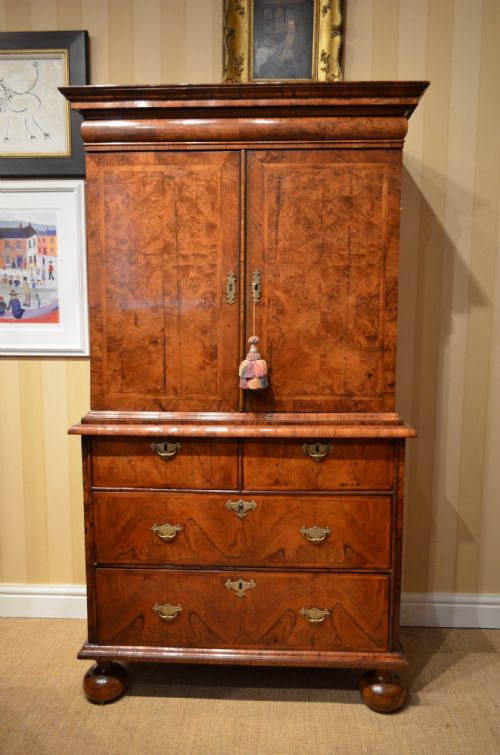

17th Century Armoire
A 17th century armoire offers monumental storage built with heavy timber and regional craft, bringing historic presence to a room.
17th Century Armoire
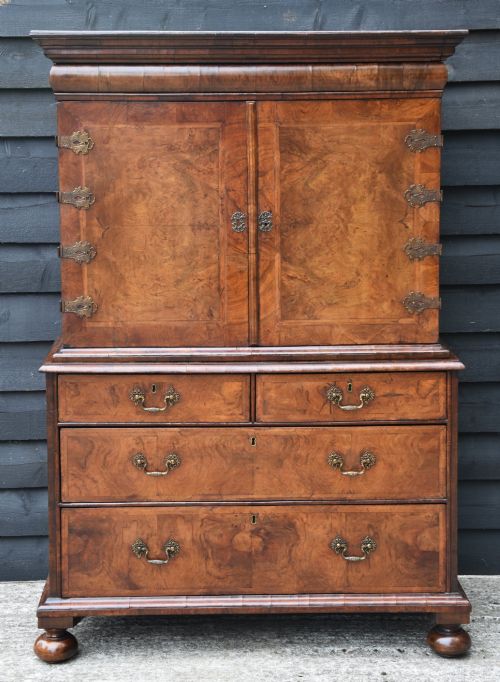
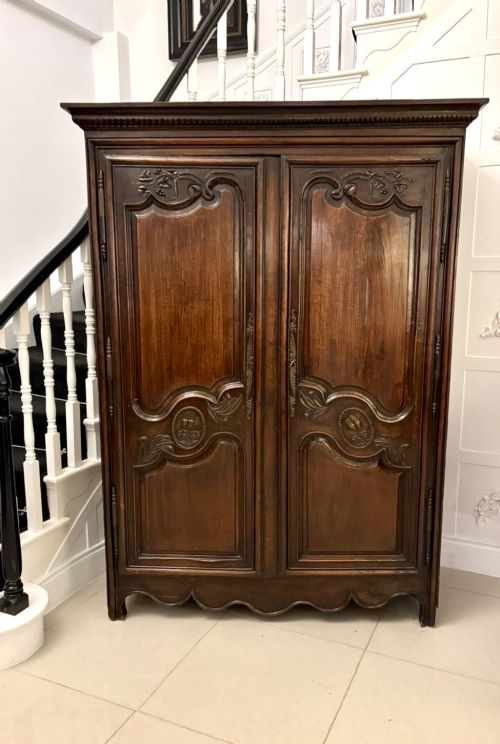
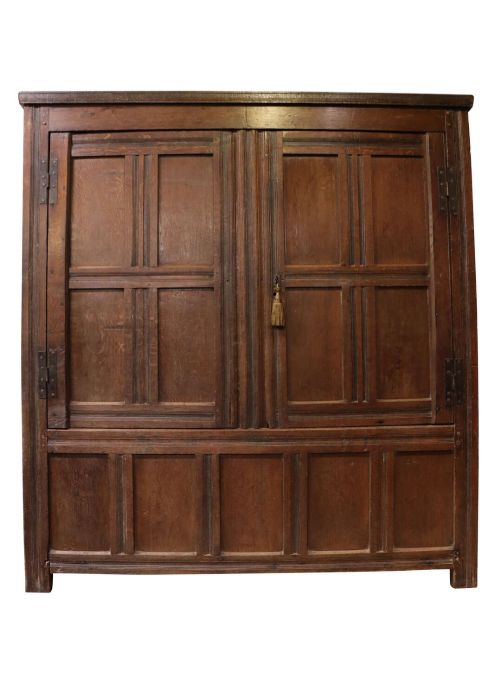
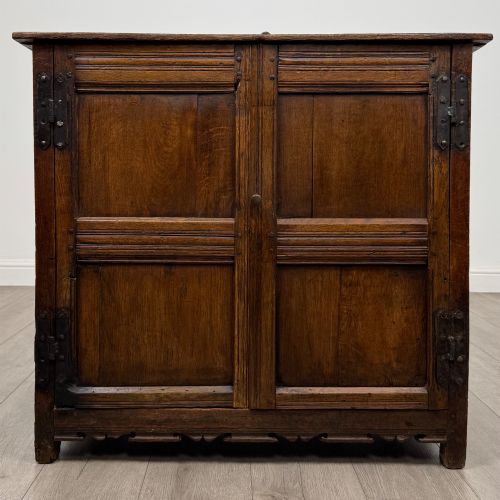
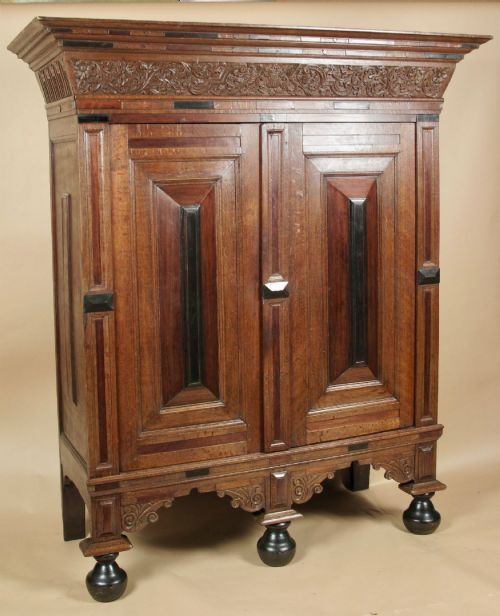
When you search for a 17th century armoire, you encounter substantial storage furniture spanning forms such as cupboards, press cupboards, cabinets on chests, and traditional kasts. These pieces originate from diverse European centres including France, the Netherlands, Spain, and Italy, reflecting distinct regional joinery traditions.
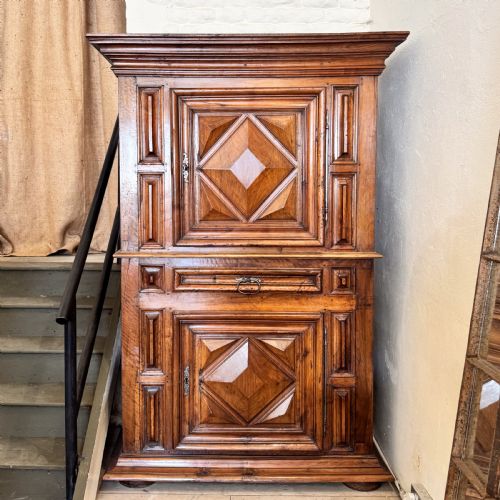
The version you are most likely to meet on this page is constructed from sturdy oak or walnut, often presenting panelled doors and architectural mouldings. Examples range from French provincial fruitwood armoires to Dutch linen cupboards and English press cupboards.
While many date strictly to the 17th century, some items date towards 1700 or draw upon William and Mary and baroque styles. Buyers seek these substantial items for their architectural proportions and deep historic utility.
Materials and construction
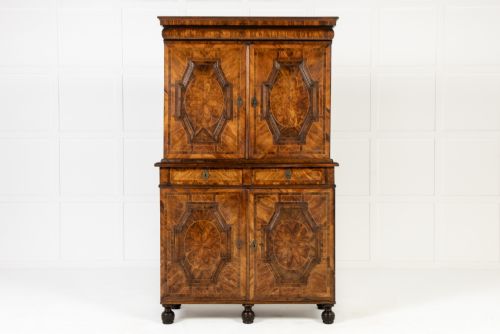
Makers utilised solid timbers such as oak, walnut, and fruitwood, frequently enriched with contrasting veneers of ebony, rosewood, burr walnut, and burr amboyna. These dense hardwoods formed the structural carcass and decorative surfaces.
Construction relied upon heavy framing, pegged mortise and tenon joints, and raised panels, supported by brass and iron hardware such as strap hinges and locks.
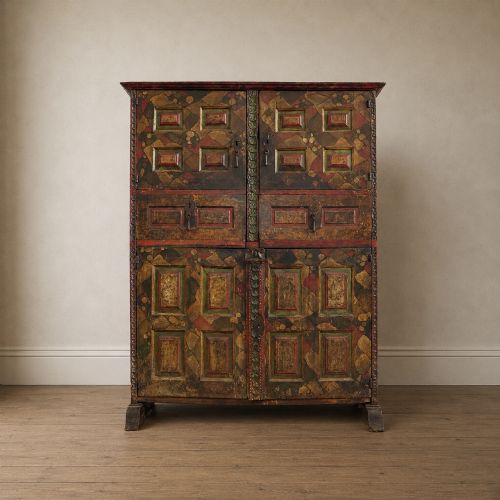
Surface detailing incorporated carved motifs, polychrome paint, and geometric mouldings that defined regional aesthetics across European workshops.
17th Century Armoire Retail Price Guide 2026
Typical asking prices for 17th century armoire among the pieces listed under this phrase on Sellingantiques today, from the lower quarter to the upper quarter. They describe what is for sale here now, not the wider market.
Listings feature oak, walnut, and rosewood forms spanning the 17th century, William and Mary period, and Dutch Baroque style.
Assessing quality and proportion
The distinction between standard examples and finer pieces lies in the choice of timber and the complexity of the cabinetry. Superior items employ highly figured burr veneers, intricate geometric panel framing, and well-preserved original hardware.
Proportion and architectural integrity dictate the standing of a piece within its category. Well-balanced cornices, crisply carved mouldings, and intact structural frames separate high-status workshop production from utilitarian regional work.
The 17th Century Armoire Glossary
- Armoire
- A large freestanding wardrobe or cupboard used primarily for storing garments and linen. These pieces typically feature double doors enclosing shelves or hanging space.
- Kast
- A large Dutch or Flemish cupboard or wardrobe, characterised by substantial proportions and architectural cornices. They often incorporate cushion moulding and rich veneer work.
- Press cupboard
- A two-tier wooden cupboard designed for storing pressed linen and clothing. The upper section is usually recessed or supported by turned posts above a larger base.
- Cabinet on chest
- A case furniture form comprising an upper cabinet resting upon a lower chest of drawers. This elevated design gained prominence during the late seventeenth century.
- Polychrome
- Decorated in multiple colours, often applied to wood surfaces in historical painted furniture. This technique adds vibrant pictorial or decorative detail to regional cupboards.
17th Century Armoire: Frequently Asked Questions
How do I clean a 17th century armoire?
Dust the timber regularly with a soft, dry cloth to prevent grit accumulation on the aged surface. Avoid modern silicone polishes that penetrate the wood grain.
Apply a traditional beeswax sparingly to nourish dry oak or walnut when necessary. Buff gently to maintain a natural, low-sheen lustre without altering the patina.
Where should I place an armoire?
Position the piece against a stable interior wall away from direct sunlight and heat sources. Rapid temperature shifts cause timber to warp and historical veneers to lift.
Ensure the floor is level so the heavy doors hang correctly within their frames. Allow adequate clearance for doors to open fully without scraping nearby surfaces.
How do I distinguish regional styles?
Examine the timber choices and architectural mouldings to identify the likely country of origin. French provincial pieces often utilise fruitwood and oak, whereas Dutch examples frequently feature rosewood and ebony veneer.
Look at the carving depth and hardware design for further clues. Spanish and Italian pieces display distinct baroque flourishes compared to northern European linear framing.
Can I store clothes inside safely?
Check the interior configuration to see if shelves, hooks, or hanging rails suit modern garments. Many early cupboards retain fixed shelves intended for folded linen.
Line shelves with acid-free tissue paper if storing delicate textiles against older wood. Ensure the interior remains well-ventilated to protect fabrics from stagnant air.