


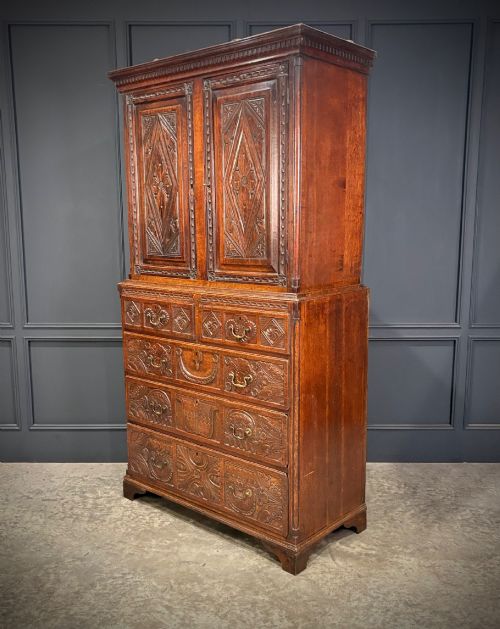


Georgian Oak Armoire
A georgian oak armoire is a robust storage piece built for household linen and clothes, offering sturdy construction and honest timber character.
What these pieces are
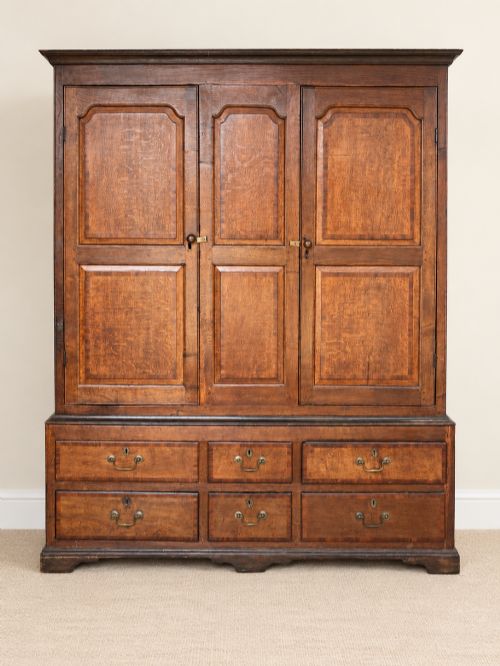
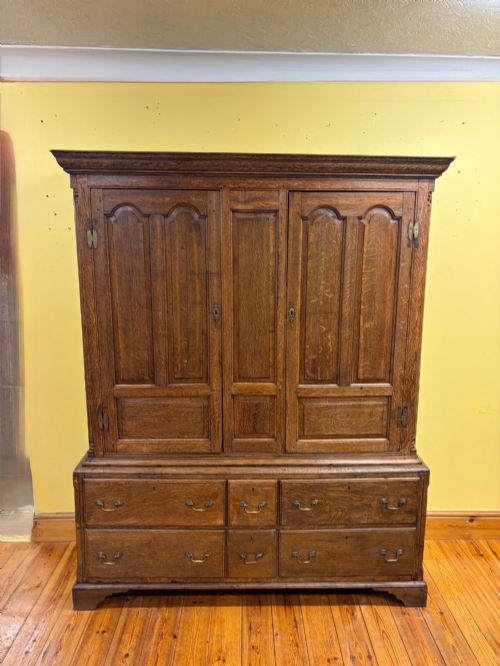
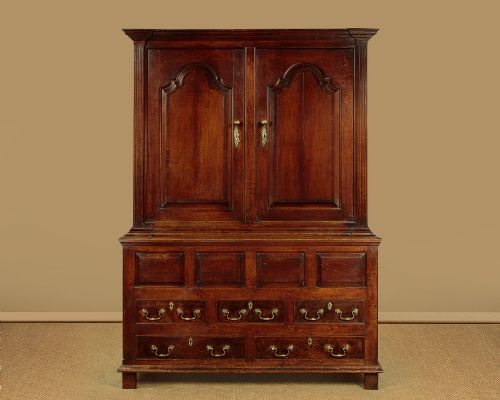
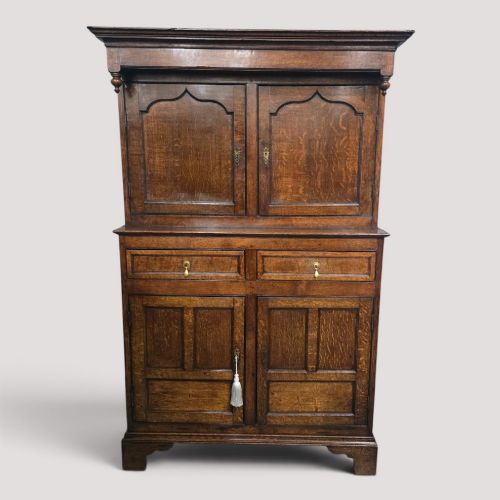
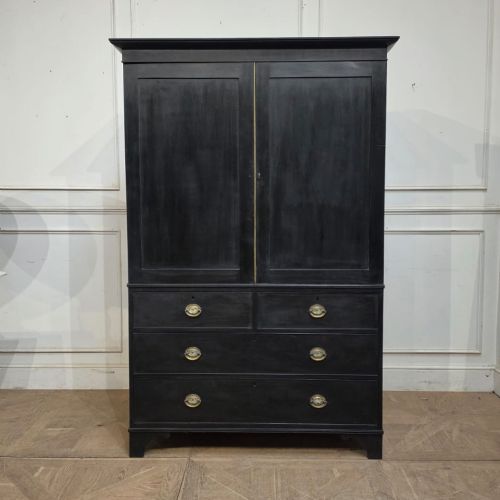
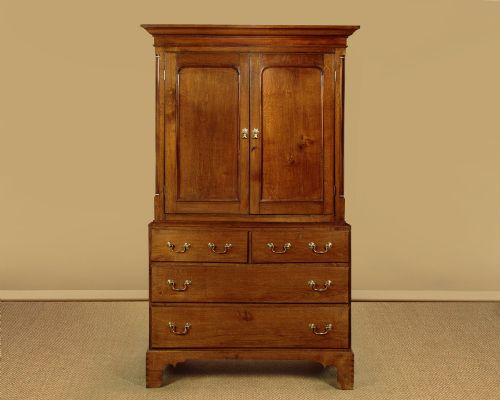
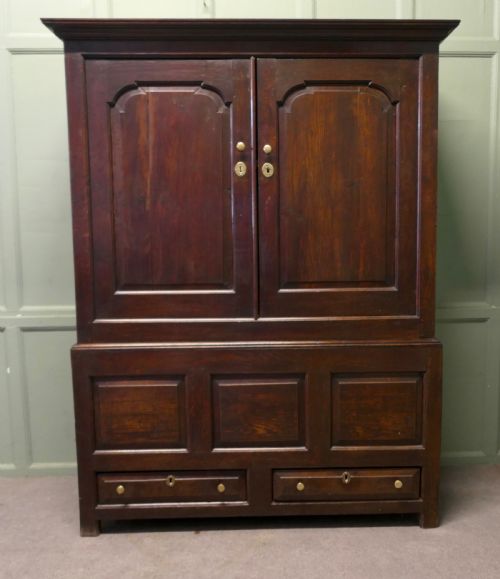
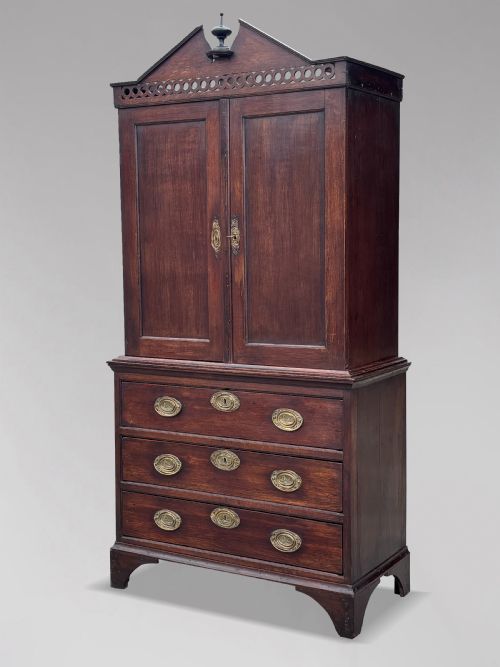
When searching for a georgian oak armoire, buyers encounter robust storage furniture spanning the eighteenth century and the broader Georgian period. These practical forms include cupboards, linen presses, housekeepers cupboards, and clothes presses on chests of drawers.
The pieces appearing on this page originate predominantly from the eighteenth century, demonstrating the solid utilitarian forms favoured in domestic interiors of that era. Most examples combine a functional cupboard or press layout with the generous proportions typical of country oak furniture.
How they were made
Construction relies heavily on solid oak timbers, selected for durability and strength in large domestic storage furniture. Workshops utilised pegged joints to secure heavy panels and frames, accommodating the natural movement of timber over centuries.
Metal hardware such as brass fittings appears alongside iron hinges and lock plates, providing essential functional support to heavy doors and drawers. Surface finishes develop naturally through age and daily handling, retaining the deep grain texture characteristic of period oak.
Retail Price Guide 2026
Typical UK retail prices for georgian oak armoire, calculated from the Sellingantiques database of over a million retail prices indexed since 2003. This retail price guide relies exclusively on Sellingantiques data; no external sources or auction records are used, so the figures do not describe the wider market.
Housekeepers guarding their linen stores kept heavy keys close at hand, ensuring family sheets stayed safely locked away from curious staff.
What varies in quality
Quality rests upon the selection of timber figures and the preservation of original structural elements across panels, cornices, and base sections. Superior examples retain crisp moulding details and well-balanced proportions that prevent heavy oak forms from appearing overly clumsy.
The integrity of internal fittings, drawer construction, and period brassware further separates utilitarian pieces from finer architectural interpretations. Surviving pegged joints and untouched patination elevate pieces beyond later assembled or heavily restored alternatives.
The Georgian Oak Armoire Glossary
- Armoire
- A large wardrobe or cupboard used for hanging or folding clothes. In British cabinetry, the term often describes large regional cupboards and press forms.
- Linen press
- A tall cupboard specifically designed for storing folded textiles and household linen. These often feature internal sliding trays or upper cupboard sections above lower drawers.
- Peg joint
- A traditional method of securing timber frame and panel joints using wooden pegs rather than metal nails. This technique accommodates seasonal wood expansion.
- Housekeepers cupboard
- A large utility cupboard traditionally used in large country houses for storing household provisions and linens. They typically offer extensive shelving and lower drawer storage.
Frequently Asked Questions
What is a georgian oak armoire used for?
These large storage pieces serve primarily for folding clothes, linens, and bulky household items within bedrooms or hallways. Their deep internal shelving and cupboard space provide practical storage capacity for modern homes.
Historically, they kept household textiles clean and protected from dampness in large country houses. Today, they function as substantial wardrobes or linen cupboards in traditional and contemporary interiors.
How do I date a georgian oak armoire?
Dating relies on examining construction methods, timber choice, and hardware styles associated with the eighteenth century. Hand-cut peg joints, raised oak panels, and period brass fittings indicate eighteenth-century craftsmanship.
Later Victorian interpretations often incorporate machine-cut elements or different internal configurations. Comparing drawer linings and backboards helps establish the primary period of manufacture.
How do I care for antique oak furniture?
Maintaining solid oak requires stable room humidity and protection from direct heat sources to prevent timber splitting. Regular gentle dusting preserves the natural wax finish and grain patination.
Avoid placing these heavy pieces in damp environments or areas subject to extreme temperature fluctuations. Simple beeswax polishes applied sparingly will maintain the historic surface sheen over time.