
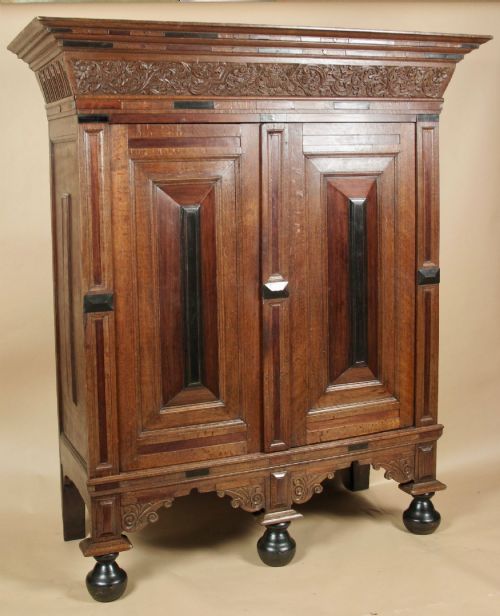
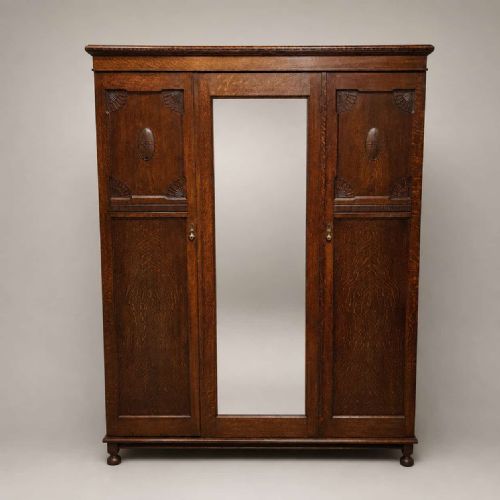
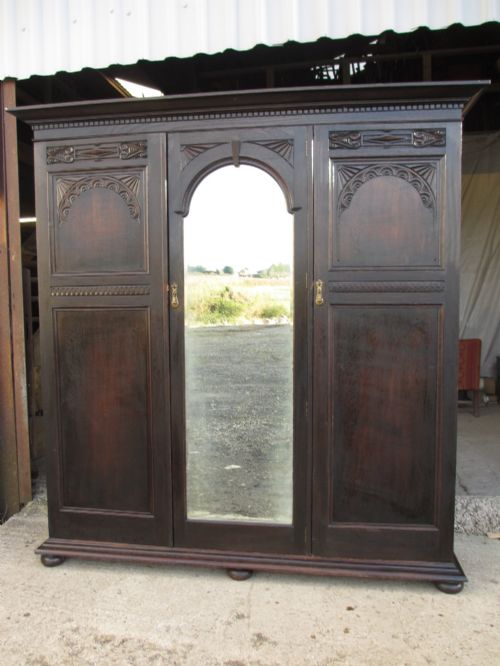
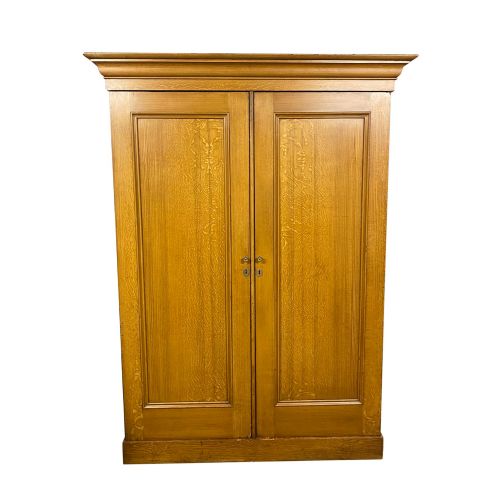



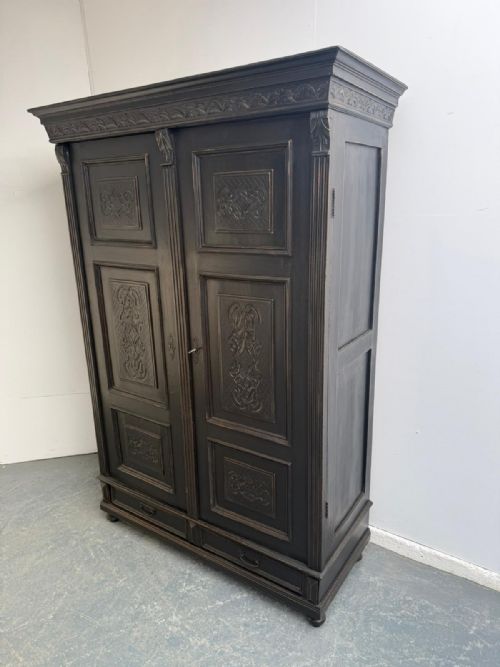
Panelled Oak Wardrobe
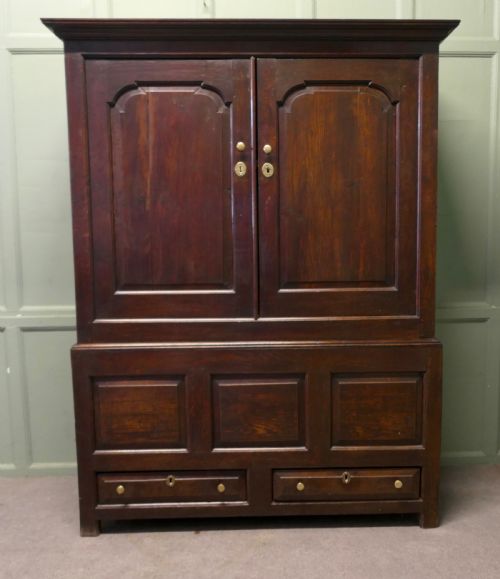
A panelled oak wardrobe is a substantial piece built to last, offering deep storage and character that modern furniture simply cannot match.
What a panelled oak wardrobe is
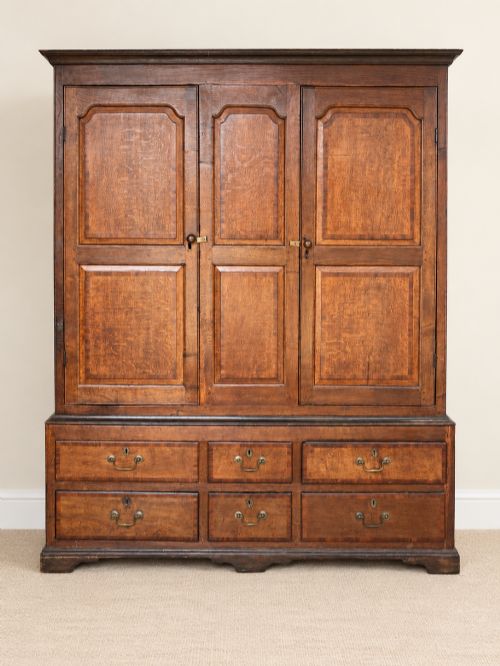
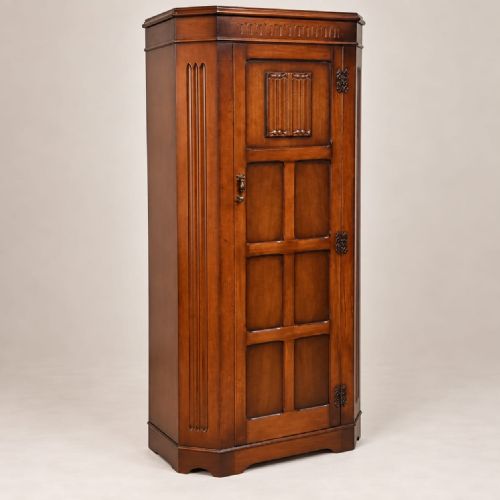
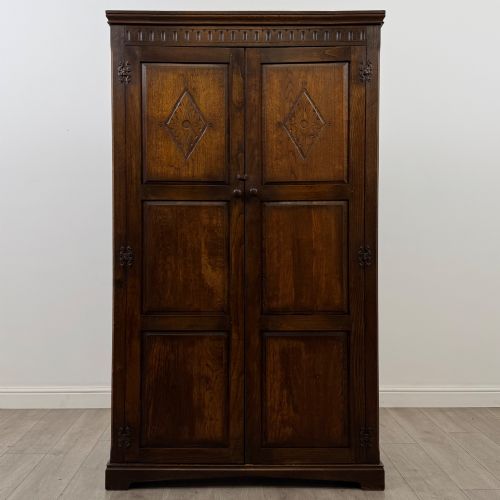
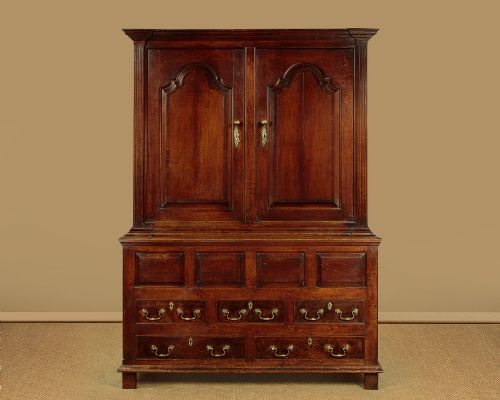
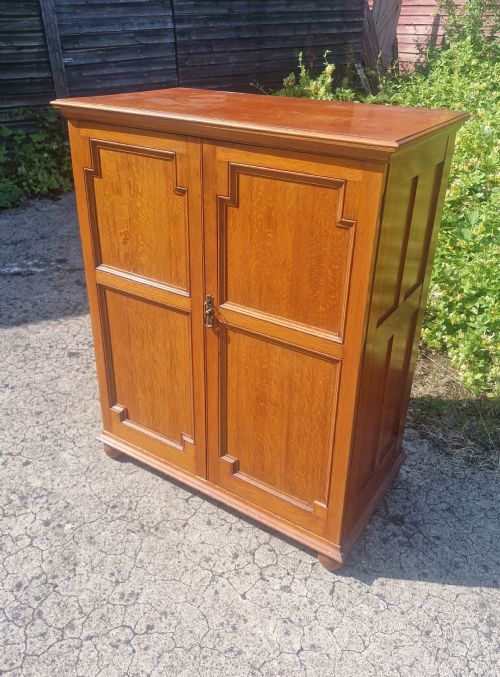
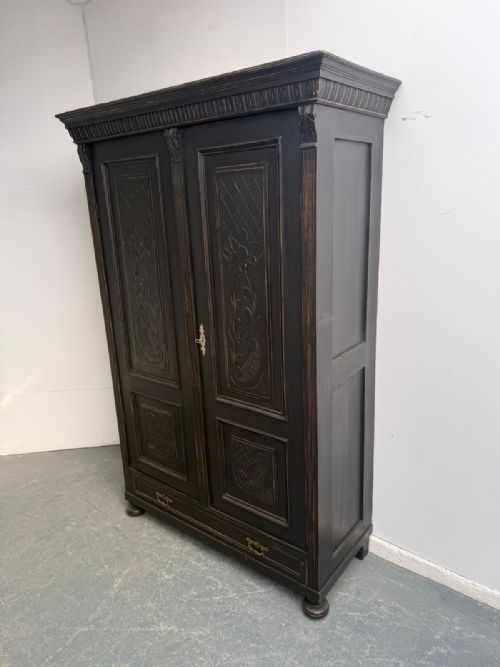
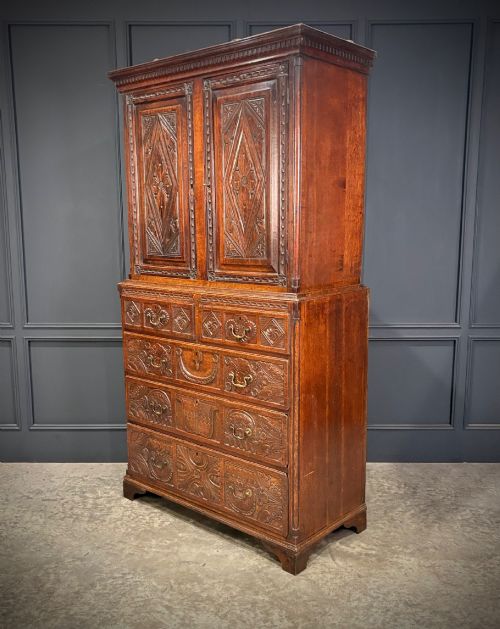
A panelled oak wardrobe provides serious storage, ranging from compact hall cupboards to large multi-door bedroom pieces. When searching for a panelled oak wardrobe, buyers encounter items dating from the Georgian period through the Victorian and Edwardian eras up to the nineteen-twenties.
The evidence shows forms spanning traditional two-door fitted models, linen presses, and pieces reflecting the Arts and Crafts movement or the Cotswold School. Provincial French examples also appear alongside British pieces, showing variety in construction and design.
How they were made
These wardrobes are constructed from solid oak, utilising traditional frame-and-panel techniques to accommodate the natural movement of the timber. Brass and iron hardware such as hinges, handles, and hanging hooks secure the doors and internal fittings.
Retail Price Guide 2026
Typical UK retail prices for panelled oak wardrobe, calculated from the Sellingantiques database of over a million retail prices indexed since 2003. This retail price guide relies exclusively on Sellingantiques data; no external sources or auction records are used, so the figures do not describe the wider market.
Listings span five distinct periods: Georgian, Victorian, Edwardian, nineteen-hundred, and nineteen-twenty, all constructed in solid oak.
What varies in quality
Quality in these wardrobes rests on the selection of timber and the depth of the carving. Heavier, solid oak construction with well-executed frame-and-panel joinery marks out superior examples.
The refinement of period details, from the proportion of the cornices to the integration of brass and iron hardware, distinguishes standard utility pieces from finer items influenced by specific design movements.
The Panelled Oak Wardrobe Glossary
- Oak
- A durable hardwood used extensively in British and European cabinetmaking for its strength and prominent grain pattern. It forms the structural and visible basis for all pieces in this category.
- Panelled
- A method of construction where a central wooden board floats within a surrounding frame to prevent splitting as the wood expands and contracts. This technique defines the visual texture of the doors and sides.
- Linen Press
- A dual-purpose piece featuring sliding trays or shelves in the upper section and hanging space or drawers below. Georgian examples in the record demonstrate this older form.
- Cotswold School
- An Arts and Crafts design movement focusing on simple, honest construction and respect for the natural qualities of the material. Pieces in this style showcase understated craftsmanship.
Frequently Asked Questions
How do I date a panelled oak wardrobe?
Dating relies on stylistic clues and construction methods visible in the mouldings, feet, and hardware. Georgian and Victorian pieces show different proportions and carving styles compared to later Edwardian or nineteen-twenties examples.
Examining the interior layout and the type of fixings used also helps place a wardrobe within its specific period, from the eighteenth century to the early twentieth century.
Are these wardrobes easy to dismantle?
Many older wardrobes were built with knock-down construction using wooden pegs or internal bolts to allow transport up stairs and through doorways. However, solid oak construction makes individual sections heavy.
Checking the assembly method before purchase ensures the piece can be moved safely into your home.
What is the difference between a wardrobe and a hall cupboard?
Hall cupboards are generally shallower and narrower than bedroom wardrobes, designed for coats and everyday garments in an entranceway. The records show both full-size bedroom models and compact hall variants.
Consider the available floor depth in your room before choosing between a full wardrobe and a hall press.
How should I care for solid oak furniture?
Solid oak responds best to stable room temperatures away from direct heat sources and strong sunlight, which can dry out the timber. Regular dusting with a dry or slightly damp cloth maintains the finish.
Applying a traditional beeswax polish occasionally helps nourish the grain and protects the surface of the wood over time.