

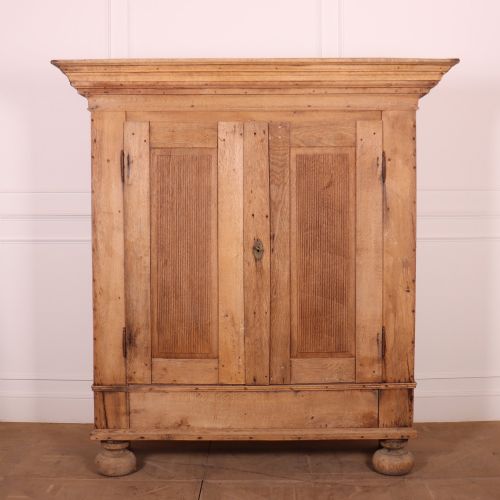
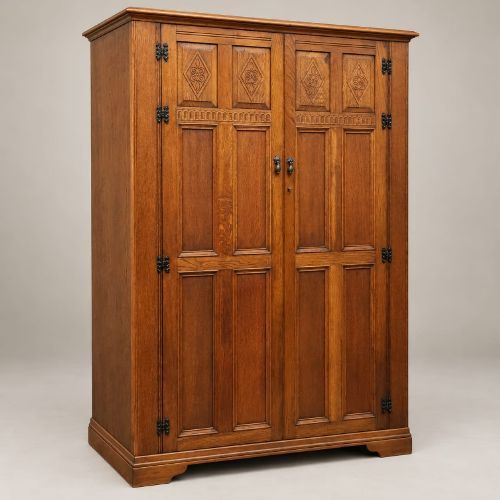
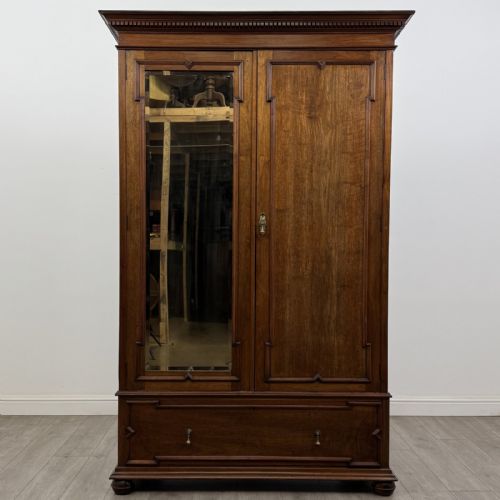
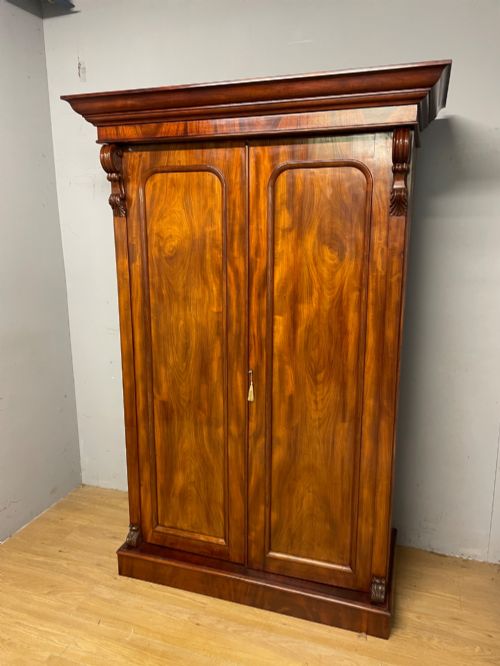
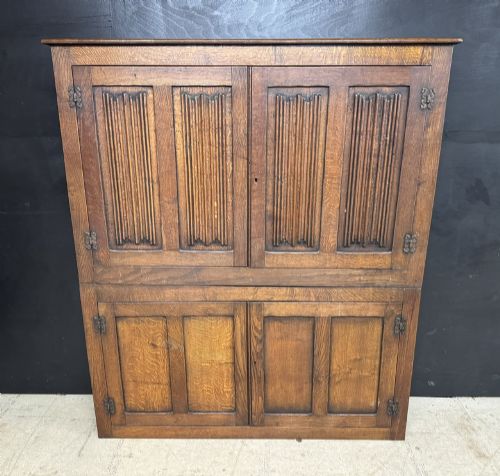
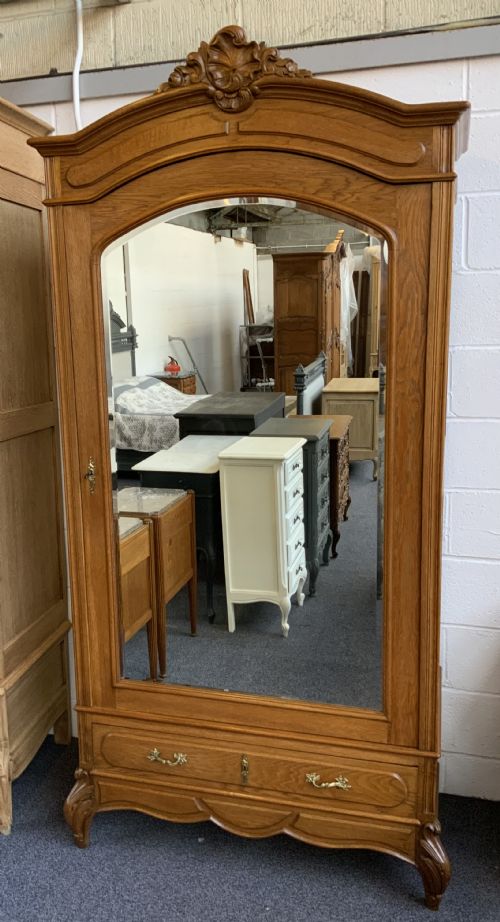
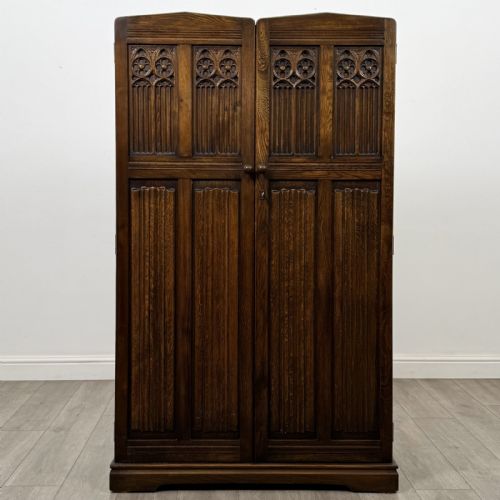
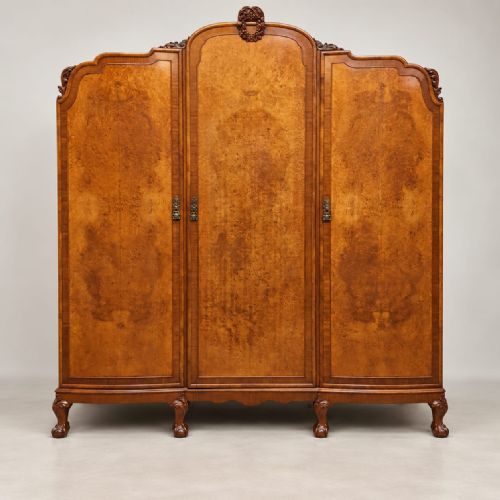
Carved Wooden Armoire
A carved wooden armoire brings deep grain and architectural presence to a room, offering vast storage disguised as grand furniture.
Carved Wooden Armoire
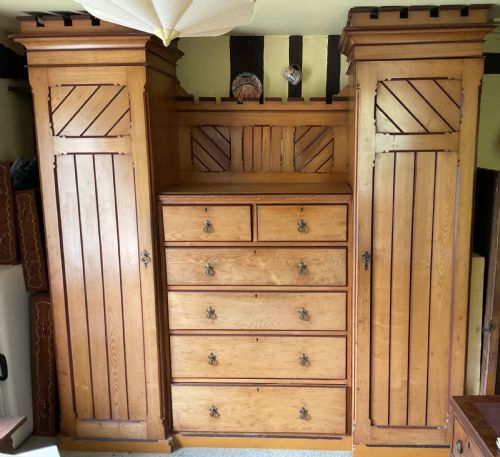
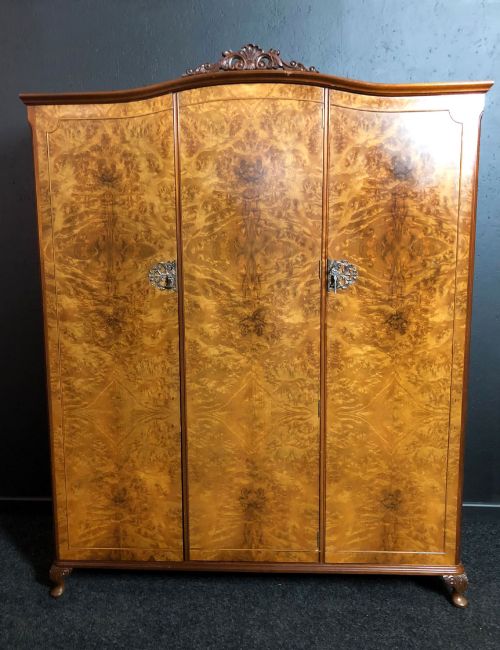
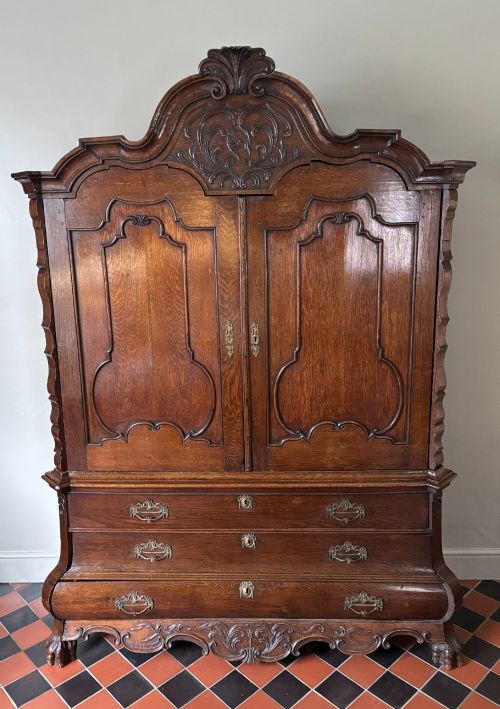
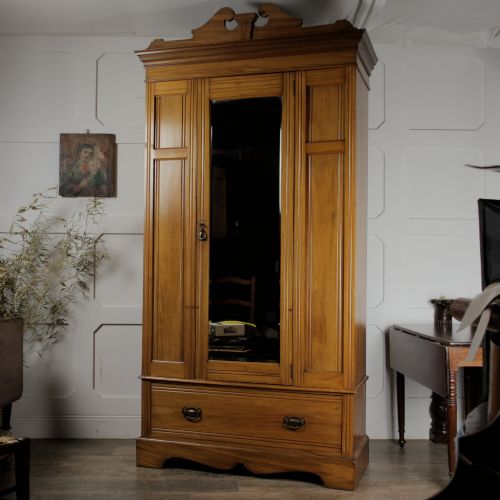
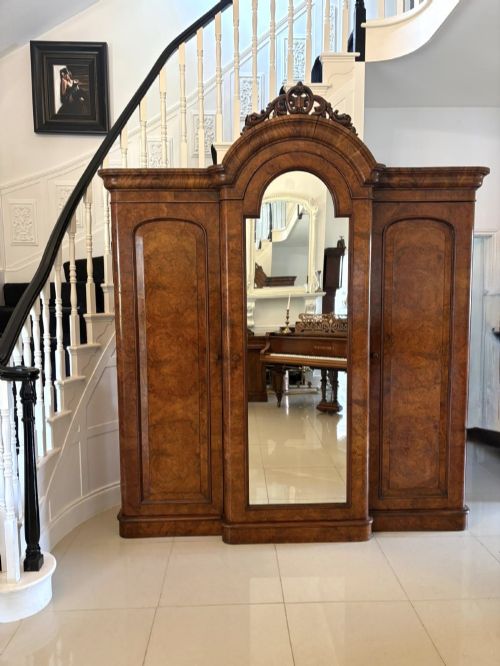
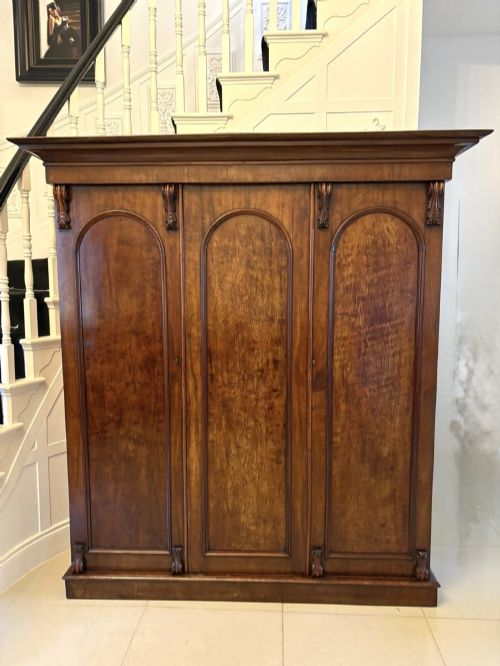
A carved wooden armoire encompasses tall storage furniture designed to house garments and linens, spanning centuries of European and global woodworking traditions. When searching for this phrase, buyers encounter substantial pieces that function as both wardrobes and display cabinets.
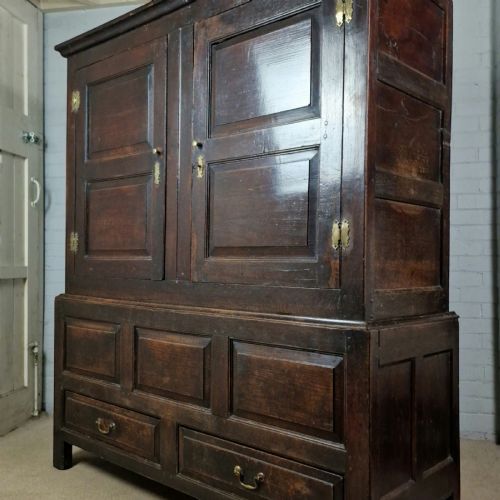
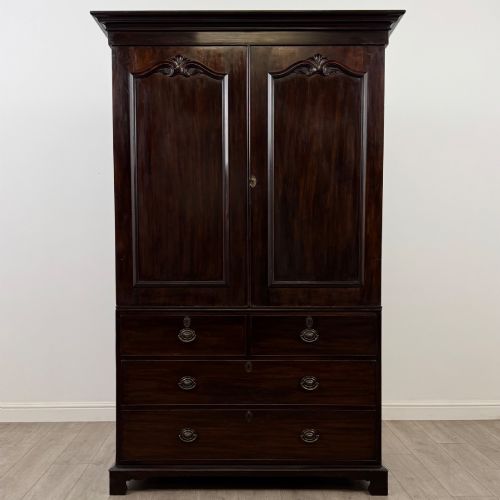
The selection here draws primarily from Victorian, Edwardian, and eighteenth-century periods, alongside regional pieces from France, Italy, Flanders, and India. Forms range from double door wardrobes and compactums to linen presses and painted storage cupboards.
Oak, walnut, mahogany, and teak dominate the selection, often enriched with detailed relief carving, panelling, or painted finishes. Buyers find everything from provincial oak armoires to satinwood inlaid wardrobes and reclaimed teak almirahs.
Materials and construction methods
Makers built these pieces using solid timbers such as oak, mahogany, walnut, and teak, frequently applying burr walnut and satinwood veneers for decorative grain patterns. Brass and iron hardware, including hinges, locks, and handles, secured heavy doors and internal compartments.
Joinery relied on traditional techniques like mortise and tenon frames, panelled doors to accommodate seasonal wood movement, and hand-cut dovetails within internal drawers. Carving was executed directly into the solid timber or onto applied mouldings, creating deep relief across cornices and door panels.
Carved Wooden Armoire Retail Price Guide 2026
Typical asking prices for carved wooden armoire among the pieces listed under this phrase on Sellingantiques today, from the lower quarter to the upper quarter. They describe what is for sale here now, not the wider market.
Several dowry chests hidden within these listings carry the silent weight of centuries-old linen stacks and family histories.
Distinctions in quality
Quality rests in the selection of timber and the precision of the joinery rather than mere scale. Superior pieces display harmonious grain matching across large surfaces, crisp hand-carving that retains sharp edges, and robust internal fittings that withstand the weight of heavy doors.
Maker execution defines the upper tier, visible in secondary timbers used for drawer linings and the survival of original brass or iron hardware. Lesser examples show simpler construction, coarser timber selection, or later alterations to internal hanging spaces.
Holland and Sons
The Carved Wooden Armoire Glossary
- Armoire
- A tall, large wardrobe or cupboard, traditionally used for storing clothes. These pieces often feature double doors and deep internal hanging or shelving space.
- Compactum
- A fitted wardrobe that combines hanging space, drawers, and linen slides within a single multi-door unit. This form emerged to maximise storage efficiency in Victorian and Edwardian dressing rooms.
- Linen press
- A piece of furniture comprising upper cupboard doors enclosing sliding trays for linens, set above a base of practical drawers. They are typically constructed from oak or mahogany.
- Almirah
- A cupboard or wardrobe originating from the Indian subcontinent, often built from reclaimed teak with distinctive panelled doors and traditional hardware. These serve as striking focal storage pieces.
- Cornice
- The decorative moulded projection that crowns the top of a cabinet or armoire. It visually balances the heavy base and conceals structural joints.
Carved Wooden Armoire: Frequently Asked Questions
How do I fit a large armoire?
Many historical armoires and wardrobes are built as knockdown pieces that dismantle into panels, cornices, and bases to ease transport and placement.
Check the ceiling height and doorway clearance of your room before delivery to ensure the assembled frame fits comfortably.
What is the difference between an armoire and a wardrobe?
While both terms describe large storage cupboards, armoire traditionally implies a continental European piece with deep historical origins and ornate carving.
Wardrobe often refers to British and later pieces specifically designed for hanging garments, frequently paired with fitted internal drawers and mirrors.
How should I care for timber surfaces?
Maintain antique wood by keeping it away from direct heat sources and sudden humidity shifts that cause timber to split.
Apply a traditional beeswax polish sparingly to nourish the grain and protect the original patina without sealing the pores.
Can I convert the interior for modern clothes?
Many buyers successfully adapt older wardrobes by installing removable clothes rails or discreet shelving inside deep carcass spaces.
Ensure any internal modifications avoid damaging original timber or historical lining papers where possible.