

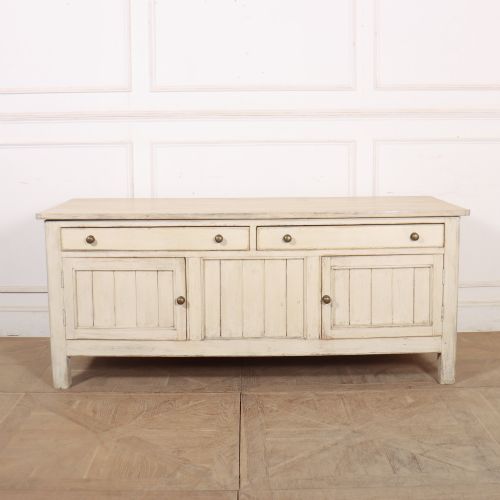
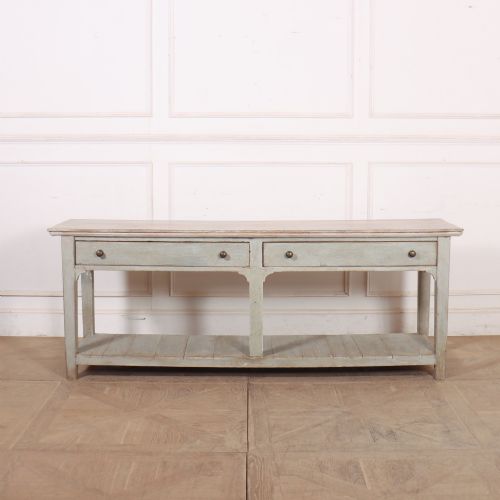
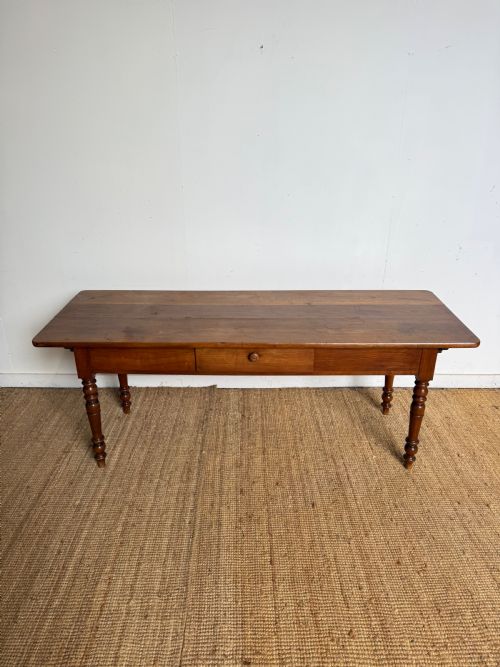
Antique Timber Server
An antique timber server is a functional dining room or kitchen piece designed for holding dishes, and these items bring practical surface space and period character to a home.
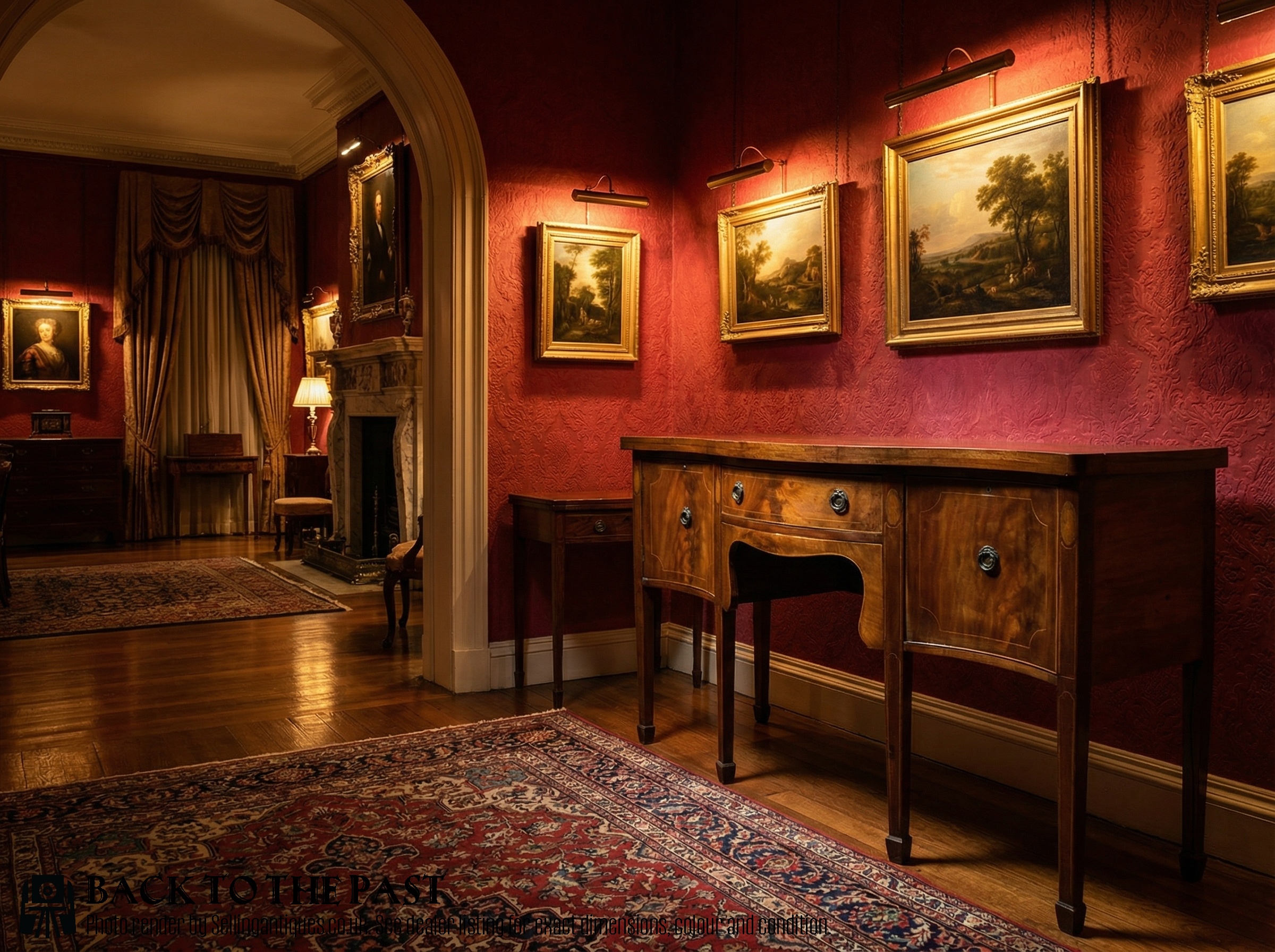
Antique Timber Server
When searching for an antique timber server, buyers encounter a variety of forms including sideboards, serving tables, console tables, and dresser bases. These items span the 18th century, 19th century, and early 20th century, drawing from Georgian, Victorian, Regency, and rustic country traditions.
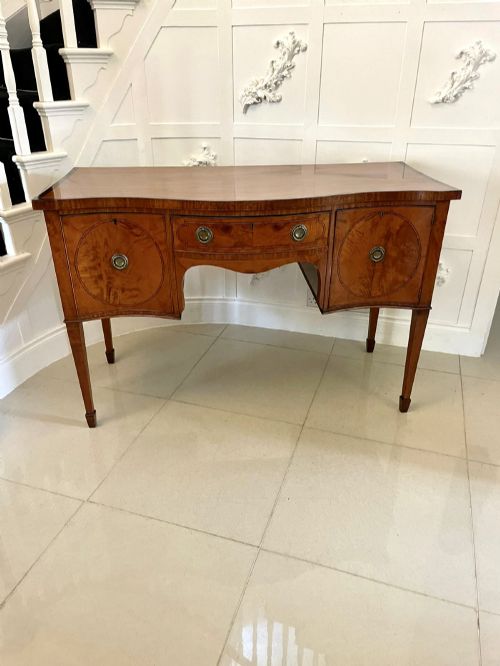
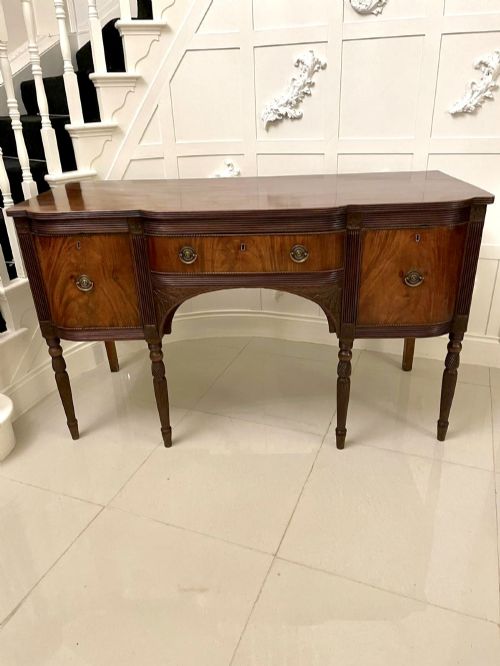
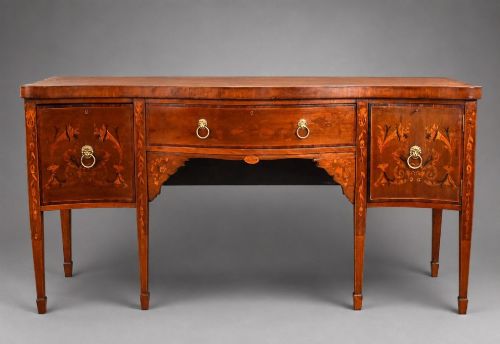
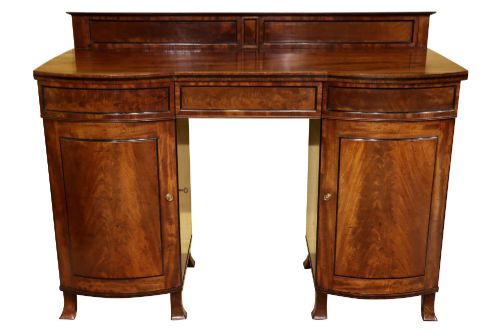
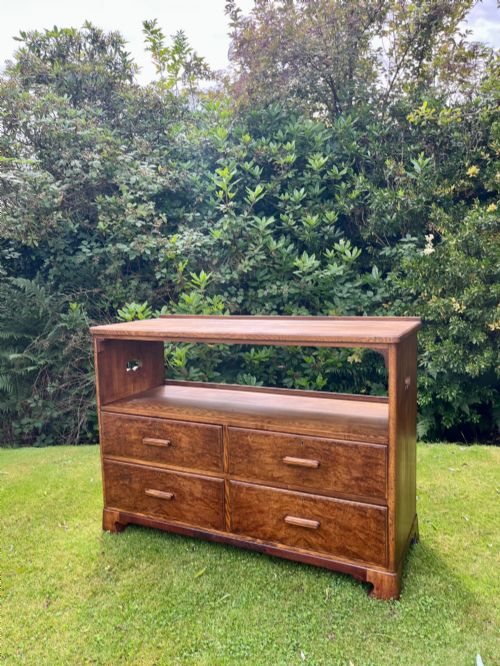
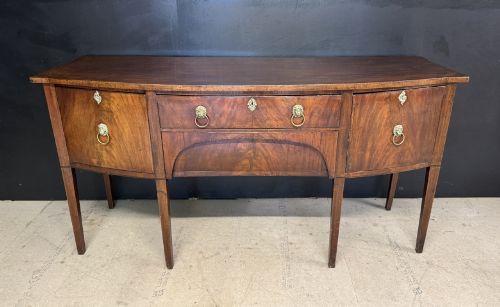
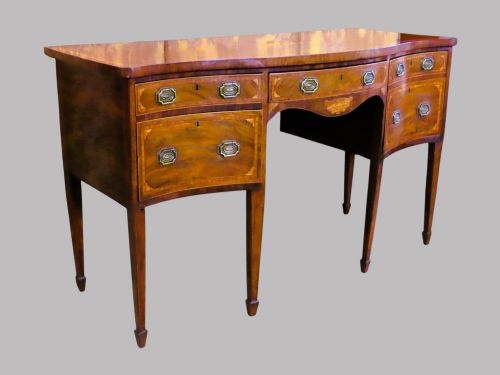
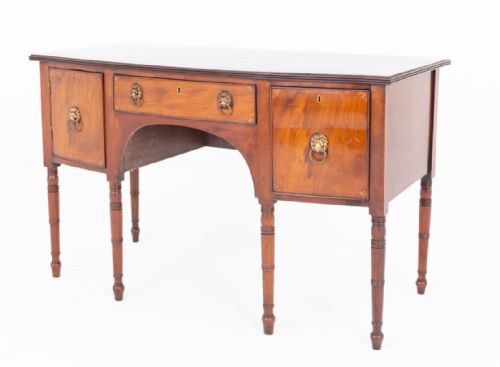
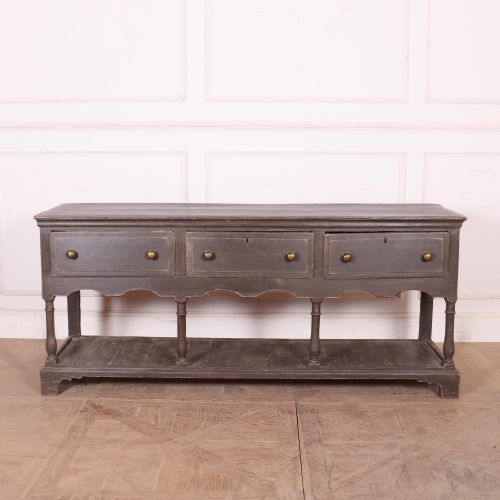
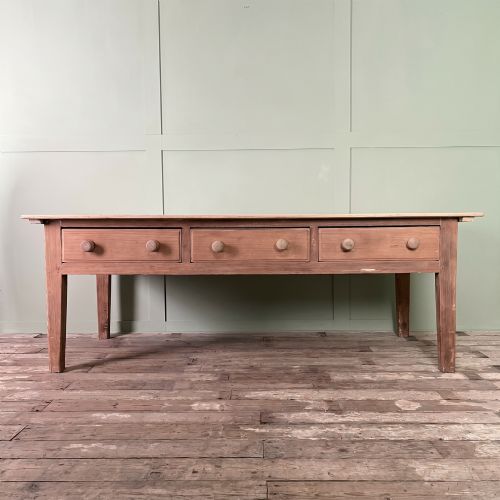
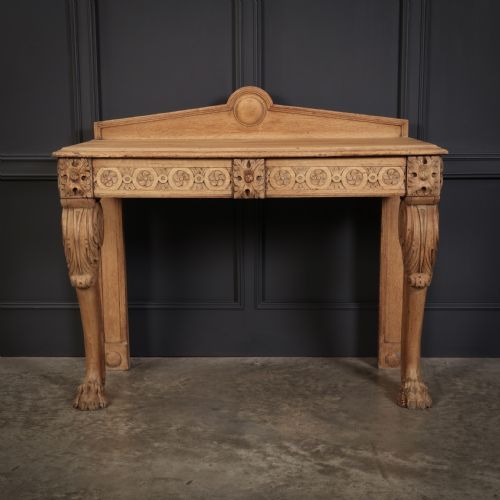
The most common formats on this page are mahogany sideboards with serpentine or bow fronts, alongside painted potboard dresser bases and oak or cherrywood console tables. Pieces range from formal Georgian dining room furniture to country house kitchen prep tables and French provincial servers.
Makers and origins vary widely, encompassing English cabinet pieces, French walnut and cherrywood tables, and regional items in pine, sycamore, or elm. Each form reflects the domestic storage and serving needs of its period.
Materials and construction methods
Makers constructed these pieces primarily using hardwoods such as mahogany, oak, walnut, and cherry, often pairing them with secondary softwoods like pine and sycamore for internal framing and drawer construction. Finer examples utilise flame mahogany veneer, burr elm, and satinwood, frequently enhanced with boxwood stringing and brass hardware.
Surface finishes range from polished mahogany and bleached oak to original paint and hand-painted decoration on country pieces. Potboard bases and dresser tables incorporate sturdy peg or mortise joinery designed for heavy daily kitchen and pantry use.
Judging quality and character
The distinction between standard utility furniture and superior pieces lies in the selection of timber figures, such as matched flame mahogany or burr elm, and the crispness of inlaid stringing. Cabinetwork precision, particularly in curved serpentine or bow fronts and smoothly operating dovetailed drawers, marks the highest workshop output.
Originality of surface finish heavily influences the standing of a piece, whether it retains a patinated polished hardwood lustre or an untouched layer of historic paint. Well-proportioned scaling and refined brass handles separate bespoke urban commissions from simpler regional kitchen work.
Whytock and Reid·The Woodworkers Ltd Kilkenny·Gillow
The Antique Timber Server Glossary
- Serpentine front
- A furniture front curving outward in the centre and inward at the ends. This undulating shape requires advanced woodworking skill to execute properly on a sideboard.
- Potboard
- A lower open shelf built into a dresser base or serving table. It was originally used for storing heavy pots and domestic utensils.
- Bow front
- A convex, outwardly curved furniture front popular in Georgian and Regency cabinetmaking. It softens the linear profile of a dining room server.
- Lowboy
- A small low table with drawers, typically standing on four legs. These pieces served as dressing tables or side serving tables in 18th-century interiors.
- Stringing
- Thin inlaid lines of contrasting wood used to outline drawers, panels, and tabletops. It highlights the geometric form of the timber.
Antique Timber Server: Frequently Asked Questions
How do I use an antique timber server today?
These pieces function well in modern dining rooms as serving surfaces for food and drink during gatherings. They also provide practical storage inside cupboards and drawers for tableware, linens, or general household items.
In hallways or living spaces, narrower console and serving tables offer a stable surface for lamps and decorative objects. Their historic timber finishes add warmth and traditional character to contemporary interior schemes.
What is the difference between a sideboard and a serving table?
Sideboards generally incorporate enclosed cupboard storage alongside multiple drawers, designed specifically for organising dining room china and cutlery. They often feature shaped fronts like serpentine or bow profiles.
Serving tables and console tables are typically more open structures, sometimes featuring a single drawer or an open potboard beneath. They focus primarily on providing a flat surface for presenting dishes rather than enclosed cabinet storage.
How do I care for antique timber furniture?
Keep wooden surfaces away from direct heat sources and strong sunlight to prevent the timber and veneers from drying out or splitting. Dust the piece regularly with a soft, dry cloth and apply occasional coats of quality beeswax to nourish the finish.
Avoid using modern chemical sprays or silicone polishes, which can build up and damage historic wax or polished surfaces over time. Handle drawers carefully and lift tables rather than dragging them across floors.
How can I tell a Georgian server from a Victorian one?
Georgian servers, dating from the 18th and early 19th centuries, typically display restrained classical proportions, fine mahogany or satinwood veneers, and subtle stringing details. They often prioritize architectural symmetry and understated elegance.
Victorian pieces from the later 19th century frequently exhibit heavier proportions, darker finishes, and more robust carving influenced by revival styles. Cabinetmakers during this era also experimented with wider ranges of timber, including burr elm and satinwood.