



Brown Wood Serving Buffet
A brown wood serving buffet anchors a dining room through solid proportions and deep timber tones.
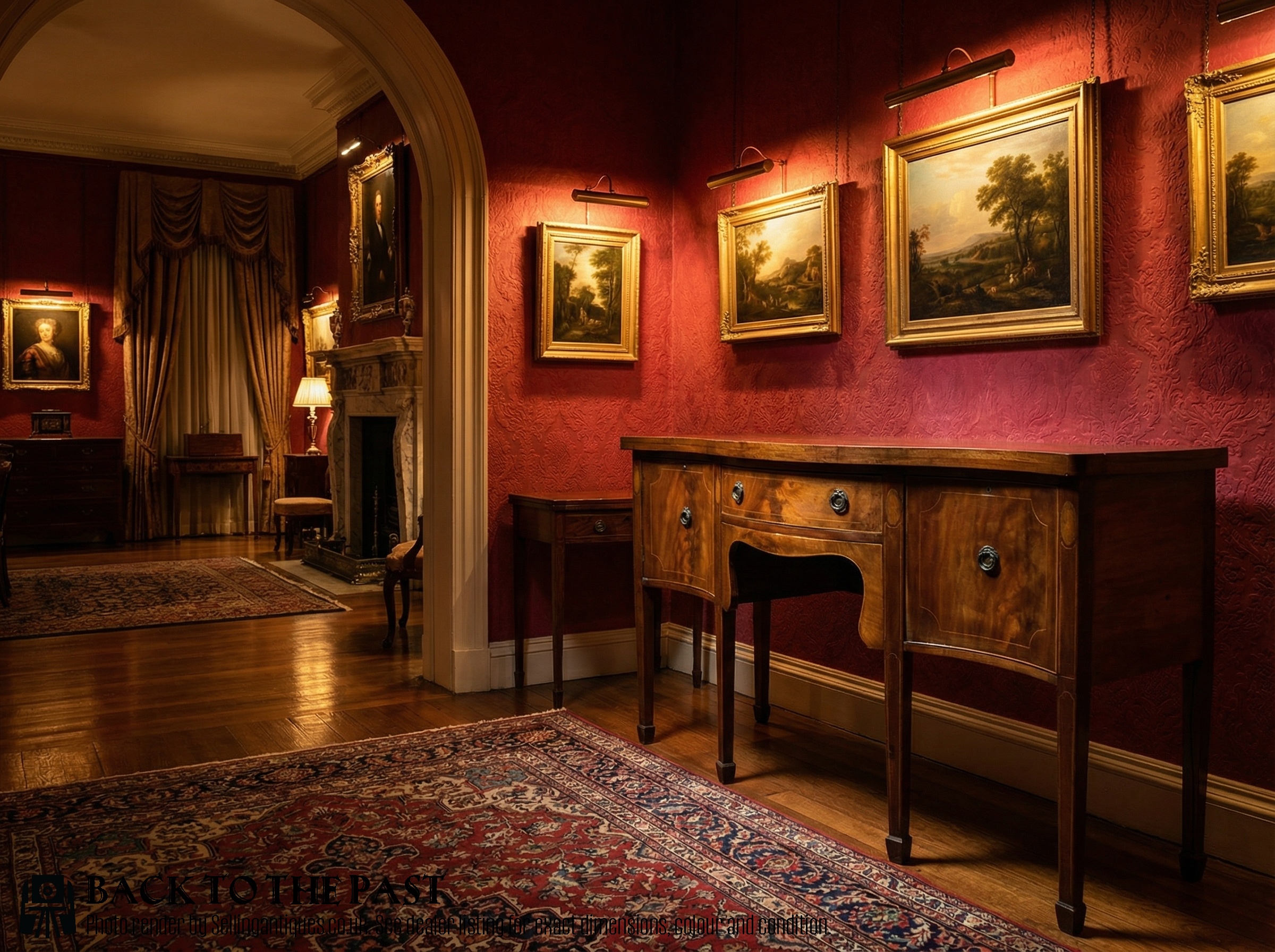
Brown Wood Serving Buffet
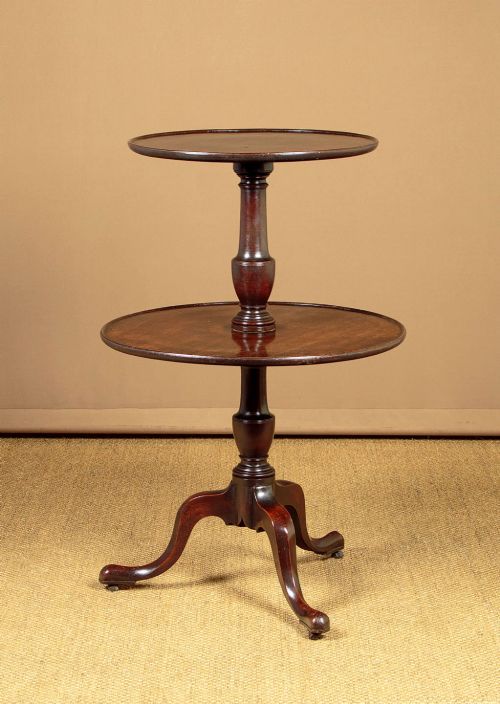
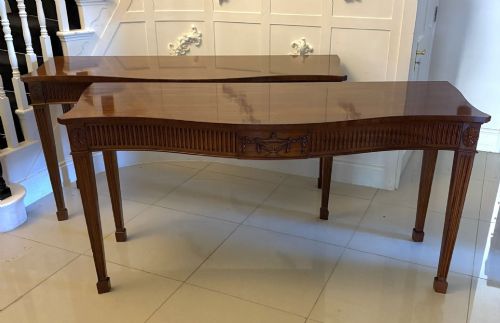
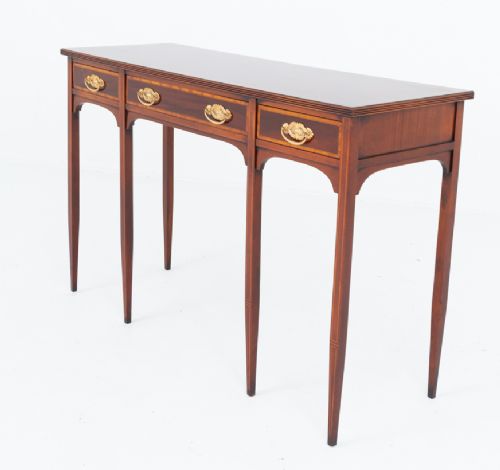
A brown wood serving buffet encompasses sideboards, servers, console tables and multi-tiered dumbwaiters designed for dining spaces. These pieces span the Georgian, Regency, William IV, Victorian and Edwardian periods, running from the eighteenth century into the twentieth century.
The version most commonly met on this page is the mahogany sideboard or multi-tiered dumbwaiter, often featuring shaped fronts and inlaid details. Workshops constructed these items primarily for domestic hospitality, providing sturdy surfaces for food and tableware.
Materials and Construction
Makers relied heavily on mahogany as the primary timber, occasionally supplementing it with walnut, oak or amboyna for specific decorative effects. Cabinetmakers incorporated satinwood and boxwood inlay to create contrasting borders and geometric patterns across drawer fronts and tops.
Brass fittings appear as handles, castors and structural mounts, securing tiered dumbwaiters and supporting heavy sideboard doors. Construction techniques included hand-cut joinery and carved neoclassical motifs, executed to ensure stability under heavy daily use.
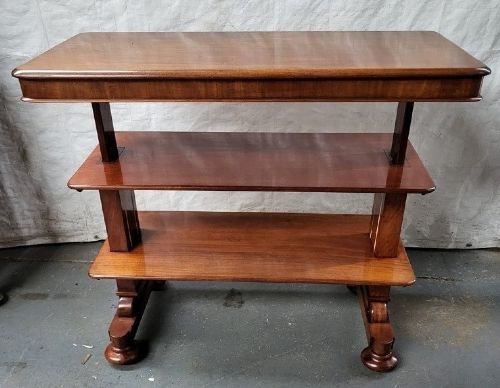
Some nineteenth-century dumbwaiters feature ingenious rise-and-fall mechanisms, allowing tired diners to adjust their tiered trays without standing up.
Judging Quality
Quality rests upon the selection of timber figures and the precision of the cabinet work, particularly where inlays meet solid framing. Pieces featuring tight mahogany grain and subtle boxwood or satinwood stringing display greater craftsmanship than plainer equivalents.
The integration of functional elements such as rise-and-fall mechanisms in dumbwaiters or serpentine curves in sideboards dictates the tier of the piece. Well-proportioned carving and original brass hardware elevate an item above standard utility furniture.
Gillow·George Hepplewhite
The Brown Wood Serving Buffet Glossary
- Buffet
- A piece of dining room furniture used for serving food and displaying tableware. These items range from multi-tiered stands to large sideboards.
- Dumbwaiter
- A multi-tiered serving stand, often with revolving trays or shelves, used in dining rooms to hold dishes without requiring servants. Examples frequently feature three tiers supported on central columns.
- Serpentine
- A furniture front or edge shaped with a central convex curve flanked by two concave curves. This contour requires skilled woodworking to follow the grain accurately.
- Inlay
- A decorative technique where contrasting woods like boxwood or satinwood are embedded into the surface of a primary timber. It creates crisp borders and visual contrast.
- Bowfront
- A convex, outward-curving front section on a cabinet or sideboard. This shape softens the corners of dining furniture.
Brown Wood Serving Buffet: Frequently Asked Questions
What is the difference between a buffet and a sideboard?
A sideboard traditionally incorporates cupboards and drawers for storing dining linen and cutlery alongside serving space. A buffet often refers to tiered serving stands or servers designed primarily to hold dishes during meals.
Both forms utilise rich timber construction and serve similar functions in traditional dining rooms, though their internal layouts vary according to the period.
How do I date a mahogany dumbwaiter?
Dating relies on examining the turning of the central column, the shape of the shelf tiers, and the style of the base supports. Georgian examples display restrained neoclassical carving, while Victorian pieces often feature heavier three-tier configurations.
Timber density, patination and the presence of original brass castors provide further clues to the exact decade of manufacture.
Where were these pieces used originally?
These items stood in formal dining rooms, drawing rooms and entertaining halls of large townhouses and country estates. They held heavy platters of food, silver service and glassware ready for family meals and gatherings.
Tiered dumbwaiters allowed diners to access extra plates and dishes independently without relying on household staff during a course.
How do I care for antique mahogany furniture?
Maintain timber surfaces by dusting with a dry cloth and applying natural beeswax polish periodically to nourish the grain. Avoid placing pieces near direct heat sources or strong sunlight to prevent the wood from drying out.
Keep humidity levels stable in the room to protect delicate boxwood and satinwood inlays from loosening over time.