
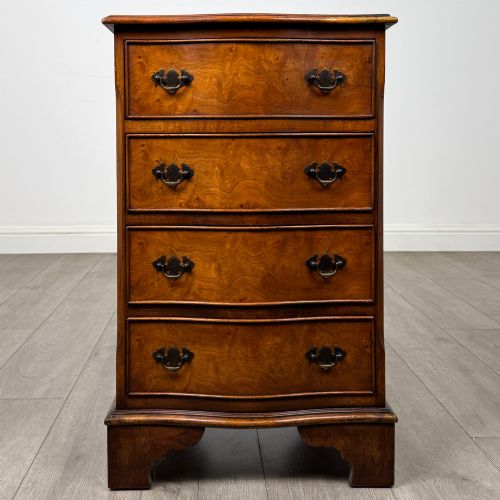
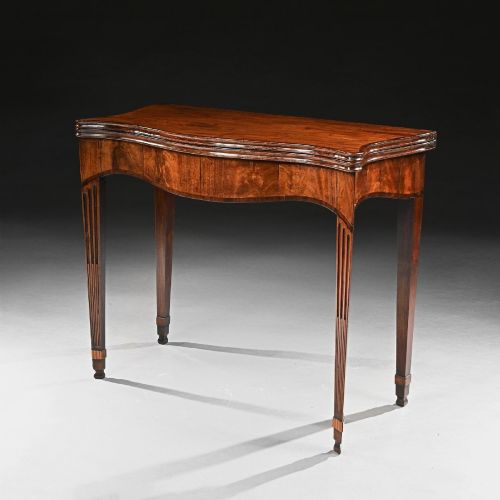

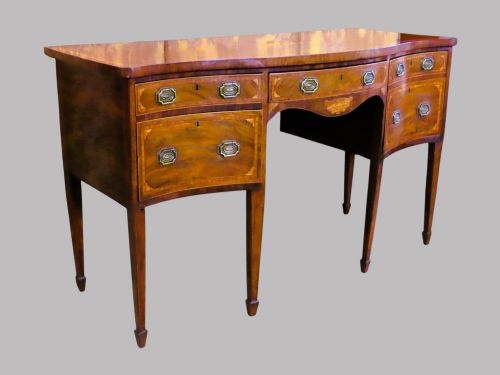
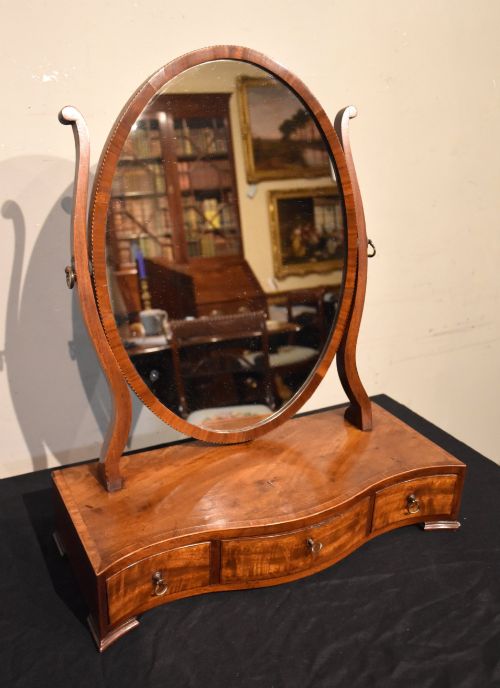

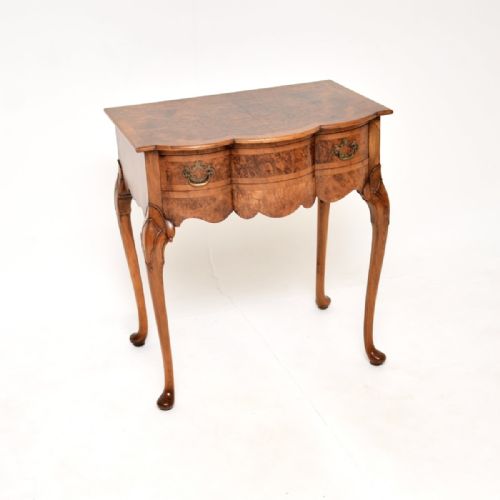
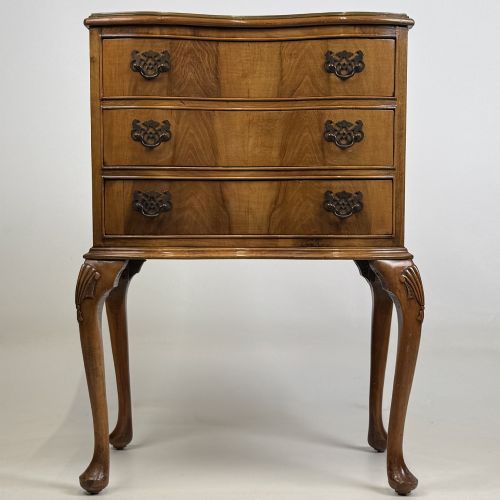
Georgian Serpentine Front Table
A georgian serpentine front table brings a sweeping, concave-convex line to a room through centuries of cabinet-making skill.
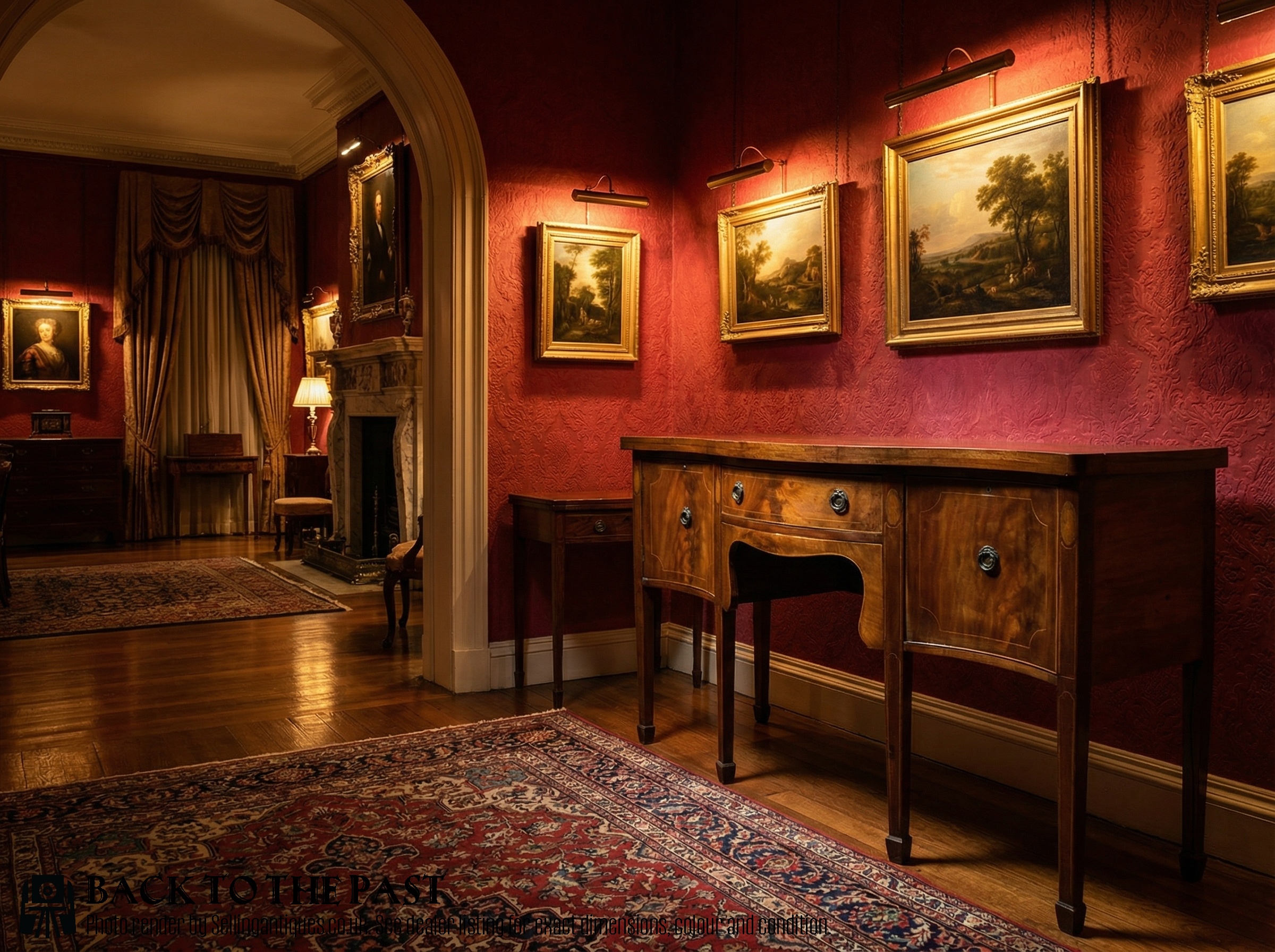
Georgian Serpentine Front Table
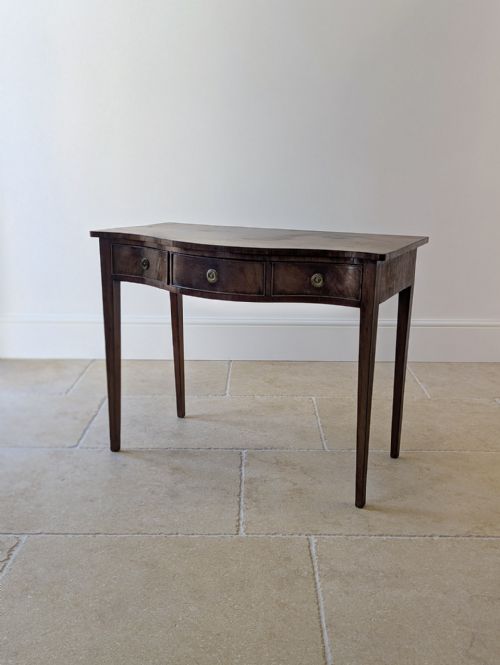
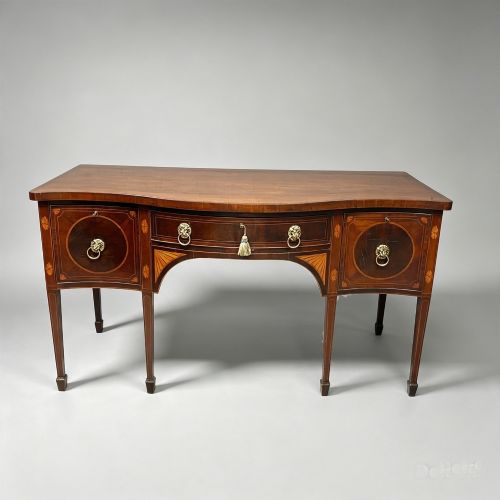
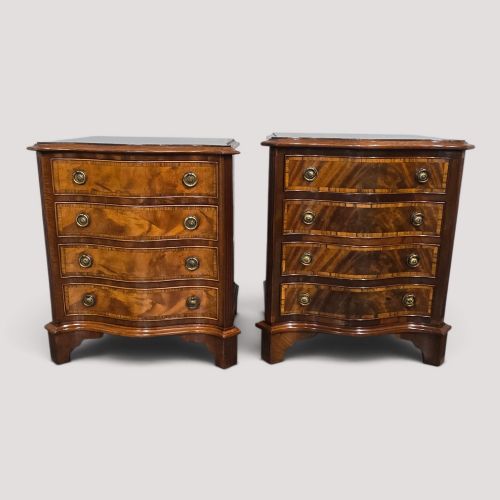
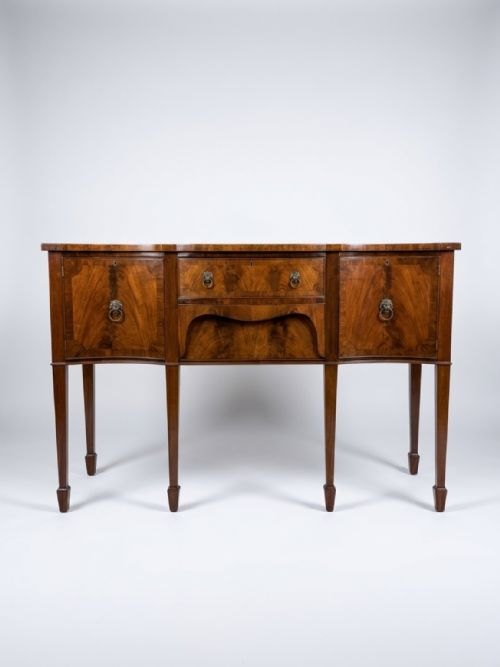
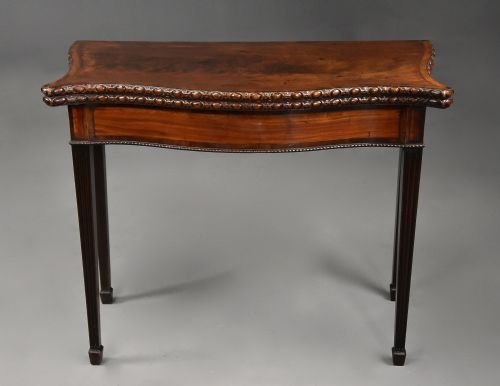
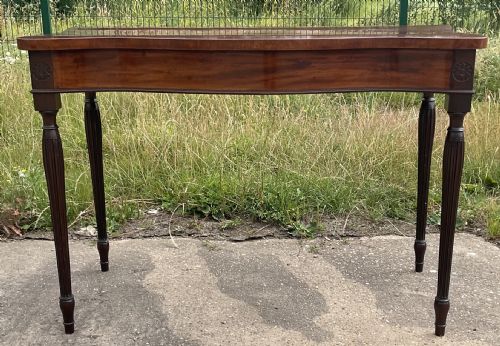
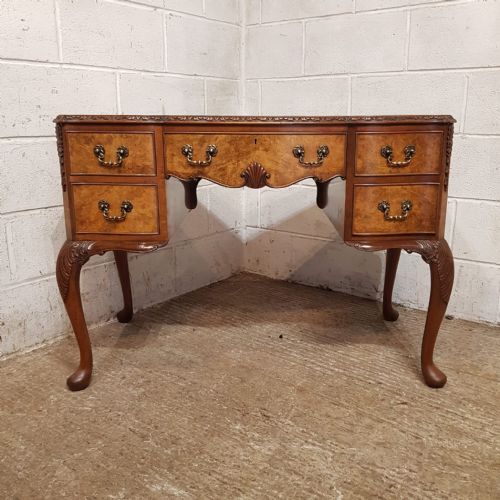
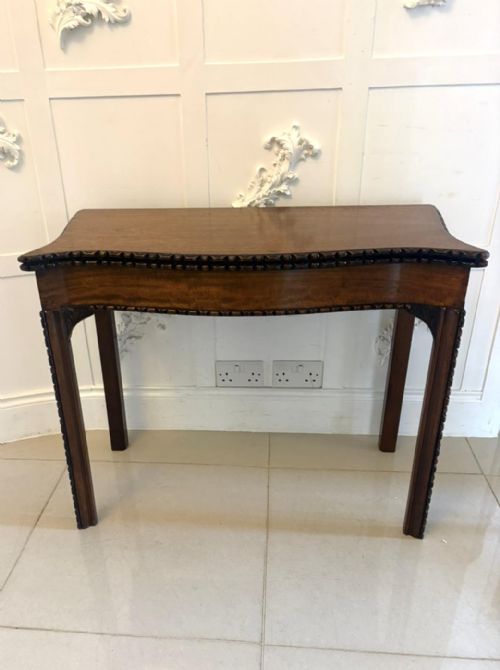
A georgian serpentine front table encompasses a range of formal furniture built with an undulating curved front profile, most commonly found in mahogany or walnut. These pieces include serving tables, card tables, side tables, and sideboards originating from the eighteenth century onwards.
The version most frequently met on this market page is the mahogany side table or sideboard dating from the Georgian period and George III era. Later revivals from the Edwardian period and the early twentieth century also appear frequently, reproducing the distinctive curving outline.
Buyers look for these tables to introduce architectural movement and refined timber grain into dining rooms, halls, and drawing rooms. The undulating front demands exact carpentry to ensure drawers and leaves follow the complex curve without binding.
How they were made
Cabinet-makers constructed these tables primarily using solid mahogany or walnut, frequently selecting burr walnut veneers or applying boxwood inlay to accent the curved drawer fronts and tops. The timber was chosen for both its structural stability and rich figure.
The sweeping serpentine profile required careful sawing of solid timber or the steam-bending of rails to achieve the convex centre flanked by concave wings. Joiners utilised traditional mortise and tenon joints to maintain rigidity along the complex geometry of the frame.
Listings feature mahogany, walnut, and burr walnut across eighteenth-century originals and twentieth-century revivals.
What varies in quality
The distinction between tiers of quality rests in the handling of the timber figure and the crispness of the serpentine sweep. Superior examples display carefully matched veneers and hand-carved details that accentuate the fluid movement of the front edge rather than masking it.
Proportion and the integration of secondary woods dictate the standing of a piece. Finer tables maintain balanced dimensions where the curve remains subtle and controlled, supported by original brass hardware and untouched patination on the polished surfaces.
The Georgian Serpentine Front Table Glossary
- Serpentine
- A furniture front shaped with a convex centre flanked by two concave curves. This contour requires specialised joinery to maintain smooth operation in drawers.
- Card table
- A folding table designed for gaming or social play, often featuring a baize-lined playing surface and a swivelling or concertina frame.
- Sideboard
- A large dining room piece used for serving food and storing tableware, frequently incorporating cupboards and drawers along its length.
- Patina
- The surface sheen and colour developed by wood and polish over decades of exposure and handling. Collectors value this indicator of age and genuine use.
- Inlay
- The technique of inserting contrasting strips of wood such as boxwood into recesses within the primary timber to create decorative borders.
Georgian Serpentine Front Table: Frequently Asked Questions
What rooms suit a serpentine table?
These tables fit easily into dining rooms, hallways, and drawing rooms where their curved outline softens rigid architectural lines.
They function well as serving surfaces or console tables against flat walls, creating visual depth through their undulating fronts.
How do I care for mahogany?
Keep the wood away from direct sunlight and steady heat sources to prevent the timber from drying out or splitting.
Apply traditional beeswax polish sparingly and buff with a soft cloth to preserve the natural lustre of the surface.
Are these tables good for dining?
Card tables and serving tables were built for specific social uses such as dining service or card games.
Smaller side tables serve effectively as writing desks or display surfaces rather than primary dining furniture.
How can I tell the period?
Examine the construction methods, secondary woods inside the drawers, and the nature of the brass hardware.
Eighteenth-century pieces typically show hand-cut dovetails and deeper patination compared to twentieth-century revivals.