
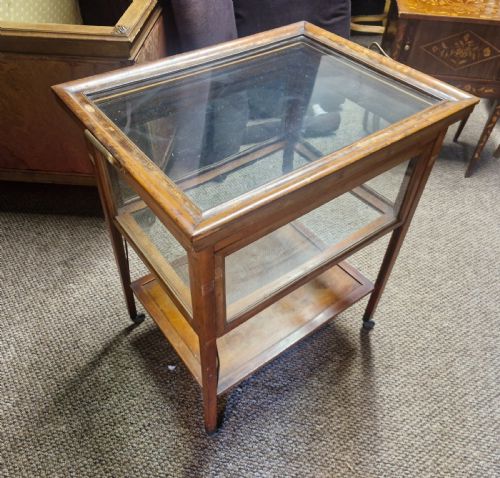


Vintage Mahogany Serving Cabinet
A vintage mahogany serving cabinet brings rich timber tones and practical storage to a dining room, uniting period character with everyday utility.
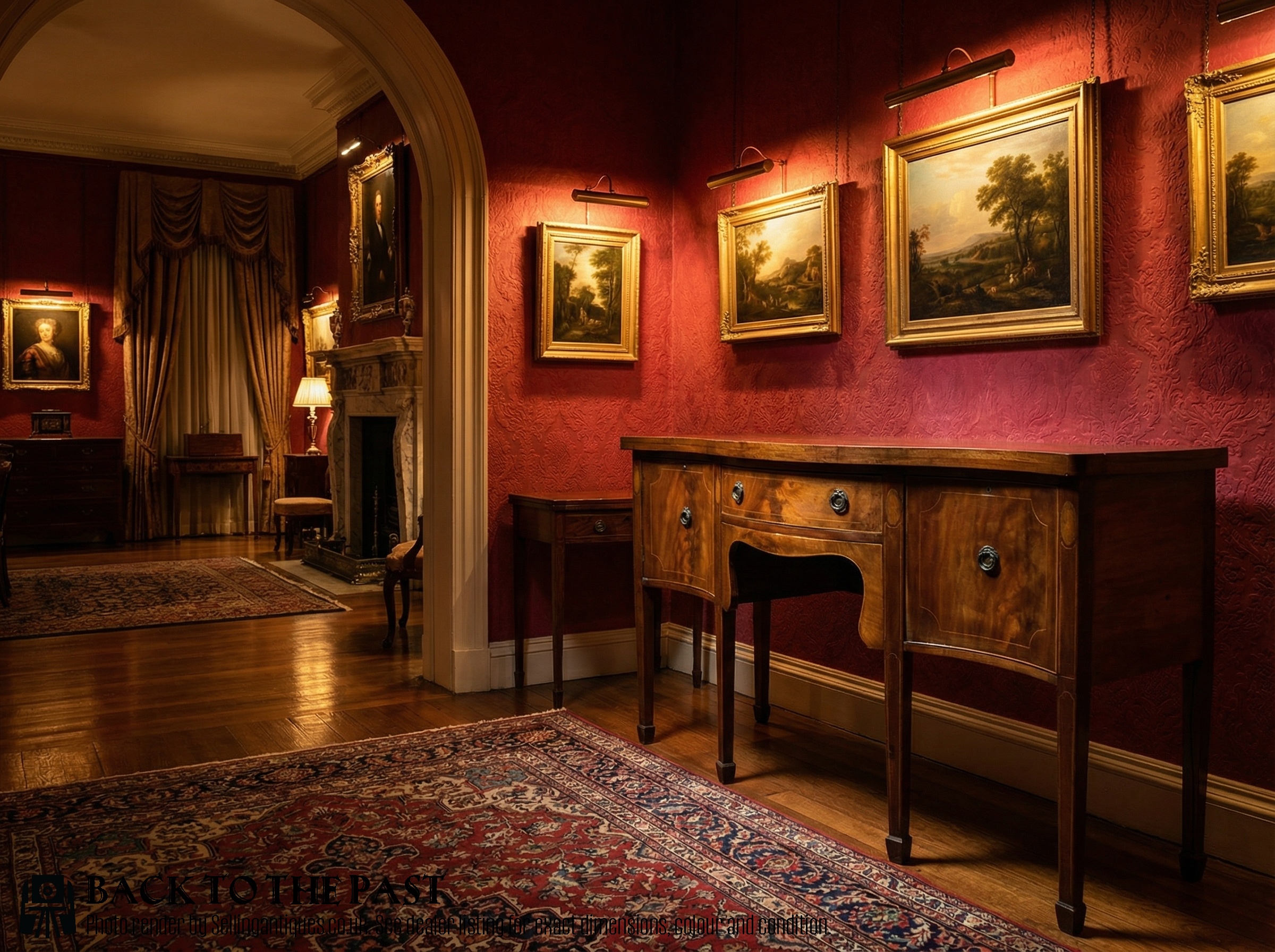
Vintage Mahogany Serving Cabinet
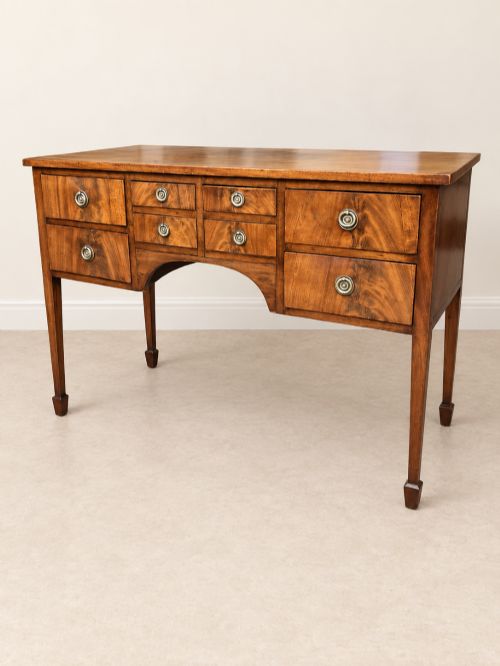
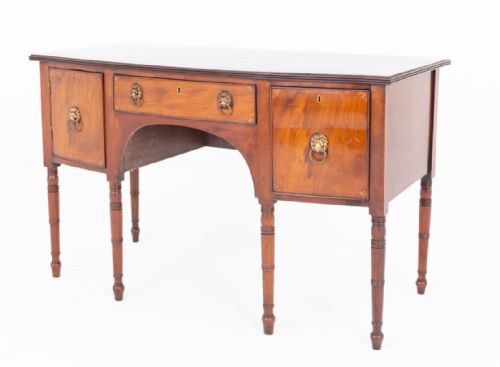
The most frequent form you meet on this page is the sideboard, appearing in Georgian, Victorian, and Regency variations alongside later revival styles. Alongside these large dining room pieces, the listings include specialised items such as tea trolleys, marble top dumb waiters, and shop serving counters.
Origins span the nineteenth century through to the 1920s, reflecting changing domestic and commercial needs. Pieces range from formal bowfront and serpentine shapes to utilitarian shop counters and compact drop-sided trolleys.
How they were made
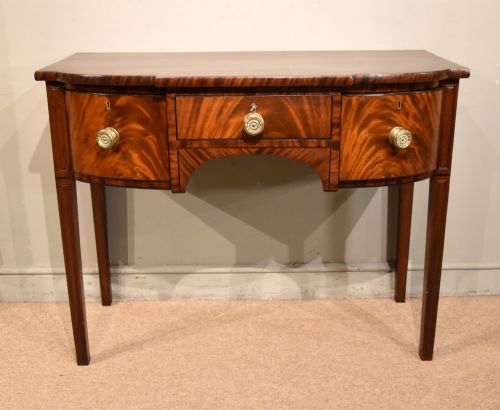
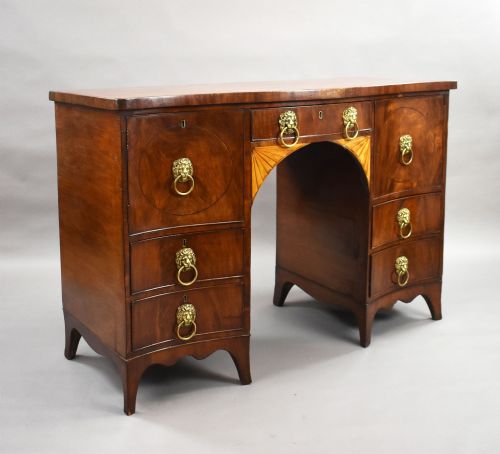
Makers utilised solid mahogany and flame mahogany veneers over secondary timbers to achieve deep reddish-brown surfaces with varied grain patterns. Cabinetmakers enhanced these wooden structures with contrasting stringing and inlay work using boxwood and satinwood.
Hardware and functional details typically incorporate cast brass handles, drawer pulls, and occasionally adjustable feet on commercial pieces. For specialised serving and display items, glass panels and marble tops were integrated into the cabinetry.
Listings feature mahogany, boxwood, satinwood, and marble across styles spanning Georgian, Regency, Victorian, and Edwardian periods.
What varies in quality
The distinction between standard examples and finer pieces lies in the choice of timber and the precision of the cabinetwork. Superior items display well-figured flame mahogany veneers and intricate satinwood or boxwood inlay rather than plain surfaces.
Proportion and form dictate distinction, with curved serpentine and bowfront designs demonstrating higher levels of joinery skill than straight-fronted carcases. The integration of period hardware, such as original brass fittings, also separates ordinary production from more distinguished examples.
The Vintage Mahogany Serving Cabinet Glossary
- Mahogany
- A durable tropical hardwood known for its deep reddish-brown colour and stability. Cabinetmakers favoured it for formal dining furniture throughout the eighteenth and nineteenth centuries.
- Flame mahogany
- A veneer cut from the branch junction of the tree, producing a dramatic, flickering flame-like grain pattern. It was applied to drawer fronts and door panels to create a decorative focal point.
- Bowfront
- A curved furniture front where the central section projects outward in a convex arc. This shape required skilled carpentry and appeared frequently on sideboards.
- Serpentine front
- A cabinet front featuring a central convex curve flanked by concave sections, forming an S-shape. It represents a more complex form of construction than a standard straight or bowfront.
- Dumb waiter
- A tiered serving stand used in dining rooms to hold dishes, glasses, or tea items without requiring a servant present. Some examples feature marble tops for durability.
Vintage Mahogany Serving Cabinet: Frequently Asked Questions
What is a vintage mahogany serving cabinet?
It is a term encompassing formal sideboards, serving cupboards, and commercial counters made from mahogany. These pieces served to store dining utensils, display food, and assist with hospitality.
They combine practical storage capacity with decorative woodwork, utilising timber veneers and inlay to suit period dining rooms.
How do I identify a Georgian sideboard?
Georgian sideboards generally feature solid mahogany construction, often enhanced with satinwood inlay and boxwood stringing. They frequently employ bowfront or serpentine shapes.
Proportions tend to be elegant and balanced, relying on the natural grain of the wood and subtle brass hardware rather than heavy ornamentation.
Where were serving cabinets used?
They were primarily placed in formal dining rooms to assist with the service of meals and the storage of silverware and linen. Domestic spaces relied on them during large gatherings.
Commercial variants, such as shop serving counters and dry bars, were designed for retail environments and hospitality settings to manage provisions.
What is flame mahogany?
Flame mahogany is a decorative veneer obtained from specific sections of the mahogany tree where the grain twists and creates a flame effect. It provides a striking visual texture.
Cabinetmakers utilised this veneer on prominent surfaces like drawer fronts and cabinet doors to catch the light and demonstrate fine craftsmanship.
How do I care for a mahogany cabinet?
Maintenance involves keeping the timber away from direct heat sources and strong sunlight to prevent the wood from drying out or fading. Regular dusting with a soft cloth preserves the finish.
Applying occasional appropriate wax polish helps maintain the lustre of the mahogany surface without building up excessive residue over time.