
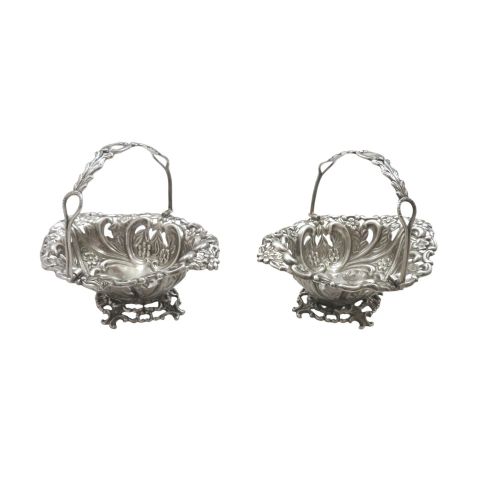

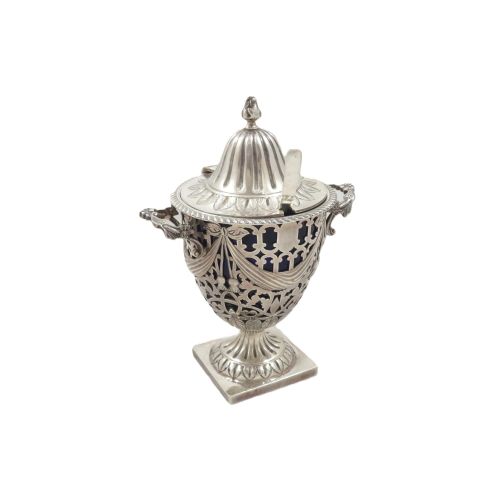
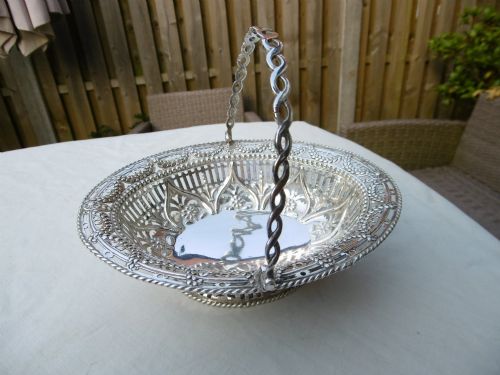
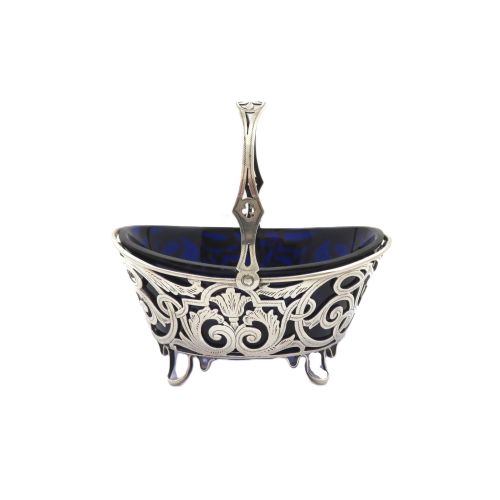
Antique Sugar Basket
An antique sugar basket brings refined Georgian pierces and Edwardian swing handles directly to the tea table.
Antique Sugar Basket
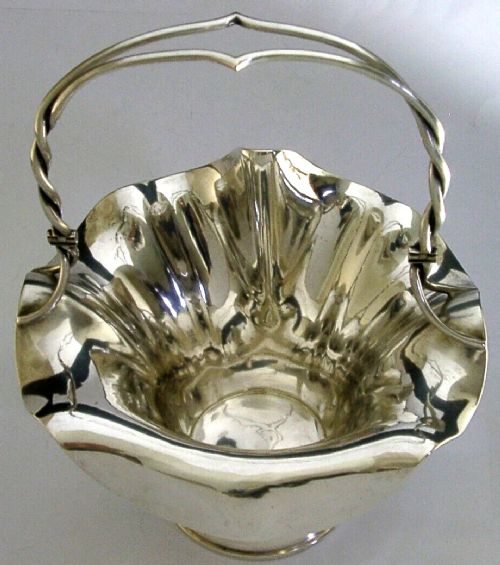
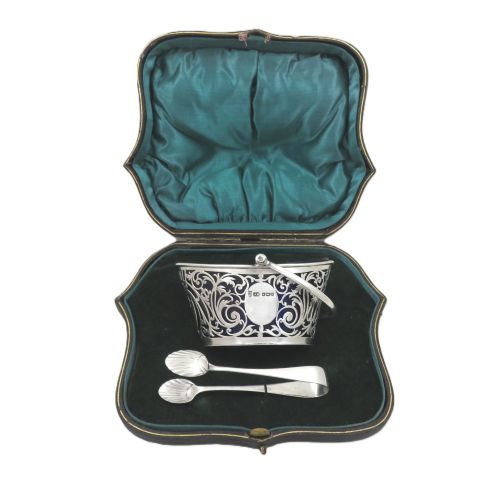
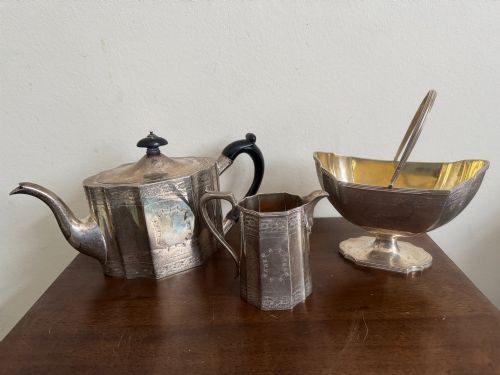
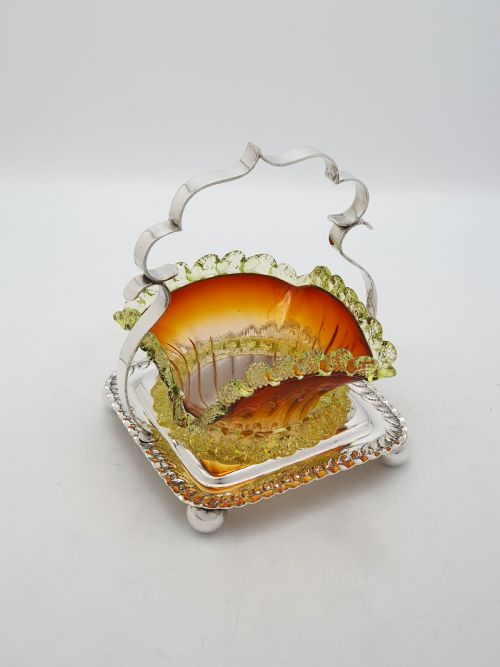
An antique sugar basket is a small, portable vessel designed to hold lump sugar or loose grains for tea service. The pieces seen most frequently on this page belong to the Edwardian period and the late Victorian era, often featuring swing handles and contrasting glass liners.
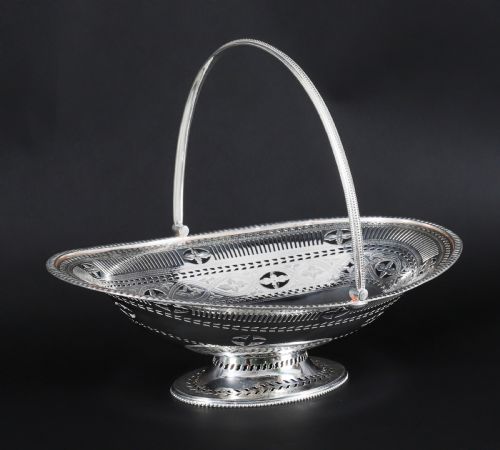
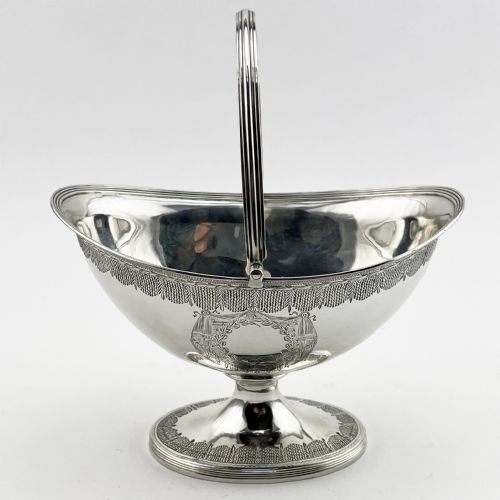
Earlier examples reach back into the Georgian and 18th Century periods, showing pierced silver bodies, wirework, and delicate boat shapes. These formal table pieces evolved from simple bowls into elaborate vessels supported on small feet or cast pedestals.
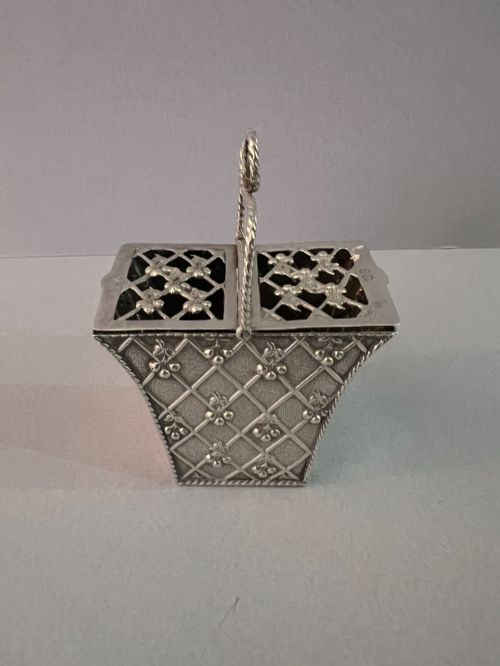
Makers also produced forms intended to hold cream pails, sweetmeats, or fruit alongside standard sugar storage. Silver plate and Old Sheffield Plate run parallel to solid sterling silver throughout the timeline, offering similar decorative pierced patterns at varied scales.
Materials and technique
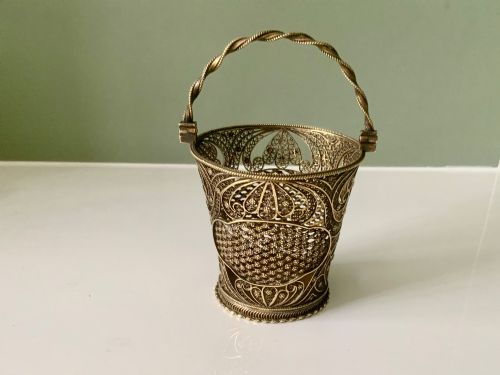
Silversmiths constructed solid sterling silver and silver-plated bodies using piercing, sawing, and fretwork techniques to create intricate lattice patterns. Wirework baskets required individual strands of metal soldered together by hand into geometric or wickerwork designs.
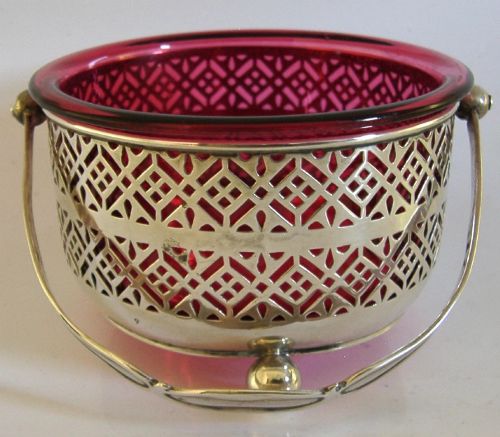
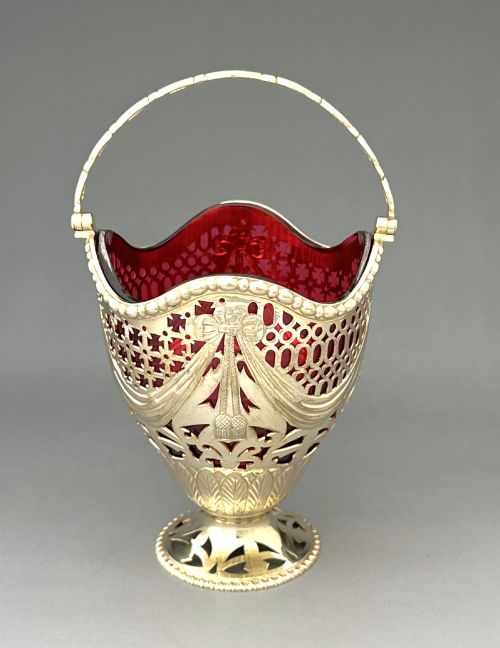
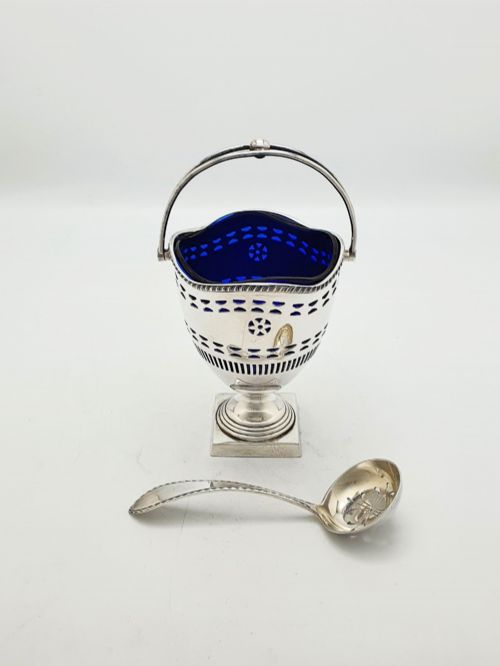
Blowers and glassmakers produced removable coloured liners in cobalt, cranberry, ruby, amber, and vaseline glass to sit inside the pierced metal frameworks. Silver gilt finishes and applied cast floral handles added weight and ornamental detail to the completed vessel.
Listings feature solid sterling silver, silver plate, and Old Sheffield Plate alongside cobalt, cranberry, and vaseline glass liners.
Markers of standard
Quality rests heavily on the crispness of the pierced or fretwork decoration and the integrity of the soldered joints. Piercing executed with sharp, clean edges distinguishes finer workshop output from softer, shallower stampings.
The presence of an original matching glass liner, particularly in distinct colours like cobalt or cranberry, elevates the piece. Heavy gauge silver plate or solid sterling metalwork with fully legible hallmarks provides tangible evidence of maker attribution and date.
Aldridge & Green·Henry Chawner·Fenton·Hammond, Creake & Co·James Dixon & Sons Ltd·William Bond·Elkington & Co
The Antique Sugar Basket Glossary
- Pierced work
- Metal sheet cut through with saws or punches to form decorative patterns. This technique reduces the weight of the basket while creating intricate openwork designs.
- Old Sheffield Plate
- A composite material made by fusing a thin sheet of silver to a thicker copper base. It was widely used for baskets before modern electroplating methods were introduced.
- Swing handle
- A movable arched handle attached to the rim of the basket by pivots or hinged loops. It allows the handle to lie flat when the vessel is placed on a table.
- Silver gilt
- Silver objects that have been coated with a thin layer of gold on the interior or exterior surfaces. This finish prevents tarnishing and provides a rich two-tone appearance.
- Liner
- A removable glass insert shaped to fit snugly inside the metal basket frame. Liners protected the metal from moisture and acidic sugar contents.
Antique Sugar Basket: Frequently Asked Questions
What were antique sugar baskets used for?
These vessels held sugar lumps or loose sugar on formal dining and tea tables during the eighteenth, nineteenth, and early twentieth centuries. Guests served themselves from the open or pierced body using small tongs or spoons.
They functioned as both functional tableware and decorative centrepieces, often paired with matching cream pails or sifter spoons. The addition of a coloured glass liner allowed wet or damp sugar products to be served without damaging the metal framework.
How do I care for silver and glass?
Solid silver and silver plate require occasional gentle cleaning with a specialist cloth to maintain their lustre and manage natural oxidation. Avoid harsh abrasive dips that can strip away fine details or damage antique plating.
Glass liners should be washed by hand in warm soapy water rather than placed in modern dishwashers. Removing the liner before polishing the surrounding metal prevents chemical residue from settling in the pierced gaps.
How can I tell Georgian from Edwardian pieces?
Georgian baskets, dating through the eighteenth century, frequently display hand-pierced neoclassical urn motifs, bright-cut engraving, or delicate wirework. Their construction is entirely manual, resulting in subtle irregularities that point to individual workshop production.
Edwardian pieces, made around the early twentieth century, often utilise machine-assisted piercing and heavier cast mounts. They lean towards revival styles that emulate earlier Georgian or Adam designs but carry legible modern hallmarks for that specific decade.
Are liners usually original to the basket?
Many surviving baskets retain their original blown or moulded glass liners, particularly those shaped specifically for unusual oval or boat-shaped frames. Because glass is fragile, some pieces encountered today feature period-compatible replacements.
A correct liner sits flush within the rim without rocking or leaving excessive gaps against the interior walls. Subtle variations in thickness and bubbles within the glass often indicate genuine period manufacture.