


Yellow Glass Bowl
A yellow glass bowl brings intense warmth and striking colour to a room, catching the light in ways clear crystal simply cannot manage.
Yellow Glass Bowl
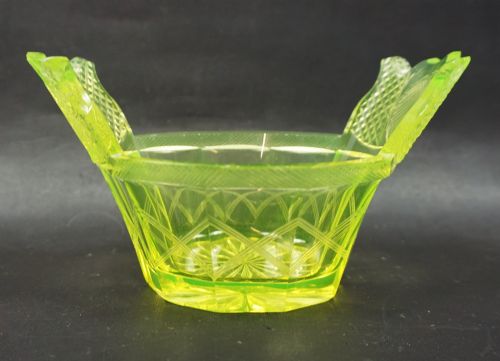
When you search for a yellow glass bowl, you encounter a range of forms spanning the nineteenth and twentieth centuries, including decorative bowls, bonbon dishes, centrepiece bowls, and tazzas.
The pieces listed here appear in styles such as Victorian, Edwardian, Art Nouveau, Art Deco, Bohemian Biedermeier, and Japonisme.
Makers and houses represented in these forms include René Lalique, Thos. Webb & Sons, and Baccarat, alongside silver-plated mounts by James Dixon.
How they were made
Makers utilised techniques involving cased glass, cut crystal, and pressed glass, alongside cameo glass and hand-painted decoration.
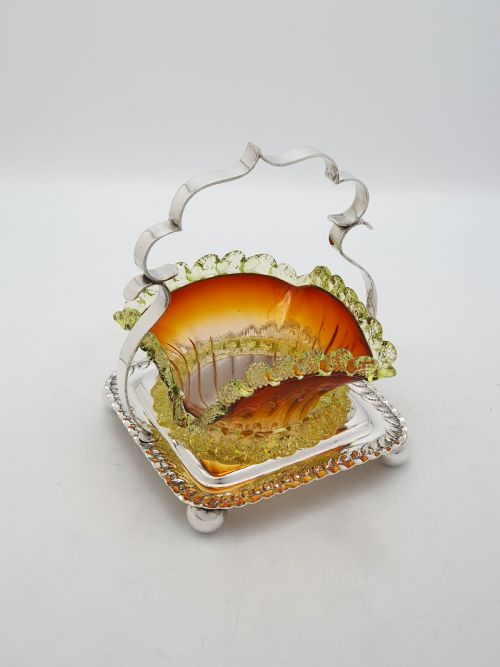
Several examples combine glass with silver plate, mounting amber, vaseline, or opaline glass bowls within metal frames.
Specialised formulations such as uranium glass and Vaseline glass produce distinctive optical effects under natural light.
Some nineteenth-century glass bowls glow an unexpected neon green in the dark when exposed to ultraviolet light.
What varies in quality
Quality depends upon the skill of the glassmaker, evident in the crispness of the cutting, the depth of the cameo carving, or the precision of the hand-painted enamel.
The integration of metalwork also dictates value, particularly where silver-plated mounts by makers like James Dixon complement the glass vessel.
The complexity of the manufacturing process, such as cased glass layers or complex moulded reliefs seen in works by René Lalique, separates standard production from finer examples.
Rene Lalique·Thos Webb And Sons·Baccarat·Paul Nicolas·James Dixon
The Yellow Glass Bowl Glossary
- Vaseline glass
- A type of glass containing uranium dioxide that exhibits a yellowish-green colour and fluoresces brightly under ultraviolet light. It gained popularity during the nineteenth century for decorative tableware.
- Uranium glass
- Glass that has uranium added to the glass mix for coloration, typically appearing yellow or green. It reacts strongly to UV light due to its chemical composition.
- Cased glass
- Glass made with distinct layers of different colours, often achieved by blowing a gathering of one glass colour into a bowl of another. This technique allows artisans to cut through the outer layer to reveal the contrasting colour beneath.
- Tazza
- An ornate cup or shallow bowl on a pedestal, frequently utilised as a centrepiece or serving dish on dining tables. Victorian examples often featured elaborate silver-plated stands.
- Cameo glass
- A luxury form of art glass produced by etching or carving through fused layers of different coloured glass to create raised designs. Pieces by makers such as Paul Nicolas demonstrate this intricate method.
Yellow Glass Bowl: Frequently Asked Questions
How do I identify uranium glass?
Uranium glass typically displays a distinct yellow or yellow-green hue in daylight. Under ultraviolet light, it emits a bright, vibrant green glow due to the uranium content.
Not all yellow glass contains uranium, so testing with a UV light remains the most reliable method for identification.
Were these bowls used for food?
Many bonbon dishes and decorative bowls served functional roles on dining tables during the Victorian and Edwardian periods, holding sweets or small fruits.
Larger centrepiece bowls and tazzas acted primarily as decorative ornaments for drawing rooms and dining rooms rather than for daily dining use.
How do I clean antique silver plated mounts?
Silver plate requires gentle cleaning with a soft cloth to avoid wearing away the thin layer of silver over the base metal. Care must be taken to keep silver polish away from the antique glass surface.
Using mild, soapy water and drying immediately helps preserve both the metal and the glass without causing abrasion.
What is cased glass?
Cased glass consists of two or more distinct layers of glass fused together during the blowing process. This technique allowed Victorian and Art Nouveau makers to create rich contrasts in colour.
Artisans often cut away parts of the outer layer to reveal the contrasting shade underneath, creating depth and pattern.