


Victorian Glass Sugar Bowl
A victorian glass sugar bowl brings nineteenth-century colour and metalwork to the table, combining richly tinted vessels with pierced silver frames.
Victorian Glass Sugar Bowl
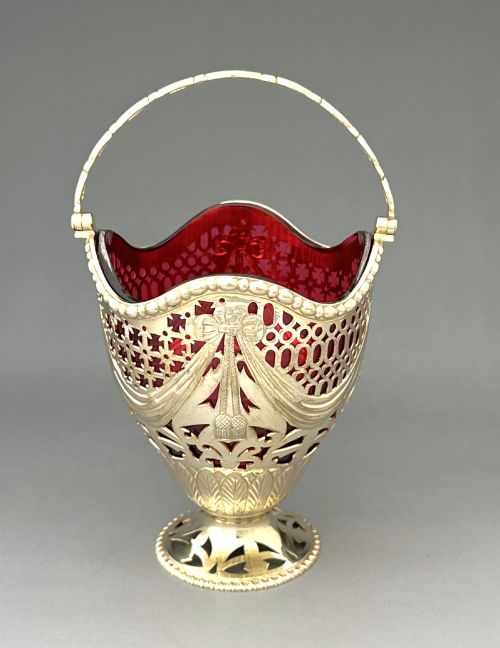
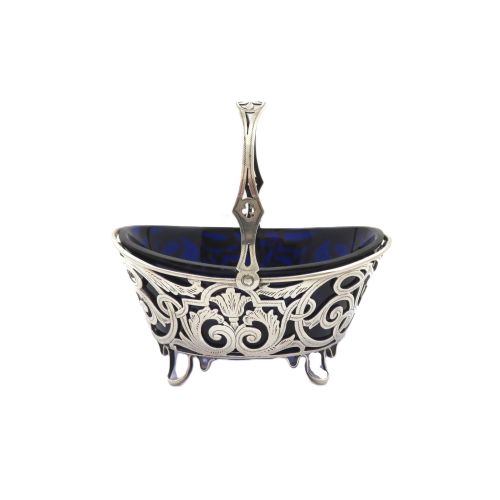
A victorian glass sugar bowl on this page usually appears as a coloured glass liner held within a pierced silver or silver-plated basket, often featuring a swing handle. These pieces served the nineteenth-century tea table for holding lump or granulated sugar.
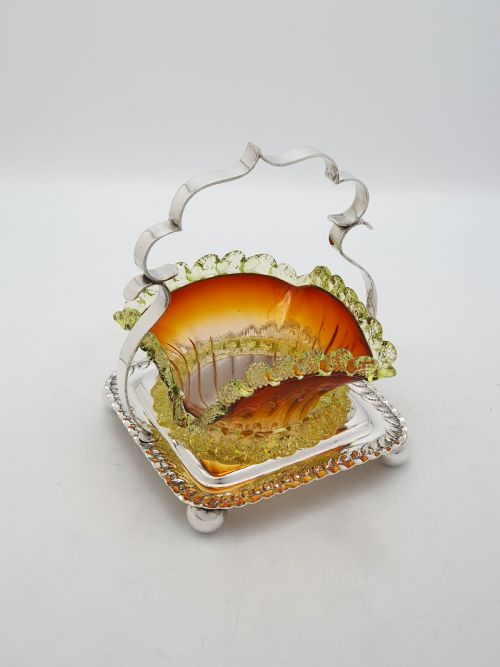
The selection extends from plain pressed and cut glass jars to complex vessels combining cranberry, vaseline, or amber glass with ornate metalwork. Related forms such as preserve dishes, bonbon dishes, and sugar baskets share the same domestic table function and decorative metal mountings.
Most examples date from the Victorian and Edwardian eras, spanning the mid-nineteenth century up to the early twentieth century. Makers and manufacturers from England and continental Europe produced these vessels in distinct styles ranging from formal Victorian designs to sweeping Art Nouveau curves.
Materials and Construction
Coloured glass production relies on metallic oxide additives to achieve deep cranberry, yellow vaseline, and ruby tones, while specialised techniques like latticinio incorporate white and coloured glass canes into the molten vessel. Master glassmakers blew or moulded these bowls before shaping them into baskets, jars, and preserve dishes.
Metal mounts and baskets were produced using sterling silver or silver plate, often enhanced with silver gilt surfaces for a rich gold-toned finish. Silversmiths pierced, cast, and engraved the metal frames to securely cradle the delicate glass liners while displaying the coloured glass beneath.
The inventory records French latticinio glass alongside English sterling silver sugar baskets from the mid-Victorian period.
Assessing Quality
The fineness of the metalwork separates standard production from exceptional pieces, visible in the depth of cast floral handles and the crispness of pierced silver patterns. Heavier gauge silver plating and substantial sterling silver mounts indicate superior workshop standards.
Quality also rests in the glass itself, where even wall thickness, rich and consistent colour saturation, and precise optic ribbing or threading distinguish better vessels. The harmony between the glass liner and its fitted metal basket demonstrates thoughtful design and secure original pairing.
Baccarat·W M F·George Fox
The Victorian Glass Sugar Bowl Glossary
- Cranberry Glass
- A transparent pinkish-red glass coloured by the addition of gold chloride to the molten batch. It became extremely popular during the nineteenth century for tableware and decorative items.
- Vaseline Glass
- A yellow-green glass containing small amounts of uranium dioxide that causes the glass to fluoresce brightly under ultraviolet light. It appears frequently in Edwardian and Victorian tablewares.
- Silver Gilt
- Silver object coated with a thin layer of gold on its surface, providing a warm golden appearance. This technique protected the underlying silver from tarnishing while adding luxury.
- Latticinio
- A decorative glass technique featuring white or coloured opaque glass threads embedded within clear glass vessels in reticulated or spiral patterns. Baccarat produced notable examples of this method in nineteenth-century France.
- Swing Handle
- A movable arched metal handle attached to the sides of a basket or bowl via pivot joints. It allowed easy access to the contents of sugar baskets and preserve dishes on the table.
Victorian Glass Sugar Bowl: Frequently Asked Questions
What is a victorian glass sugar bowl used for?
These vessels held lump or loose sugar for tea service on formal nineteenth-century dining tables. Their open baskets and fitted glass liners allowed guests to serve themselves easily.
Today, many buyers repurpose them as decorative table centerpieces, sweet dishes, or small planters for the home.
How do I distinguish cranberry glass from ruby glass?
Cranberry glass exhibits a lighter, pinker translucent red hue achieved through gold oxide colouring. Ruby glass tends to be a deeper, darker, and more opaque red.
Examining the piece in good light reveals the distinct golden-pink undertones characteristic of genuine nineteenth-century cranberry pieces.
Are silver plated baskets marked?
Silver plated items often bear manufacturer marks, initials, or electroplate stamps hidden along the rim or base of the metal mount. Sterling silver pieces carry official assay office hallmarks indicating the town, standard, and date.
Checking the underside of the base usually uncovers these vital maker stamps and silver standard marks.
How do I care for antique glass and silver?
Wash the glass liner gently in warm soapy water using a soft cloth, avoiding harsh abrasives that could scratch the surface. Keep silver-plated or sterling metal mounts polished sparingly with appropriate silver creams to maintain their finish.
Removing the glass liner before cleaning the metal prevents moisture from becoming trapped between the two materials.