







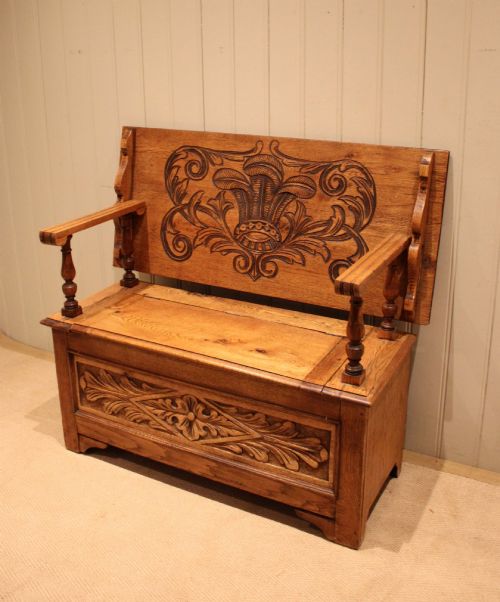
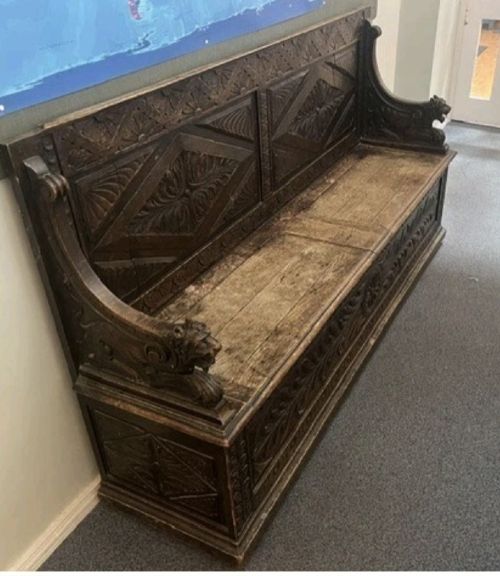
Antique Storage Seat Bench
An antique storage seat bench brings practical timber seating and concealed compartment space into a hallway or room.
Antique Storage Seat Bench
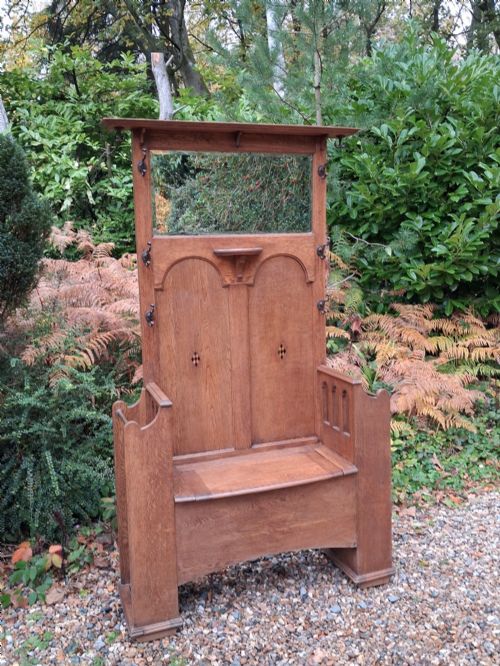
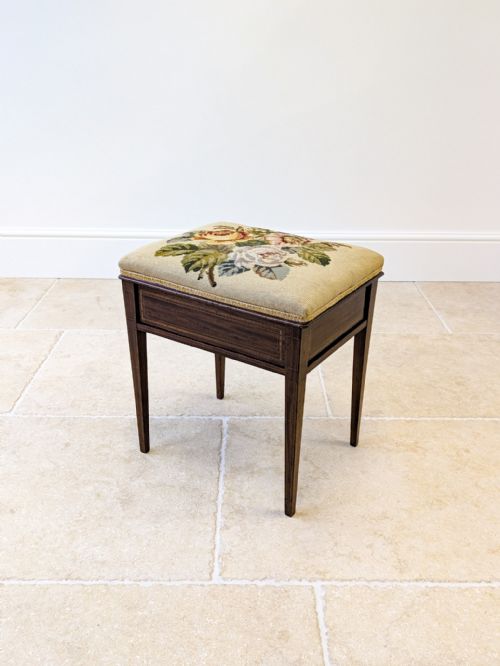
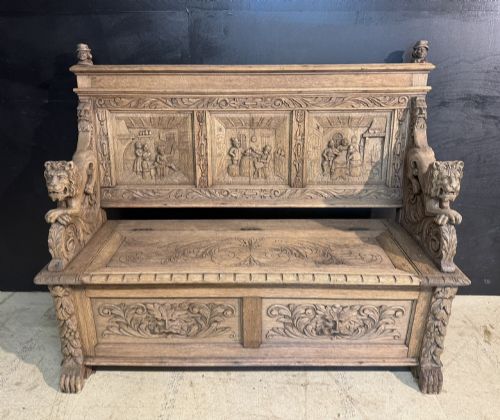
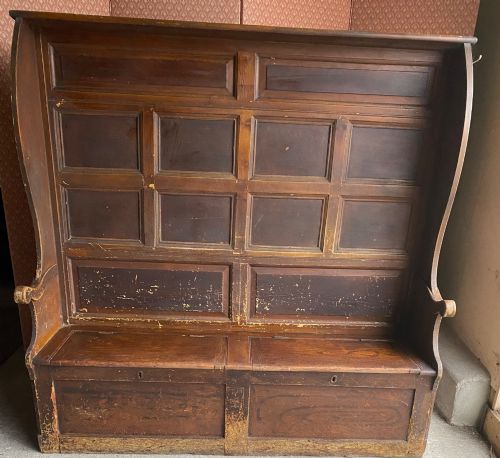
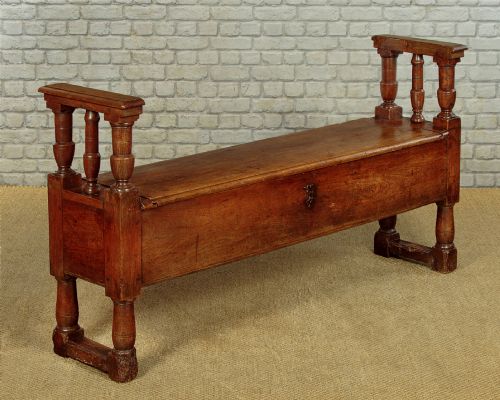
When you search for an antique storage seat bench, you encounter sturdy timber forms designed to provide both a place to sit and an enclosed space beneath the lid or seat. These pieces span centuries of domestic utility, originating as heavy farmhouse settles or country hallway furniture before evolving into refined Edwardian piano stools and mahogany cabinets.
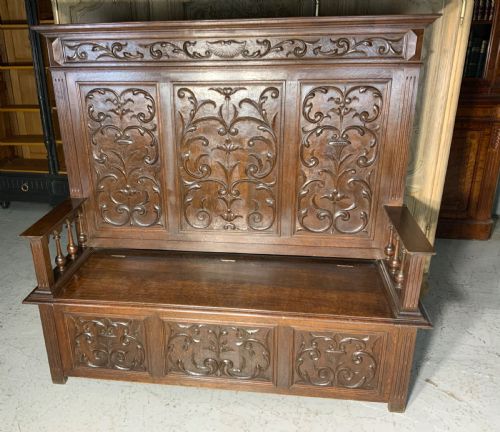
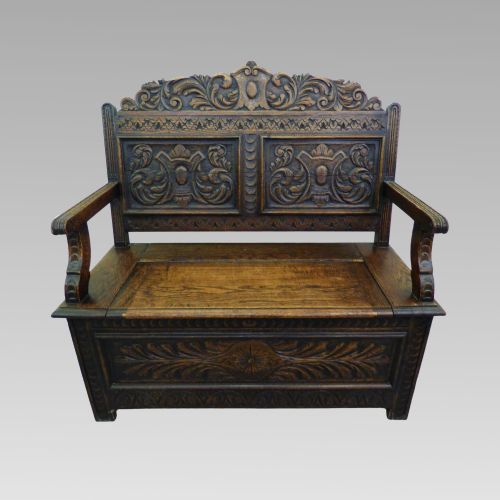
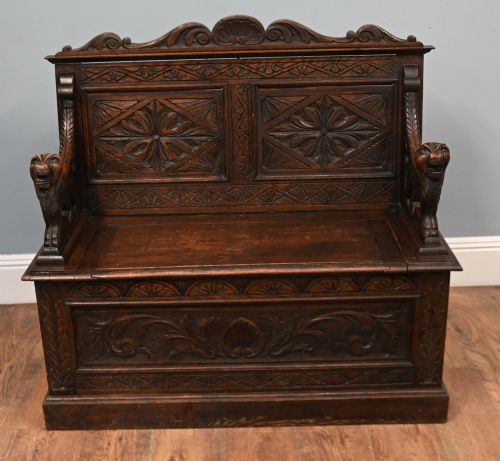
The most common examples on this page are oak box settles and hall benches dating from the Victorian and eighteenth-century periods. You also find pine farmhouse benches, elm box settles, and mahogany piano stools with lift-up upholstered lids.
Regional variations appear frequently, from Welsh and North Country oak designs to Hungarian painted pine benches and Italian walnut cassapancas. Each piece reflects the functional requirements of historical interiors, serving simultaneously as a seat, a chest, and occasionally a table via a folding monk's bench top.
How they were made
Cabinetmakers constructed these pieces primarily from solid domestic hardwoods like oak, elm, ash, and walnut, alongside softer woods such as pine. Joinery relied on pegged mortise and tenon joints to withstand the heavy daily use demanded of hallway seating and storage chests.
Surface treatments varied according to period and origin, ranging from traditional wax finishes that highlighted the natural grain of solid oak to applied paint on regional pine and walnut. Carved ornamentation, panelled backs, and needlework seat inserts demonstrate the manual skill applied by historical makers.
Antique Storage Seat Bench Retail Price Guide 2026
Typical asking prices for storage seat bench among the pieces listed under this phrase on Sellingantiques today, from the lower quarter to the upper quarter. They describe what is for sale here now, not the wider market.
The inventory encompasses regional forms such as Welsh box settles, Hungarian painted pine benches, and Italian walnut cassapancas.
What varies in quality
The distinction between ordinary utility items and superior examples lies in the selection of timber and the depth of hand-carved detail. Heavy, quarter-sawn oak boards and sophisticated panel construction signal a higher grade of craftsmanship than simpler boarded pine boxes.
Originality of surface finish and hardware dictates much of the standing of an individual piece. Retained original hinges, untouched waxed patination, and intact structural timbers elevate a bench above examples with heavily replaced elements or unsympathetic modern alterations.
James Shoolbred & Co.·Shapland & Petter·Liberty
The Antique Storage Seat Bench Glossary
- Settle
- A wooden bench with a high back, solid arms, and a box compartment beneath the seat. This form protected sitters from draughts in historical homes while storing household goods.
- Cassapanca
- An Italian wooden bench featuring a chest base and a backrest, often elaborately carved. These large seating units served as prestigious furniture in Renaissance and later palatial halls.
- Monk's bench
- A multi-functional item featuring a hinged back that folds down flat over the armrests to transform the seat into a table. This clever dual-purpose design conserved space in smaller rooms.
- Ottoman
- A low, upholstered seat or stool with a hollow interior accessed by lifting the hinged top. Edwardian and later versions frequently utilised needlework or fabric covers.
- Box settle
- A heavy timber bench incorporating a lidded storage compartment beneath the seat boards. It represents the primary precursor to modern hallway storage furniture.
Antique Storage Seat Bench: Frequently Asked Questions
How were box settles used historically?
Box settles stood near hearths or in entrance halls where occupants needed a place to sit while removing outer garments or footwear. The high back protected sitters from cold draughts in large, unheated rooms.
The deep compartment beneath the seat served as secure storage for linens, firewood, or dry goods, keeping the main living space tidy and organised.
How do I care for antique timber furniture?
Maintain antique wooden benches by placing them away from direct heat sources and strong sunlight, which can dry out and split historical oak, pine, or mahogany. Apply traditional beeswax periodically to nourish the wood and preserve the surface sheen.
Avoid using modern silicone sprays or harsh chemical cleaners, as these can strip the accumulated patination and damage the original timber finish.
How can I tell an 18th century settle from a Victorian one?
Eighteenth-century pieces typically display heavier pegged construction, hand-planed board surfaces, and deep patination acquired over centuries of use. The carving tends to be bolder, simpler, and executed with hand tools characteristic of early country joinery.
Victorian interpretations often show revival styles, machine-finished elements, or tighter joint tolerances alongside crisper, more uniform decorative carving reflecting industrial manufacturing advances.