

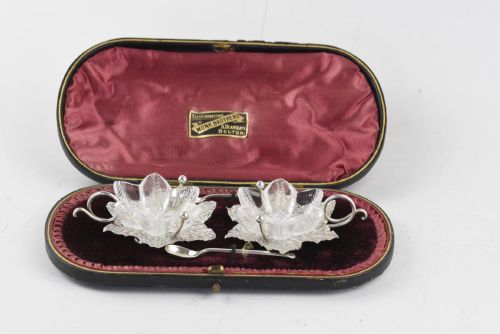
Antique Sterling Silver Case
These antique sterling silver case pieces range from card holders to vesta matches, offering practical pocket storage crafted in precious metal.
What the pieces are
An antique sterling silver case serves several specific purposes, most notably holding visiting cards, matches, or cigars securely in a pocket. Card cases and vesta cases form the majority of the examples encountered, reflecting Victorian and Edwardian social habits.
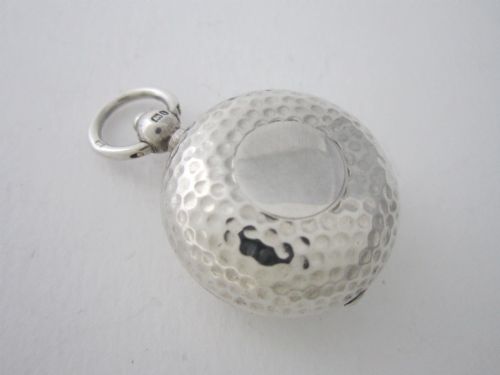
The objects span from the mid-nineteenth century into the early twentieth century, incorporating Early Victorian, Victorian, Edwardian, and Art Deco periods. Forms include torpedo-shaped cigar holders, combination sovereign and vesta pieces, and decorative pocket items.
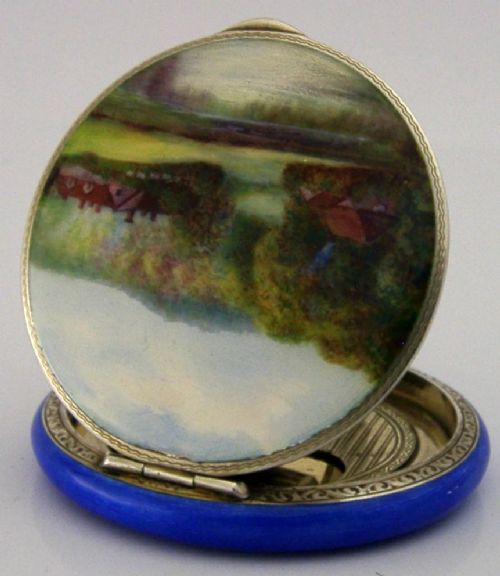
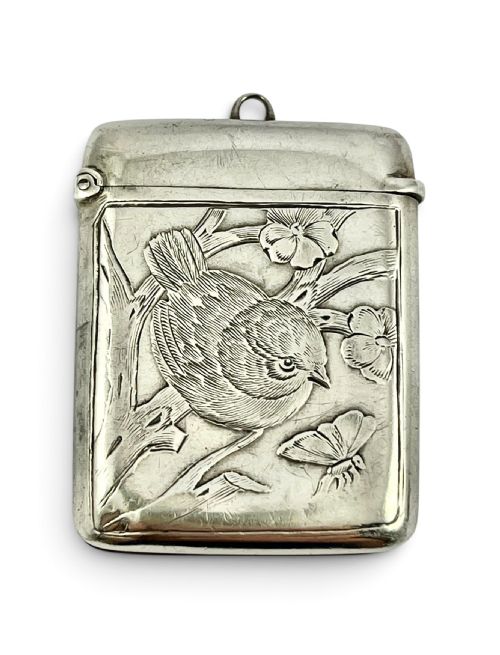
Makers produced items ranging from plain surfaces intended for monograms to elaborate pictorial designs. Castle top card cases depict specific landmarks like the Houses of Parliament or Trinity Church, while others feature birds, butterflies, or stags.
How they were made
Silversmiths utilised solid sterling silver, shaping the metal through techniques such as planishing, piercing, and embossing. Hinges and catches required precise metalwork to ensure lids closed firmly on pocket containers.
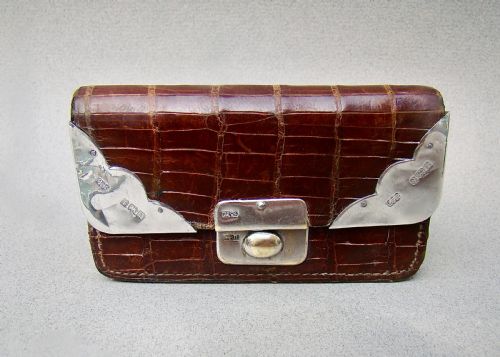
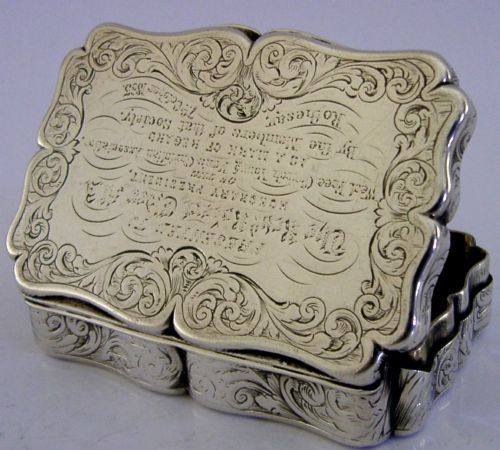
Surface decoration often involved detailed engraving, repoussé work, and applied enamel colour. Some examples incorporated other materials like leather, crocodile skin, or glass alongside the silver mounts.
Retail Price Guide 2026
Typical UK retail prices for sterling silver case, calculated from the Sellingantiques database of over a million retail prices indexed since 2003. This retail price guide relies exclusively on Sellingantiques data; no external sources or auction records are used, so the figures do not describe the wider market.
Materials in these listings include sterling silver and enamel, spanning the Victorian and Edwardian periods.
What varies in quality
Quality rests in the crispness of the relief work and the structural integrity of the hinges. Superior items show deep, sharp chasing on pictorial scenes and robust construction that withstands daily pocket use without loosening.
The skill of the artisan dictates the refinement of details, from the delicate engraving of a castle top to the smooth operation of a spring-loaded lid. Plain pieces depend entirely on the weight of the metal and the precision of their geometric lines.
Nathaniel Mills
The Antique Sterling Silver Case Glossary
- Vesta case
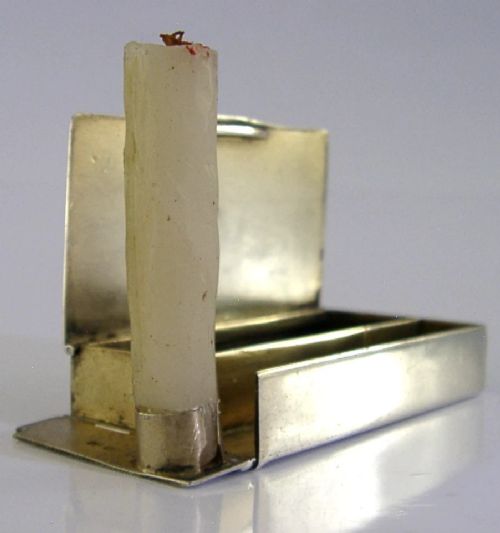
- A small pocket container designed to hold matches and keep them dry. These often include a textured striking surface on the base.
- Castle top
- A card case featuring a high-relief engraving of a famous building or landmark on the front lid. Examples depict architectural scenes such as the Houses of Parliament.
- Sterling silver
- An alloy of silver containing ninety-two point five percent pure silver and seven point five percent other metals, usually copper. This standard ensures durability for functional items.
- Planished
- A metal surface finish achieved by hammering with a small, flat-faced tool to create subtle, uniform facet patterns. This technique hardens the silver while adding texture.
Frequently Asked Questions
What is a vesta case?
A vesta case is a small pocket container used to hold matches safely.
They usually feature a textured panel on the bottom for striking the matches.
How do I date a silver case?
Dating relies heavily on hallmarks stamped into the metal by official assay offices.
These marks indicate the year of testing, the city, and the maker alongside the sterling standard.
What is a castle top case?
Castle top cases feature detailed relief engravings of notable architectural landmarks.
Popular subjects include the Houses of Parliament and various churches.
Were these cases used daily?
Original owners carried them regularly in pockets or bags for social calls.
Card cases protected visiting cards from bending, while cigar cases preserved tobacco moisture.