



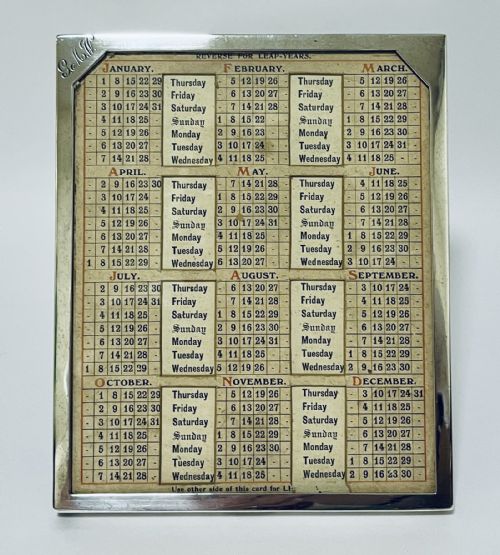


Engraved Silver Card Holder
An engraved silver card holder is a pocket accessory for calling cards, combining metalwork and personal stationer's habit.
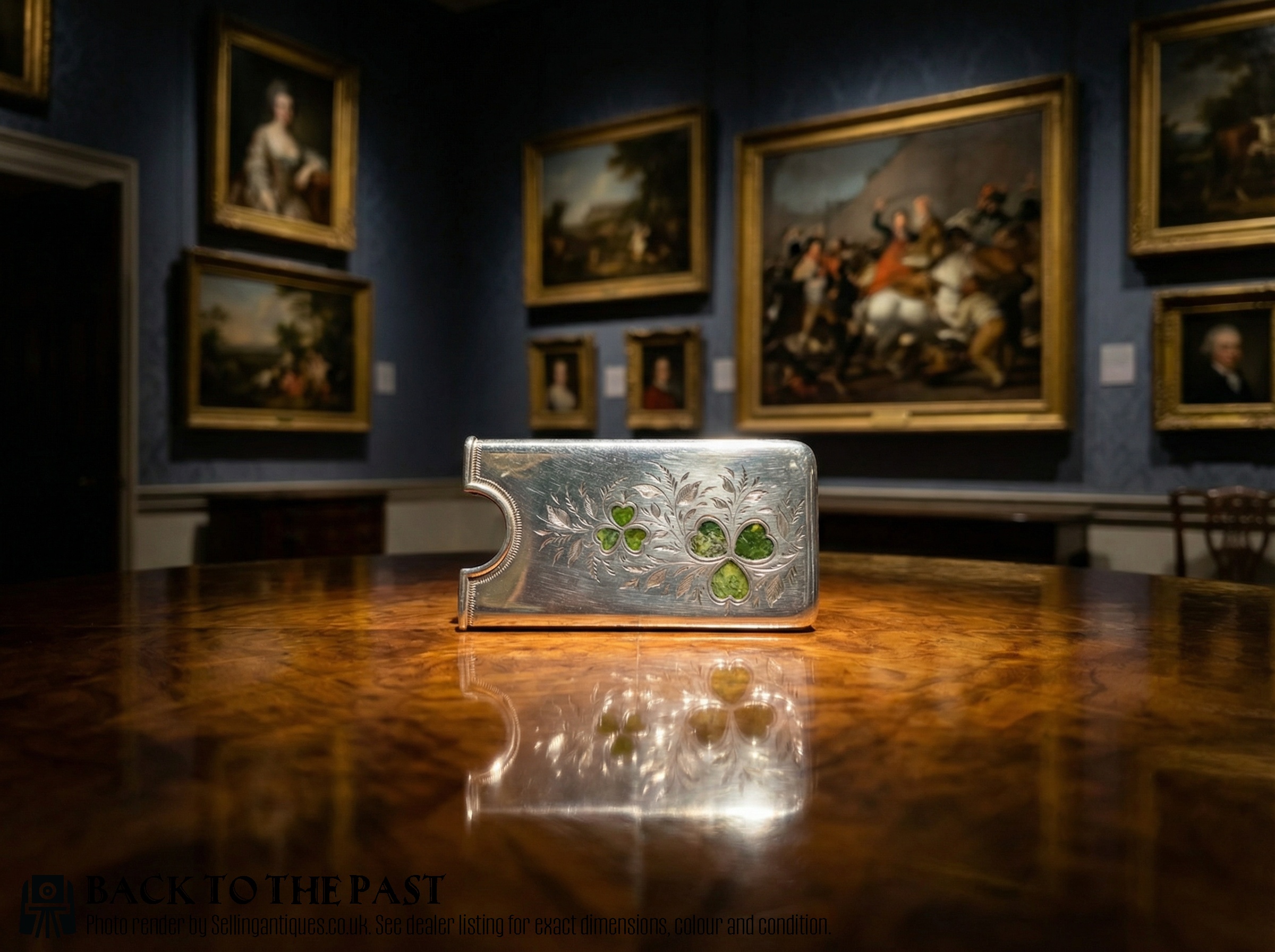
Engraved Silver Card Holder
When you search for an engraved silver card holder, you encounter pocket cases designed for the exchange of visiting cards in social and formal routines. These items appear chiefly from the Victorian and Edwardian periods, alongside later twentieth-century examples.
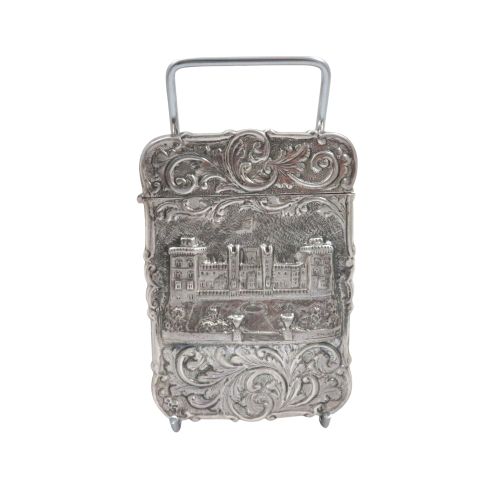
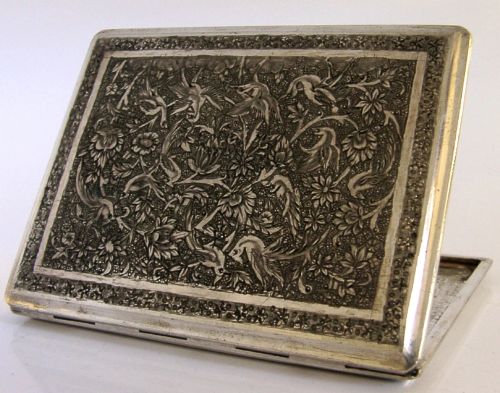
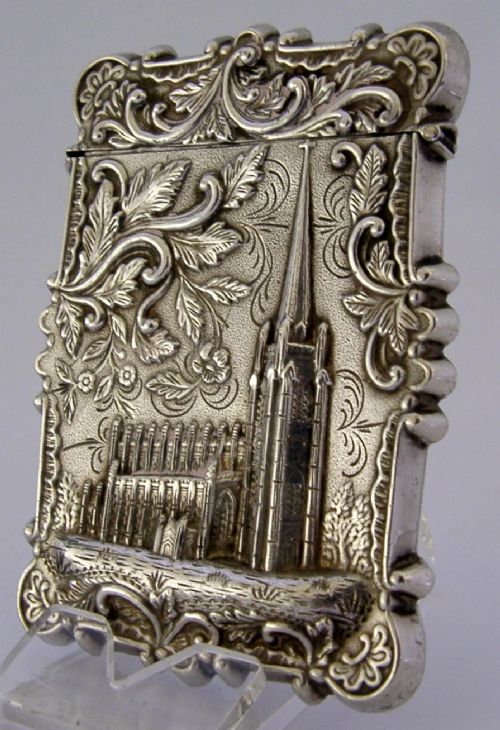
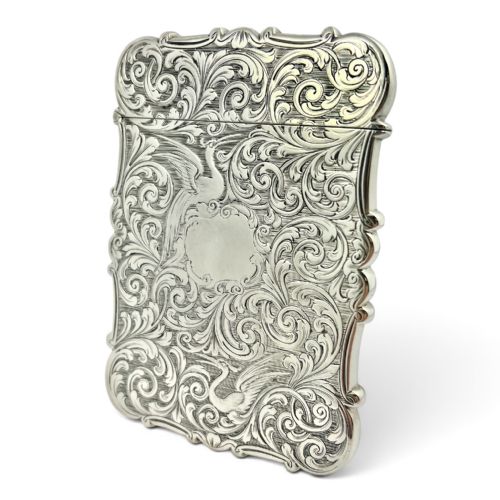
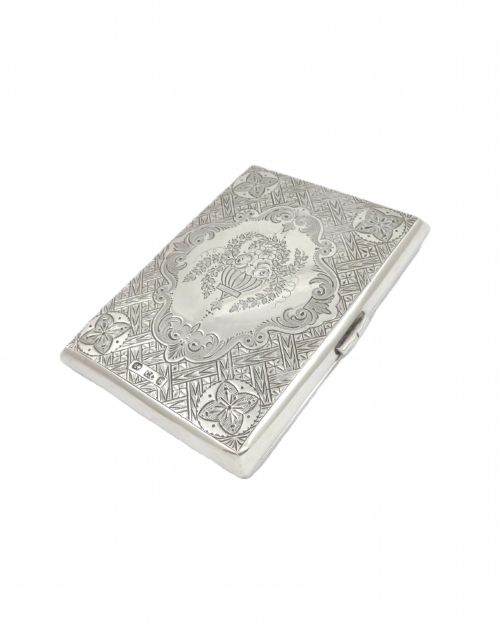
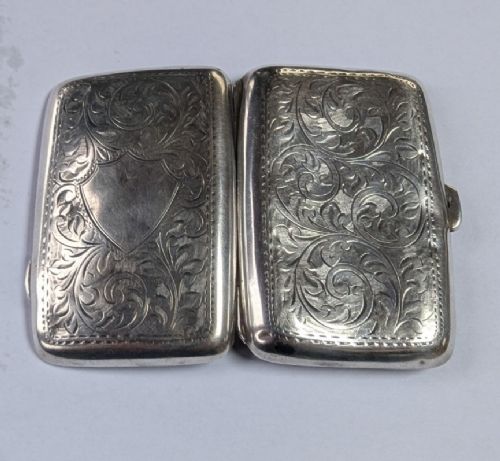
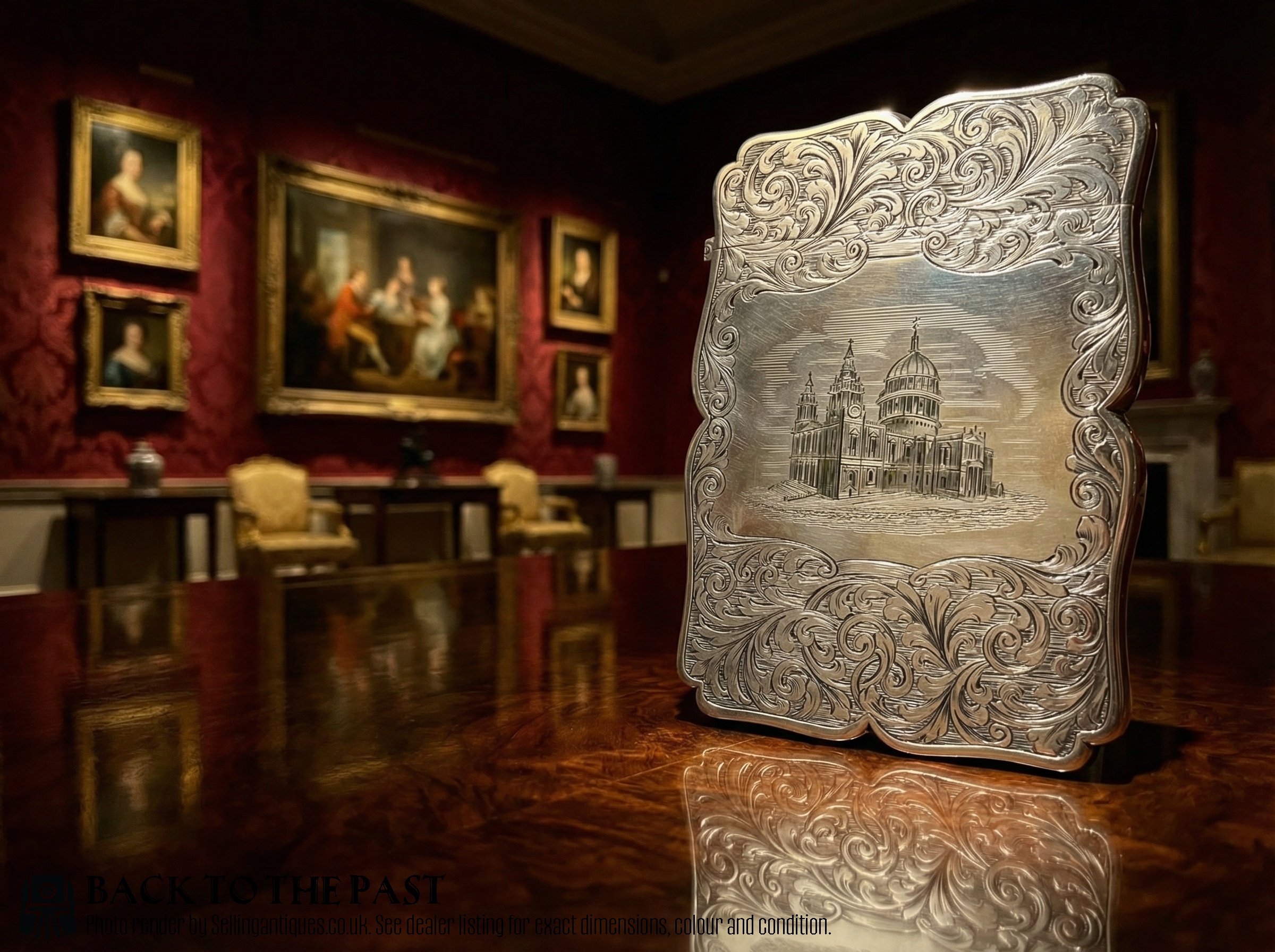
The objects take the form of slim cases, boxes, and aide-memoires fashioned to protect paper cards before presentation. Many display floral engraving, scrolls, or architectural views known as castle tops.
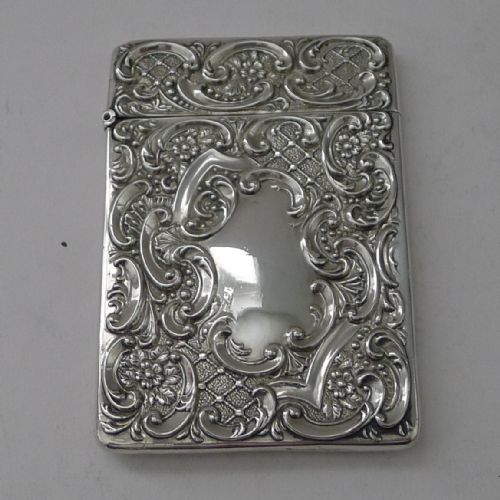
Victorian examples dominate the selection, often bearing hallmarks from Birmingham or London makers. Edwardian pieces follow with lighter ornamentation or simpler geometric engraving.
Materials and technique
Silversmiths utilised sterling silver and solid silver as the primary metals, sometimes applying silver gilt to the interior surfaces. Sheet silver was shaped, hinged, and lined with materials such as silk, paper, or leather to cushion the contents.
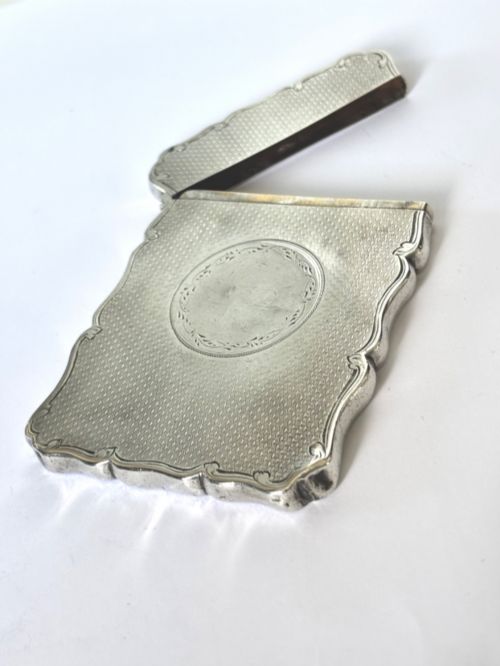
Decoration relied on hand engraving, engine turning, and casting, particularly for the high-relief architectural scenes on castle top pieces. Hallmarks were stamped directly into the metal to record the standard, assay office, and year.
Engraved Silver Card Holder Retail Price Guide 2026
Typical asking prices for engraved silver card holder among the pieces listed under this phrase on Sellingantiques today, from the lower quarter to the upper quarter. They describe what is for sale here now, not the wider market.
Listings feature sterling silver, solid silver, and silver gilt alongside unexpected material pairings including Connemara marble and silk.
Quality and craftsmanship
The standard of an engraved silver card holder rests upon the crispness of the chased or engraved detail and the integrity of the hinges. Fine work displays deep, sharply defined motifs rather than worn or shallow surface marks.
Maker attribution elevates the piece, especially when associated with prominent silversmiths specialising in small silver goods. The complexity of the opening mechanism and the inclusion of internal fitments also distinguish finer examples.
Nathaniel Mills·George Unite·Wright and Davies·Foxall and Co·Edward Edwards
The Engraved Silver Card Holder Glossary
- Castle top
- A style of card case featuring a high-relief architectural engraving of a famous building or landmark on the cover. Nathaniel Mills produced notable examples depicting structures such as Windsor Castle and St Paul’s Cathedral.
- Aide-memoire
- A pocket notebook or card case fitted with a small tablet and pencil to record engagements. These items often incorporate silver covers combined with internal paper or silk leaves.
- Engine turned
- A geometric pattern of fine lines mechanically engraved into the silver surface. This technique produces repetitive textures such as basketweave or radiating rays.
- Hallmark
- A series of official marks stamped onto silver items to guarantee the metal purity and trace the origin. British pieces typically show a maker's mark, assay office mark, and date letter.
Engraved Silver Card Holder: Frequently Asked Questions
How were calling card cases used?
Calling card cases held visiting cards that individuals presented upon visiting acquaintances or leaving social calls. The slim profile protected the paper cards from bending or soiling within a pocket or handbag.
As social rituals required precise etiquette in delivering cards, these holders kept the stationery pristine until the moment of presentation.
How do I date an antique silver case?
Dating relies primarily on the assay office hallmarks stamped into the silver metal. A specific letter punch within the assay marks corresponds to the year of testing.
Style also indicates the period, with Victorian pieces often showing heavy floral scrolls and Edwardian examples featuring lighter, simpler motifs.
Did these cases hold anything besides cards?
Some designs incorporated internal compartments, silk linings, or writing tablets to function as aide-memoires. Others were adapted for cigarettes, stamps, or dance cards depending on the interior fittings.
Convertible versions included detachable parts or spring clips to secure different types of paper ephemera.