
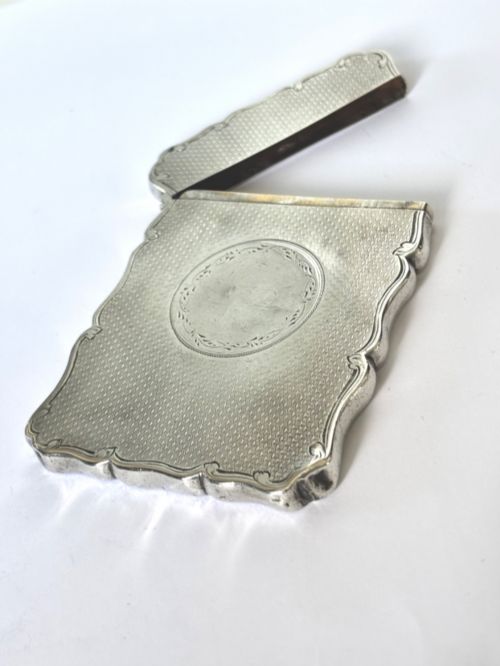


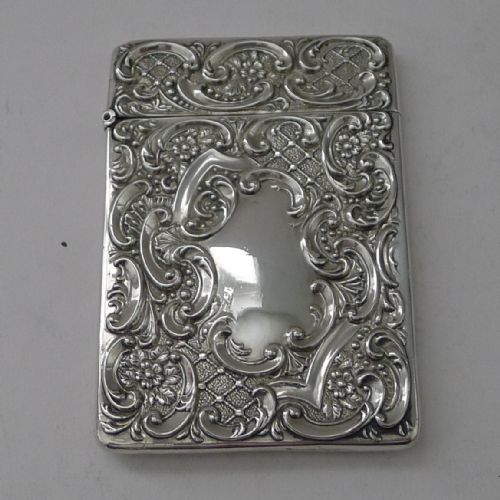


Victorian Visiting Card Case
These Victorian visiting card cases are pocket-sized silver and shell containers designed to hold calling cards with elegance.
What they are
A Victorian visiting card case is a pocket-sized container designed to hold calling cards. These items emerged during the nineteenth century when social etiquette demanded the exchange of cards during social visits.
The versions met on this page range across the Victorian and Edwardian periods. They take forms including rectangular boxes, book-shaped cases, and aide-mémoire holders.
How they were made
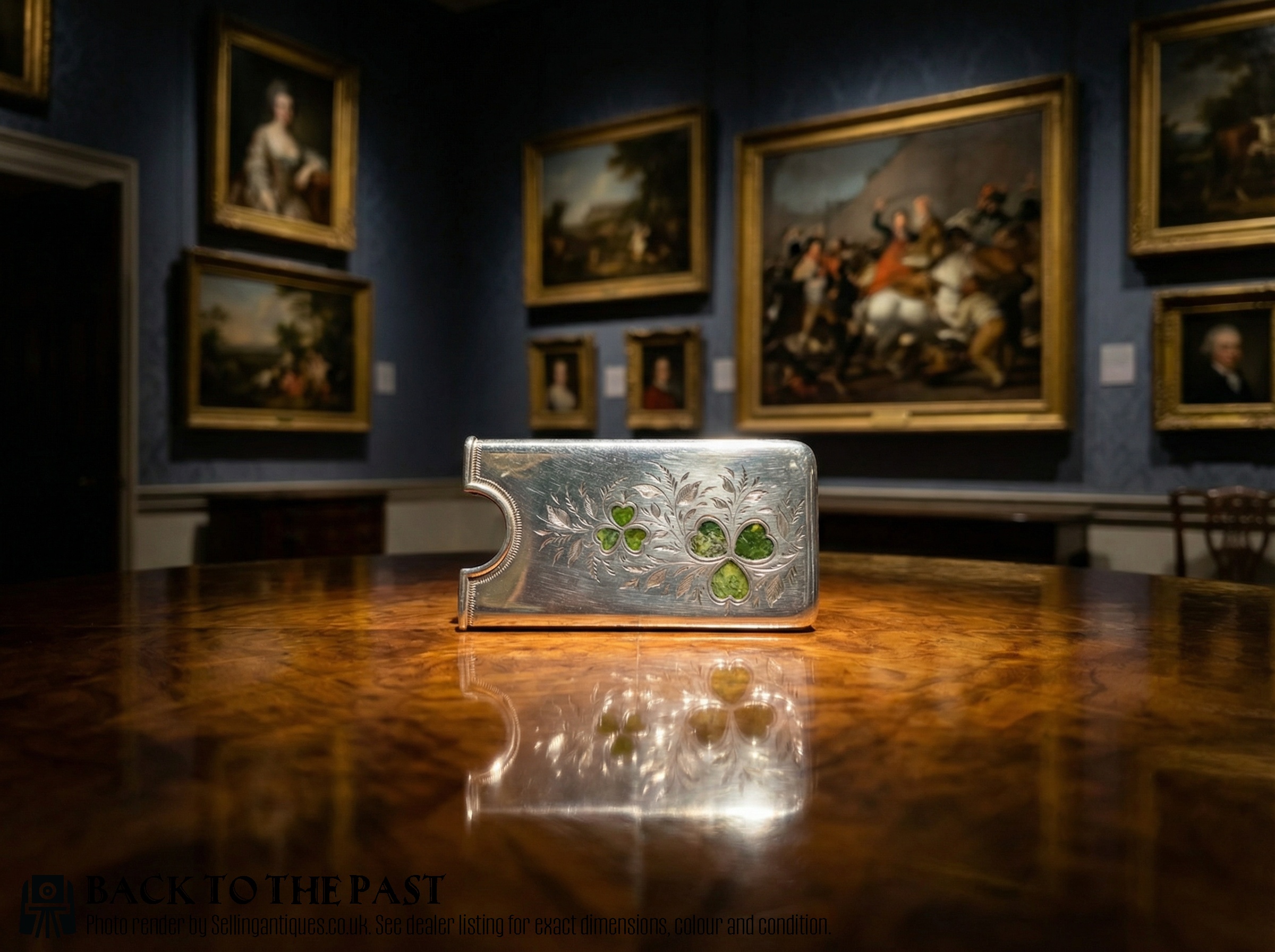
Materials recorded in the evidence include sterling silver, silver, Connemara marble, mother-of-pearl, abalone, and tortoiseshell. Metals were often hallmarked and shaped into rigid protective shells for delicate paper cards.
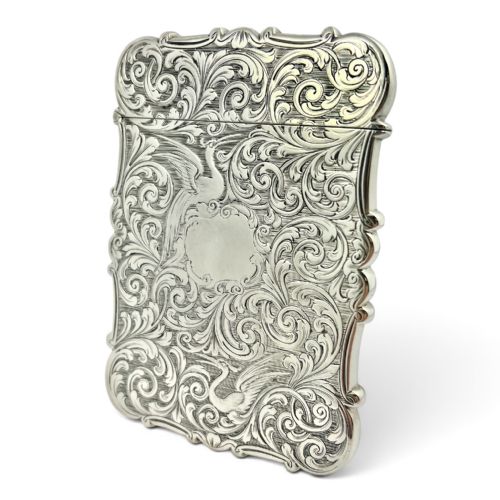
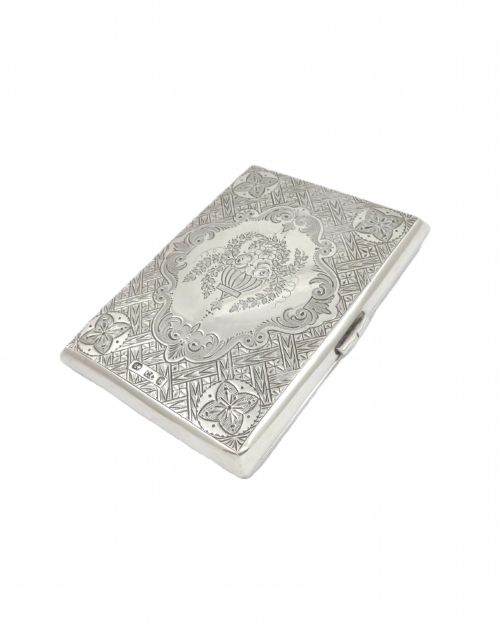
Decorative techniques involve detailed surface engraving and the piecing together of iridescent shell panels, including designs featuring a tree of life motif.
What varies in quality
The presence of named silversmiths elevates a piece significantly. Pieces associated with notable makers command attention for their superior craftsmanship.
GEORGE UNITE·Deakin & Nephew·Nathaniel Mills
The Victorian Visiting Card Case Glossary
- Hallmark
- An official stamp applied to precious metals indicating standard of purity and origin. These marks provide dates and silversmith initials.
- Castle top
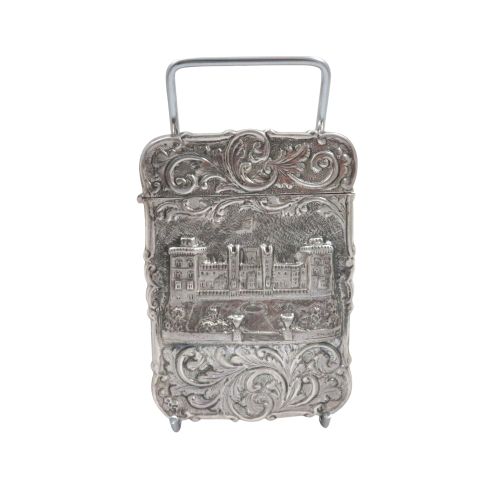
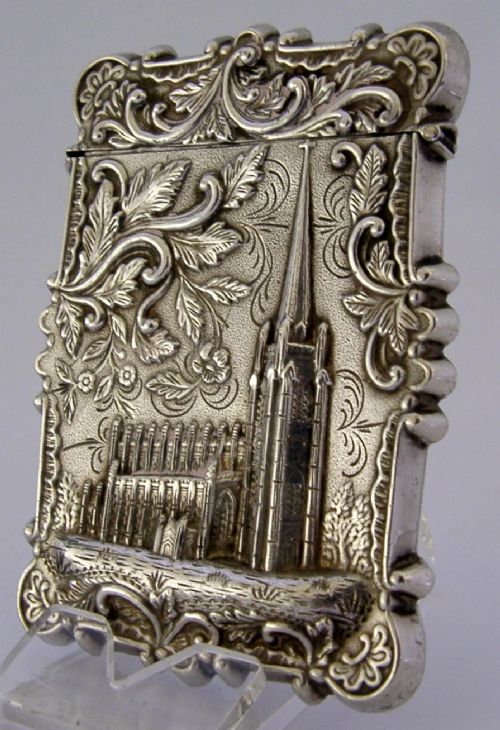
- A detailed engraved or cast depiction of a specific building on the metal lid. This style represents high-end Victorian silversmithing.
- Aide-mémoire
- A notebook or memorandum case combined with a card holder. It often includes internal leaves for written notes.
- Connemara marble
- A distinctive green ornamental stone sourced from Ireland. It appears set into silver frames.
Frequently Asked Questions
What is a Victorian visiting card case?
A Victorian visiting card case is a small protective container used during the nineteenth century to carry personal calling cards. These accessories were essential tools of social etiquette for leaving cards when visiting acquaintances.
They appear in materials such as sterling silver, mother-of-pearl, abalone, tortoiseshell, and Connemara marble. Their compact sizes allowed them to fit easily into pockets or reticules.
How were calling cards used?
Calling cards were left at residences to signal a social visit, announce arrival, or offer condolences. The physical card served as a formal proxy for the visitor.
Card cases kept these paper items clean and uncreased while travelling. Retrieving a pristine card from a silver or shell case formed part of the polite ritual of the era.
What materials are common?
Sterling silver and silver dominate the surviving examples, often paired with decorative engraving. Other common materials include iridescent mother-of-pearl and abalone shell panels.
Some examples incorporate tortoiseshell or green Connemara marble. Book-shaped designs and aide-mémoire formats also appear within the material record.