


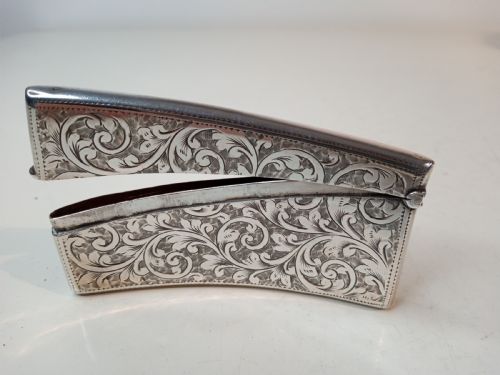

Birmingham Silver Card Case
These pieces for birmingham silver card case are pocket carriers designed for callers, and collectors seek them for their detailed repousse and engraved metalwork.
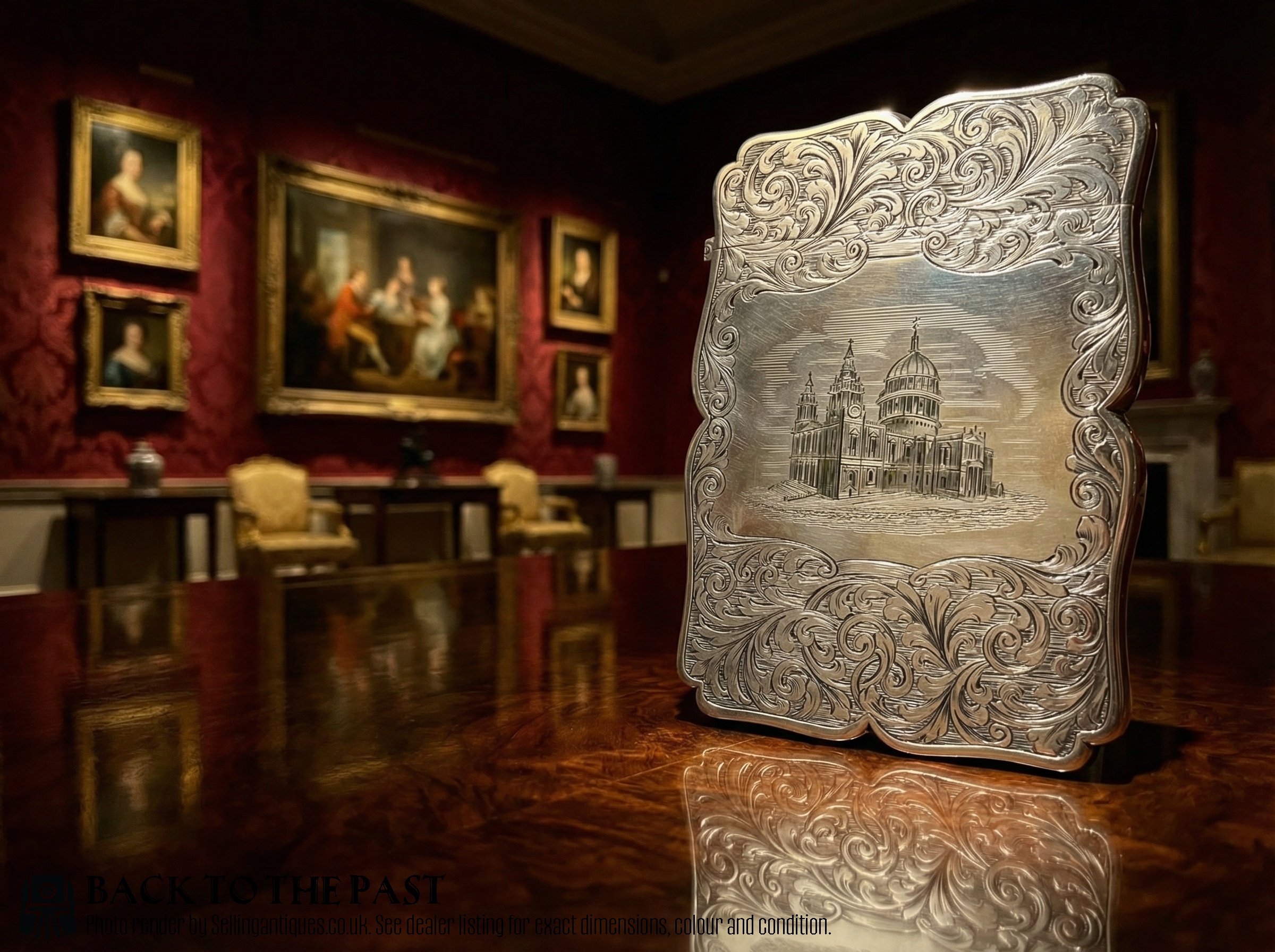
What a birmingham silver card case is
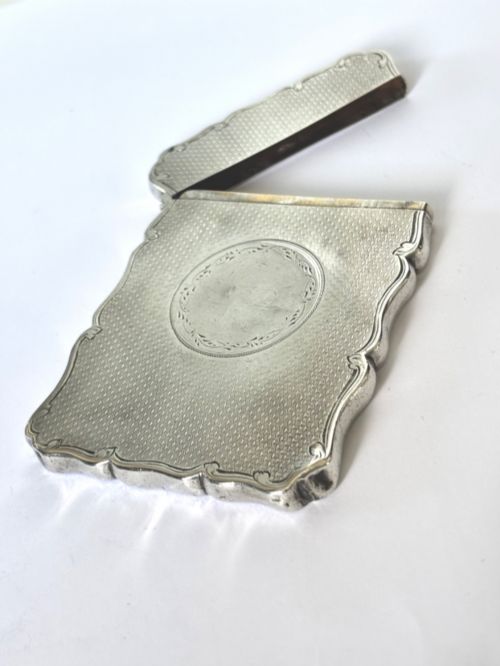
A birmingham silver card case is a small protective container created to hold visiting cards, calling cards or business cards during social exchange. The pieces found on this page span the Victorian, Edwardian and later periods, reflecting changing social rituals.
The objects originate from the mid-nineteenth century onward, demonstrating the industrial and silversmithing capacity of the Midlands. Collectors encounter variants including slimline models, aide memoires and compendiums fitted with internal compartments.
How they were made
Makers utilised sterling silver sheets, shaping them through pressing, folding and soldering to form rigid or hinged enclosures. Exterior surfaces received decoration via hand engraving, engine turning or cast relief motifs.
Internal elements often incorporated silk linings, leather pockets or fitted card holders to secure the contents during transport. Hinges and clasps were engineered to close flush, protecting the paper cards inside from dust and bending.
Retail Price Guide 2026
Typical UK retail prices for birmingham silver card case, calculated from the Sellingantiques database of over a million retail prices indexed since 2003. This retail price guide relies exclusively on Sellingantiques data; no external sources or auction records are used, so the figures do not describe the wider market.
The documented forms range from standard calling card cases to envelope wallets and compendiums.
What varies in quality
The distinction between standard items and superior examples lies in the depth and clarity of the metalwork. Pieces featuring high-relief cast scenes, such as architectural castle tops or sculptural cherubs, require greater skill than flat engraved surfaces.
Gauge and weight separate robust daily carry items from lighter domestic pieces. Heavier silver gauge ensures the structural integrity of hinges and edges over repeated opening and closing.
George Unite·Nathaniel Mills·Deakin & Francis·Joseph Gloster·Henry Matthews
The Birmingham Silver Card Case Glossary
- Castle top
- A style of card case featuring a high-relief depiction of a famous building or landmark on the lid. St Paul's Cathedral appears among the architectural examples.
- Aide memoire
- A pocket notebook or card case combined with ivory writing tablets and a small pencil. These allowed the owner to record social engagements on the go.
- Repousse
- A metalworking technique where the silver is hammered from the reverse side to form a raised design in relief on the front. This creates textured floral and figural scenes.
- Engine turning
- A mechanical method of engraving precise geometric patterns onto the metal surface using a lathe. It provides a uniform textured background for crests or initials.
- Sterling silver
- An alloy containing ninety-two point five percent silver and seven point five percent other metals, usually copper. It provides the durability required for pocket items.
Frequently Asked Questions
What were birmingham silver card cases used for?
These containers held visiting cards used during formal social calls in the nineteenth and early twentieth centuries. Leaving a card signified a visit had been paid when the host was not at home.
The slim construction protected the delicate paper cards from bending or moisture while carried in pockets or reticules. Later examples were also adapted to hold cigarettes or business cards.
How do I date a birmingham silver card case?
Dating relies upon the assay office marks and date letters stamped into the sterling silver body. Birmingham items carry the anchor mark alongside letters corresponding to the year of hallmarking.
Stylistic shifts also help narrow the era, moving from Victorian foliate engraving to Edwardian envelope forms and later art deco geometric patterns.
Are all birmingham silver card cases rigid?
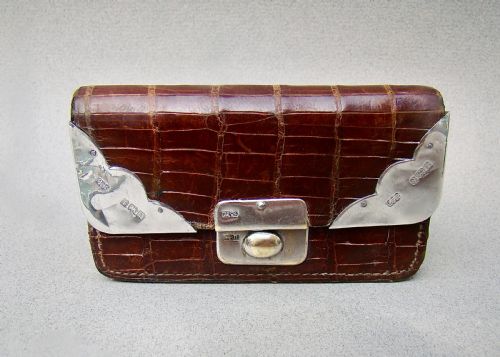
While the majority are rigid hinged boxes made entirely of solid silver, variations exist. Some incorporate leather, crocodile skin or textile components to form flexible wallets or compendiums.
Envelope forms and expanding notebook variants also diverge from the standard box shape while maintaining a protective silver exterior.
How should I display a birmingham silver card case?
These pieces can be displayed closed on shelves or opened in shallow glass cabinets to show internal fittings and hallmarks. Placing them on small stands allows viewers to appreciate both sides.
Owners should avoid storing them in humid environments and limit handling to preserve the original polish and engraved details.