


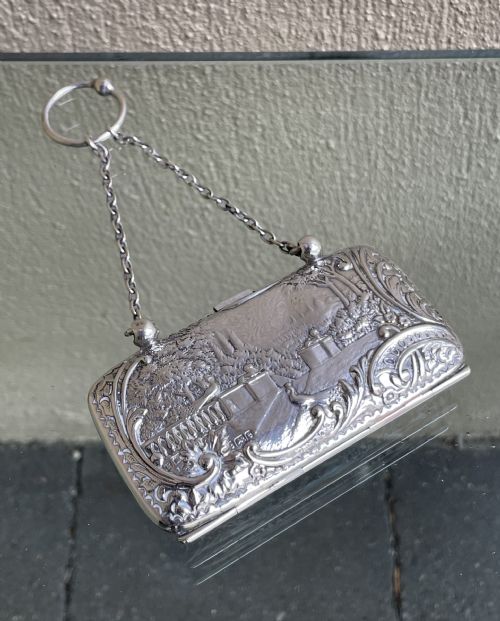


Victorian Silver Card Case
When you search for a victorian silver card case, you seek a pocket-sized repository of nineteenth-century social etiquette and intricate metalwork.
Victorian Silver Card Case
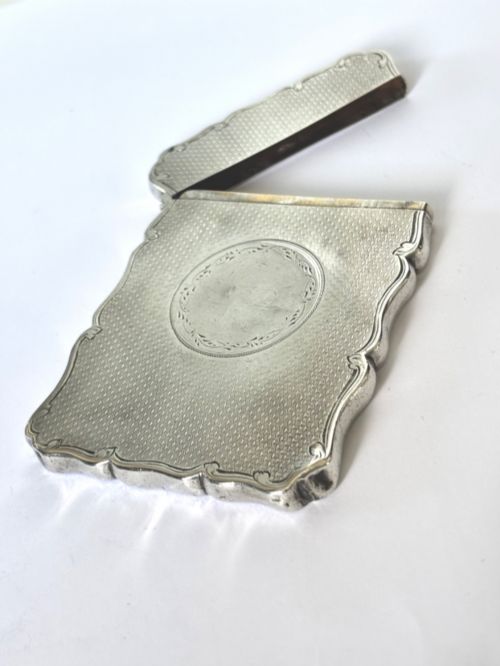
A victorian silver card case is a slim, pocketable container designed to hold calling cards during the height of the nineteenth-century calling ritual. These pieces typically measure just large enough for paper visiting cards, functioning as portable statements of social standing.
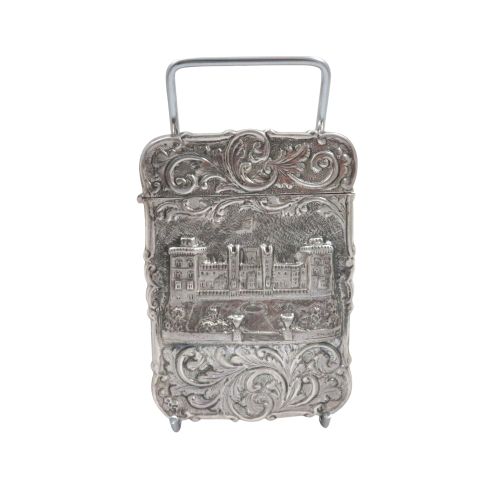
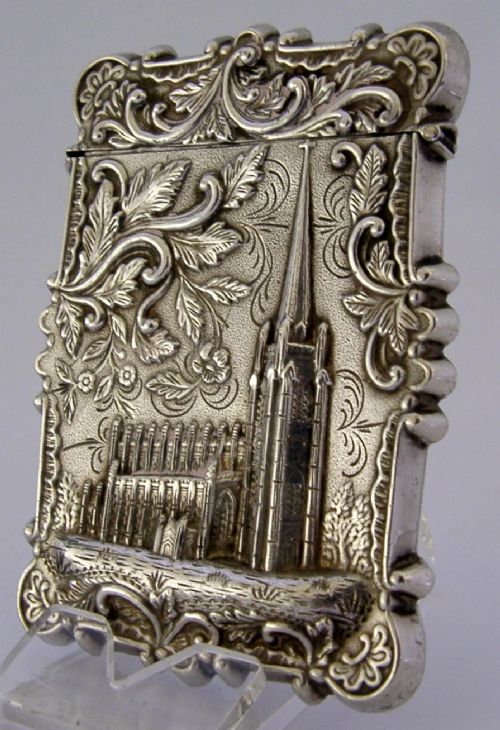
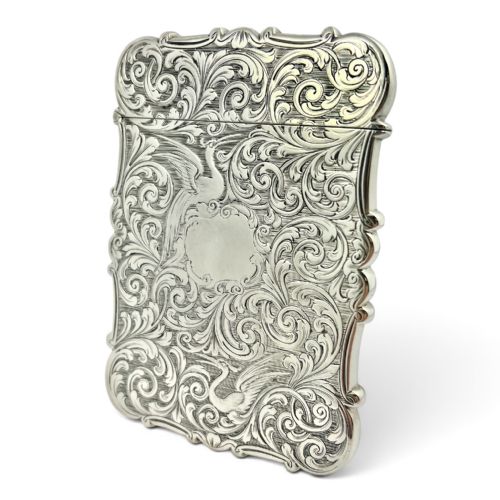
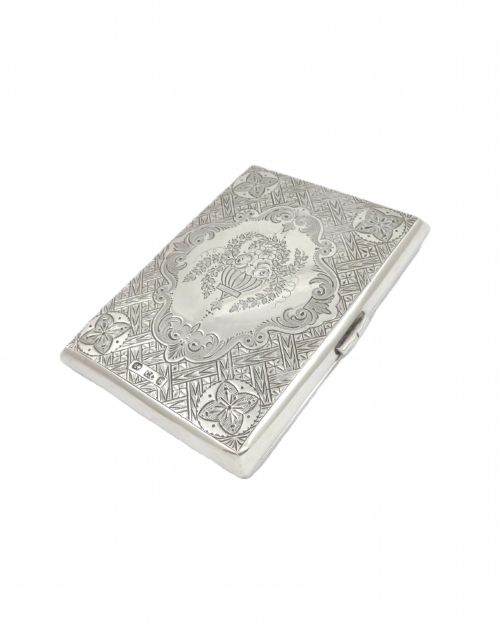
The most common examples on this page are rectangular sterling silver cases decorated with floral engraving, geometric scrolls, or architectural relief scenes known as castle tops. Alongside standard card cases, buyers frequently encounter hybrid forms that double as aide-memoires, cigarette cases, or leather-lined wallets.
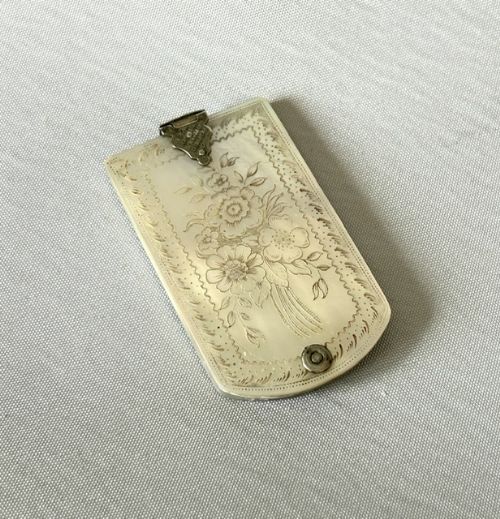
While the Victorian period dominates the selections, related items extend into the Edwardian era and occasionally incorporate materials like mother-of-pearl, tortoise-shell, bone, and enamel. Makers utilised hinged lids and fitted interior compartments to keep delicate paper cards secure during transport.
How They Were Made
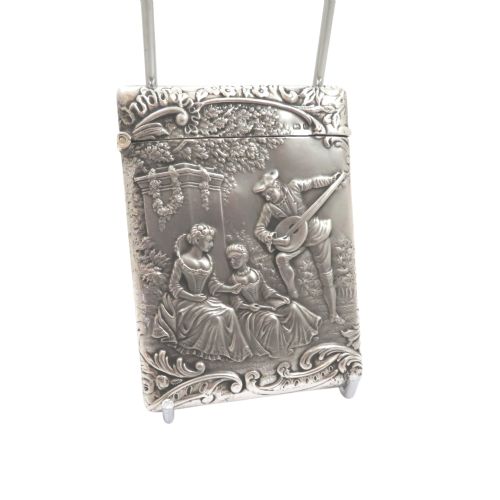
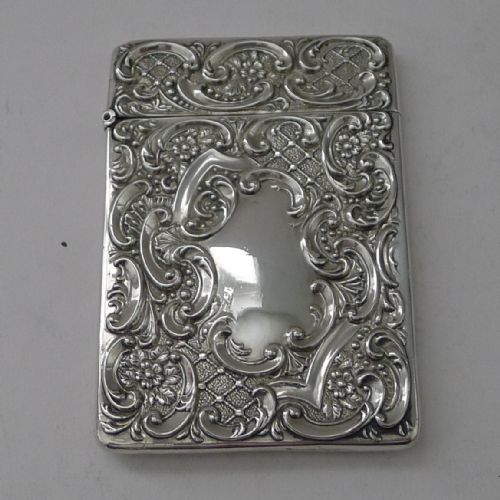
Silversmiths constructed these cases primarily from sterling silver, shaping sheet metal through pressing, folding, and soldering to create rigid rectangular shells. Many panels received deep surface enrichment via manual engraving, repoussé, or chased motifs depicting foliage, crests, and historic buildings.
Specialised variants integrated organic elements such as tortoise-shell, mother-of-pearl, bone, or Connemara marble mounted directly onto silver frames or leather backing. Interior mechanisms often featured silk concertina pockets for aide-memoires or small writing tablets complete with miniature bone or ivory pencils.
Victorian Silver Card Case Retail Price Guide 2026
Typical asking prices for victorian silver card case among the pieces listed under this phrase on Sellingantiques today, from the lower quarter to the upper quarter. They describe what is for sale here now, not the wider market.
One tiny silver sentry box stands ready to guard your dining table menus just like a loyal royal guard.
What Varies in Quality
Quality rests upon the depth, sharpness, and clarity of the metalwork, distinguishing flat, machine-like stencilling from crisp, hand-chased relief work. Architectural castle top scenes rendered with distinct three-dimensional perspective command higher regard than standard scrollwork.
The integrity of the hinge, the tightness of the snap closure, and the presence of legible hallmarks stamped by prominent makers influence the overall merit of a piece. Original fitted presentation cases and complex internal silk concertina linings further elevate individual examples.
Nathaniel Mills·George Unite·Sampson Mordan·Hilliard & Thomason·Alfred Taylor·Francis Clark·Wright & Davies·Colen Hewer Cheshire·Ludwig Krumm·William Neale
The Victorian Silver Card Case Glossary
- Castle top
- A card case featuring a high-relief architectural engraving of a famous building or landmark on the cover. Nathaniel Mills produced some of the most celebrated examples of this form.
- Aide-memoire
- A pocket notebook or case combining card storage with a small folding writing tablet and a tiny pencil. These often include internal silk concertina compartments.
- Repoussé
- A metalworking technique where the silver is hammered from the reverse side to form a raised design in relief on the front. This method creates tactile, highly decorative surfaces.
- Chasing
- The process of refining and sinking metal lines from the front using punches and hammers after initial repoussé work. It adds fine detail and texture to floral and scroll patterns.
- Sterling silver
- An alloy consisting of pure silver and other metals, usually copper, standardised for durability and strength. British pieces typically bear standard assay office hallmarks confirming this standard.
Victorian Silver Card Case: Frequently Asked Questions
What was a victorian silver card case used for?
These containers held visiting cards that Victorians exchanged during formal social calls. Leaving a card signified a visit paid when the host was absent.
They protected delicate paper cards from damage within pockets or reticules while serving as fashionable accessories.
How do I identify the maker and date?
Makers stamp their punch marks, alongside town assay office symbols, date letters, and the lion passant denoting sterling silver, directly onto the metal surface.
Consulting hallmark reference tables decodes these small stamps to reveal exact years and workshops.
Are interior compartments common?
Many examples feature simple open interiors, while others include silk concertina folds, velvet linings, or spring-loaded clips to retain cards securely.
Some hybrid designs incorporate spaces for coins, stamps, or miniature writing tablets.